


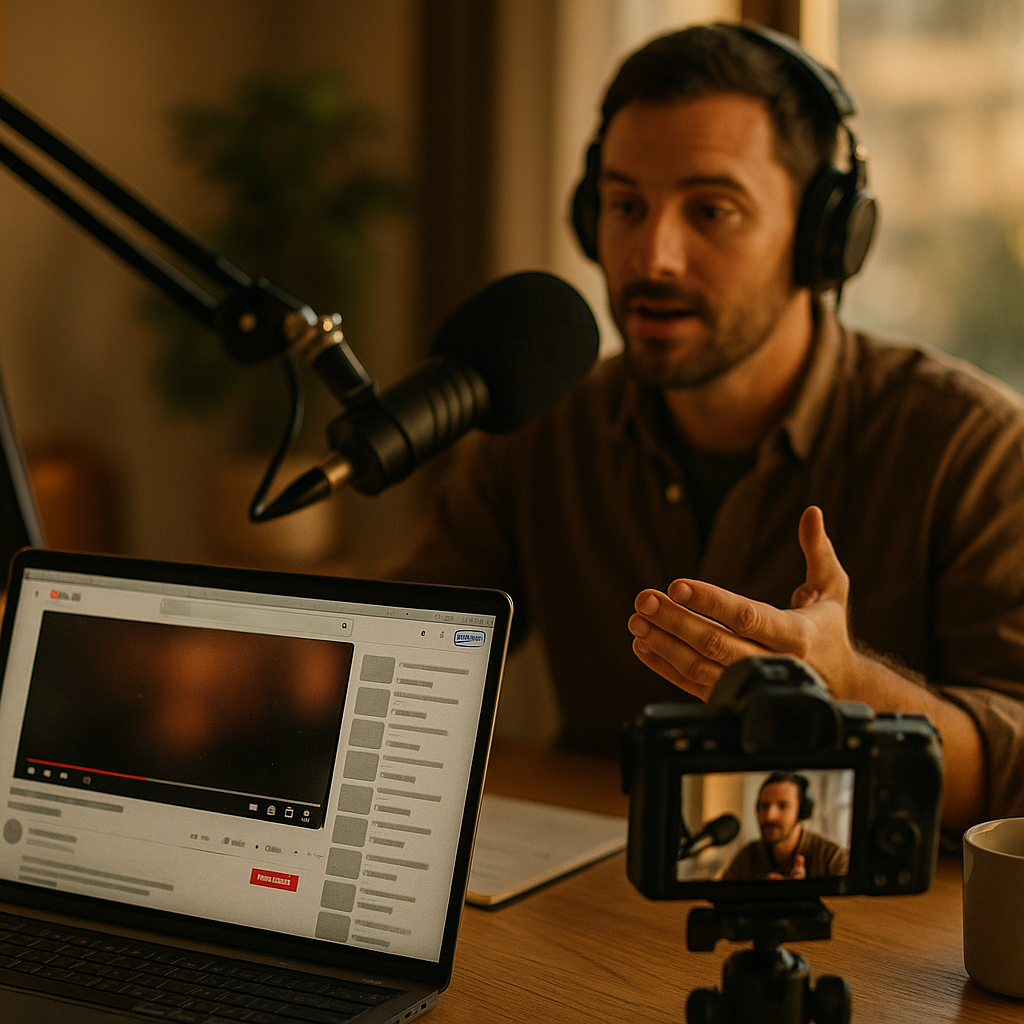
Brands are spending north of $2,000 CPM on some video podcast placements and still calling it a bargain. Is it? The answer depends entirely on which metrics you’re using to evaluate video podcast CPM and format strategy, and most media plans are using the wrong ones.
Three Formats, Three Completely Different Value Propositions
Before you can compare CPMs across video podcasts, YouTube pre-roll, and traditional host-read audio, you need to stop pretending they’re competing for the same outcome. They’re not. Each format sits at a different point in the purchase funnel, delivers a different quality of attention, and requires a fundamentally different attribution model.
Here’s the short version:
- YouTube pre-roll is a reach and awareness play. Skippable TrueView ads run at CPMs between $8 and $25 for broad targeting, with non-skippable bumper ads pushing $15 to $40 depending on audience segments. You’re buying impressions at scale with measurable view-through rates, but you’re interrupting content the viewer chose.
- Traditional host-read podcast audio runs $20 to $50 CPM for mid-tier shows and climbs past $80 for culturally dominant programs. The audience is warm, trust is high, but attribution is a nightmare — promo codes and vanity URLs remain the industry’s crutch.
- Creator-hosted hybrid video-audio podcasts (think Joe Rogan on Spotify, Diary of a CEO on YouTube, or Call Her Daddy’s video distribution) are now commanding $40 to $120 CPM for integrated mid-roll placements. But the audience quality metrics behind those numbers are genuinely different from the other two.
The hybrid format isn’t just audio with a camera rolling. It’s a fundamentally different consumption behavior: viewers are watching a long-form conversation with full visual context, often on a second screen, with pause-and-replay behavior that looks closer to CTV than to social video. That changes everything about how you evaluate the buy.
Why Audience Quality Metrics Break Down Across Formats
Standard CPM comparisons collapse because each format has a different effective attention window. A 15-second YouTube bumper delivers roughly 12 seconds of real cognitive engagement. A host-read podcast mid-roll delivers 60 to 90 seconds of direct message exposure, but to a listener who’s commuting, exercising, or doing dishes. A hybrid video podcast mid-roll integration can deliver two to four minutes of visual and verbal reinforcement, with the creator demonstrating the product on camera.
Attention-adjusted CPM, not raw CPM, is the metric that separates sophisticated video podcast buyers from brands still optimizing on reach alone. A $90 CPM on a creator-hosted video mid-roll can outperform a $12 YouTube pre-roll when you weight for seconds of engaged attention delivered.
Tools like Sprout Social‘s listening analytics and third-party measurement platforms like Podscribe and Chartable (now integrated into various hosting stacks) have started building attention-weighting models. But most brand media teams haven’t adopted them yet. If your agency is still presenting raw CPM comparisons across these three formats without an attention multiplier, push back.
Audience quality also breaks along demographic lines. YouTube pre-roll skews toward intent-based audiences when layered with Google’s interest and in-market targeting. Host-read audio podcasts build psychographic affinity over time. Hybrid video podcasts often attract a superfan segment: people who voluntarily watch a two-hour conversation are self-selecting for depth of interest, which is exactly the audience a direct-response brand or a considered-purchase product needs.
The Attribution Gap Nobody Wants to Talk About
YouTube pre-roll has the cleanest attribution stack. Google’s view-through conversion windows, combined with first-party data matching through Google Ads, give you a reasonably defensible cost-per-sale. You can run incrementality tests, control holdout groups, and tie spend to revenue with a degree of statistical confidence that other formats can’t match at scale.
Traditional podcast host-reads are where attribution goes to die, slowly, expensively. Promo codes work until a loyal listener forgets to use them. Vanity URLs capture some lift but miss every consumer who heard the ad, went to Google, and searched the brand name. podcast attribution improvements like Spotify’s Streaming Ad Insertion (SAI) and pixel-based solutions from Spotify and iHeart have improved things, but the category still lags display and video by years.
Hybrid video podcasts sit in an uncomfortable middle. When distributed on YouTube, they benefit from Google’s attribution infrastructure. When distributed on Spotify or Apple Podcasts with video enabled, attribution reverts to the same promo-code model. The same episode, the same integration, can produce radically different attribution fidelity depending on which platform the listener chose that day.
This is not a reason to avoid the format. It’s a reason to negotiate platform-specific guarantees with creators who have strong YouTube distribution, and to weight your measurement methodology accordingly. For more on how to build multi-platform content that survives attribution gaps, our coverage of multi-platform repurposing is worth reviewing before you brief.
Cost-Per-Sale: Where the Math Actually Lives
Strip away CPM and ask the only question that matters at the end of a campaign: what did it cost to acquire a customer?
Across several DTC categories tracked by performance agencies using multi-touch attribution, hybrid video podcast integrations are generating cost-per-sale figures that sit 30 to 50 percent below traditional display and pre-roll when the product is in the $40 to $200 price range and the creator has genuine audience alignment. The mechanism isn’t mystery: a host who has used your product for six weeks before the episode records, demonstrates it on camera, and fields listener questions about it in real-time is delivering a product education session that no 30-second ad can replicate.
That said, the floor is also lower. When creator-product fit is poor, hybrid video podcast campaigns can produce cost-per-sale figures that make programmatic display look efficient. The format amplifies authenticity in both directions. A great fit converts exceptionally. A poor fit wastes budget at scale.
YouTube pre-roll consistently delivers the most predictable cost-per-sale curve, which is why performance-focused brands often use it as their baseline and measure podcast and creator formats against it. eMarketer data consistently shows video remains the highest-converting digital ad format for awareness-to-consideration movement, but host-read and hybrid formats outperform on consideration-to-purchase when audience trust is high.
For brands running hybrid sponsorship formats, the operational complexity of managing compliance, creative approvals, and platform-specific deliverables across video and audio simultaneously adds budget overhead that rarely appears in CPM comparisons. Factor it in.
Building a Format Mix That Actually Works
The practical answer is almost never “pick one format.” It’s build a layered strategy where each format does the job it’s structurally best at.
- Use YouTube pre-roll for reach, retargeting, and measurable mid-funnel movement. Google’s ad formats give you granular control over frequency, audience exclusions, and conversion windows that creator formats can’t match.
- Use traditional host-read audio for sustained brand affinity in niche categories where the show’s audience is the entire addressable market. A B2B SaaS brand on a DevOps podcast doesn’t need YouTube scale; it needs the right 8,000 people to hear the message six times.
- Use hybrid video podcast integrations for considered purchases, new product launches, and any scenario where demonstration, trust, and depth of message matter more than cost efficiency.
For buying strategy specifics, our breakdown of video podcast buying strategy covers negotiation leverage, exclusivity windows, and how to structure performance bonuses into creator contracts without creating perverse incentives.
One tactic worth testing: run YouTube pre-roll targeted to audiences who have recently visited a hybrid podcast creator’s channel. You’re reaching a warm audience at a fraction of the cost of a direct integration, using the creator’s built equity as a targeting signal. Statista research shows podcast listeners are significantly more likely to research products online after hearing an ad, which makes this retargeting play structurally sound.
The brands winning in creator-hosted media aren’t picking formats by CPM. They’re mapping formats to funnel stages, then using attribution architecture to measure each layer independently before combining into a blended cost-per-sale.
When you brief creators for hybrid formats, the integration script matters as much as the placement itself. A host-read that sounds scripted kills conversion. For compliance and creative standards across hybrid sponsorships, the FTC’s endorsement guidelines remain the legal floor, and your brief should make clear expectations explicit before production begins.
For more on how brief standards affect sponsorship performance, see our guide to AI podcast sponsorship briefs covering how automation is reshaping the brief-to-delivery pipeline.
Next step: Pull your last three podcast or creator video campaigns, calculate attention-adjusted CPM using a conservative 3x multiplier for hybrid video mid-rolls versus pre-roll, and compare the resulting cost-per-engaged-minute against your cost-per-sale data. That single recalculation will tell you whether you’re over- or under-investing in the format.
FAQs
What is a typical CPM for video podcast sponsorships compared to YouTube pre-roll?
Video podcast mid-roll integrations on creator-hosted hybrid formats typically run $40 to $120 CPM, significantly higher than YouTube pre-roll which ranges from $8 to $40 depending on targeting and ad format. However, the higher CPM is offset by longer attention windows, stronger audience trust, and better cost-per-sale performance for considered purchases when creator-product fit is strong.
How do you measure attribution for hybrid video-audio podcast sponsorships?
Attribution for hybrid formats varies by distribution platform. YouTube-distributed episodes benefit from Google’s view-through and conversion infrastructure. Audio-first platforms like Spotify and Apple still rely on promo codes, vanity URLs, and streaming ad insertion (SAI) technology. Brands should negotiate platform-specific distribution guarantees favoring YouTube and use third-party measurement tools like Podscribe to build a more complete attribution picture.
When does a traditional host-read podcast ad outperform a video podcast integration?
Traditional host-read audio outperforms when the target audience is small, highly specialized, and deeply loyal to a specific show — common in B2B, finance, and technical verticals. When you’re targeting a niche audience of a few thousand decision-makers rather than driving mass awareness, the intimacy and trust of audio-only host-reads often delivers better cost-per-sale than the higher-CPM video format.
What is attention-adjusted CPM and why does it matter for format evaluation?
Attention-adjusted CPM weights raw CPM by the average seconds of genuine cognitive engagement delivered per impression. A 15-second YouTube bumper delivers roughly 12 seconds of attention. A two-minute hybrid video podcast mid-roll can deliver 90 to 120 seconds. When you divide CPM by engaged seconds delivered, the apparent cost advantage of low-CPM pre-roll often disappears, making hybrid formats more competitive on an efficiency basis.
Should brands use all three formats simultaneously?
Yes, in most cases a layered approach outperforms single-format investment. Use YouTube pre-roll for scalable reach and retargeting, traditional host-reads for niche audience affinity, and hybrid video podcasts for product demonstration and considered purchases. Mapping each format to a specific funnel stage and measuring cost-per-sale per layer independently gives you the data to optimize budget allocation over time.
Top Influencer Marketing Agencies
The leading agencies shaping influencer marketing in 2026
Agencies ranked by campaign performance, client diversity, platform expertise, proven ROI, industry recognition, and client satisfaction. Assessed through verified case studies, reviews, and industry consultations.
Moburst

-
2

The Shelf
Boutique Beauty & Lifestyle Influencer AgencyA data-driven boutique agency specializing exclusively in beauty, wellness, and lifestyle influencer campaigns on Instagram and TikTok. Best for brands already focused on the beauty/personal care space that need curated, aesthetic-driven content.Clients: Pepsi, The Honest Company, Hims, Elf Cosmetics, Pure LeafVisit The Shelf → -
3

Audiencly
Niche Gaming & Esports Influencer AgencyA specialized agency focused exclusively on gaming and esports creators on YouTube, Twitch, and TikTok. Ideal if your campaign is 100% gaming-focused — from game launches to hardware and esports events.Clients: Epic Games, NordVPN, Ubisoft, Wargaming, Tencent GamesVisit Audiencly → -
4

Viral Nation
Global Influencer Marketing & Talent AgencyA dual talent management and marketing agency with proprietary brand safety tools and a global creator network spanning nano-influencers to celebrities across all major platforms.Clients: Meta, Activision Blizzard, Energizer, Aston Martin, WalmartVisit Viral Nation → -
5

The Influencer Marketing Factory
TikTok, Instagram & YouTube CampaignsA full-service agency with strong TikTok expertise, offering end-to-end campaign management from influencer discovery through performance reporting with a focus on platform-native content.Clients: Google, Snapchat, Universal Music, Bumble, YelpVisit TIMF → -
6

NeoReach
Enterprise Analytics & Influencer CampaignsAn enterprise-focused agency combining managed campaigns with a powerful self-service data platform for influencer search, audience analytics, and attribution modeling.Clients: Amazon, Airbnb, Netflix, Honda, The New York TimesVisit NeoReach → -
7

Ubiquitous
Creator-First Marketing PlatformA tech-driven platform combining self-service tools with managed campaign options, emphasizing speed and scalability for brands managing multiple influencer relationships.Clients: Lyft, Disney, Target, American Eagle, NetflixVisit Ubiquitous → -
8

Obviously
Scalable Enterprise Influencer CampaignsA tech-enabled agency built for high-volume campaigns, coordinating hundreds of creators simultaneously with end-to-end logistics, content rights management, and product seeding.Clients: Google, Ulta Beauty, Converse, AmazonVisit Obviously →