


The Sponsorship Format Your Media Plan Hasn’t Caught Up To Yet
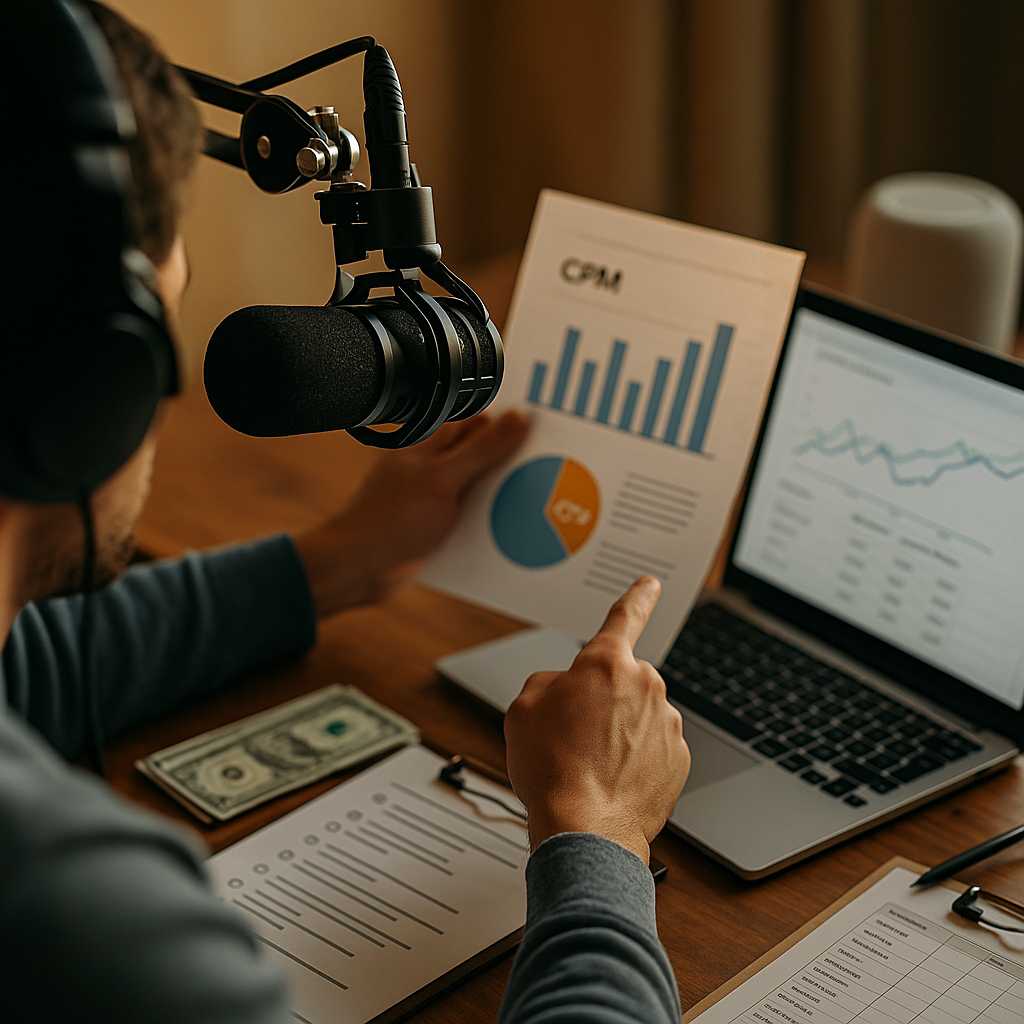
Podcast ad spend is projected to exceed $4 billion globally, and a growing slice of that inventory is no longer purely human-made. AI-augmented podcast formats, where the host still records the episode but AI generates show notes, chapter markers, dynamic ad inserts, and even listener-specific creative variants, are moving from experiment to mainstream buying option. Most brand media teams are evaluating them against traditional host-read sponsorships using the wrong criteria.
This isn’t a question of AI versus authenticity. It’s an operational and commercial question: does this format deliver better ROI, cleaner attribution, and acceptable brand-safety controls at the CPMs being quoted?
What “AI-Augmented” Actually Means in a Podcast Context
The term gets used loosely, so let’s define what you’re actually buying when a network or creator pitches an “AI-enhanced” podcast sponsorship.
- AI-generated show notes and chapters: Tools like Descript, Riverside, and Podcastle auto-generate timestamped summaries and searchable transcripts. For brands, this means your sponsorship mention appears in indexed, crawlable text, extending reach beyond the audio itself.
- Dynamic ad insertion (DAI): Platforms like Spotify’s Streaming Ad Insertion or Megaphone’s DAI technology serve different ads to different listener segments based on geography, device, or behavioral data. The host may record one read, or no read at all, and the system stitches it in programmatically.
- AI-generated ad creative: Some formats now use voice synthesis or AI-scripted reads voiced by the host’s cloned voice, a practice that raises significant disclosure and consent issues covered further below.
- Listener-personalized summaries: Emerging newsletter and companion-app formats serve AI-written episode recaps to subscribers, with sponsor callouts embedded in the text layer.
These aren’t interchangeable. A brand buying DAI inventory is making a very different bet than one buying a host-read with AI-enhanced distribution. Your brief and evaluation criteria need to reflect that distinction. For teams already working through AI podcast sponsorship briefs, the format taxonomy matters before you set CPM expectations.
CPM Reality Check: What the Numbers Actually Mean
Traditional host-read podcast sponsorships command CPMs between $20 and $50 for mid-roll placements on established shows, with top-tier hosts in finance, business, and health reaching $80 or more. AI-augmented formats typically price differently depending on the component being sold.
DAI pre-roll and mid-roll via programmatic pipes often clears at $12 to $22 CPM, which looks efficient on paper. But the denominator matters. Many DAI buys include “served impressions” that count a listener who skipped at the 3-second mark identically to one who listened through. Unless your contract specifies a completion-rate threshold, the CPM comparison is misleading.
A $15 DAI CPM with a 40% completion rate delivers less qualified exposure than a $35 host-read CPM with an 85% listen-through rate. Always normalize CPM to completed impressions before comparing formats.
Show notes placements, where your brand mention lives in the AI-generated text summary, are often bundled into sponsorship packages at no additional CPM. Treat these as SEO and retargeting assets, not primary reach drivers. If the show has a high-authority domain and consistent organic search traffic, those text placements carry real secondary value. If the show publishes notes on a subdomain with negligible traffic, the value is near zero.
For teams comparing this against video-adjacent buys, the hybrid video-podcast CPM and compliance framework offers a useful parallel structure for normalized comparison.
Audience Quality: Where AI Formats Introduce New Risks
The single biggest concern brands should pressure-test is audience quality in AI-distributed formats. Here’s why this gets complicated fast.
When a podcast uses AI to generate companion newsletters, distribute to aggregator apps, or expand reach through auto-syndicated transcripts, the “audience” being counted may include passive readers who never engaged with the audio. Some networks inflate download numbers by including web page views of AI-generated show notes in total reach figures. IAB’s podcast measurement guidelines define a download as a complete file request from a unique IP, but many AI-augmented formats are selling multi-touchpoint “audience reach” that bundles formats under one impression count.
Ask for a format-by-format breakdown. How many unique audio listeners completed 80% or more of the episode? How many additional impressions came from text or visual assets? What was the traffic source for newsletter open rates? These aren’t hostile questions; they’re standard planning inputs. Any network unwilling to break out those numbers is selling you an opaque bundle.
For verticals where audience intent signals matter, such as B2B SaaS, financial services, or healthcare, the quality gap between a loyal 40,000-listener host-read audience and a 200,000-impression AI-distributed reach package can be enormous. Bigger numbers, worse buyers.
Briefing AI-Augmented Formats: What Has to Change
Your standard host-read brief is built around voice, tone, talking points, and mandatory disclosures. An AI-augmented brief needs additional layers.
For DAI formats: Specify the creative asset you’re providing (pre-produced :30 or :60 spot), confirm the platform’s brand safety category exclusions, and request audience segment definitions in writing. Define completion-rate minimums as a contract term, not a post-campaign hope. Require that your ad not appear adjacent to content in categories you’ve excluded, which DAI platforms can enforce at the segment level if you push for it.
For AI-generated show notes and chapters: Brief the creator on brand messaging hierarchy because AI summarization tools pull from audio transcripts, so if your talking points are buried in minute 47 of a 60-minute episode, the show notes may not surface them at all. Some tools let creators manually add sponsor callouts to the notes layer. Make this a contractual requirement, not an optional add-on.
For AI voice or cloned-host reads: This is the most legally and reputationally sensitive territory. The FTC’s endorsement guidelines require that material connections be disclosed, and using a cloned voice to deliver an ad read without explicit host endorsement may constitute a deceptive practice depending on how it’s framed. Require written confirmation that the host consented to voice synthesis for commercial use, and include a disclosure requirement in your brief. This isn’t optional. For teams who want the briefing standards in more detail, the FTC-compliant creator brief framework covers the disclosure architecture.
Good briefs for AI-augmented formats are structurally similar to what you’d build for any multi-touchpoint sponsorship. The video podcast sponsorship brief model translates well as a starting template, with AI-specific addenda for the text and dynamic layers.
Attribution: The Honest Assessment
Attribution in podcast advertising has always been imperfect. Promo codes, vanity URLs, and brand lift surveys have been the standard toolkit for years. AI-augmented formats add complexity, not clarity.
DAI creates a theoretical improvement because platforms can log which listener segments were served which creative, when, and whether they completed the ad. Spotify and Spotify Audience Network now offer impression-level data for DAI campaigns that was unavailable in traditional host-read buys. That’s a genuine advantage, particularly for brands running incrementality tests.
But show notes links, newsletter mentions, and transcript-embedded brand references create a multi-touch attribution problem. If a listener hears your promo code in a host read, later searches the show name, reads the AI-generated summary, and clicks a link in that summary, which touchpoint gets credit? Most attribution models will credit the last click, which means the host-read that drove the behavior gets zero credit in your reporting.
Build your attribution framework before the campaign launches, not after. Define which touchpoints are “awareness” and which are “conversion,” then instrument them separately from day one.
For brands running concurrent host-read and DAI placements on the same show, use distinct promo codes per format. It’s a simple operational step that gives you real comparative data across a single campaign cycle. HubSpot’s UTM tracking framework applies here: treat each format as a separate source in your attribution model.
Host-Read vs. AI-Augmented: When Each Format Wins
This isn’t an either/or decision, but it helps to be clear about where each format earns its place.
Host-read sponsorships win when: the product requires trust transfer (supplements, financial products, software subscriptions), the audience is highly niche and intent-rich, and you need conversion at the individual listener level. The host’s credibility is the media buy.
AI-augmented formats win when: you need scale with targeting controls (geo, demo, behavioral), you’re running a brand awareness campaign where reach matters more than conversion, or you want to extend the useful life of a single creative asset across a long tail of shows without renegotiating individual host deals. DAI also offers faster creative rotation, which is valuable for time-sensitive promotions.
The formats work best together. A flagship host-read on a top-tier show, supported by DAI on the same network’s mid-tier catalog, and amplified through AI-generated show notes with embedded links, creates a layered campaign that none of the formats could achieve independently. The multi-platform content repurposing model applies directly here: one core creative concept, distributed through format-appropriate executions.
Before your next podcast investment, run a format audit of every placement in your current plan. Separate each component (host-read, DAI, show notes, newsletter) and assign distinct success metrics to each. That single step will clarify whether your CPMs are defensible and whether your attribution model is capturing the full picture.
FAQs
What is an AI-augmented podcast sponsorship?
An AI-augmented podcast sponsorship combines traditional audio advertising with AI-generated elements such as show notes, chapter markers, dynamic ad insertion, and sometimes AI-scripted or synthesized ad reads. Brands sponsor not just the audio placement but also the text and data layers that AI tools produce around the episode.
How do AI-augmented podcast CPMs compare to traditional host-read CPMs?
Dynamic ad insertion (DAI) programmatic placements typically range from $12 to $22 CPM, while traditional host-read sponsorships on established shows range from $20 to $80-plus CPM. The comparison is only meaningful when normalized to completed impressions, since DAI served impressions often include listeners who skipped the ad early.
What should a brand brief include for an AI-augmented podcast format?
A brief for AI-augmented podcast sponsorships should specify the creative asset type, audience segment targeting parameters, completion-rate minimums for DAI, show notes mention requirements, brand safety exclusions, and disclosure requirements for any AI voice synthesis. Each component of the format needs its own set of deliverable specifications.
Are AI-cloned host voice ads legal and FTC-compliant?
AI-cloned host voice ads exist in a legally sensitive area. The FTC’s endorsement guidelines require disclosure of material connections, and using a synthesized host voice to imply personal endorsement without explicit host consent may constitute a deceptive practice. Brands should require written confirmation of host consent for voice synthesis and mandate disclosure language in any AI-generated read.
How should brands measure attribution across AI-augmented podcast formats?
Brands should build a format-specific attribution framework before the campaign launches. Use separate promo codes or UTM parameters for host-read placements, DAI spots, and show notes links. Define which touchpoints are awareness-stage and which are conversion-stage, then report on them separately to avoid last-click models that undervalue upper-funnel audio exposure.
When does a host-read sponsorship outperform an AI-augmented format?
Host-read sponsorships outperform AI-augmented formats when the product category requires trust transfer (supplements, financial services, SaaS), when the audience is a small, high-intent niche, or when conversion at the individual listener level is the primary campaign goal. The host’s credibility and relationship with the audience is the core media asset in these cases.
Top Influencer Marketing Agencies
The leading agencies shaping influencer marketing in 2026
Agencies ranked by campaign performance, client diversity, platform expertise, proven ROI, industry recognition, and client satisfaction. Assessed through verified case studies, reviews, and industry consultations.
Moburst

-
2

The Shelf
Boutique Beauty & Lifestyle Influencer AgencyA data-driven boutique agency specializing exclusively in beauty, wellness, and lifestyle influencer campaigns on Instagram and TikTok. Best for brands already focused on the beauty/personal care space that need curated, aesthetic-driven content.Clients: Pepsi, The Honest Company, Hims, Elf Cosmetics, Pure LeafVisit The Shelf → -
3

Audiencly
Niche Gaming & Esports Influencer AgencyA specialized agency focused exclusively on gaming and esports creators on YouTube, Twitch, and TikTok. Ideal if your campaign is 100% gaming-focused — from game launches to hardware and esports events.Clients: Epic Games, NordVPN, Ubisoft, Wargaming, Tencent GamesVisit Audiencly → -
4

Viral Nation
Global Influencer Marketing & Talent AgencyA dual talent management and marketing agency with proprietary brand safety tools and a global creator network spanning nano-influencers to celebrities across all major platforms.Clients: Meta, Activision Blizzard, Energizer, Aston Martin, WalmartVisit Viral Nation → -
5

The Influencer Marketing Factory
TikTok, Instagram & YouTube CampaignsA full-service agency with strong TikTok expertise, offering end-to-end campaign management from influencer discovery through performance reporting with a focus on platform-native content.Clients: Google, Snapchat, Universal Music, Bumble, YelpVisit TIMF → -
6

NeoReach
Enterprise Analytics & Influencer CampaignsAn enterprise-focused agency combining managed campaigns with a powerful self-service data platform for influencer search, audience analytics, and attribution modeling.Clients: Amazon, Airbnb, Netflix, Honda, The New York TimesVisit NeoReach → -
7

Ubiquitous
Creator-First Marketing PlatformA tech-driven platform combining self-service tools with managed campaign options, emphasizing speed and scalability for brands managing multiple influencer relationships.Clients: Lyft, Disney, Target, American Eagle, NetflixVisit Ubiquitous → -
8

Obviously
Scalable Enterprise Influencer CampaignsA tech-enabled agency built for high-volume campaigns, coordinating hundreds of creators simultaneously with end-to-end logistics, content rights management, and product seeding.Clients: Google, Ulta Beauty, Converse, AmazonVisit Obviously →