


Most Creator Briefs Were Never Built for Depth
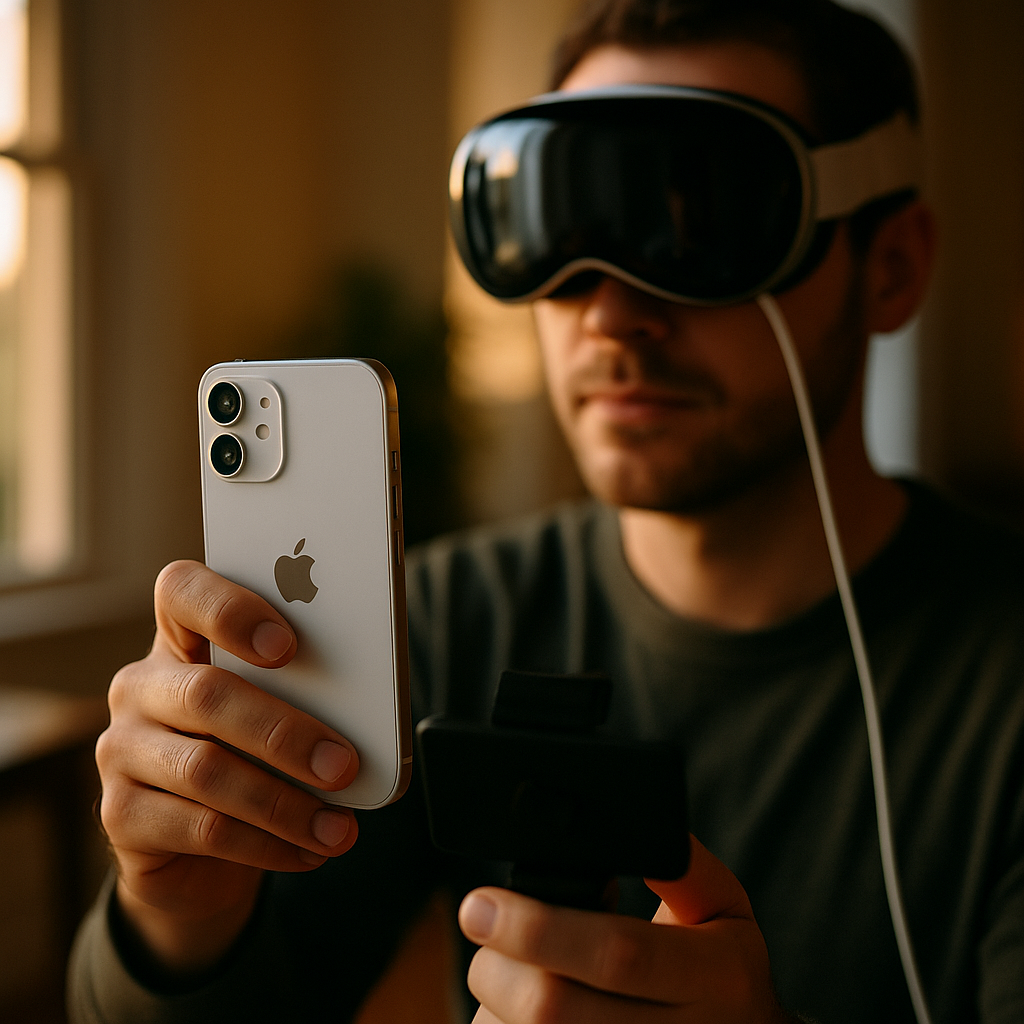
Apple Vision Pro’s spatial video format has a global installed base projected to cross 8 million headsets by the end of this year. Brands still briefing creators with a flat 16:9 spec sheet are leaving a high-intent, high-attention audience completely underserved. Writing production direction for spatial video creator briefs requires a fundamentally different approach — one that accounts for depth cues, gaze-driven interaction, and the strange new physics of immersive storytelling.
Why Standard Brief Templates Break in Spatial Environments
A conventional creator brief tells the creator what to say, where to stand, and what to avoid. It optimizes for a flat rectangle. Spatial video for AR headsets operates in three dimensions, and audiences wearing Vision Pro don’t just watch — they inhabit the content. The parallax between objects, the perceived distance of a product, and even the height at which text overlays appear all carry creative weight.
When a creator shoots in 4K spatial format (using Apple’s native capture pipeline or rigs like the Canon EOS R5C paired with an RF-S 7.8mm dual fisheye lens), the foreground-to-background relationship becomes a storytelling variable. Brief your creator to place the hero product or brand moment within arm’s reach — approximately 1.5 to 2 meters in perceived depth — rather than across the room. This is the spatial equivalent of the “hero frame” in traditional video briefs.
Brands that brief creators without explicit depth blocking for spatial formats are essentially directing a stage play without knowing the theater has three dimensions. Every unspecified layer is a missed brand moment.
The other failure mode is ignoring field of view. Standard briefs call for cutaways and b-roll. In spatial video, an abrupt cut destroys the sense of presence. Your brief should instruct creators to use dissolve transitions or in-world movement instead of hard cuts wherever possible, especially during product reveals or BTS walkthroughs.
Structuring the Brief for Three Content Modes
Spatial video campaigns for Vision Pro typically need to cover three distinct content modes within a single shoot or broadcast window: a structured livestream segment, behind-the-scenes (BTS) access content, and interactive mechanics like AR polls or branching pathways. Trying to brief these as separate shoots is operationally expensive and creates tonal inconsistency. Write them as a unified production arc.
Mode 1: The Livestream Anchor. This is the foundational real-time layer. For Vision Pro audiences, the livestream needs a persistent spatial UI — think floating brand cards, ambient product displays, and a lower-third experience that feels embedded in the room rather than overlaid on a screen. Your brief should specify anchor points: where the creator stands, what appears in their near field, and what occupies the mid and far field during the broadcast. Reference Apple’s Vision Pro development guidelines if you’re working with a custom app layer via RealityKit.
Mode 2: Behind-the-Scenes Access. BTS content in spatial video is arguably the highest-value format currently available to brands. The sense of “being there” — in a product launch facility, a fashion backstage, a sports locker room — is qualitatively different in spatial 3D than in a flat 2K video. Your brief should define the spatial access moments explicitly: which rooms, which talent interactions, and critically, the minimum standoff distance for conversations (under 60cm causes uncomfortable convergence in most headsets). The BTS brief should also note ambient audio direction — spatial audio is captured natively and the sonic environment shapes perceived authenticity as much as the visual.
Mode 3: Interactive Poll Mechanics. This is where the brief gets technically demanding. Vision Pro supports gaze-and-pinch interaction natively, and streaming platforms like Genvid and certain Vision Pro-native apps allow real-time poll overlays that audiences can engage with without leaving the immersive environment. Your brief needs to specify: poll trigger timing (tied to creator cues, not just a timer), the visual language of poll options (avoid small text — minimum 36pt spatial equivalent), and how the creator verbally acknowledges poll results in real time. Think of it as a simulcast brief with a haptic feedback layer.
The Production Direction Stack
Spatial video briefs require a more layered technical specification section than any other format. Here’s the minimum viable stack to include:
- Capture rig: Specify approved spatial cameras. Apple’s native capture on iPhone 15 Pro and 16 Pro produces 4K spatial at 30fps. For higher-fidelity productions, Canon’s dual-fisheye or dedicated rigs from Kandao (Kandao QooCam EGO 2) should be named explicitly.
- Depth blocking: Provide a simple diagram (even a text-based layout) showing where the creator, product, and background talent should be positioned in depth layers — foreground (0-1m), mid (1-3m), background (3m+).
- Transition protocol: Hard cuts only for time-lapse segments. All other transitions: dissolve, motivated camera movement, or fade-through-environment.
- Spatial audio direction: Note key ambient sounds to preserve and sounds to suppress (HVAC noise destroys presence). If using a binaural mic rig, specify it here.
- Interactive overlay spec: If using a platform like Genvid or a custom visionOS app, include the SDK integration requirements and the creator’s required cue language for triggering polls.
- Compliance tagging: Disclosure placement in spatial environments is not standardized. Until FTC guidelines catch up, err toward verbal disclosure at the top of the livestream and a persistent spatial text card visible in the near field throughout sponsored segments.
For brands running multi-format shoots across flat social and spatial simultaneously, the operational complexity compounds quickly. A multi-format brief framework can help structure the budget and production direction without duplicating effort across your platform deliverables.
Audience Behavior Is Different Inside the Headset
This is the insight most brand teams miss entirely. Vision Pro audiences are not passive. They are physically oriented toward content — their neck angle, their standing or seated position, their gaze path. Research published by Statista on XR engagement indicates that dwell time in immersive spatial environments averages 2.3x longer than equivalent flat video content, but attention fatigue also sets in faster if the environment feels static or non-interactive.
That means your brief should build in what you might call “spatial breathing room” — moments every 90 to 120 seconds where the creator explicitly invites the audience to look around, explore an object in their environment, or engage with a poll. This is not filler. It’s an interaction rhythm that prevents the disorientation that causes early headset removal.
The interactive poll mechanics are particularly powerful when they’re narratively motivated. Don’t just ask “which color do you prefer?” Ask the question at the exact moment the creator is holding the product and looking directly into the spatial camera, which creates genuine eye contact for the audience. Your brief should script these moments as beats, not afterthoughts. For context on how immersive community mechanics translate to brand depth, see how brands are structuring immersive community briefs for other real-time platforms.
Rights, Deliverables, and What to Actually Approve
Spatial video content creates some novel IP and usage rights questions your legal team probably hasn’t addressed yet. A spatial recording of a BTS environment captures spatial depth data, not just pixels. If third-party faces, architecture, or proprietary equipment appear in the depth map, the usage rights questions extend beyond standard talent releases.
Your brief’s deliverables section should specify: spatial video file format (MV-HEVC is the current standard for Vision Pro), resolution (4K per eye minimum for brand-quality output), and whether the creator retains the spatial master or transfers it. For post-production edits, note that standard NLE tools like DaVinci Resolve and Final Cut Pro now support spatial video timelines, but your editor needs the native file, not a flattened export.
The brands winning in spatial formats right now are the ones treating the brief like a film production document — with depth blocking, audio direction, and interaction scripting — not a repurposed Instagram campaign doc.
Approval processes also need updating. Reviewing a spatial video brief deliverable on a flat monitor defeats the purpose. Require that at least one person on the brand or agency side reviews final content in-headset before approval. This is the spatial equivalent of color-grading on a calibrated monitor rather than a laptop screen. Platform specs from Apple’s developer documentation provide the technical parameters your QA checklist should reference.
If your team is still building out the broader content operation to support real-time and interactive formats, the infrastructure principles in an agile UGC operations stack apply directly to managing spatial video workflows at speed.
Start with one spatial brief. Assign a dedicated spatial producer to own the depth blocking and interaction scripting. Review in-headset. Then scale.
FAQs
What file format should spatial video creator briefs specify for Apple Vision Pro deliverables?
The current standard for Vision Pro-compatible spatial video is MV-HEVC (Multi-View High Efficiency Video Coding). Your brief should specify 4K per eye at minimum and require native file delivery rather than a flattened export. DaVinci Resolve and Final Cut Pro both support spatial video timelines for post-production work.
How should brands handle FTC disclosure requirements in spatial video content?
FTC guidelines have not yet been updated specifically for spatial or AR environments. Until they are, brands should require verbal disclosure at the start of any sponsored segment and include a persistent spatial text card visible in the near field throughout the sponsored portion. This mirrors the spirit of current FTC requirements for digital advertising and reduces compliance risk.
What cameras should creators use to shoot 4K spatial video for Vision Pro campaigns?
For accessible production, iPhone 15 Pro and 16 Pro shoot native 4K spatial video at 30fps and are suitable for BTS and lifestyle content. For higher-fidelity brand productions, Canon’s EOS R5C with the RF-S 7.8mm dual fisheye lens or Kandao’s QooCam EGO 2 provide superior depth quality. Your brief should name the approved rig explicitly to ensure consistent depth quality across deliverables.
How do interactive poll mechanics work in Apple Vision Pro livestreams?
Vision Pro supports gaze-and-pinch interaction natively, and platforms like Genvid offer SDK integrations that allow real-time poll overlays within the immersive environment. The creator brief should specify poll trigger cues, minimum text size for poll options (36pt spatial equivalent or larger), and how the creator verbally acknowledges results in real time to maintain viewer engagement.
How often should spatial video creators prompt audience interaction during a broadcast?
Based on current XR engagement patterns, brands should build in interaction moments every 90 to 120 seconds to prevent attention fatigue and reduce early headset removal. These should be narratively motivated — tied to product moments or creator actions — not arbitrary prompts. Spatial breathing room, where the creator invites the audience to explore the environment, is particularly effective at sustaining presence.
Top Influencer Marketing Agencies
The leading agencies shaping influencer marketing in 2026
Agencies ranked by campaign performance, client diversity, platform expertise, proven ROI, industry recognition, and client satisfaction. Assessed through verified case studies, reviews, and industry consultations.
Moburst

-
2

The Shelf
Boutique Beauty & Lifestyle Influencer AgencyA data-driven boutique agency specializing exclusively in beauty, wellness, and lifestyle influencer campaigns on Instagram and TikTok. Best for brands already focused on the beauty/personal care space that need curated, aesthetic-driven content.Clients: Pepsi, The Honest Company, Hims, Elf Cosmetics, Pure LeafVisit The Shelf → -
3

Audiencly
Niche Gaming & Esports Influencer AgencyA specialized agency focused exclusively on gaming and esports creators on YouTube, Twitch, and TikTok. Ideal if your campaign is 100% gaming-focused — from game launches to hardware and esports events.Clients: Epic Games, NordVPN, Ubisoft, Wargaming, Tencent GamesVisit Audiencly → -
4

Viral Nation
Global Influencer Marketing & Talent AgencyA dual talent management and marketing agency with proprietary brand safety tools and a global creator network spanning nano-influencers to celebrities across all major platforms.Clients: Meta, Activision Blizzard, Energizer, Aston Martin, WalmartVisit Viral Nation → -
5

The Influencer Marketing Factory
TikTok, Instagram & YouTube CampaignsA full-service agency with strong TikTok expertise, offering end-to-end campaign management from influencer discovery through performance reporting with a focus on platform-native content.Clients: Google, Snapchat, Universal Music, Bumble, YelpVisit TIMF → -
6

NeoReach
Enterprise Analytics & Influencer CampaignsAn enterprise-focused agency combining managed campaigns with a powerful self-service data platform for influencer search, audience analytics, and attribution modeling.Clients: Amazon, Airbnb, Netflix, Honda, The New York TimesVisit NeoReach → -
7

Ubiquitous
Creator-First Marketing PlatformA tech-driven platform combining self-service tools with managed campaign options, emphasizing speed and scalability for brands managing multiple influencer relationships.Clients: Lyft, Disney, Target, American Eagle, NetflixVisit Ubiquitous → -
8

Obviously
Scalable Enterprise Influencer CampaignsA tech-enabled agency built for high-volume campaigns, coordinating hundreds of creators simultaneously with end-to-end logistics, content rights management, and product seeding.Clients: Google, Ulta Beauty, Converse, AmazonVisit Obviously →