


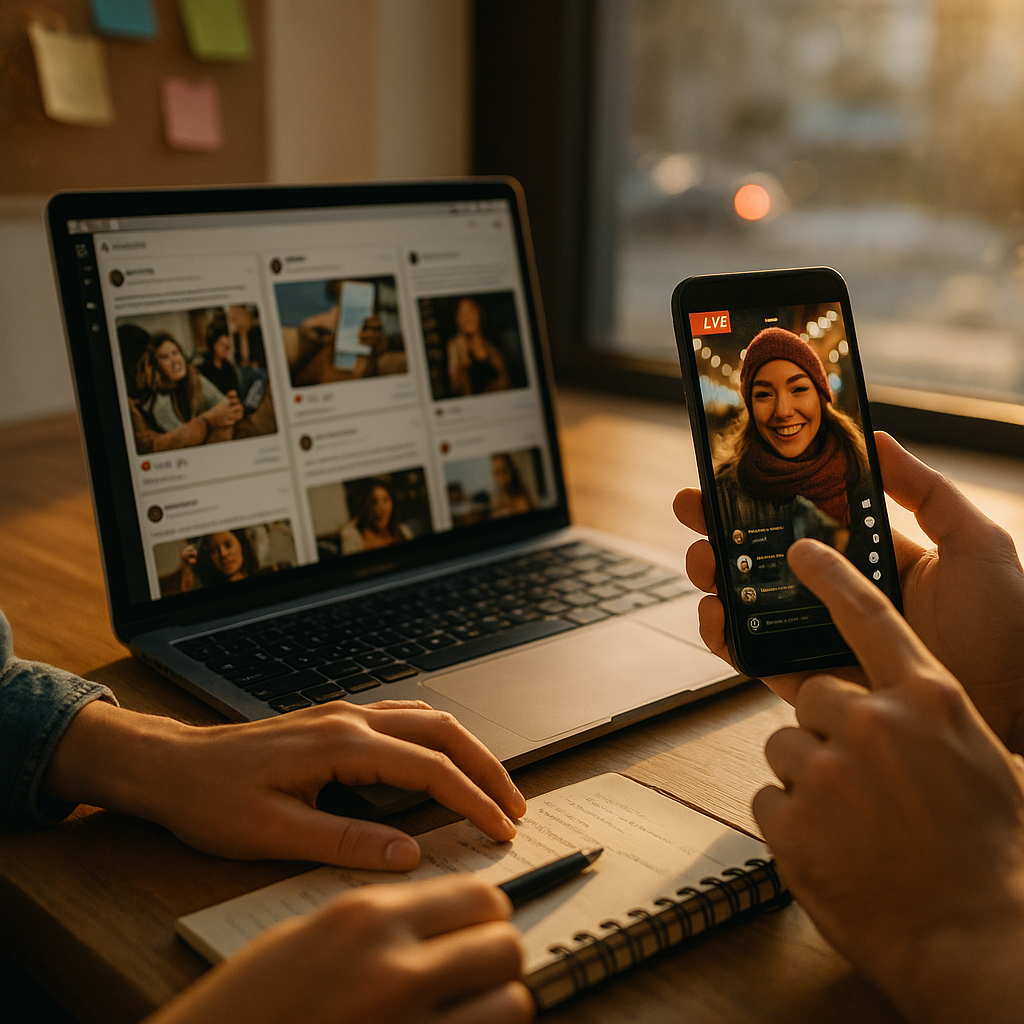
Traditional Creative Workflows Are Costing You the Moment
Brands that still route UGC through a six-week TV-style approval chain are leaving viral windows on the table — sometimes permanently. The average peak engagement window for a trending moment on TikTok lasts under 48 hours, yet most brand creative cycles run 15 to 30 days minimum. That gap is not a content problem. It is an operations problem.
The creator economy’s answer is the agile UGC operations stack: a lean, cross-functional system that compresses brief-to-publish timelines from weeks to hours, while maintaining brand safety, FTC compliance, and creative consistency. Brands building these internal programs are not just moving faster. They are winning cultural relevance that no media buy can replicate.
What an Agile UGC Operations Stack Actually Looks Like
Forget the org chart where social goes through brand, brand goes through legal, legal goes through leadership. An agile UGC stack is structured around pre-approved decision rights, modular creative assets, and standing creator rosters — all designed to eliminate the bottlenecks that kill timeliness.
The core components brands are deploying right now:
- Pre-cleared creator pools: Vetted, contracted creators on standby retainers — typically 10 to 50 per market — with NDAs, usage rights, and rate cards already negotiated.
- Modular brief libraries: Templated briefs organized by content type (reaction, haul, vox-pop, livestream) that can be activated and customized in under 30 minutes. Check out how brands structure 60-second approval workflows for meme-driven content.
- AI-assisted ideation layers: Tools like Jasper, Perplexity, and custom GPT instances that surface trend signals and generate first-draft briefs based on real-time social listening data.
- Delegated approval authority: Pre-defined tiers where a social lead can approve content under a certain risk threshold without escalating to legal or brand leadership.
- Rights management automation: Platforms like TINT, Bazaarvoice, or Billo that handle UGC rights acquisition at scale, so the legal clearance step does not become the bottleneck post-capture.
The operational design principle here is simple: remove sequential dependencies wherever possible, and replace them with parallel workstreams. While one creator is shooting, another brief is being drafted. While legal is reviewing one asset, the next wave is already in production.
The brands winning real-time culture are not the ones with the biggest creative budgets. They are the ones with the most pre-built operational infrastructure — because speed is now a brand strategy, not just a production goal.
Reacting to Viral Moments Without Burning the Brand
Speed without guardrails is how brands end up on the wrong side of a Twitter ratio. The tension inside agile UGC programs is managing creative velocity alongside brand safety — and that tension is very real. A moment that looks like a win at 9am can look like a crisis by noon if the cultural context shifts.
Leading brand teams are solving this with what internal ops leads at consumer goods companies sometimes call a “green/yellow/red moment classification” system. Green moments (sports wins, entertainment releases, benign memes) get fast-tracked with minimal review. Yellow moments (polarizing cultural events, sensitive social topics) trigger a secondary review layer. Red moments get a hard stop regardless of trend velocity.
This framework pairs well with pre-authorized content templates. For reactive UGC tied to major sports events, for example, many brands now maintain standing reactive brief templates ready to deploy within minutes of a key moment — goals scored, upsets, viral player moments.
The FTC compliance layer cannot be shortcut, even in reactive content. The FTC’s endorsement guidelines apply whether a creator posts in 60 seconds or 60 days. Disclosure language must be baked into every pre-approved brief template, not added as an afterthought after the content goes live.
Regional Fan Nuances: Why One Roster Won’t Cut It
Here is where most brands underinvest. A viral moment in São Paulo reads differently than the same moment in Seoul or Chicago. Regional UGC programs require localized creator rosters, culturally-aware briefs, and market-specific approval leads who understand the nuance — not a centralized global team trying to localize on the fly.
Brands running sophisticated regional programs typically segment their creator pools by metro area or cultural region, not just country. This matters particularly for fandom content, where regional pride and local references are the currency of authenticity. Participatory fandom content briefs built for local voices consistently outperform generic national templates on engagement rate and comment sentiment.
The operational implication: regional community managers need some level of brief approval authority at the local level. A global brand social lead approving content in New York cannot move fast enough to capture a local cultural moment in Osaka at 11pm JST. Distributed decision rights are not optional — they are the architecture.
Platforms like Sprout Social and Brandwatch now offer regional social listening dashboards that surface localized trend spikes before they hit global virality, giving regional ops leads a 2 to 6 hour lead time to activate before the moment peaks.
Live Events as the Stress Test for Your Stack
Live events are where agile UGC operations either prove themselves or collapse. A championship game, a brand-sponsored concert, a product launch livestream — these compress every operational dependency into a real-time pressure environment.
Brands running well-structured live event programs deploy dedicated “UGC commanders” on-site or on-call: someone whose only job during the event window is activating creators, reviewing incoming assets, and clearing content for publish. This person is not also running the event Instagram or managing influencer logistics. Focus is the operational principle.
For simulcast and live reaction content, where the brand is extending the cultural moment across creator channels in real time, the brief structure is necessarily different from static UGC. Explore how live simulcast campaign briefs are structured to handle the speed and unpredictability of live events while keeping creators on-brand.
Measurement during live events also requires pre-configuration. You cannot build your attribution model after the fact when content has a 4-hour peak window. Pixel placements, UTM structures, and conversion tracking benchmarks need to be live before the event starts.
Live events are not just content opportunities. They are operational audits. Every gap in your UGC stack — slow approvals, unclear rights, no standing creator roster — surfaces under live conditions with zero time to fix it.
Building the Internal Program vs. Staying Agency-Dependent
Most brands arrive at agile UGC through agencies. The problem is that agency-mediated UGC programs inherit the agency’s operational tempo, not the brand’s. When a viral window opens at 2am on a Saturday, your agency account team is not online.
The business case for internalization is increasingly clear. HubSpot research consistently shows that in-house content teams produce at lower per-unit cost and with faster revision cycles than agency counterparts. The agile UGC context amplifies this advantage significantly because the primary cost driver is speed, not production quality.
What internalization requires: a dedicated UGC program manager (not a generalist social media manager), a contracted creator roster with pre-negotiated terms, a brief library maintained as a living document, and a tech stack that includes at minimum a social listening tool, a creator management platform, and a rights management solution.
For brands building multi-platform creator programs, the internal ops model also provides the flexibility to adapt briefs rapidly across TikTok, Instagram, and YouTube Shorts without waiting for an agency to re-scope the engagement.
The hybrid model — internal program management with an agency on call for production overflow and compliance review — is where most mid-to-large brands land after their first 12 months of internalization. It preserves operational speed while managing capacity risk.
For local and regional commerce moments specifically, localized creator brief frameworks are becoming a core internal asset, not an agency deliverable. The brands treating brief infrastructure as proprietary IP are the ones scaling fastest.
Start with one vertical: pick the content type (live events, reactive moments, or regional fandom) where your current workflow is slowest, document every approval dependency, eliminate the ones that do not require legal or brand sign-off, and build your first templated brief from that stripped-down process. That is your proof of concept.
Frequently Asked Questions
What is an agile UGC operations stack?
An agile UGC operations stack is an internal system of pre-vetted creator rosters, templated briefs, delegated approval authority, and supporting technology that allows brand teams to produce and publish user-generated content in hours rather than weeks. It is designed to replace sequential, broadcast-style approval workflows with parallel, speed-optimized processes.
How do brands maintain brand safety when moving at high speed?
Leading brands use a tiered moment classification system (often categorized as green, yellow, and red) to determine which trending moments can be fast-tracked and which require additional review. Pre-approved content templates, delegated approval tiers, and embedded FTC disclosure language in all brief templates are the structural safeguards that enable speed without sacrificing compliance.
How large does a standing creator roster need to be for a reactive UGC program?
For a single market, most brands find that a roster of 10 to 50 creators across content tiers (nano to mid-tier) provides sufficient capacity for reactive and live event programming. Rosters should be segmented by content type specialty (lifestyle, sports reaction, vox-pop, etc.) and by regional or metro market for localized activation.
What technology tools are essential for an internal UGC ops program?
The minimum viable tech stack includes a social listening platform (such as Brandwatch or Sprout Social) for trend detection, a creator management platform (such as Grin, Aspire, or Creator.co) for roster management and brief distribution, a UGC rights management solution (such as TINT or Bazaarvoice), and an AI-assisted brief generation tool for rapid content templating.
Should brands build UGC programs in-house or work with agencies?
Both models have merit depending on organizational maturity and budget. Agencies provide creator networks and production expertise but often cannot match the speed required for real-time UGC. In-house programs offer faster operational cycles and lower per-unit costs at scale, but require dedicated headcount and infrastructure investment. Most experienced brands move toward a hybrid model: internal program management with agency support for overflow production and compliance review.
Top Influencer Marketing Agencies
The leading agencies shaping influencer marketing in 2026
Agencies ranked by campaign performance, client diversity, platform expertise, proven ROI, industry recognition, and client satisfaction. Assessed through verified case studies, reviews, and industry consultations.
Moburst

-
2

The Shelf
Boutique Beauty & Lifestyle Influencer AgencyA data-driven boutique agency specializing exclusively in beauty, wellness, and lifestyle influencer campaigns on Instagram and TikTok. Best for brands already focused on the beauty/personal care space that need curated, aesthetic-driven content.Clients: Pepsi, The Honest Company, Hims, Elf Cosmetics, Pure LeafVisit The Shelf → -
3

Audiencly
Niche Gaming & Esports Influencer AgencyA specialized agency focused exclusively on gaming and esports creators on YouTube, Twitch, and TikTok. Ideal if your campaign is 100% gaming-focused — from game launches to hardware and esports events.Clients: Epic Games, NordVPN, Ubisoft, Wargaming, Tencent GamesVisit Audiencly → -
4

Viral Nation
Global Influencer Marketing & Talent AgencyA dual talent management and marketing agency with proprietary brand safety tools and a global creator network spanning nano-influencers to celebrities across all major platforms.Clients: Meta, Activision Blizzard, Energizer, Aston Martin, WalmartVisit Viral Nation → -
5

The Influencer Marketing Factory
TikTok, Instagram & YouTube CampaignsA full-service agency with strong TikTok expertise, offering end-to-end campaign management from influencer discovery through performance reporting with a focus on platform-native content.Clients: Google, Snapchat, Universal Music, Bumble, YelpVisit TIMF → -
6

NeoReach
Enterprise Analytics & Influencer CampaignsAn enterprise-focused agency combining managed campaigns with a powerful self-service data platform for influencer search, audience analytics, and attribution modeling.Clients: Amazon, Airbnb, Netflix, Honda, The New York TimesVisit NeoReach → -
7

Ubiquitous
Creator-First Marketing PlatformA tech-driven platform combining self-service tools with managed campaign options, emphasizing speed and scalability for brands managing multiple influencer relationships.Clients: Lyft, Disney, Target, American Eagle, NetflixVisit Ubiquitous → -
8

Obviously
Scalable Enterprise Influencer CampaignsA tech-enabled agency built for high-volume campaigns, coordinating hundreds of creators simultaneously with end-to-end logistics, content rights management, and product seeding.Clients: Google, Ulta Beauty, Converse, AmazonVisit Obviously →