


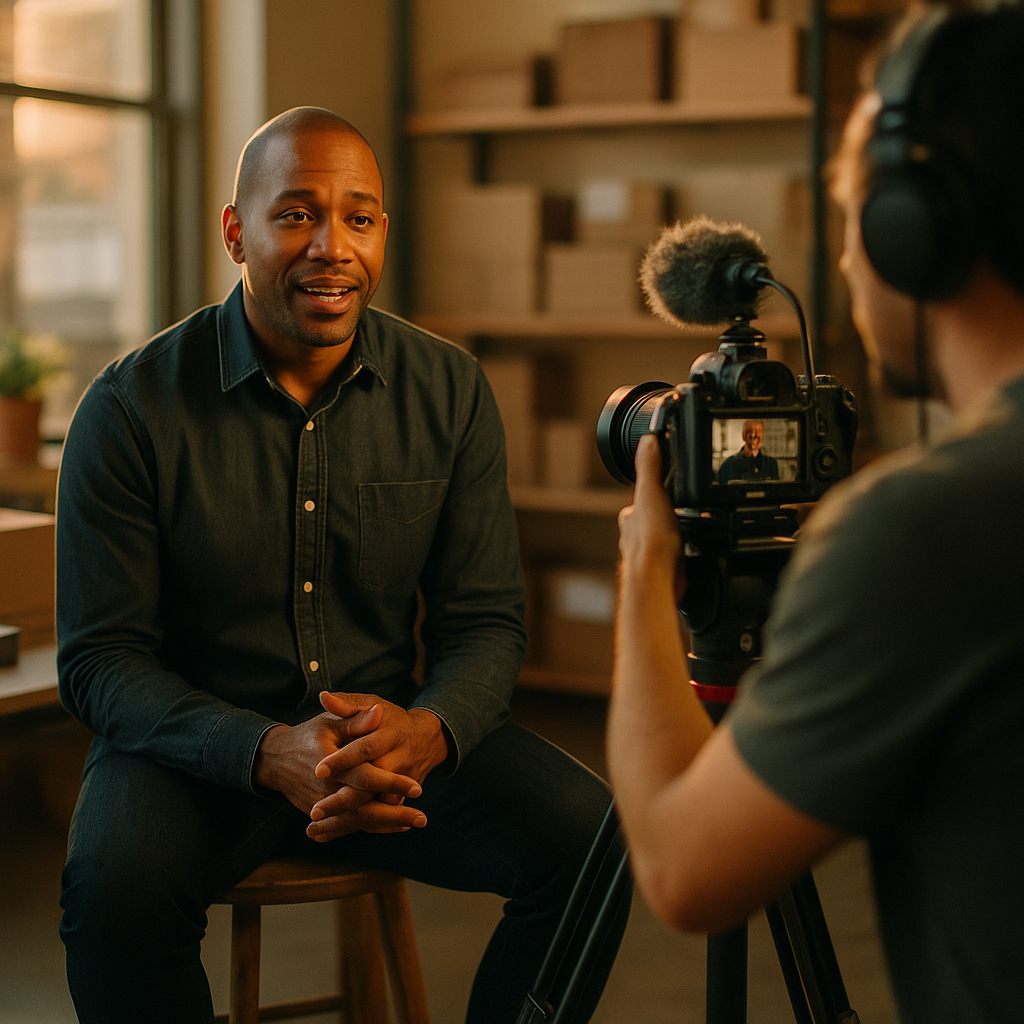
Attention spans didn’t shrink. Patience for bad storytelling did. Brands now have roughly 90 seconds to convince a scrolling viewer that a founder’s journey matters — and the origin-to-launch micro-documentary format is quietly becoming the highest-converting way to do it. Compress a two-year founder grind into a minute and a half, and you get something raw, credible, and shareable. Stretch it into a five-minute brand film, and you get something nobody finishes.
This isn’t a trend chasing nostalgia for garage startups. It’s a response to how audiences now vet brands before they buy: fast, skeptical, and looking for proof of a real human behind the product.
Why 90 Seconds Beats a Full-Length Brand Documentary
Longer isn’t more persuasive anymore. According to eMarketer viewership data trends, completion rates drop sharply after the 60-second mark on short-form platforms, and brand-produced content faces even steeper attrition than creator-native content. A polished, agency-shot four-minute founder story might win a Cannes shortlist. It will not survive a TikTok feed.
The 90-second window forces discipline. You can’t include every pivot, every rejection, every investor “no.” You have to pick the single emotional beat that makes the founder’s journey legible in one watch. That constraint is the format’s superpower, not its limitation.
A founder story that takes five minutes to build trust has already lost the viewer. A founder story that builds trust in 90 seconds becomes the trust.
Compare this to the discipline already proven in travel content, where origin-to-departure micro-documentaries compress an entire trip planning arc into a booking-driving narrative. The product category is different. The mechanism — compression creating urgency and intimacy — is identical.
The Four-Beat Arc That Actually Works
Every origin-to-launch micro-doc that performs well follows some version of the same structural skeleton. Skip a beat and the story feels incomplete, even if the footage is beautiful.
- The spark (0–15 seconds): The problem, frustration, or gap that started everything. This needs to be specific, not generic (“I couldn’t find a protein bar without seed oils” beats “I wanted to make healthier snacks”).
- The grind (15–45 seconds): Failed prototypes, rejected pitches, the unglamorous middle. This is where credibility gets built. Skip it and the story feels like an ad.
- The turn (45–70 seconds): The moment something clicked — a formula that worked, a customer reaction, a signed retail deal. This is the emotional payoff.
- The launch (70–90 seconds): The product, in market, in someone’s hands. Close on availability, not on sentiment alone.
This mirrors the logic behind countdown-to-launch teaser structures, which also rely on a four-beat compression to build anticipation before conversion. The difference here is that the origin-to-launch format sells the founder’s credibility first and the product second. Product-led categories — supplements, beauty, food and beverage — respond especially well to this sequencing because skepticism about ingredient claims runs high.
Who Should Actually Be On Camera?
Founder-led is the default assumption, and it’s usually right. But not every founder is a compelling on-camera narrator, and forcing one who freezes up in front of a lens will tank the whole piece. Consider these alternatives:
- A co-founder or early employee who witnessed the grind but narrates with more ease.
- A creator embedded in the founder’s world for a week, shooting observational footage rather than staged interview clips.
- A hybrid format where the founder speaks in voiceover while a creator or production team handles the visual storytelling.
The employee takeover format offers a useful parallel here — audiences trust people who were “in the room” almost as much as they trust the founder, sometimes more, because employees have less obvious incentive to oversell.
Budget Reality: You Don’t Need a Production Crew
Here’s the uncomfortable truth for brand marketers used to five-figure video budgets: the best origin-to-launch micro-docs often look intentionally unpolished. Phone-shot footage, real workspace clutter, actual old prototypes pulled from a drawer — these signal authenticity in a way that a lit soundstage cannot.
That doesn’t mean “no production value.” It means the production value should go into editing, pacing, and sound design rather than lighting rigs. A skilled editor cutting real footage to a tight 90-second arc will consistently outperform a beautifully shot but slowly paced five-minute film.
Budget allocation that tends to work:
- 60% editing and post (pacing, sound, captions, color)
- 20% capture (even a single afternoon with a creator and a gimbal)
- 20% paid amplification once the piece is validated organically
This flips the traditional agency model, where capture eats most of the budget and editing gets whatever’s left. For origin-to-launch content, that ratio is backwards.
Where This Format Fits in the Funnel
Origin-to-launch micro-docs aren’t top-of-funnel awareness plays in the traditional sense, and they’re not bottom-of-funnel conversion assets either. They live in a middle zone — call it “trust-of-funnel.” The viewer already knows the category exists. What they don’t know yet is whether this specific brand is worth their money.
That positioning matters for measurement. Don’t judge these assets purely on click-through rate. Judge them on:
- Save and share rate (a proxy for narrative resonance)
- Comment sentiment (are people asking “where can I buy this” or debating the story itself?)
- Branded search lift in the 48 hours following a push
- Downstream conversion when retargeted with a direct product ad
Brands running retail launches have found success pairing an origin-to-launch doc with a follow-up conversion asset, similar to the sequencing described in the two-creator handoff format, where one piece of content builds trust and a second closes the sale. The origin doc does the emotional heavy lifting; a separate, shorter demo or offer-driven clip does the converting.
Compliance: The Part Everyone Forgets Until Legal Calls
Founder stories feel personal, which is exactly why brands get sloppy with disclosure. If a creator, agency, or paid partner is involved in producing or narrating the piece, FTC endorsement guidance still applies even when the “creator” is technically an employee or contractor speaking about their own company.
Get specific about a few things before you shoot:
- If any statistic about the founder’s journey (funding raised, time to profitability, retail placements) will appear on screen, have it fact-checked and sourced. These claims get screenshotted and fact-checked by skeptical commenters faster than you’d expect.
- If a third-party creator is telling the founder’s story rather than the founder, disclosure requirements under FTC endorsement guidelines apply in full.
- If the piece runs as paid media, platform-level disclosure tools (Meta’s branded content tags, TikTok’s paid partnership label) need to be applied even though the content doesn’t look like a traditional ad.
The more “real” a piece of content feels, the more scrutiny it invites when something in it turns out to be exaggerated. Authenticity is a promise, and audiences hold brands to it.
This same lesson shows up in the mockumentary format discourse, where blurred lines between staged and authentic content have already burned several brands publicly. Origin-to-launch docs are non-fiction by design, which raises the stakes on accuracy even higher.
Sourcing Claims Deserve Their Own Scrutiny
If the founder story touches on sourcing, manufacturing, or ingredient origin — a common beat in food, beauty, and wellness launches — treat those claims with the same rigor covered in product origin mapping guidance. A founder saying “we source everything from small family farms” on camera needs to be provably true, not aspirationally true.
Distribution: One Cut Is Never Enough
A common mistake: treating the 90-second cut as the only deliverable. In practice, brands get far more value from shooting a single day of footage and cutting three or four versions:
- The full 90-second origin-to-launch arc for organic social and paid amplification
- A 15-second teaser isolating just “the spark” beat, used to drive traffic to the full piece
- A vertical-native cut versus a horizontal cut for CTV or YouTube pre-roll, following the logic in vertical-horizontal hybrid briefs
- A long-form behind-the-scenes cut (three to five minutes) for the brand’s owned YouTube channel or investor-facing content
This “shoot once, cut many” approach dramatically improves the cost-per-asset math. Brands spending on a single-purpose shoot are leaving distribution value on the table.
Measuring Success Without Fooling Yourself
It’s tempting to declare victory because a founder video got emotional comments. Comments aren’t revenue. Before greenlighting a bigger budget for a follow-up series, validate against a few honest benchmarks:
- Did branded search volume move in the week following the launch, measurable via Google’s own tracking tools?
- Did the piece get organic pickup beyond the brand’s own following (shares, stitches, duets)?
- Did retargeted audiences who watched 75%+ convert at a higher rate than cold audiences?
Tools like Sprout Social or platform-native analytics can isolate these signals, but the discipline matters more than the tool. Set the benchmark before the launch, not after, so you’re not rationalizing a mediocre result into a win.
Next step: before your next product or founder story hits a camera, storyboard it against the four-beat arc first, then shoot for coverage, not for a script. The edit — not the interview — is where this format either earns trust or wastes it.
FAQs
What makes the origin-to-launch micro-documentary format different from a standard brand video?
It compresses a founder’s real journey into a strict 90-second, four-beat narrative arc rather than a polished brand message, prioritizing authenticity and pacing over production gloss.
Does the founder need to appear on camera personally?
No. Co-founders, early employees, or an embedded creator can narrate or appear instead, as long as the storytelling feels credible and the person has genuine firsthand knowledge of the journey.
How much should a brand budget for this format?
Most successful versions spend the majority of budget on editing and pacing rather than capture equipment, since raw, lightly produced footage often outperforms heavily lit, agency-style shoots.
Are there FTC disclosure requirements for founder story content?
Yes, if a third-party creator, paid partner, or contractor is involved in telling the story, FTC endorsement guidelines and platform-level paid partnership labels still apply, even though the content feels personal rather than promotional.
How should brands measure success for this format?
Track save and share rates, comment sentiment, branded search lift, and downstream conversion from retargeted audiences rather than relying solely on click-through rate.
FAQs
What makes the origin-to-launch micro-documentary format different from a standard brand video?
It compresses a founder’s real journey into a strict 90-second, four-beat narrative arc rather than a polished brand message, prioritizing authenticity and pacing over production gloss.
Does the founder need to appear on camera personally?
No. Co-founders, early employees, or an embedded creator can narrate or appear instead, as long as the storytelling feels credible and the person has genuine firsthand knowledge of the journey.
How much should a brand budget for this format?
Most successful versions spend the majority of budget on editing and pacing rather than capture equipment, since raw, lightly produced footage often outperforms heavily lit, agency-style shoots.
Are there FTC disclosure requirements for founder story content?
Yes, if a third-party creator, paid partner, or contractor is involved in telling the story, FTC endorsement guidelines and platform-level paid partnership labels still apply, even though the content feels personal rather than promotional.
How should brands measure success for this format?
Track save and share rates, comment sentiment, branded search lift, and downstream conversion from retargeted audiences rather than relying solely on click-through rate.
Top Influencer Marketing Agencies
The leading agencies shaping influencer marketing in 2026
Agencies ranked by campaign performance, client diversity, platform expertise, proven ROI, industry recognition, and client satisfaction. Assessed through verified case studies, reviews, and industry consultations.
Moburst

-
2

The Shelf
Boutique Beauty & Lifestyle Influencer AgencyA data-driven boutique agency specializing exclusively in beauty, wellness, and lifestyle influencer campaigns on Instagram and TikTok. Best for brands already focused on the beauty/personal care space that need curated, aesthetic-driven content.Clients: Pepsi, The Honest Company, Hims, Elf Cosmetics, Pure LeafVisit The Shelf → -
3

Audiencly
Niche Gaming & Esports Influencer AgencyA specialized agency focused exclusively on gaming and esports creators on YouTube, Twitch, and TikTok. Ideal if your campaign is 100% gaming-focused — from game launches to hardware and esports events.Clients: Epic Games, NordVPN, Ubisoft, Wargaming, Tencent GamesVisit Audiencly → -
4

Viral Nation
Global Influencer Marketing & Talent AgencyA dual talent management and marketing agency with proprietary brand safety tools and a global creator network spanning nano-influencers to celebrities across all major platforms.Clients: Meta, Activision Blizzard, Energizer, Aston Martin, WalmartVisit Viral Nation → -
5

The Influencer Marketing Factory
TikTok, Instagram & YouTube CampaignsA full-service agency with strong TikTok expertise, offering end-to-end campaign management from influencer discovery through performance reporting with a focus on platform-native content.Clients: Google, Snapchat, Universal Music, Bumble, YelpVisit TIMF → -
6

NeoReach
Enterprise Analytics & Influencer CampaignsAn enterprise-focused agency combining managed campaigns with a powerful self-service data platform for influencer search, audience analytics, and attribution modeling.Clients: Amazon, Airbnb, Netflix, Honda, The New York TimesVisit NeoReach → -
7

Ubiquitous
Creator-First Marketing PlatformA tech-driven platform combining self-service tools with managed campaign options, emphasizing speed and scalability for brands managing multiple influencer relationships.Clients: Lyft, Disney, Target, American Eagle, NetflixVisit Ubiquitous → -
8

Obviously
Scalable Enterprise Influencer CampaignsA tech-enabled agency built for high-volume campaigns, coordinating hundreds of creators simultaneously with end-to-end logistics, content rights management, and product seeding.Clients: Google, Ulta Beauty, Converse, AmazonVisit Obviously →