


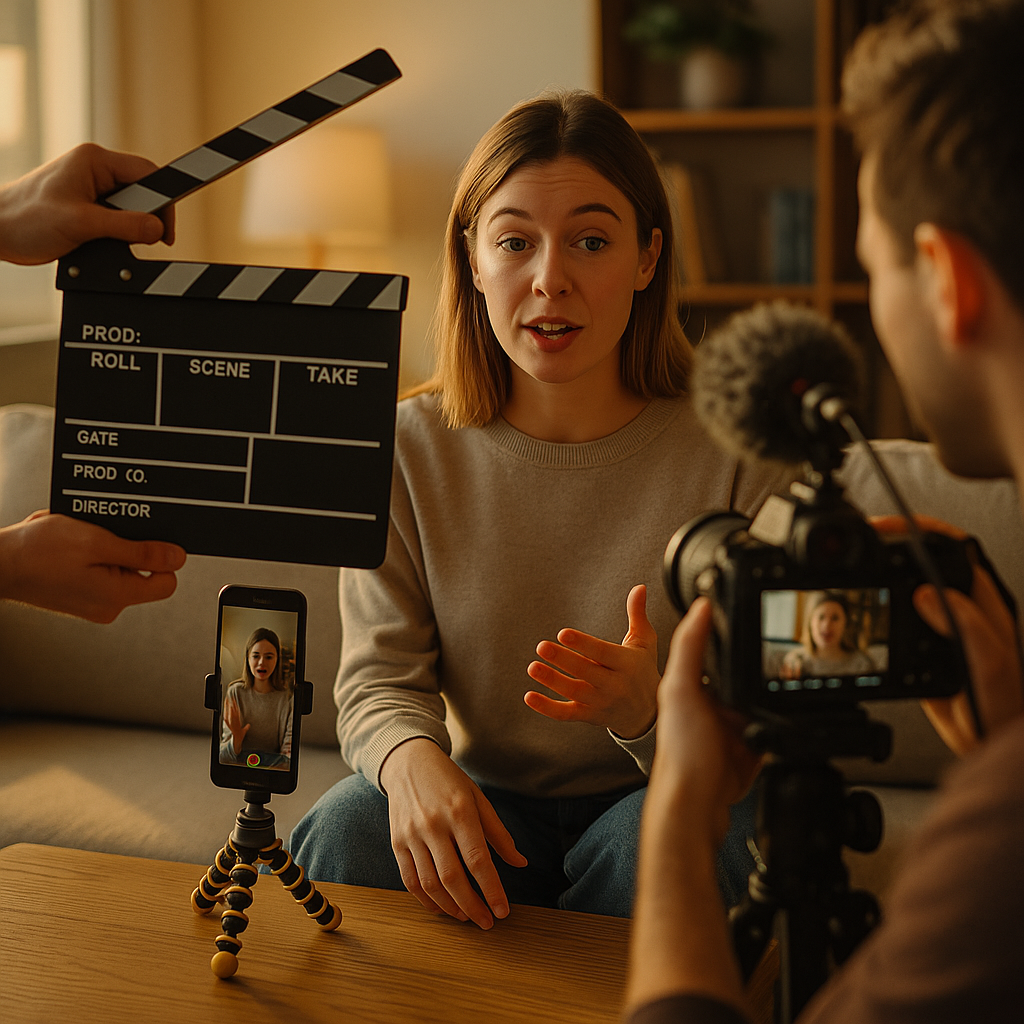
Scripted content is dying a slow death on TikTok, and everyone knows it. So brands got clever: they started faking the fake. The mockumentary format — talking-head interviews, shaky b-roll, faux-serious narration about absurd or mundane subjects — is quietly becoming one of the highest-performing creative styles on the platform, precisely because it mocks the polish audiences already distrust.
Why “Fake Real” Beats “Actually Real” Right Now
Here’s the paradox brands are exploiting. Audiences say they want authenticity. But raw, unstructured authenticity often underperforms because it lacks narrative tension. A mockumentary borrows the visual grammar of authenticity, the talking-head confessional, the “expert” interview cutaway, the dramatic pause before a reveal, and applies it to something deliberately silly or hyper-specific. The result reads as self-aware rather than staged.
Think of the format as a wink to the camera. Viewers know it’s a bit. That’s the entire appeal. It signals the brand isn’t precious about polish or self-image, which is a currency Gen Z and younger millennial audiences reward heavily. A 2024 eMarketer analysis of short-form engagement patterns found that content perceived as “in on the joke” consistently outperformed straightforward product demos in completion rate and shares.
The mockumentary format works because it doesn’t ask viewers to believe anything — it asks them to enjoy the performance of believing, which removes the skepticism tax most branded content pays.
What Does a Mockumentary Brief Actually Look Like?
This isn’t just “hire a funny creator and hope.” The strongest examples follow a loose but recognizable documentary skeleton:
- Cold open with stakes — a dramatic statement about a low-stakes problem (“This is the story of the worst Tuesday in office history”).
- Talking-head interviews — the creator addresses camera as if being interviewed for a news segment or true-crime doc.
- Faux b-roll — slow pans over “evidence,” product shots framed like crime-scene photos.
- An “expert” cutaway — a second creator plays a specialist, psychologist, historian, whoever fits the bit.
- A deadpan resolution — the problem gets solved by the product, delivered with zero irony in tone despite total irony in premise.
Brands like Liquid Death, Duolingo, and Ryanair’s social team have leaned into this tonally adjacent chaos for years. What’s new in this cycle is the specific documentary framing device, borrowed from true-crime parody and workplace mockumentaries like The Office, being applied deliberately to product marketing rather than general brand humor.
The ROI Case: Attention Is Cheaper Here
Mockumentary content tends to outperform on two metrics that matter most to media buyers: watch time and share rate. Because the format relies on a slow reveal, viewers stay through the setup to get the payoff. That’s structurally different from a straight ad, which front-loads the offer and loses attention immediately after.
Agencies running paid amplification behind organic mockumentary content report lower CPMs on Spark Ads because the underlying watch-through rate improves the algorithm’s confidence in the content. TikTok’s own ad guidance has repeatedly emphasized that native-feeling creative, content that doesn’t look like an ad, drives stronger delivery efficiency than polished commercial cuts.
There’s also a production cost angle worth stating plainly: mockumentary content is cheap. No sets. No lighting rigs. A creator, a phone, a “location” that’s really just their kitchen, and a script that leans on tone rather than effects. Compare that to the budget required for a traditional branded video shoot and the math gets very favorable, very fast.
Where Brands Get It Wrong
The format has a failure mode, and it’s common: brands write jokes instead of writing documentaries. A mockumentary only works if the tone stays deadpan. The moment a script winks too hard, or the “expert” breaks character to plug a discount code directly to camera, the illusion collapses and it just becomes another skit ad.
The second failure mode is disclosure sloppiness. Because mockumentary content intentionally blurs the line between real and staged, brands sometimes get lazy about labeling it as sponsored. That’s a compliance problem, not a creative one, and it’s an easy one to avoid. The FTC’s endorsement guidance doesn’t care how clever your format is; if a creator is paid or gifted, the disclosure rules apply regardless of genre. Bake #ad or “Paid Partnership” into the doc-style framing itself, maybe as a lower-third caption that matches the aesthetic, so it doesn’t feel bolted on.
This is the same discipline brands need across most “trust-coded” formats right now, whether that’s confession-booth style videos or group chat screenshot content. The more a format borrows the visual language of unpaid, organic content, the more careful the disclosure has to be.
Casting Matters More Than the Script
A mediocre mockumentary script performed by a creator with strong deadpan delivery beats a brilliant script performed by someone who can’t hold a straight face. This format lives and dies on comedic timing, specifically the ability to deliver absurd lines with the gravity of a news anchor.
Brands scouting creators for this format should look at existing content for one specific signal: can this person do a “concerned expert” voice without breaking? Improv and sketch-background creators tend to overperform here relative to their follower count, because the skill transfers directly. Micro-influencers with theater or comedy backgrounds are an underpriced asset in this specific lane; the format rewards performance skill over reach.
This is also a format where pairing two creators, one as “subject,” one as “interviewer” or “expert,” tends to outperform solo talking-head videos. The back-and-forth mimics real interview rhythm, which sells the bit harder.
Where This Format Sits in the Broader Trust-Content Landscape
Mockumentary content is really a subgenre of a larger shift happening across TikTok: brands adopting the visual codes of unscripted, low-production content because audiences have gotten very good at pattern-matching “ad” versus “real.” That same logic underpins formats like one-take challenge demos, voiceover confessional videos, and annotated screen-record content.
What separates mockumentary from those neighboring formats is intent. Confessionals and screen-recordings ask viewers to believe the content is genuinely unscripted. Mockumentary content doesn’t ask for belief at all, it asks for participation in a shared joke. That’s a lower trust bar to clear, which is exactly why it’s forgiving for brands still nervous about full authenticity plays.
Sprout Social’s consumer trends research has consistently found that humor and relatability outperform polish as brand content drivers on short-form platforms, particularly among audiences under 35. Mockumentary content is essentially the packaging of that insight into a repeatable production format.
A Simple Brief Template Worth Stealing
For teams ready to test this, keep the brief loose but structured:
- Pick a mundane product truth (a common complaint, an odd use case, a weird feature) and treat it like breaking news.
- Write a three-act arc: setup, “investigation,” resolution. Sixty to ninety seconds total.
- Cast for deadpan delivery, not follower count.
- Build disclosure into the visual style, not as an afterthought caption.
- Let the creator ad-lib the “expert” lines. Scripted absurdity often reads less funny than improvised absurdity performed straight.
Run it organically first. If watch-through and shares clear your benchmark, push paid dollars behind the top performer using Spark Ads rather than building a separate commercial cut. The whole value of the format collapses the moment it looks like a traditional ad.
FAQs
Frequently Asked Questions
What is mockumentary-style creator content?
It’s short-form video that borrows documentary conventions, talking-head interviews, dramatic narration, faux b-roll, to present a brand message as a comedic, self-aware “investigation” rather than a straightforward ad.
Why is this format performing well on TikTok specifically?
TikTok’s algorithm rewards watch-through and shares, and the slow-reveal structure of documentary storytelling keeps viewers watching longer than a front-loaded ad pitch typically does.
Does mockumentary content still need FTC disclosure?
Yes. Paid or gifted creator content requires clear disclosure regardless of format or tone. Brands should build labeling into the visual style so it doesn’t undercut the bit.
What kind of creators work best for this format?
Creators with comedy or improv backgrounds who can deliver absurd lines with a straight face tend to outperform higher-follower creators without that specific skill.
Is mockumentary content expensive to produce?
No. It’s one of the cheaper formats to run, typically requiring a creator, a phone, and a tight script rather than sets, lighting, or post-production effects.
How is this different from other “authentic-style” creator formats?
Formats like confession booths or screen-recordings ask viewers to believe the content is genuinely unscripted. Mockumentary content doesn’t ask for belief, it invites viewers into an obvious, shared joke, which lowers the trust risk if the bit doesn’t land perfectly.
Test one mockumentary concept against your best-performing straightforward ad this quarter, same product, same budget, and compare watch-through rate. The format either earns its place in your content mix on data, or it doesn’t, and that answer usually comes back fast.
Top Influencer Marketing Agencies
The leading agencies shaping influencer marketing in 2026
Agencies ranked by campaign performance, client diversity, platform expertise, proven ROI, industry recognition, and client satisfaction. Assessed through verified case studies, reviews, and industry consultations.
Moburst

-
2

The Shelf
Boutique Beauty & Lifestyle Influencer AgencyA data-driven boutique agency specializing exclusively in beauty, wellness, and lifestyle influencer campaigns on Instagram and TikTok. Best for brands already focused on the beauty/personal care space that need curated, aesthetic-driven content.Clients: Pepsi, The Honest Company, Hims, Elf Cosmetics, Pure LeafVisit The Shelf → -
3

Audiencly
Niche Gaming & Esports Influencer AgencyA specialized agency focused exclusively on gaming and esports creators on YouTube, Twitch, and TikTok. Ideal if your campaign is 100% gaming-focused — from game launches to hardware and esports events.Clients: Epic Games, NordVPN, Ubisoft, Wargaming, Tencent GamesVisit Audiencly → -
4

Viral Nation
Global Influencer Marketing & Talent AgencyA dual talent management and marketing agency with proprietary brand safety tools and a global creator network spanning nano-influencers to celebrities across all major platforms.Clients: Meta, Activision Blizzard, Energizer, Aston Martin, WalmartVisit Viral Nation → -
5

The Influencer Marketing Factory
TikTok, Instagram & YouTube CampaignsA full-service agency with strong TikTok expertise, offering end-to-end campaign management from influencer discovery through performance reporting with a focus on platform-native content.Clients: Google, Snapchat, Universal Music, Bumble, YelpVisit TIMF → -
6

NeoReach
Enterprise Analytics & Influencer CampaignsAn enterprise-focused agency combining managed campaigns with a powerful self-service data platform for influencer search, audience analytics, and attribution modeling.Clients: Amazon, Airbnb, Netflix, Honda, The New York TimesVisit NeoReach → -
7

Ubiquitous
Creator-First Marketing PlatformA tech-driven platform combining self-service tools with managed campaign options, emphasizing speed and scalability for brands managing multiple influencer relationships.Clients: Lyft, Disney, Target, American Eagle, NetflixVisit Ubiquitous → -
8

Obviously
Scalable Enterprise Influencer CampaignsA tech-enabled agency built for high-volume campaigns, coordinating hundreds of creators simultaneously with end-to-end logistics, content rights management, and product seeding.Clients: Google, Ulta Beauty, Converse, AmazonVisit Obviously →