


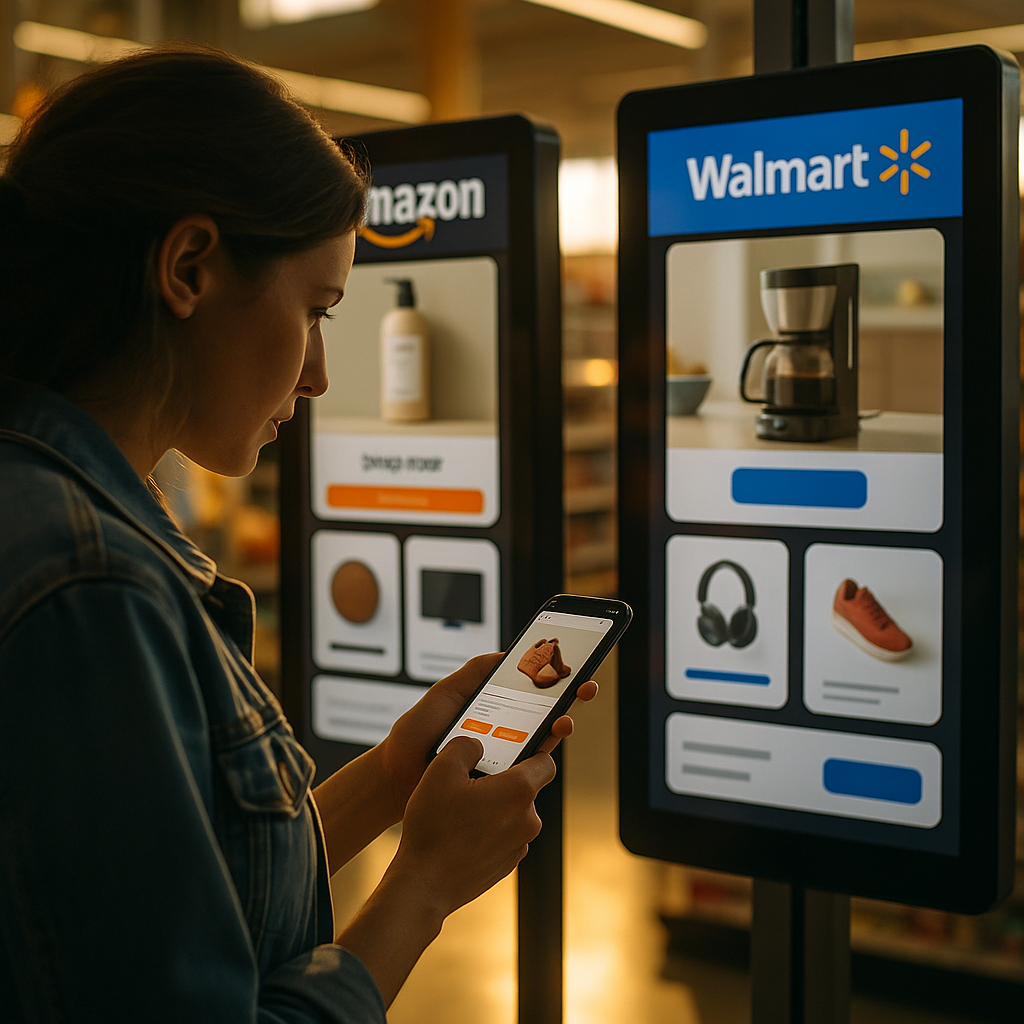
Walmart Connect and Amazon’s DSP now let shoppers tap directly on a creator’s product mention and check out without leaving the video. No redirect, no link-in-bio scavenger hunt. That’s the interactive retail media ad unit, and it’s rewriting what a creator brief needs to accomplish. If your team is still writing briefs like it’s a standard UGC ad, you’re leaving conversion lift on the table.
This format collapses the gap between discovery and purchase into a single tap. That’s great news for attribution. It’s terrifying news for creative directors who haven’t updated their brief templates in two years.
What Exactly Is the Interactive Retail Media Ad Unit?
Amazon and Walmart have both rolled out embedded-link video formats that place shoppable hotspots directly inside creator content, whether that’s a Prime Video placement, an Amazon Live stream, or a Walmart Creator video syndicated into onsite placements and Connect’s off-site network. The viewer sees a product, taps a highlighted zone or icon, and lands on a buy box, an add-to-cart tray, or a mini product carousel, all without leaving the content.
Walmart’s version leans on its Walmart Creator platform, letting influencer content get tagged with SKU-level links that surface as interactive overlays across the retailer’s owned channels and select social placements. Amazon’s approach threads through its DSP and Amazon Live infrastructure, letting brands push creator video into shoppable slots on-site and across connected TV inventory.
The mechanics differ. The implication for briefing doesn’t: creators are no longer just producing a video that talks about a product. They’re producing a video that has to work as a functional storefront.
The interactive retail media ad unit turns every creator video into a checkout surface. That changes what “good creative” even means.
Why This Breaks Your Existing Brief Template
Most influencer briefs are built around narrative beats: hook, problem, demo, CTA. That structure still matters. But it now has to coexist with hard technical constraints that most creative directors have never had to brief around.
Think about it this way: a standard brand-safe UGC video gives the creator room to move the camera, reframe, cut away. An embedded-link unit needs the product visible, unobstructed, and on-screen long enough for the hotspot to register and for the shopper to actually tap it. If your creator’s hands are covering the packaging during the exact three seconds the tap window is live, you’ve paid for a placement that converts at near zero.
This is a production problem disguised as a creative one. Creative directors need to brief not just what the creator says, but where they stand, how long they hold a product in frame, and when cuts happen relative to the tap zone.
The Core Briefing Shifts
- Frame discipline: Specify a minimum on-screen duration for the hero product, typically 4-6 seconds uninterrupted, matching the retailer’s hotspot activation window.
- Static product zones: Ask creators to designate a consistent screen quadrant for product placement so the retailer’s tagging tool can lock the hotspot without drift across cuts.
- SKU-level accuracy: If a creator shows three shades of a product, each needs its own tagged moment. Generic “the product” mentions don’t map cleanly to embedded links.
- Pacing for tap windows: Slow down the edit during commerce-critical seconds. Fast jump cuts kill tap-through rates because viewers don’t have time to register the interactive element.
None of this is exotic. It’s just new. And it means your brief template needs a technical production section that didn’t exist eighteen months ago.
Briefing for the Buy Box, Not Just the Story
Here’s the uncomfortable truth: creative directors have spent years training creators to prioritize narrative authenticity over commercial mechanics. That instinct is right for TikTok organic content. It’s wrong, or at least incomplete, for retail media placements where the entire commercial value of the asset depends on a tap registering cleanly.
So the brief now needs two parallel tracks. One is the story: why does this product matter, what’s the emotional hook, how does the creator’s voice carry it. The other is the commerce choreography: what has to be visible, static, and well-lit at the exact moment the retailer’s system needs it to be.
Walmart’s own creator guidance emphasizes clear product visibility and consistent lighting as prerequisites for its shoppable tagging to work reliably. Amazon’s Live and DSP specs similarly call out framing and duration requirements creators need to hit for hotspots to render correctly on both mobile and connected TV surfaces. If your brief doesn’t translate those platform specs into plain-English direction, you’re relying on the creator to reverse-engineer platform documentation mid-shoot. That never ends well.
A brief that nails the story but ignores tap-zone mechanics is a brief that pays for a video the retailer’s system can’t actually make shoppable.
What to Actually Put in the Brief Document
A working template for this format should include:
- A shot list marking exactly which seconds are “commerce-critical” and need static framing.
- Lighting minimums, since low-light footage often fails hotspot detection on both Amazon and Walmart’s systems.
- A SKU map showing which product corresponds to which timestamp, handed to the creator before the shoot, not reverse-engineered after editing.
- Platform-specific aspect ratio and safe-zone guidance, since CTV placements and mobile feeds crop differently.
- A disclosure and FTC compliance line embedded directly in the script, not left to the creator’s discretion.
This isn’t a huge lift once it’s templated. It’s a huge lift the first time, when your team is figuring out what actually breaks in QA.
Compliance Doesn’t Get Easier Just Because the Tech Got Smarter
Embedded checkout inside a video adds a new wrinkle to disclosure. The FTC’s endorsement guidance still requires clear and conspicuous disclosure of material connections, and a viewer tapping a product mid-video doesn’t reduce that obligation. If anything, the frictionless purchase path raises the bar: the disclosure has to be visible before the shopper commits to tapping, not buried in a caption they’ll never scroll to.
Brands running these placements at scale should treat disclosure the same way they treat the product hotspot itself: as a required, timed element of the video, not an afterthought. The FTC’s endorsement guidelines haven’t been rewritten for shoppable video specifically, but the underlying standard, clarity before purchase intent, applies directly.
Legal and compliance teams should be looped into the brief review before the shoot, not during post-production. That’s a process change for a lot of marketing orgs, and it’s worth making now rather than after a retailer flags a batch of non-compliant assets.
Teams that have already built compliance-first workflows for other interactive formats have a head start here. The same discipline used in shoppable live-commerce briefing transfers almost directly: timed disclosure, clear link attribution, and a pre-shoot legal check.
Measurement: What Changes When the Tap Is the Conversion Event
Attribution gets both simpler and more demanding. Simpler, because the tap-to-cart event is a first-party, retailer-verified signal, no third-party pixel required, no multi-touch modeling guesswork. More demanding, because creative directors now need to report on creative-level performance metrics that didn’t exist before: tap-through rate by product zone, time-to-tap, and drop-off between tap and completed purchase.
That last metric matters most. A high tap rate with a low completion rate usually means the buy box surfaced but the product page it linked to didn’t match what the creator promised on screen, wrong variant, wrong price, out of stock. That’s a briefing failure as much as a merchandising one. Creative directors should be requesting SKU-level inventory confirmation before locking a script, not after the video is live.
According to eMarketer’s retail media forecasts, retail media ad spend continues outpacing traditional digital display, and shoppable video formats are a meaningful driver of that shift. Brands that treat these placements as a new line item worth dedicated creative testing, rather than a repurposed version of existing UGC, are the ones seeing the tap-through numbers that justify the spend.
Building the Feedback Loop Back Into the Brief
Once a campaign runs, the data should feed the next brief. Which product zone got the highest tap rate? Was it top-third framing, or centered mid-shot? Did creators who held the product for six seconds outperform those who held for four? This is genuinely new optimization territory, and most creative teams don’t have three months of data yet. Build the measurement plan now, log everything, and expect your third or fourth campaign to be meaningfully sharper than your first.
For teams already running comparison or multi-creator formats, the tagging discipline mirrors what’s covered in the split-screen comparison brief guidance, where consistent framing across creators is what makes the format scale.
Where This Fits in a Broader Creator Strategy
Interactive retail media units shouldn’t replace your full-funnel creator mix. They’re a bottom-funnel, high-intent placement, and they work best when there’s already brand familiarity built through earlier-stage content: teaser-driven launches, demonstration content, or trust-building formats like the two-creator handoff.
Retail media platforms reward creative that’s already primed an audience. A cold viewer tapping a product for the first time converts at a very different rate than one who’s seen the creator discuss the category three times already. Brief for the full arc, not just the shoppable moment.
Tools like Sprout Social and HubSpot are increasingly building retail-media-adjacent reporting into their platforms, which makes it easier to connect upper-funnel creator content performance to bottom-funnel tap-through data without stitching together three separate dashboards.
The brands winning here aren’t the ones with the biggest creator budgets. They’re the ones who rewrote their briefing process before the format matured, so their creators were already shooting tap-ready footage while competitors were still troubleshooting hotspot failures.
Frequently Asked Questions
FAQs
What is the interactive retail media ad unit?
It’s a shoppable video format used by Amazon and Walmart that embeds tappable product links directly inside creator content, letting viewers purchase without leaving the video or stream.
How is this different from a standard shoppable video?
Standard shoppable video usually links out to a product page or requires a swipe-up. The embedded-link unit surfaces a buy box or add-to-cart tray directly on top of the video, tied to a specific tagged moment, which requires much stricter framing and timing in production.
What does a creative director need to add to a standard influencer brief?
A technical production section covering minimum on-screen product duration, static framing for tap zones, SKU-level timestamp mapping, lighting minimums, and platform-specific safe zones for mobile versus connected TV.
Does FTC disclosure work differently for these formats?
The underlying FTC standard doesn’t change, disclosure must be clear and conspicuous before purchase intent. But because the purchase path is frictionless, disclosure needs to appear early enough in the video that a viewer sees it before they tap, not buried in a description field.
What metrics should brands track beyond tap-through rate?
Time-to-tap, drop-off between tap and completed purchase, and performance by product screen-zone placement. A gap between tap rate and completion rate usually signals a mismatch between what the creator showed and what the linked product page actually offers.
Should every creator campaign use this ad unit?
No. It performs best as a bottom-funnel placement layered on top of existing brand familiarity built through earlier content like teasers, demos, or trust-building formats.
Update your brief template this week: add a commerce-choreography section, lock SKU-to-timestamp mapping before the shoot, and route every script through legal before cameras roll. The retailers built the tap. Your brief has to build the reason people take it.
Top Influencer Marketing Agencies
The leading agencies shaping influencer marketing in 2026
Agencies ranked by campaign performance, client diversity, platform expertise, proven ROI, industry recognition, and client satisfaction. Assessed through verified case studies, reviews, and industry consultations.
Moburst

-
2

The Shelf
Boutique Beauty & Lifestyle Influencer AgencyA data-driven boutique agency specializing exclusively in beauty, wellness, and lifestyle influencer campaigns on Instagram and TikTok. Best for brands already focused on the beauty/personal care space that need curated, aesthetic-driven content.Clients: Pepsi, The Honest Company, Hims, Elf Cosmetics, Pure LeafVisit The Shelf → -
3

Audiencly
Niche Gaming & Esports Influencer AgencyA specialized agency focused exclusively on gaming and esports creators on YouTube, Twitch, and TikTok. Ideal if your campaign is 100% gaming-focused — from game launches to hardware and esports events.Clients: Epic Games, NordVPN, Ubisoft, Wargaming, Tencent GamesVisit Audiencly → -
4

Viral Nation
Global Influencer Marketing & Talent AgencyA dual talent management and marketing agency with proprietary brand safety tools and a global creator network spanning nano-influencers to celebrities across all major platforms.Clients: Meta, Activision Blizzard, Energizer, Aston Martin, WalmartVisit Viral Nation → -
5

The Influencer Marketing Factory
TikTok, Instagram & YouTube CampaignsA full-service agency with strong TikTok expertise, offering end-to-end campaign management from influencer discovery through performance reporting with a focus on platform-native content.Clients: Google, Snapchat, Universal Music, Bumble, YelpVisit TIMF → -
6

NeoReach
Enterprise Analytics & Influencer CampaignsAn enterprise-focused agency combining managed campaigns with a powerful self-service data platform for influencer search, audience analytics, and attribution modeling.Clients: Amazon, Airbnb, Netflix, Honda, The New York TimesVisit NeoReach → -
7

Ubiquitous
Creator-First Marketing PlatformA tech-driven platform combining self-service tools with managed campaign options, emphasizing speed and scalability for brands managing multiple influencer relationships.Clients: Lyft, Disney, Target, American Eagle, NetflixVisit Ubiquitous → -
8

Obviously
Scalable Enterprise Influencer CampaignsA tech-enabled agency built for high-volume campaigns, coordinating hundreds of creators simultaneously with end-to-end logistics, content rights management, and product seeding.Clients: Google, Ulta Beauty, Converse, AmazonVisit Obviously →