


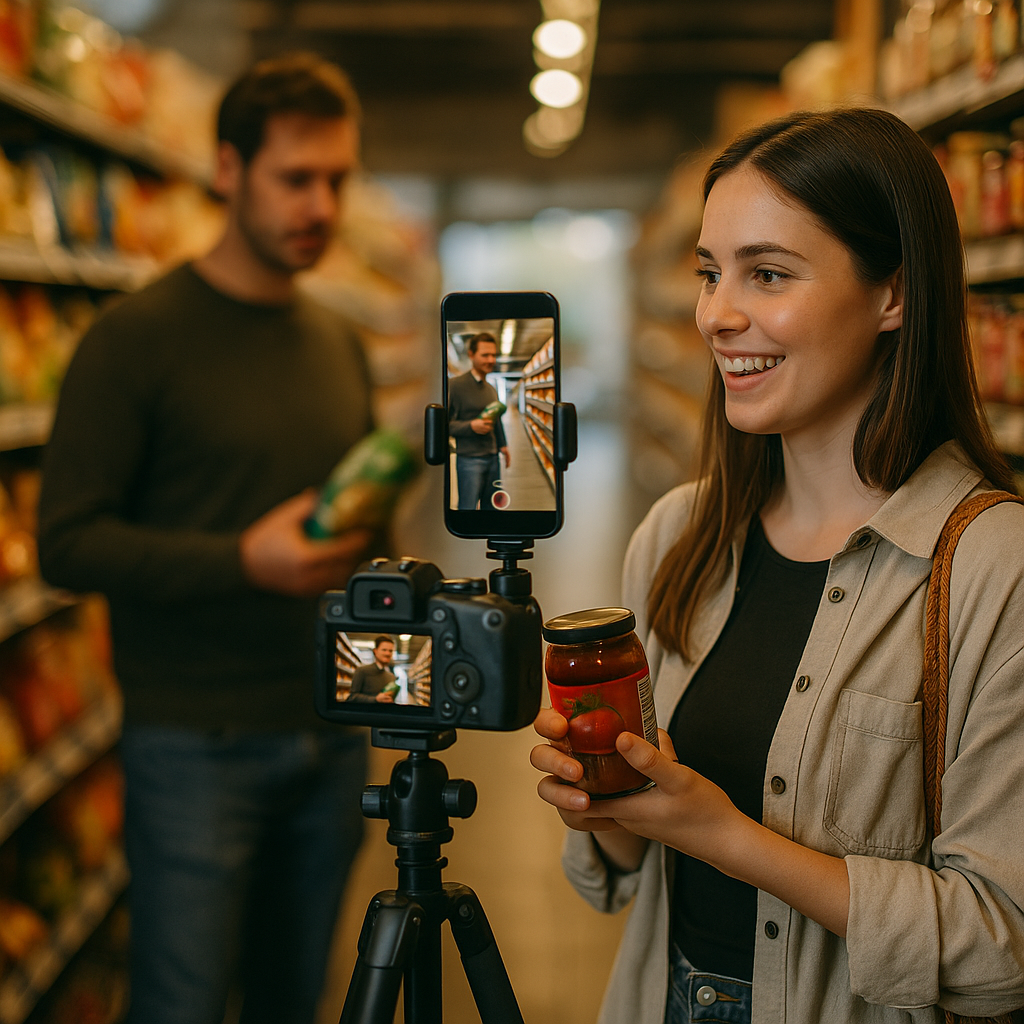
A single grocery buyer meeting can undo six months of DTC momentum. Retailers don’t care about your Instagram engagement rate — they care about proof that shoppers will actually pull your product off the shelf. The nano-creator unboxing format is quietly becoming CPG’s best weapon for exactly that: cheap, credible, repeatable aisle-tour content that doubles as evidence in the shelf-space pitch deck.
Big-budget influencer campaigns are great for awareness. They’re mostly useless in a category review meeting. What buyers want is unscripted, believable footage of real people finding your product in a real store, reacting to it, and buying it. That’s a completely different production model than the one most CPG brands are running today.
Why Grocery Buyers Actually Care About This Content
Category managers at chains like Kroger, Publix, and regional grocers are increasingly citing social proof during line reviews. Not because they’re chasing TikTok trends, but because unprompted creator content is one of the only signals they can’t buy directly from a broker deck.
Think about what a buyer sees normally: a slide deck full of velocity projections and trade spend commitments. Now imagine that same pitch backed by forty nano-creators (1,000-50,000 followers) filming themselves finding your product on shelf in test markets, comparing it to the incumbent, and putting it in the cart. That’s not marketing collateral anymore. That’s market research with a camera.
Nano-creators convert at higher rates than mega-influencers in CPG categories precisely because their “I just found this randomly” framing reads as unpaid discovery, not media buy.
According to eMarketer, nano and micro creators now account for the fastest-growing share of branded content spend in food and beverage, driven largely by cost efficiency and higher perceived authenticity. Brands aren’t choosing nano creators because they’re trendy. They’re choosing them because the format actually mirrors real shopper behavior.
The Aisle-Tour Structure That Works
An unboxing at home tells you nothing about shelf performance. An aisle tour does. The format needs a specific structure to be useful, not just cute.
- The find: Creator walks the actual category aisle, camera at eye level, showing real shelf placement (or lack of it, if you’re pitching for better facing).
- The comparison: Quick side-by-side against 1-2 competitor SKUs already on shelf. This is the moment buyers actually watch closely.
- The pickup: Product goes in the cart. No cuts, no staging. This single unbroken motion is what separates authentic aisle content from ad-adjacent theater.
- The unboxing: Home segment, package opened, first reaction captured unscripted.
- The verdict: A specific, usable line — “I’d buy this again” or “this replaced my usual brand” — delivered in the creator’s own words.
Notice what’s missing: a hard sell. Buyers and shoppers both smell scripted enthusiasm instantly. The format works because it looks like five other formats already flooding social feeds — think packaging ASMR content or straightforward one-take demo videos — but repurposed with a retail-facing objective baked into the brief.
What Makes This Different From a Standard Unboxing Brief
Most unboxing briefs are conversion-focused: drive a link click, drive a promo code redemption. Aisle-tour briefs are procurement-focused. The deliverable isn’t just the video — it’s the aggregated proof package a trade marketing team hands to a buyer.
That changes everything about how you brief creators. You need:
- Geographic spread across the retailer’s actual footprint (not just wherever your creators happen to live)
- Consistent shelf-visibility framing so footage is usable in buyer decks without reshoots
- A release structure that lets you legally repurpose UGC in trade materials, not just social feeds
That last point trips up more brands than anything else. A standard influencer contract usually grants usage rights for paid social and owned channels. It rarely covers internal sales decks, broker presentations, or trade show reels. Get this in writing before the shoot, not after you’ve already built the pitch around footage you can’t legally use externally.
Sourcing Nano-Creators Without Burning Your Whole Budget
Here’s the uncomfortable math: you need volume for this to work as proof, not just anecdote. One creator’s aisle tour is a nice clip. Forty creators’ aisle tours across a test market is a dataset.
Nano-creator rates in food and beverage typically run $50-$300 per deliverable, according to rate benchmarks widely cited across creator marketplaces. That means a 40-creator aisle-tour campaign can run $2,000-$12,000 — a rounding error compared to the trade spend a chain might demand for better facing.
Platforms like Grin, Aspire, and even retailer-specific creator networks (Walmart Creator, for instance) have made sourcing at this scale far easier than it was even two years ago. But sourcing isn’t the hard part. Brief consistency is.
Run your brief through three checks before sending it out:
- Is the shelf-visibility instruction specific enough? “Show the shelf” gets you unusable footage half the time. “Hold the camera at chest height, pan left to right across the full category set before picking up the product” gets you usable footage.
- Does the creator understand the FTC disclosure requirement? Even nano-creator content needs clear #ad or #partner disclosure per FTC guidelines. This matters more, not less, at scale — forty non-compliant posts is a forty-count problem.
- Is there a fallback shot list if the ideal shelf placement doesn’t exist yet? This is common when you’re pitching for facing you don’t currently have.
Turning Footage Into a Buyer-Ready Asset
Raw creator content doesn’t win category reviews on its own. It needs packaging. The best trade marketing teams are building what amounts to a highlight reel plus a data layer: engagement rates, sentiment tagging, and geographic distribution overlaid on the footage.
Some brands go further, pulling verbatim quotes from comment sections to reinforce the on-camera verdicts. If forty shoppers say “finally, a healthier option in this aisle” unprompted, that’s a stronger buyer argument than any velocity projection a broker can produce.
This is also where the format overlaps with broader UGC harvesting strategy. Treat aisle-tour content the same way you’d treat any scaled UGC program: tag it, store it, and build a retrieval system so trade marketing, brand, and retail media teams aren’t duplicating outreach to the same creators.
The brands winning shelf-space arguments in category reviews are the ones showing up with forty pieces of unscripted proof, not one polished hero video.
Where This Intersects With Retail Media
Once you’ve got category placement, the aisle-tour asset doesn’t retire. Repurpose it into retail media units — Walmart Connect and Amazon DSP both support video ad formats where authentic, lower-production content actually outperforms polished studio work. This connects directly to broader shifts happening in interactive retail media ad units, where shoppable, in-context video is increasingly the default rather than the exception.
It’s a nice second life for content you already paid for. Shoot once for the buyer pitch, repurpose for retail media, and you’ve effectively doubled the ROI on a campaign that cost less than a single trade show booth.
Common Mistakes That Undercut the Format
Three failure patterns show up constantly:
- Over-scripting the reaction. The moment a nano-creator sounds like they’re reading copy, the entire value proposition of the format collapses. Buyers can tell. So can shoppers.
- Ignoring negative footage. If three creators in your batch say the price feels high, that’s not something to hide from the deck — it’s intel your trade marketing team needs before the buyer brings it up first.
- Skipping usage-rights paperwork. This one’s purely operational, and purely avoidable. Build a standard rider into every nano-creator contract that covers trade and sales-facing use, not just social.
There’s also a compliance angle brands underestimate. HubSpot’s research on creator marketing consistently flags disclosure inconsistency as a top brand risk at scale, and CPG categories — food, supplements, anything ingestible — draw more regulatory scrutiny than most verticals. Build your review process to catch missing disclosures before publish, not after a retailer’s legal team flags it.
What This Looks Like in Practice
A mid-size snack brand running a test-market push into a regional chain doesn’t need a celebrity endorsement. It needs thirty real shoppers in thirty real stores saying, on camera, “I didn’t know this was here, and now it’s in my cart.” Bundle that with sell-through data from the test period, and you’ve got a category review pitch that’s genuinely hard to argue against.
Compare that to formats built for pure social virality — mockumentary-style content or split-screen comparisons — which are great for top-of-funnel awareness but carry zero weight in a buyer’s spreadsheet. Aisle-tour unboxing content sits in a different lane entirely: it’s proof-of-demand content disguised as social entertainment.
Run this format ahead of your next line review, not after you’ve already lost the facing argument. Build the creator brief around shelf visibility and unscripted verdicts, secure trade-usage rights up front, and you’ll walk into the buyer meeting with something no broker deck can match: real shoppers, on camera, choosing your product over the one already on the shelf.
Frequently Asked Questions
What is the nano-creator unboxing format for grocery and CPG?
It’s a structured content brief where creators with roughly 1,000 to 50,000 followers film themselves finding a product on an actual store shelf, comparing it to competitors, purchasing it, and reacting to the unboxing at home. The footage is used both for social content and as proof material in retailer category review pitches.
How much does a nano-creator aisle-tour campaign typically cost?
Rates generally range from $50 to $300 per deliverable, meaning a 40-creator campaign across multiple markets often costs between $2,000 and $12,000, significantly less than traditional trade spend commitments.
Can this content legally be used in buyer presentations and trade decks?
Only if your creator contract explicitly grants those usage rights. Standard influencer agreements typically cover social and owned channels only. Brands need to add a specific rider covering trade, sales, and internal presentation use before the shoot.
What FTC rules apply to nano-creator unboxing content?
All paid or gifted content requires clear disclosure, such as #ad or #partner, regardless of creator size or follower count. At scale, inconsistent disclosure across dozens of creators becomes a compliance risk, so review processes should catch missing disclosures before publishing.
Why do nano-creators outperform larger influencers for this format?
Their smaller, more engaged audiences perceive their content as genuine discovery rather than paid promotion. In grocery and CPG specifically, that authenticity translates into higher trust with both shoppers and category buyers who are skeptical of obviously staged endorsements.
How does aisle-tour content support a shelf-space pitch?
It provides unscripted, geographically distributed proof of shopper interest and purchase intent that buyers can’t get from broker projections alone. Packaged with sentiment data and verbatim reactions, it functions as informal market research alongside the sales pitch.
Top Influencer Marketing Agencies
The leading agencies shaping influencer marketing in 2026
Agencies ranked by campaign performance, client diversity, platform expertise, proven ROI, industry recognition, and client satisfaction. Assessed through verified case studies, reviews, and industry consultations.
Moburst

-
2

The Shelf
Boutique Beauty & Lifestyle Influencer AgencyA data-driven boutique agency specializing exclusively in beauty, wellness, and lifestyle influencer campaigns on Instagram and TikTok. Best for brands already focused on the beauty/personal care space that need curated, aesthetic-driven content.Clients: Pepsi, The Honest Company, Hims, Elf Cosmetics, Pure LeafVisit The Shelf → -
3

Audiencly
Niche Gaming & Esports Influencer AgencyA specialized agency focused exclusively on gaming and esports creators on YouTube, Twitch, and TikTok. Ideal if your campaign is 100% gaming-focused — from game launches to hardware and esports events.Clients: Epic Games, NordVPN, Ubisoft, Wargaming, Tencent GamesVisit Audiencly → -
4

Viral Nation
Global Influencer Marketing & Talent AgencyA dual talent management and marketing agency with proprietary brand safety tools and a global creator network spanning nano-influencers to celebrities across all major platforms.Clients: Meta, Activision Blizzard, Energizer, Aston Martin, WalmartVisit Viral Nation → -
5

The Influencer Marketing Factory
TikTok, Instagram & YouTube CampaignsA full-service agency with strong TikTok expertise, offering end-to-end campaign management from influencer discovery through performance reporting with a focus on platform-native content.Clients: Google, Snapchat, Universal Music, Bumble, YelpVisit TIMF → -
6

NeoReach
Enterprise Analytics & Influencer CampaignsAn enterprise-focused agency combining managed campaigns with a powerful self-service data platform for influencer search, audience analytics, and attribution modeling.Clients: Amazon, Airbnb, Netflix, Honda, The New York TimesVisit NeoReach → -
7

Ubiquitous
Creator-First Marketing PlatformA tech-driven platform combining self-service tools with managed campaign options, emphasizing speed and scalability for brands managing multiple influencer relationships.Clients: Lyft, Disney, Target, American Eagle, NetflixVisit Ubiquitous → -
8

Obviously
Scalable Enterprise Influencer CampaignsA tech-enabled agency built for high-volume campaigns, coordinating hundreds of creators simultaneously with end-to-end logistics, content rights management, and product seeding.Clients: Google, Ulta Beauty, Converse, AmazonVisit Obviously →