


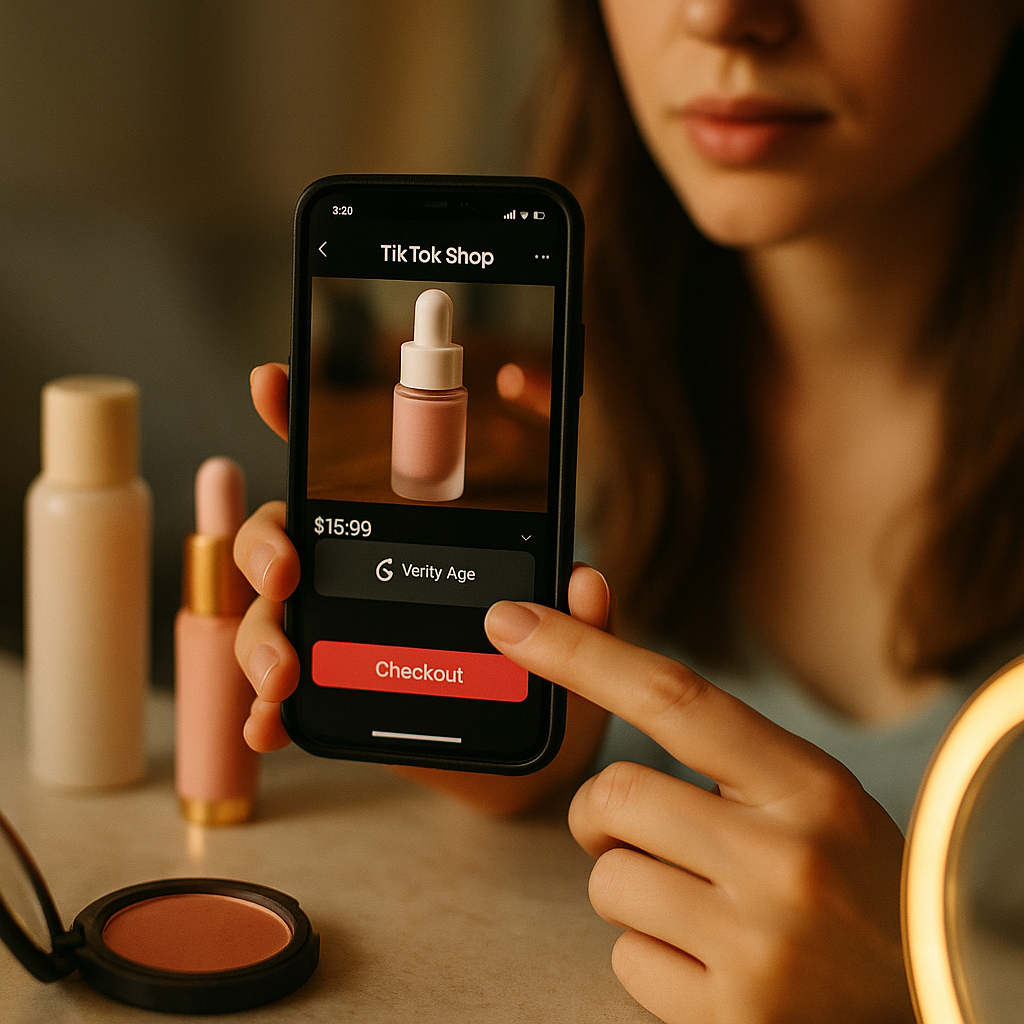
One percentage point. That’s roughly the margin separating a smooth TikTok Shop launch from an FTC inquiry when your beauty line contains alcohol-adjacent ingredients — think boozy-scented perfumes, wine-extract skincare, or CBD-and-cocktail-culture collabs. TikTok’s new age verification checkpoint just changed how creators can legally show checkout. Miss the memo on the tiktok shop age-gated purchase flow, and your next viral haul video becomes a legal headache instead of a sales spike.
Why This Flow Exists (and Why It’s Not Optional)
TikTok Shop rolled out stricter age-verification checkpoints for product categories that brush up against alcohol regulation, even when the SKU itself is technically “beauty.” Think fragrance lines marketed with cocktail branding, skincare using wine polyphenols, or limited-run collabs with spirits brands. Platforms are getting proactive because regulators aren’t waiting around. The FTC has made clear that deceptive checkout experiences, including ones that obscure age requirements, fall under its endorsement guidelines.
This isn’t a TikTok-only problem, either. Alcohol-adjacent marketing has always lived in a gray zone across social platforms, and Meta’s commerce policies have tightened in parallel. But TikTok Shop’s in-app checkout makes the stakes more immediate: the purchase happens inside the content experience, not on a separate retailer site with its own compliance layer.
What the Age-Gated Purchase Flow Actually Looks Like
Here’s the mechanic, stripped down: a shopper taps the product card in a video or LIVE, TikTok Shop’s checkout opens, and before payment, the buyer hits an age-confirmation screen. It’s not a simple “are you 18?” checkbox anymore. Depending on the SKU’s flagged category, it can require ID capture or a birthdate cross-check against account signals.
For brands, that means the moment a creator’s video converts, the flow has to hold up under scrutiny. If your top-performing UGC creator skips past that gate in their demo, or worse, coaches viewers to bypass it, you’ve got a policy violation baked into your best-performing content.
The age gate isn’t friction to minimize. It’s the one part of the funnel you actually want your creators showing, in full, on camera.
Enter the Beauty-Aisle Verification Format
This is where smart brands are flipping a compliance requirement into a content asset. Instead of hiding the age gate or cutting away from it in editing, the “beauty-aisle verification format” briefs creators to walk through the checkout step the same way they’d narrate a Sephora aisle tour: casual, transparent, almost tutorial-like.
The format borrows structurally from grocery and retail walkthrough content that’s already proven itself with nano-creators. If you’ve seen how nano-creator aisle tours build buyer trust by showing real shelf interactions, the logic transfers directly to digital shelves. The verification step becomes part of the “proof” beat, not an inconvenient interruption.
The Four Beats Brands Should Brief
- Setup: Creator introduces the product and mentions, briefly, why age verification applies (alcohol-derived ingredient, cross-branded spirits collab, etc.).
- Demonstration: Screen-record the actual checkout, showing the age gate triggering naturally, not staged or skipped.
- Reaction: A quick, authentic beat, “oh, it’s asking me to verify,” normalizes the friction instead of treating it as a flaw.
- Completion: Purchase confirmation shown, closing the loop so viewers see the full, honest path to checkout.
Sound familiar? It should. This four-beat structure mirrors the pacing logic used in countdown-to-launch teaser briefs, just repurposed for a compliance moment instead of a hype moment.
Briefing Creators Without Killing the Vibe
Nobody wants a legal disclaimer read verbatim in a GRWM video. The trick is giving creators language that feels native to them while still hitting the disclosure requirements your legal team needs. That means moving away from generic ad-read scripts and toward the kind of algorithmic-receipt transparency brands have used for pricing claims. If your team has already adopted the algorithmic receipt format for FTC-safe pricing content, this is the same instinct applied to age verification: show the mechanism, don’t just claim compliance.
Practical brief notes that work:
- Never tell creators to “skip past” or “fast forward through” the verification screen in editing.
- Require a visible, un-cut screen recording of the checkout sequence for any paid or gifted content tied to alcohol-adjacent SKUs.
- Give creators a one-line explainer they can paraphrase (not read robotically) about why the gate exists.
- Flag the SKU’s regulatory category upfront in the brief, don’t assume creators know which products trigger the gate.
This isn’t just risk mitigation. Data from eMarketer consistently shows that perceived authenticity correlates with conversion in social commerce; a creator showing the “real” checkout, warts and gate and all, tends to outperform a polished, edited-down version.
Where This Overlaps With Existing FTC-Safe Formats
If your team already runs disclosure-heavy formats, you’re closer to ready than you think. The beauty-aisle verification approach shares DNA with several formats Influencers Time has covered for other regulated or scrutinized claims:
- The price-tag reveal format, which trains creators to show real numbers instead of vague value claims.
- The ghost ad confession format, useful for reminding creators why transparency beats concealment even when it’s less flattering.
- The ingredient swap challenge brief, since alcohol-adjacent beauty often hinges on ingredient-level claims that need the same rigor.
Legal and compliance teams should treat the age gate demonstration as another disclosure surface, not a separate problem. Brief it with the same rigor you’d apply to a sponsorship tag or a pricing claim.
What Happens If Brands Get This Wrong
Skipping or downplaying the age gate in creator content isn’t a minor slip. It risks:
- Platform-level penalties: TikTok Shop can suspend product listings or throttle reach for SKUs tied to non-compliant demo content.
- Regulatory exposure: The FTC has shown willingness to pursue brands (not just platforms) for deceptive commerce practices tied to age-restricted or adjacent categories.
- Creator liability creep: Creators who habitually edit out compliance steps become a repeat risk across your entire roster, not just one video.
Brands running affiliate or livestream commerce programs should treat this the same way they’d treat shoppable live-commerce compliance: attribution and disclosure aren’t afterthoughts, they’re the infrastructure the whole program rests on.
Measuring Whether the Format Actually Works
Compliance content still needs to perform. Track these metrics against your standard TikTok Shop benchmarks:
- Completion rate through the verification beat: are viewers dropping off when the age gate appears, or watching through?
- Checkout conversion post-gate: does showing the friction honestly hurt or help follow-through purchases?
- Comment sentiment: are viewers asking “why do I need to verify,” which signals your creator’s explainer beat needs sharpening?
Early data across a handful of TikTok Shop beauty campaigns running alcohol-adjacent SKUs suggests transparent verification demos hold completion rates within a few points of standard haul content, a signal that the friction, when framed well, isn’t the conversion killer brands fear. Sprout Social’s research on social commerce trust reinforces this: audiences reward brands that show their work, even the inconvenient parts.
Frequently Asked Questions
What triggers TikTok Shop’s age-gated purchase flow for beauty products?
Products get flagged when they contain alcohol as an ingredient, use alcohol-branded packaging or collabs, or are marketed with cocktail-culture positioning. TikTok’s classification system checks SKU metadata and listing copy, so even a wine-extract serum with “spritz” branding can trigger the gate.
Can creators edit out the age verification step in their videos?
They shouldn’t, and brands need to say so explicitly in the brief. Editing out the gate can misrepresent the actual checkout experience, which creates FTC exposure for both the brand and the creator under endorsement guideline rules.
Does showing the age gate hurt conversion rates?
Early campaign data suggests the impact is minimal when the moment is framed as normal, brief, and narrated rather than treated as an error or interruption. Authenticity around friction tends to build more trust than it costs in drop-off.
How is this different from standard FTC disclosure requirements?
Standard disclosure covers sponsorship and material connection. Age-gate transparency is a separate compliance layer tied to regulated-adjacent product categories, closer in spirit to how alcohol and pharma marketing require additional purchase-path safeguards.
Should nano-creators and micro-influencers follow the same brief?
Yes. Reach size doesn’t change the regulatory exposure. If anything, nano-creators often run less-edited content, which makes the format’s “show it real” approach a natural fit rather than an added constraint.
Brief the age gate like a feature, not a flaw, and your next TikTok Shop beauty launch converts skepticism into trust instead of triggering a takedown.
Frequently Asked Questions
What triggers TikTok Shop’s age-gated purchase flow for beauty products?
Products get flagged when they contain alcohol as an ingredient, use alcohol-branded packaging or collabs, or are marketed with cocktail-culture positioning. TikTok’s classification system checks SKU metadata and listing copy, so even a wine-extract serum with “spritz” branding can trigger the gate.
Can creators edit out the age verification step in their videos?
They shouldn’t, and brands need to say so explicitly in the brief. Editing out the gate can misrepresent the actual checkout experience, which creates FTC exposure for both the brand and the creator under endorsement guideline rules.
Does showing the age gate hurt conversion rates?
Early campaign data suggests the impact is minimal when the moment is framed as normal, brief, and narrated rather than treated as an error or interruption. Authenticity around friction tends to build more trust than it costs in drop-off.
How is this different from standard FTC disclosure requirements?
Standard disclosure covers sponsorship and material connection. Age-gate transparency is a separate compliance layer tied to regulated-adjacent product categories, closer in spirit to how alcohol and pharma marketing require additional purchase-path safeguards.
Should nano-creators and micro-influencers follow the same brief?
Yes. Reach size doesn’t change the regulatory exposure. If anything, nano-creators often run less-edited content, which makes the format’s “show it real” approach a natural fit rather than an added constraint.
Top Influencer Marketing Agencies
The leading agencies shaping influencer marketing in 2026
Agencies ranked by campaign performance, client diversity, platform expertise, proven ROI, industry recognition, and client satisfaction. Assessed through verified case studies, reviews, and industry consultations.
Moburst

-
2

The Shelf
Boutique Beauty & Lifestyle Influencer AgencyA data-driven boutique agency specializing exclusively in beauty, wellness, and lifestyle influencer campaigns on Instagram and TikTok. Best for brands already focused on the beauty/personal care space that need curated, aesthetic-driven content.Clients: Pepsi, The Honest Company, Hims, Elf Cosmetics, Pure LeafVisit The Shelf → -
3

Audiencly
Niche Gaming & Esports Influencer AgencyA specialized agency focused exclusively on gaming and esports creators on YouTube, Twitch, and TikTok. Ideal if your campaign is 100% gaming-focused — from game launches to hardware and esports events.Clients: Epic Games, NordVPN, Ubisoft, Wargaming, Tencent GamesVisit Audiencly → -
4

Viral Nation
Global Influencer Marketing & Talent AgencyA dual talent management and marketing agency with proprietary brand safety tools and a global creator network spanning nano-influencers to celebrities across all major platforms.Clients: Meta, Activision Blizzard, Energizer, Aston Martin, WalmartVisit Viral Nation → -
5

The Influencer Marketing Factory
TikTok, Instagram & YouTube CampaignsA full-service agency with strong TikTok expertise, offering end-to-end campaign management from influencer discovery through performance reporting with a focus on platform-native content.Clients: Google, Snapchat, Universal Music, Bumble, YelpVisit TIMF → -
6

NeoReach
Enterprise Analytics & Influencer CampaignsAn enterprise-focused agency combining managed campaigns with a powerful self-service data platform for influencer search, audience analytics, and attribution modeling.Clients: Amazon, Airbnb, Netflix, Honda, The New York TimesVisit NeoReach → -
7

Ubiquitous
Creator-First Marketing PlatformA tech-driven platform combining self-service tools with managed campaign options, emphasizing speed and scalability for brands managing multiple influencer relationships.Clients: Lyft, Disney, Target, American Eagle, NetflixVisit Ubiquitous → -
8

Obviously
Scalable Enterprise Influencer CampaignsA tech-enabled agency built for high-volume campaigns, coordinating hundreds of creators simultaneously with end-to-end logistics, content rights management, and product seeding.Clients: Google, Ulta Beauty, Converse, AmazonVisit Obviously →