


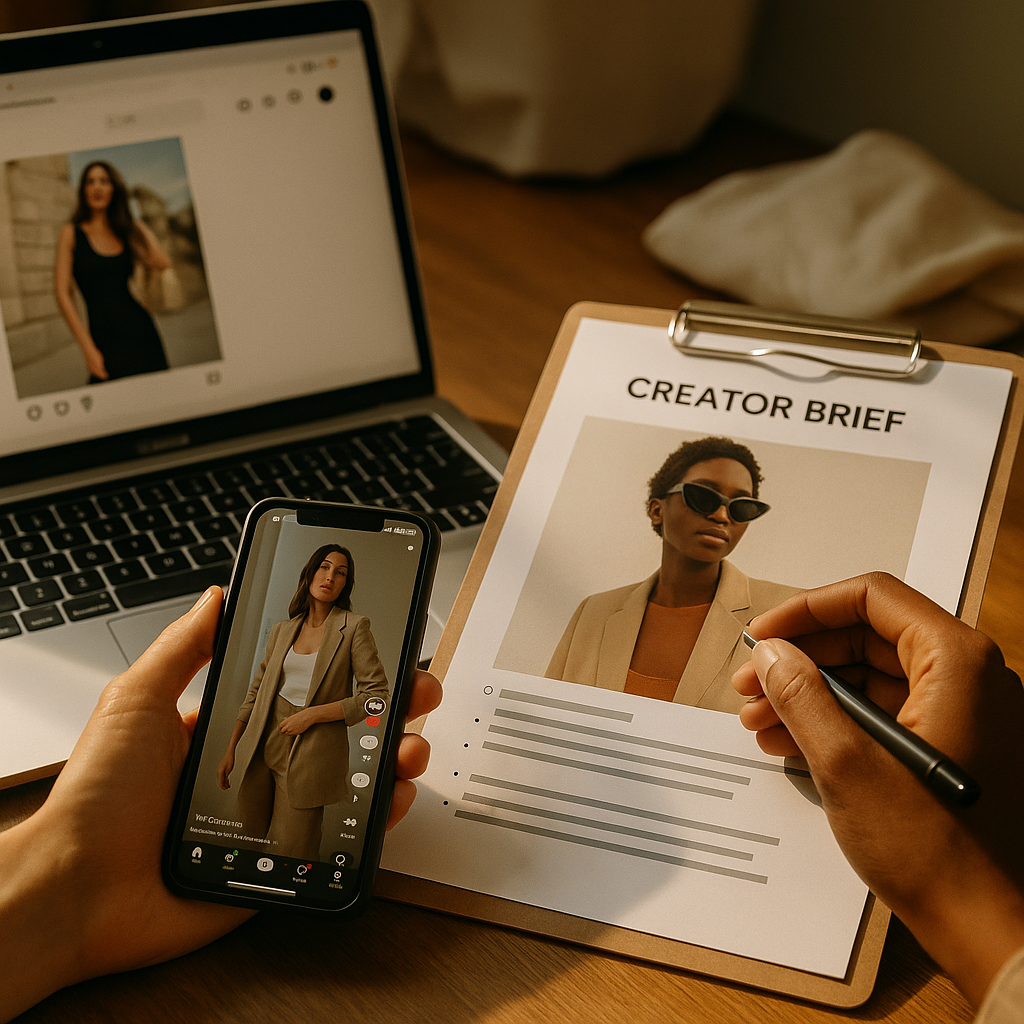
One Asset. Two Platforms. Zero Extra Budget.
Fashion and luxury brands that still treat Instagram and TikTok as separate productions are hemorrhaging budget and leaving conversion on the table. The brands winning social commerce in the creator economy have cracked a smarter operating model: a single creator asset, engineered from brief to delivery, to perform on both platforms simultaneously. Here is how they are doing it.
Why Instagram and TikTok Demand Different Purchase Intent Frames
The core tension is behavioral, not aesthetic. Instagram’s feed and Reels ecosystem reward follower-centric purchase intent: users arrive already warm, often pre-sold on a brand or creator they follow. The algorithm surfaces content within an established trust network. Saves, DMs, and profile visits are the signal chain that tells Meta a post has commercial gravity. Brands that understand how to brief for saves and DMs consistently outperform those still chasing raw reach.
TikTok is the mirror opposite. Discovery is the engine. A user has zero prior relationship with your brand when your creator’s video surfaces in their For You feed. Purchase intent has to be built inside the video itself, in seconds, by a stranger. That means hook architecture, watch time, and narrative momentum matter far more than follower count. Brands briefing creators on watch time briefs that unlock distribution are seeing dramatically better organic reach than those relying on standard sponsored post formats.
According to eMarketer, social commerce gross merchandise value in the US crossed $100 billion, with fashion and beauty accounting for the largest share. The brands capturing that spend are not the ones with the biggest production budgets — they are the ones with the sharpest creator briefs.
The Dual-Platform Asset Architecture
So what does a single creator asset that genuinely works on both platforms actually look like? The answer sits in the brief structure, not the edit suite.
The most effective format currently in circulation across fashion and luxury brands follows a three-layer construction:
- A front-loaded hook (0 to 3 seconds): Built for TikTok’s cold-discovery environment. Movement, contrast, or a verbal pattern interrupt. This layer also works as Reels’ opening frame for non-followers encountering the content via Explore.
- A product or lifestyle narrative core (3 to 25 seconds): Where Instagram’s warm audience gets the aspiration and context they expect. Texture, styling, occasion. The craft signals that luxury requires. On TikTok, this is where watch time accumulates if the hook held.
- A conversion signal (final 5 seconds): A soft CTA or product pin that works with TikTok Shop’s native checkout and Instagram’s product tag ecosystem simultaneously. Creators briefed to mention the product organically before the CTA see higher tap-through on both platforms.
The key operational insight: the edit does not change between platforms. The brief does. Creators are directed to shoot with the TikTok hook constraint in mind, but the story arc they deliver naturally serves Instagram’s storytelling cadence. One shoot. One edit. Two platform-native performances.
How Luxury Brands Are Navigating This Without Diluting Brand Codes
The legitimate concern from luxury brand directors is brand dilution. Viral TikTok aesthetics, raw-cut talking heads, price-drop CTAs — none of that belongs in a Bottega Veneta or Chanel ecosystem. The creators solving this are not the loudest ones. They are the mid-tier and micro-creators with highly specific aesthetic languages: archive fashion curators, quiet luxury stylists, material-obsessed reviewers who would never say “link in bio.”
Maison Margiela’s approach (widely documented in trade press) has been to seed product with creators whose content naturally mirrors editorial — no explicit brief for virality, just product access and a clear usage window. The resulting content performs on TikTok’s discovery feed because it is genuinely different from what saturates that environment. On Instagram, the same post lands as aspirational editorial. Neither platform required a bespoke production.
For brands operating with micro-creator versus macro-influencer budgets, this approach is especially compelling. A cohort of 15 micro-creators with distinct aesthetic voices generates more platform-native variation than a single macro-influencer campaign, and individual asset cost is a fraction of the spend.
The TikTok Shop Variable Luxury Cannot Ignore
TikTok Shop has changed the calculus for fashion commerce more than any single platform update in recent memory. The ability to embed a product link at the moment of peak engagement, inside a discovery-driven video, collapses the traditional funnel. Brands with optimized TikTok Shop creator briefs are seeing attach rates that outperform paid social formats that cost ten times as much per touchpoint.
The friction for luxury brands is price point and positioning. A $1,200 bag does not convert the same way a $38 serum does. But the discovery function still serves a luxury brand’s pipeline: TikTok is now a primary channel for new customer acquisition among the 22 to 35 demographic that luxury houses are spending heavily to court. The purchase may not happen in-app. But the first awareness moment increasingly does.
Brands using TikTok Shop’s omnichannel integration are capturing that awareness-to-intent journey by connecting TikTok discovery to their own DTC checkout, sidestepping the in-app purchase concern while still benefiting from the algorithmic distribution.
The brands that will own fashion’s social commerce decade are not the ones protecting their aesthetic from TikTok. They are the ones engineering creator briefs precise enough to make TikTok’s algorithm work for them without surrendering what makes their aesthetic worth protecting.
What the Brief Actually Needs to Contain
Generic creator briefs produce generic content. For a dual-platform asset to work, the brief must be explicit on five things:
- Hook constraint: What is the opening three-second premise? Give the creator a framework, not a script.
- Watch time objective: What is the minimum retention target? Brief creators on hook sequences and watch time mechanics so they understand why pacing matters algorithmically.
- Brand code guardrails: Color, tone, product handling, what music or audio is prohibited. Luxury briefs especially need this layer.
- Platform-specific CTA instruction: TikTok Shop pin placement versus Instagram product tag versus swipe-up link. Different mechanics, same content.
- Repurposing rights: Can the brand boost this as a paid asset on either platform? Rights clarity upfront prevents the most common post-campaign budget bottleneck.
The repurposing rights point deserves more attention than it typically gets. Brands that secure whitelist or spark ad rights at the brief stage convert their best organic-performing creator assets directly into paid amplification. According to Meta’s business documentation, creator-originated content consistently outperforms brand-originated creative in paid placements. The same dynamic holds at TikTok Ads Manager via Spark Ads. One brief. One shoot. Organic performance plus paid amplification runway.
Measurement Across Two Incompatible Platform Metrics
The final operational challenge is attribution. Instagram and TikTok report differently, optimize for different engagement signals, and have incompatible conversion tracking architectures. Brands trying to compare performance directly across platforms end up measuring the wrong things.
The cleaner model is to define separate success metrics per platform from the brief stage. TikTok: watch time percentage, profile visits, Shop conversion rate. Instagram: saves, DM volume, product tag taps, story reshares. Both platforms feed into a single upper-level metric: new customer acquisition cost per platform, measured against the shared production cost of the asset. Sprout Social and tools like Dash Hudson offer cross-platform creative performance views that make this comparison operationally manageable for mid-sized brand teams. Statista data consistently shows fashion as the highest-indexed category for social commerce intent signals across both platforms, which means even small efficiency gains in this measurement model compound quickly.
The TikTok vs Instagram brief comparison for discovery and conversion is worth building into your standard campaign planning template if you are running any fashion or luxury category spend.
The immediate next step: Audit your last three creator campaigns and identify which briefs specified hook constraints and watch time objectives. If fewer than half did, your production spend is subsidizing algorithmic underperformance on at least one of these platforms. Fix the brief before you adjust the budget.
Frequently Asked Questions
Can the same creator asset really perform natively on both Instagram and TikTok without separate edits?
Yes, with the right brief structure. The key is front-loading a TikTok-compatible hook in the first three seconds while building a narrative arc that serves Instagram’s warmer audience. Most brands that claim this does not work have not engineered the brief correctly — they have simply reposted the same video without accounting for platform behavioral differences in the creation stage itself.
How do luxury brands maintain brand codes when briefing for TikTok’s discovery-driven environment?
By selecting creators whose organic aesthetic already aligns with brand codes, rather than briefing for virality. Micro and mid-tier creators who specialize in archive fashion, quiet luxury, or material culture produce content that performs on TikTok’s For You feed precisely because it is differentiated from mass-market creator content. Brand code guardrails in the brief (color, tone, product handling, prohibited audio) do the rest.
What is the minimum brief specification for a dual-platform creator asset?
Five elements: a hook constraint for the opening three seconds, a watch time retention objective, brand code guardrails, platform-specific CTA instructions for each platform’s product tagging or shop integration, and explicit repurposing rights covering paid amplification. Missing any of these creates downstream budget waste or compliance risk.
How should brands measure performance across Instagram and TikTok when the platforms report different metrics?
Define separate success metrics per platform at the brief stage rather than trying to compare them directly. TikTok: watch time percentage, Shop conversion rate, and profile visits. Instagram: saves, DM volume, and product tag taps. Unify them under a single upper-level metric: new customer acquisition cost per platform, measured against the shared asset production cost.
Does TikTok Shop work for high-price-point luxury products?
Not as a direct in-app conversion channel for most luxury categories, but as a discovery and new customer acquisition tool it is increasingly central. Luxury brands are using TikTok Shop’s omnichannel integration to route discovery-stage users to their own DTC checkout rather than completing the purchase in-app. The algorithm distribution benefit is captured without the brand positioning risk of a commodity checkout experience.
Top Influencer Marketing Agencies
The leading agencies shaping influencer marketing in 2026
Agencies ranked by campaign performance, client diversity, platform expertise, proven ROI, industry recognition, and client satisfaction. Assessed through verified case studies, reviews, and industry consultations.
Moburst

-
2

The Shelf
Boutique Beauty & Lifestyle Influencer AgencyA data-driven boutique agency specializing exclusively in beauty, wellness, and lifestyle influencer campaigns on Instagram and TikTok. Best for brands already focused on the beauty/personal care space that need curated, aesthetic-driven content.Clients: Pepsi, The Honest Company, Hims, Elf Cosmetics, Pure LeafVisit The Shelf → -
3

Audiencly
Niche Gaming & Esports Influencer AgencyA specialized agency focused exclusively on gaming and esports creators on YouTube, Twitch, and TikTok. Ideal if your campaign is 100% gaming-focused — from game launches to hardware and esports events.Clients: Epic Games, NordVPN, Ubisoft, Wargaming, Tencent GamesVisit Audiencly → -
4

Viral Nation
Global Influencer Marketing & Talent AgencyA dual talent management and marketing agency with proprietary brand safety tools and a global creator network spanning nano-influencers to celebrities across all major platforms.Clients: Meta, Activision Blizzard, Energizer, Aston Martin, WalmartVisit Viral Nation → -
5

The Influencer Marketing Factory
TikTok, Instagram & YouTube CampaignsA full-service agency with strong TikTok expertise, offering end-to-end campaign management from influencer discovery through performance reporting with a focus on platform-native content.Clients: Google, Snapchat, Universal Music, Bumble, YelpVisit TIMF → -
6

NeoReach
Enterprise Analytics & Influencer CampaignsAn enterprise-focused agency combining managed campaigns with a powerful self-service data platform for influencer search, audience analytics, and attribution modeling.Clients: Amazon, Airbnb, Netflix, Honda, The New York TimesVisit NeoReach → -
7

Ubiquitous
Creator-First Marketing PlatformA tech-driven platform combining self-service tools with managed campaign options, emphasizing speed and scalability for brands managing multiple influencer relationships.Clients: Lyft, Disney, Target, American Eagle, NetflixVisit Ubiquitous → -
8

Obviously
Scalable Enterprise Influencer CampaignsA tech-enabled agency built for high-volume campaigns, coordinating hundreds of creators simultaneously with end-to-end logistics, content rights management, and product seeding.Clients: Google, Ulta Beauty, Converse, AmazonVisit Obviously →