


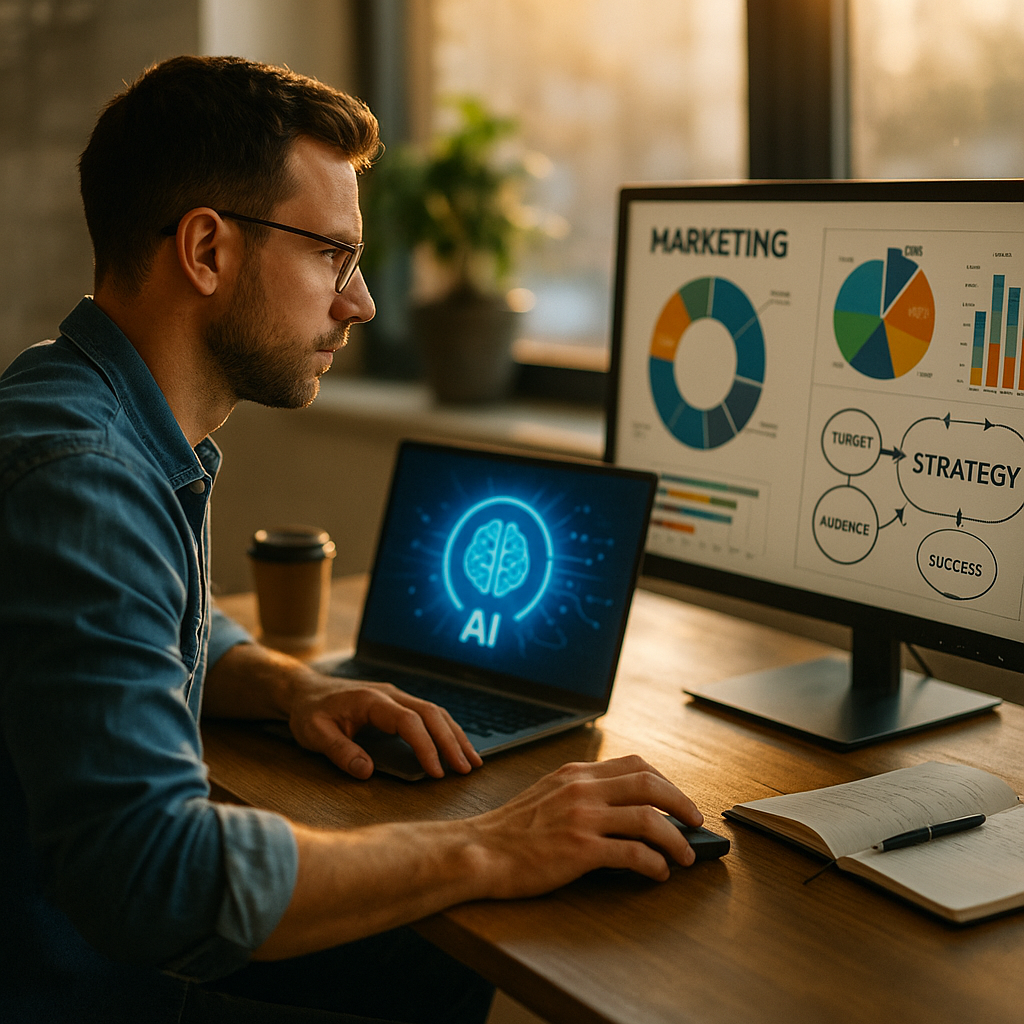
Only 14% of senior marketing roles posted this year explicitly require AI workflow competency alongside strategic campaign experience, according to LinkedIn Talent Insights data. That gap is not a hiring oversight. It is a structural misunderstanding of what the modern brand leadership role actually demands. If your job specs still separate “strategy” from “technology,” you are already behind.
Why the Hybrid Marketer Role Exists Now
The creator economy has matured faster than most marketing org charts. Brands are running always-on influencer programs, AI-assisted content workflows, real-time performance optimization, and multi-platform attribution simultaneously. These are not separate functions. They are one function, and someone has to own all of it.
The old model, where a VP of Brand Strategy handed a brief to a marketing ops team that handled the tooling, is breaking down. Not because ops teams are incompetent, but because the strategic and technical decisions are now inseparable. Choosing which AI discovery platform to use is a strategic decision. Knowing how to prompt a generative brief tool affects campaign quality. Understanding why your attribution model undercounts mid-funnel creator impact requires both analytical and narrative fluency.
This is the hybrid marketer: someone who can own a $5M influencer budget and also audit an AI workflow for data quality issues before a board presentation. That person is rare. And the competition to hire them is intensifying.
The strategic and technical decisions in modern influencer marketing are now inseparable — which means job specs that treat them as separate competencies are hiring for a role that no longer exists.
What “AI Workflow Competency” Actually Means at Senior Level
This is where most job specs go wrong. They list “AI familiarity” or “experience with marketing technology” as a bullet point at the bottom, under “nice to have.” That framing signals to candidates that the organization has not thought seriously about the role.
For a senior brand leader managing influencer programs, AI workflow competency in a meaningful sense means at least four things:
- Prompt engineering for creative and strategic outputs: The ability to direct tools like ChatGPT, Claude, or Jasper to produce usable first drafts of briefs, campaign frameworks, and performance narratives — not just play with them.
- AI-assisted creator discovery and vetting: Working fluency with platforms like Grin, Traackr, or Sprinklr’s AI modules to filter creator pools by audience quality signals, not just follower count. For deeper context, see our analysis of AI content analysis for creator discovery.
- Workflow integration: Understanding how AI tools connect to existing MarTech stacks, where human review checkpoints are required, and where automation can safely run without oversight. This is increasingly a compliance and governance concern, not just an efficiency one.
- Data interpretation: Reading AI-generated performance reports critically — knowing when the model is surfacing a real insight versus pattern-matching noise. This requires enough statistical literacy to push back on a vendor dashboard.
None of these require engineering skills. They require a disposition toward learning tooling, a willingness to get hands-on, and enough operational experience to know when a system is wrong. For brands building this competency into their team architecture, the AI-fluent team architecture framework offers a useful structural reference.
Writing the Job Spec: Four Things to Get Right
Here is where brand leaders and their HR partners routinely diverge. HR will default to templated language. Your job is to override it.
1. Lead with scope, not title. “Senior Manager, Influencer Strategy” says nothing. “Senior Brand Lead responsible for creator program P&L, AI workflow governance, and cross-platform attribution” says everything. Candidates self-select more accurately when the spec reflects operational reality.
2. Separate “required” from “coachable.” Strategic campaign experience at budget scale is not coachable in six months. Deep familiarity with one AI platform is. Structure your spec accordingly: require the campaign experience, specify the AI fluency level you need at hire, and be honest about what you will train.
3. Benchmark the AI competency level explicitly. Reference the hybrid marketer standard framing when setting internal benchmarks. “Proficient” means they can run an AI-assisted workflow independently. “Fluent” means they can build one. “Expert” means they can evaluate new tools and train others. Know which level you actually need.
4. Include a practical assessment. Ask candidates to walk through how they would use an AI tool to streamline a creator brief process, or how they would quality-check an AI-generated influencer shortlist. The answer reveals both their technical comfort and their strategic judgment. Candidates who have never thought about this at a practical level will not survive 90 days in the role.
The Talent Market: What Brands Are Actually Competing For
Let’s be direct about supply. The pool of marketers with five-plus years of senior influencer or creator strategy experience and documented AI workflow competency is genuinely small. LinkedIn Talent data shows AI-related skills appearing in fewer than 20% of profiles in the Brand Marketing and Influencer Marketing categories at director level and above.
This creates three practical hiring realities:
- You will compete against agencies. Large creator economy agencies and consulting firms are building hybrid practices and have begun absorbing senior brand-side talent with AI fluency. Compensation packages at these firms often include learning budgets and tooling access that in-house teams cannot match.
- Internal development is frequently faster than external hiring. A senior strategist with strong campaign instincts who gets structured AI upskilling (think: a 90-day cohort with hands-on tool access and measurable competency benchmarks) can reach functional hybrid proficiency faster than a 6-month external search. The AI skills gap in senior marketing analysis covers this trade-off in detail.
- Fractional and contractor models are filling the gap. Several brands are opting for a fractional hybrid lead, someone who brings the rare combination on a project or retainer basis while an internal candidate develops. This is not a long-term solution, but it is operationally sound for programs that cannot wait 18 months for the talent market to catch up.
A senior strategist with strong campaign instincts who gets structured AI upskilling can reach functional hybrid proficiency faster than a six-month external search — and retention rates are significantly higher.
Compensation benchmarking for this hybrid profile runs 15 to 25% above equivalent non-AI-fluent roles at director and senior manager level, according to data tracked by eMarketer and corroborated by conversations with agency talent leads. Budget accordingly or lose candidates in final rounds.
Governance and the Role Brief: Don’t Skip This Section
One dimension most job specs omit entirely: AI governance accountability. As brands scale AI-assisted influencer workflows, someone at the senior level needs to own the review process, the audit trail, and the compliance posture. The FTC’s guidance on endorsement disclosures increasingly intersects with AI-generated content decisions, and that intersection needs a named owner inside the organization.
If your hybrid marketer role includes any authority over content workflows, the job spec should explicitly include governance responsibilities. This is not a legal function. It is a strategic one. And candidates who understand that distinction are worth more. For context on what functional AI governance looks like inside creator programs, see AI governance for creator programs.
What Hiring Managers Should Watch For in Interviews
The most reliable signal is specificity. Ask candidates to name the last AI tool they used in a campaign workflow, describe what it did well, and describe where it failed. Vague answers about “leveraging AI to improve efficiency” reveal surface-level familiarity. Specific answers reveal operational experience.
Watch for candidates who can also articulate the limits of AI tools. The marketer who says “our AI discovery platform surfaced great reach metrics but consistently underfitted on audience psychographics, so we layered in a manual verification step” is telling you they understand both the capability and the risk. That judgment is exactly what the hybrid role requires. Additional hiring criteria benchmarks are covered in the CMO AI skills gap and hiring criteria resource.
For role benchmarking, industry framing from Sprout Social and HubSpot on marketing role evolution provides useful external anchors when briefing HR or an executive search firm on what the market expects.
Start your job spec rewrite this quarter. Waiting for the talent market to get clearer means losing the candidates who are already moving.
Frequently Asked Questions
What is a hybrid marketer role in the context of influencer and creator programs?
A hybrid marketer in this context is a senior brand or influencer marketing professional who combines strategic campaign ownership (budget management, creator relationships, multi-platform execution) with hands-on AI workflow competency (prompt engineering, AI-assisted discovery tools, data interpretation, and governance oversight). This is distinct from a traditional marketing technologist role, which is primarily tool-focused rather than strategy-led.
How should brands differentiate required AI skills from nice-to-have skills in a job spec?
Required AI skills should be those that directly affect the core responsibilities of the role from day one: for example, the ability to run an AI-assisted creator discovery workflow independently, or to quality-check AI-generated performance reports. Nice-to-have skills are those that can be developed on the job within a structured learning environment. Brands should be honest in their specs about what they will actually train, rather than listing every AI tool as a requirement and narrowing an already small candidate pool.
What compensation premium should brands expect when hiring for hybrid marketer roles?
Current market data suggests a 15 to 25% compensation premium above equivalent non-AI-fluent senior marketing roles at the director and senior manager level. This reflects genuine scarcity of the combined skill set, not inflation. Brands that benchmark compensation against traditional marketing roles will lose hybrid candidates in final rounds.
Is it faster to hire externally or develop hybrid marketer skills internally?
For most brands, developing an existing senior strategist with strong campaign instincts through a structured 90-day AI upskilling program is faster than a 6-month external search, and retention rates are significantly higher. External hiring makes more sense when the organization has no suitable internal candidate or needs the hybrid capability immediately for a specific program launch.
What governance responsibilities should be included in a hybrid marketer job spec?
Any senior marketer with authority over AI-assisted content or creator workflows should own the review and audit process for AI-generated outputs, maintain compliance with FTC endorsement disclosure guidelines as they apply to AI-assisted content, and serve as the internal escalation point for AI workflow decisions. This is a strategic function, not a legal one, and should be framed as such in the job description.
Top Influencer Marketing Agencies
The leading agencies shaping influencer marketing in 2026
Agencies ranked by campaign performance, client diversity, platform expertise, proven ROI, industry recognition, and client satisfaction. Assessed through verified case studies, reviews, and industry consultations.
Moburst

-
2

The Shelf
Boutique Beauty & Lifestyle Influencer AgencyA data-driven boutique agency specializing exclusively in beauty, wellness, and lifestyle influencer campaigns on Instagram and TikTok. Best for brands already focused on the beauty/personal care space that need curated, aesthetic-driven content.Clients: Pepsi, The Honest Company, Hims, Elf Cosmetics, Pure LeafVisit The Shelf → -
3

Audiencly
Niche Gaming & Esports Influencer AgencyA specialized agency focused exclusively on gaming and esports creators on YouTube, Twitch, and TikTok. Ideal if your campaign is 100% gaming-focused — from game launches to hardware and esports events.Clients: Epic Games, NordVPN, Ubisoft, Wargaming, Tencent GamesVisit Audiencly → -
4

Viral Nation
Global Influencer Marketing & Talent AgencyA dual talent management and marketing agency with proprietary brand safety tools and a global creator network spanning nano-influencers to celebrities across all major platforms.Clients: Meta, Activision Blizzard, Energizer, Aston Martin, WalmartVisit Viral Nation → -
5

The Influencer Marketing Factory
TikTok, Instagram & YouTube CampaignsA full-service agency with strong TikTok expertise, offering end-to-end campaign management from influencer discovery through performance reporting with a focus on platform-native content.Clients: Google, Snapchat, Universal Music, Bumble, YelpVisit TIMF → -
6

NeoReach
Enterprise Analytics & Influencer CampaignsAn enterprise-focused agency combining managed campaigns with a powerful self-service data platform for influencer search, audience analytics, and attribution modeling.Clients: Amazon, Airbnb, Netflix, Honda, The New York TimesVisit NeoReach → -
7

Ubiquitous
Creator-First Marketing PlatformA tech-driven platform combining self-service tools with managed campaign options, emphasizing speed and scalability for brands managing multiple influencer relationships.Clients: Lyft, Disney, Target, American Eagle, NetflixVisit Ubiquitous → -
8

Obviously
Scalable Enterprise Influencer CampaignsA tech-enabled agency built for high-volume campaigns, coordinating hundreds of creators simultaneously with end-to-end logistics, content rights management, and product seeding.Clients: Google, Ulta Beauty, Converse, AmazonVisit Obviously →