


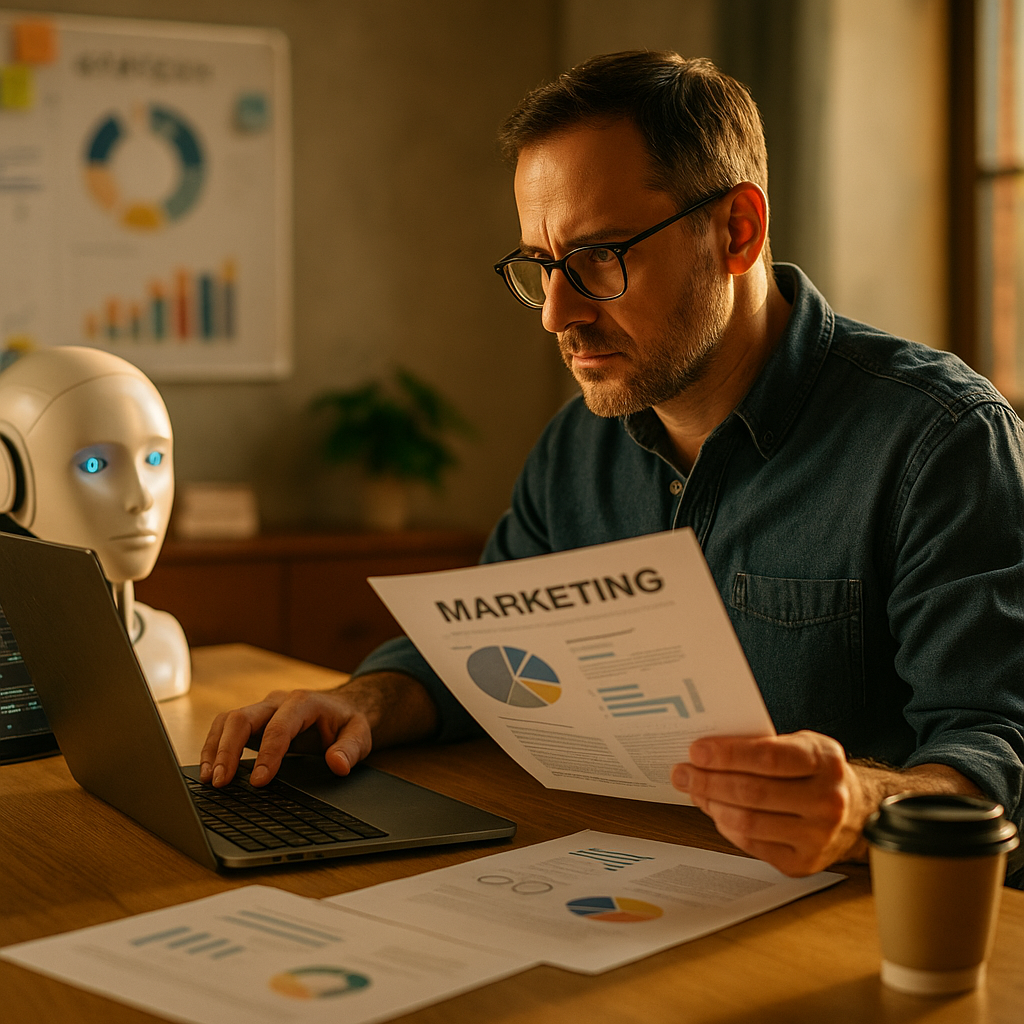
By the end of this year, 72% of CMOs report they cannot fill senior marketing roles because candidates either have strategic chops with no AI capability, or AI fluency with no brand judgment. The hybrid marketer standard isn’t a future aspiration. It’s the hiring crisis happening right now.
Why the Old Segmentation No Longer Works
For years, marketing org charts made a comfortable distinction: strategists handled brand thinking, positioning, and campaign architecture, while “digital” or “performance” specialists handled the tooling. That division made sense when the tooling was relatively contained — paid search, CRM workflows, basic analytics dashboards.
AI broke the partition.
When a VP of Brand Strategy can’t evaluate whether a generative AI content pipeline is degrading creative quality, or a Performance Director can’t translate attribution model outputs into a cohesive brand narrative, the organization develops blind spots that cost real money. We’re not talking about edge cases. We’re talking about the core decisions that senior marketers make every week: which creators to activate, how to allocate budget across surfaces, how to brief teams, how to prove program value to a CFO.
The AI skills gap in senior marketing isn’t a training problem in isolation. It’s an organizational design problem that starts with how role specifications are written.
What “Hybrid” Actually Means at the Senior Level
Let’s be precise, because “hybrid” gets used loosely. At the senior level, hybrid capability is not about being able to use ChatGPT to write a brief. Anyone can do that.
Genuine hybrid competency at Director level and above means three things:
- Strategic interpretation of AI outputs: The ability to evaluate what an AI-generated forecast, creative recommendation, or audience segment actually means for brand health and business objectives — and where the model is likely wrong.
- Workflow architecture literacy: Understanding how AI tools connect across a marketing stack (creator discovery platforms, content analysis tools, paid amplification systems) well enough to identify inefficiencies, vendor gaps, and compliance risks.
- Human judgment as a differentiator: Knowing when to override AI recommendations based on brand equity considerations, cultural context, or stakeholder dynamics that no model can weight correctly.
This isn’t a checklist you can train in a two-day workshop. It’s a practice that develops through repeated, real-stakes decision-making — which means your career development frameworks need to create those conditions deliberately.
Organizations that continue writing senior marketing role specs without explicit AI capability requirements aren’t just behind on hiring. They’re building teams that will struggle to govern the AI-driven programs they’re already running.
How Role Specifications Are Failing Candidates and Brands Right Now
Pull up any senior marketing job posting from a Fortune 500 brand or a mid-market DTC company right now. You’ll see requirements like “10+ years of brand marketing experience,” “proven track record of integrated campaign development,” maybe “familiarity with marketing technology platforms.” What you almost never see is a specific, testable AI capability requirement.
The result is a two-sided hiring failure. Exceptional candidates with genuine hybrid skills self-select out because the role sounds like it doesn’t value what they bring. And candidates without meaningful AI capability get hired because the spec never tested for it, creating a capability gap that surfaces six months into the role when AI governance issues or tool adoption problems emerge.
The CMO-level competency roadmap challenge is upstream of hiring, though. Most marketing leaders haven’t defined what “AI capable” looks like at different seniority levels in their specific organizational context. Without that definition, HR writes generic specs, hiring managers use gut instinct, and the standards remain inconsistently applied across the team.
Rewriting the Senior Marketing Role Spec
Concrete change starts here. A Director of Influencer Marketing or VP of Brand Partnerships role spec in this environment should include requirements that look something like this:
- Demonstrated ability to evaluate AI-generated creator discovery recommendations against first-party brand safety criteria
- Experience using AI content analysis tools (Traackr, Grin, Sprinklr, or equivalent) to inform campaign architecture decisions — not just to pull reports
- Comfort presenting AI-informed attribution models to CFO-level stakeholders and defending budget allocation decisions under scrutiny
- Familiarity with prompt engineering and AI output quality control in the context of creator brief development
Notice the framing: these aren’t “nice to have” technical skills. They’re applied competencies in context. The difference matters for both evaluation and candidate messaging.
For reference, LinkedIn’s talent data shows that marketing job postings requiring AI-related skills have grown significantly over recent hiring cycles, yet conversion rates on those postings lag behind generic marketing roles. The market wants these candidates. The job specs just don’t reflect that clearly enough to attract them.
Career Development Frameworks That Actually Build Hybrid Capability
Hiring better is necessary but not sufficient. The more durable competitive advantage comes from developing hybrid capability in your existing senior team.
Most current L&D approaches to AI upskilling fall into one of two inadequate categories: broad vendor-led platform training (often shallow and product-biased) or general AI literacy courses that don’t connect to the specific decisions a marketing leader makes on a Thursday afternoon when a creator campaign is underperforming and the attribution data looks inconsistent.
What actually works is learning embedded in real program decisions. Some structures that have proven effective:
- Decision audits: After each major campaign or creator program decision, teams document which AI tools influenced the decision, what the tool recommended, what the team actually did, and why any divergence occurred. This builds the interpretive muscle over time.
- Cross-functional AI squads: Pair senior brand strategists with performance and data specialists on live briefs, with explicit accountability for the AI tool stack audit. The learning happens in the friction.
- Vendor evaluation rotations: Require senior marketers to lead at least one tool evaluation process per year. Evaluating competing AI platforms (say, comparing creator AI tool stacks across Grin, Tagger, and Captiv8) builds fluency that no course can replicate.
The organizations advancing fastest on this aren’t necessarily the ones with the largest L&D budgets. They’re the ones treating AI capability development as an operational priority embedded in how work gets done, not as a training program that runs parallel to real work.
The hybrid marketer gap is widest at the Director and VP level — senior enough to set strategic direction, too removed from execution to have built tool fluency organically. That’s exactly where intentional career development investment pays off most.
Governance and the Overlooked Compliance Dimension
There’s a dimension of the hybrid marketer standard that gets underweighted in most hiring and development conversations: governance literacy.
Senior marketers running creator programs or brand campaigns powered by AI tools carry significant compliance exposure. FTC disclosure requirements, data privacy obligations under regulations like GDPR and state-level frameworks, and brand safety liabilities attached to AI-generated or AI-amplified content all require the leader to understand enough about how the tools work to know when they’re creating risk.
A VP who can build a beautiful brand strategy but doesn’t understand how an AI audience modeling tool is using customer data isn’t fully competent for the role anymore. The FTC’s evolving guidance on AI-generated content and endorsements makes this a legal exposure question, not just an operational one.
Governance literacy should be explicitly included in both role specifications and development frameworks. It’s not the same as legal review. It’s the practitioner’s ability to ask the right questions before a tool gets deployed, not after something goes wrong.
For teams managing AI fluency and governance requirements simultaneously, the integration of both into a single competency framework (rather than keeping them as separate compliance and capability tracks) is where the operational efficiency gains show up most clearly.
What This Means for Agency Partnerships and Budget Architecture
One downstream consequence of the hybrid marketer shift that doesn’t get enough attention: it changes how brands should evaluate and contract with agencies.
If your senior internal team has genuine hybrid capability, you need agency partners who can work at that level of sophistication — not agencies who are essentially providing AI capability your team lacks. The AOR vs hybrid agency decision looks different when your internal team is genuinely capable versus when they’re dependent on the agency for AI interpretation.
Budget architecture follows the same logic. When internal teams can evaluate AI-driven influencer discovery and content analysis outputs with genuine competency, the creator amplification spend decisions get made with more precision, less waste, and better accountability to business outcomes. Capability is a direct input to ROI.
According to eMarketer’s data, programmatic and AI-driven media decisions now account for a significant majority of digital marketing spend allocation. Senior marketers who can’t engage with those systems at a strategic level are effectively outsourcing some of the most consequential decisions in their programs.
The practical shift for brand leaders right now: audit every open or upcoming senior marketing role against a hybrid competency framework before posting. If your current job specs don’t explicitly test for applied AI capability in the context of your specific programs and tools, rewrite them before the next hire. That’s not a long-term organizational initiative. It’s a decision you can make this week.
Frequently Asked Questions
What is the hybrid marketer standard and why does it matter now?
The hybrid marketer standard refers to the expectation that senior marketing professionals possess both deep strategic brand experience and hands-on capability with AI tools and workflows. It matters now because AI has become central to core marketing decisions — creator discovery, attribution, content analysis, budget allocation — and organizations that separate “strategy” roles from “AI/tech” roles are creating governance gaps and capability blind spots that affect campaign performance and compliance.
How should brand leaders update senior marketing role specifications to reflect hybrid requirements?
Role specifications should move beyond generic “familiarity with marketing technology” language and instead include specific, testable AI competencies in context: ability to evaluate AI-generated creator recommendations against brand safety criteria, experience using named platforms (Traackr, Grin, Captiv8, Sprinklr) to influence campaign decisions, comfort presenting AI-informed attribution models to C-suite stakeholders, and demonstrated governance literacy around data privacy and FTC compliance in AI-assisted programs.
What’s the difference between AI literacy and genuine hybrid capability at the senior level?
AI literacy is awareness — understanding what AI tools can do in general terms. Hybrid capability at the senior level is applied competency: the ability to interpret AI outputs in the context of real strategic decisions, identify where models are likely wrong, architect workflows across a connected tool stack, and know when human brand judgment should override an algorithmic recommendation. The distinction matters enormously when writing role specs and designing development programs.
How can organizations develop hybrid capability in existing senior marketing teams?
The most effective approaches embed AI capability development in actual work rather than separating it into training programs. Decision audits after major campaigns, cross-functional squads that pair brand strategists with performance specialists on live briefs, and requiring senior marketers to lead vendor evaluation processes for AI platforms are all structures that build real fluency. The goal is repeated, high-stakes practice — not one-time certification.
Does the hybrid marketer standard apply to agency-side senior roles as well?
Yes. Agency Directors, VPs, and strategists who manage brand relationships face the same hybrid requirement. As client-side teams become more AI-capable, agencies that can’t match that sophistication risk losing strategic influence and being reduced to execution vendors. The hybrid standard is also changing how brands evaluate and contract agency partners — favoring agencies whose senior team can work alongside, not as a substitute for, an AI-capable internal marketing function.
Top Influencer Marketing Agencies
The leading agencies shaping influencer marketing in 2026
Agencies ranked by campaign performance, client diversity, platform expertise, proven ROI, industry recognition, and client satisfaction. Assessed through verified case studies, reviews, and industry consultations.
Moburst

-
2

The Shelf
Boutique Beauty & Lifestyle Influencer AgencyA data-driven boutique agency specializing exclusively in beauty, wellness, and lifestyle influencer campaigns on Instagram and TikTok. Best for brands already focused on the beauty/personal care space that need curated, aesthetic-driven content.Clients: Pepsi, The Honest Company, Hims, Elf Cosmetics, Pure LeafVisit The Shelf → -
3

Audiencly
Niche Gaming & Esports Influencer AgencyA specialized agency focused exclusively on gaming and esports creators on YouTube, Twitch, and TikTok. Ideal if your campaign is 100% gaming-focused — from game launches to hardware and esports events.Clients: Epic Games, NordVPN, Ubisoft, Wargaming, Tencent GamesVisit Audiencly → -
4

Viral Nation
Global Influencer Marketing & Talent AgencyA dual talent management and marketing agency with proprietary brand safety tools and a global creator network spanning nano-influencers to celebrities across all major platforms.Clients: Meta, Activision Blizzard, Energizer, Aston Martin, WalmartVisit Viral Nation → -
5

The Influencer Marketing Factory
TikTok, Instagram & YouTube CampaignsA full-service agency with strong TikTok expertise, offering end-to-end campaign management from influencer discovery through performance reporting with a focus on platform-native content.Clients: Google, Snapchat, Universal Music, Bumble, YelpVisit TIMF → -
6

NeoReach
Enterprise Analytics & Influencer CampaignsAn enterprise-focused agency combining managed campaigns with a powerful self-service data platform for influencer search, audience analytics, and attribution modeling.Clients: Amazon, Airbnb, Netflix, Honda, The New York TimesVisit NeoReach → -
7

Ubiquitous
Creator-First Marketing PlatformA tech-driven platform combining self-service tools with managed campaign options, emphasizing speed and scalability for brands managing multiple influencer relationships.Clients: Lyft, Disney, Target, American Eagle, NetflixVisit Ubiquitous → -
8

Obviously
Scalable Enterprise Influencer CampaignsA tech-enabled agency built for high-volume campaigns, coordinating hundreds of creators simultaneously with end-to-end logistics, content rights management, and product seeding.Clients: Google, Ulta Beauty, Converse, AmazonVisit Obviously →