


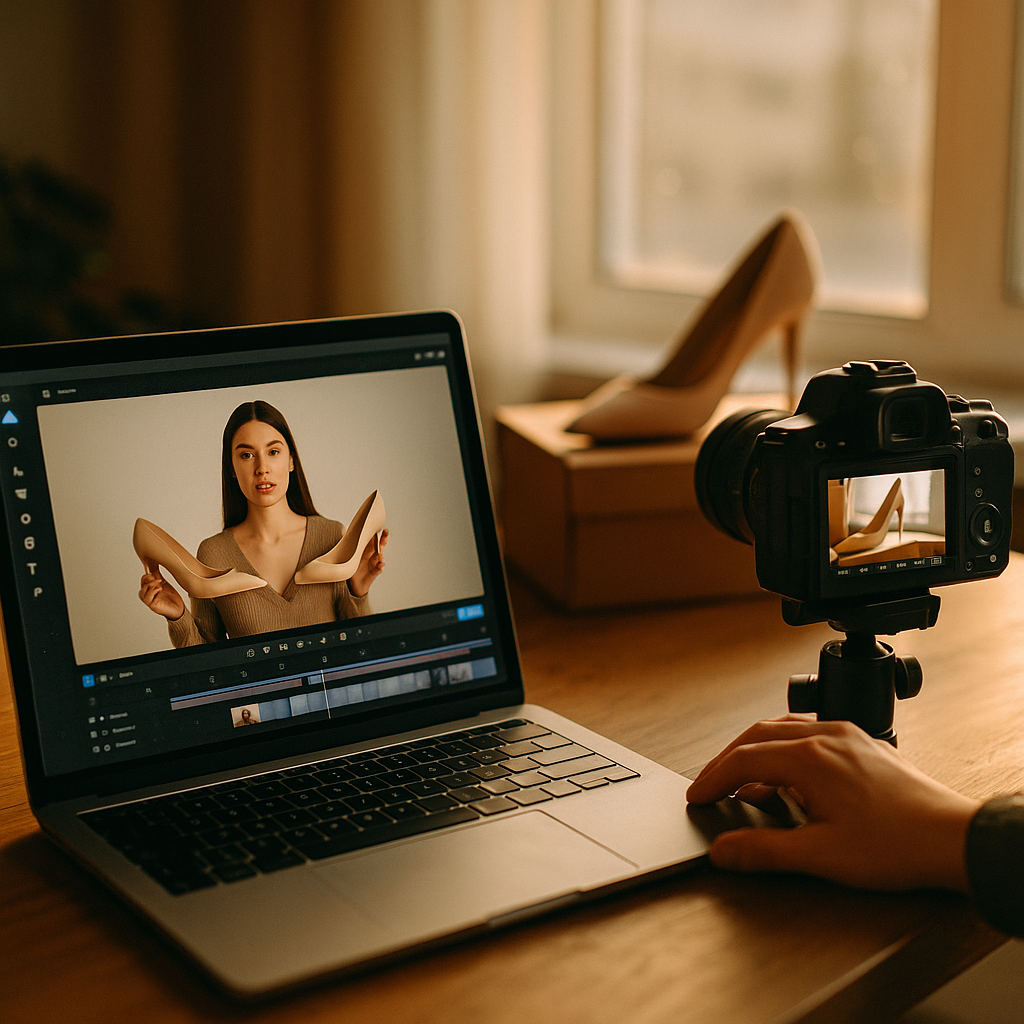
Brands running paid social at scale are burning six figures annually on video production that AI can now replicate in minutes. The question isn’t whether AI e-commerce video ad platforms like NemoVideo belong in your stack — it’s whether your team knows how to evaluate them against the workflow you already have.
The Production Problem Nobody Talks About in Budget Reviews
Manual video ad production is slow by design. A single product video — brief, concept, shoot, edit, revisions, versioning for Stories vs. Reels vs. TikTok — can take two to four weeks and cost anywhere from $3,000 to $15,000 depending on your agency tier. Multiply that across a catalog of 200 SKUs and seasonal refresh cycles, and the math becomes embarrassing fast.
AI-native platforms like NemoVideo flip this entirely. You paste a product URL, the system scrapes imagery, copy, and metadata, then renders platform-optimized video variants in minutes. Vertical for TikTok. Square for Meta feed. Widescreen for YouTube pre-roll. The same asset brief, executed in parallel, without a single creative call.
That’s operationally significant. But “fast and cheap” is not the same as “effective.” Senior marketers know this instinctively, which is why the evaluation criteria matter more than the demo reel.
What These Platforms Actually Do (And Where They Stop)
To evaluate fairly, you need to understand the technical scope. NemoVideo-style tools sit at the intersection of generative AI, dynamic creative optimization, and commerce data ingestion. The core pipeline works like this:
- Ingestion: The platform pulls product data from a URL, feed, or API connection to your catalog (Shopify, WooCommerce, or custom).
- Asset synthesis: AI assembles video using existing product imagery, generates voiceover or text overlays, selects music, and applies motion effects.
- Format rendering: Output is generated simultaneously across aspect ratios and duration specs for each destination platform.
- Performance hooks: Some platforms embed dynamic elements — price callouts, offer countdowns, CTA variants — that connect to live feed data.
Where they stop: brand voice nuance, talent-driven storytelling, emotionally complex narratives, and anything requiring original footage. A platform generating ads from product links cannot replicate a founder’s authentic origin story or a creator’s raw unboxing energy. For those use cases, manual production or multimodal AI creative pipelines with human creative direction still lead.
The Evaluation Framework Brand Teams Should Actually Use
Most vendor comparisons default to feature checklists. That’s the wrong lens. What you need is a performance-weighted framework that accounts for your specific volume, margin profile, and channel mix.
1. Output-to-performance ratio, not just output speed. How do ads generated by the platform perform against your current creative benchmarks? Request platform case studies broken down by CTR, ROAS, and thumb-stop rate — not just production time saved. If a vendor can’t provide platform-specific performance data (Meta vs. TikTok, for example), that’s a gap worth probing. The NemoVideo ROI breakdown for TikTok and Meta is a useful reference point for benchmarking expectations before you sign a contract.
2. Catalog compatibility and feed fidelity. Does the platform handle your catalog structure cleanly? Test with edge cases: products with variant images, bundles, items with minimal copy. Feed errors that produce mismatched ads are a brand safety risk, not just a QA annoyance.
3. Creative control depth. Brand teams that have fought hard for visual identity standards will feel the tension here. Evaluate how much you can lock: fonts, color palettes, animation style, voice tone. Some platforms offer shallow customization; others expose template logic you can manipulate meaningfully. Know your threshold before the demo.
4. Attribution architecture. How does the platform pass conversion data back to your measurement stack? UTM parameters are table stakes. The more important question is whether it integrates with your CRM attribution models or connects to your existing ad accounts without introducing tracking fragmentation.
5. Compliance and rights management. AI-generated video using scraped product imagery, licensed music, and synthesized voiceover creates a layered rights situation. Understand exactly what the platform licenses on your behalf, what you’re responsible for, and how liability is allocated in the terms of service. Agencies managing multiple brand accounts need this in writing before scaling. Check platform-level requirements at Meta for Business and TikTok for Business to ensure AI-generated ad content meets current disclosure standards.
AI video platforms that can’t demonstrate platform-specific ROAS benchmarks — not just production speed — are selling efficiency, not performance. Evaluate them accordingly.
Manual Production Still Wins in Three Specific Scenarios
Be honest about where AI tooling falls short. Manual workflows retain a clear advantage when:
- The product requires demonstration. Apparel fit, complex assembly, textural nuance — these need real footage. AI synthesis from static imagery produces plausible but unconvincing motion for tactile-heavy categories.
- Creator authenticity is the campaign mechanic. Influencer-led content relies on personality, spontaneity, and community trust signals that no AI tool generates from a product link. For these programs, integrating social commerce attribution with creator-produced content remains the more defensible path.
- You’re targeting top-funnel brand building, not direct response. AI-native tools are optimized for conversion-oriented formats. Brand narrative campaigns with longer arcs and emotional depth still require human creative leadership.
Stack Integration: The Question Teams Skip Until It’s Too Late
Operational efficiency gains from AI video production evaporate quickly if the platform doesn’t connect cleanly to the rest of your stack. Before committing to a platform, map the integration points explicitly.
Does it connect to your product information management (PIM) system? Does it export directly to Meta Ads Manager and TikTok Ads Manager, or does it create manual download-and-upload friction? Does it support A/B creative rotation natively, or do you need a separate dynamic creative optimization layer? Understanding all-in-one AI platforms versus point solutions for your creative stack will shape how you answer these questions — and whether a standalone video tool or a broader platform suite is the smarter contract.
Brands that skip this integration audit during the pilot phase often find themselves paying for a tool that creates work rather than eliminating it. The asset is generated in minutes; the manual trafficking takes hours. That’s not a technology problem — it’s a procurement failure.
Cost Modeling: The Comparison That Actually Informs Budget Decisions
Run the real numbers. On the manual side, account for agency retainer or per-project rates, internal project management hours, revision cycles, and time-to-launch lag. On the AI platform side, account for licensing fees, internal QA hours (yes, you still need human review), and any creative direction overhead for brand compliance.
According to eMarketer, video ad spending in retail e-commerce continues to outpace overall digital growth, which means the volume pressure on creative teams is structural, not cyclical. The cost argument for AI tooling gets stronger as SKU counts and channel requirements grow. But the break-even point varies dramatically by catalog size and production complexity. A 50-SKU brand with a strong agency relationship may find manual workflows more cost-effective. A 2,000-SKU brand running performance creative at daily refresh cadence almost certainly won’t.
Statista data consistently shows that mobile video drives the majority of social commerce conversions, which raises the stakes for format-optimized output — precisely where AI platforms have the clearest structural advantage over manual production workflows that often treat mobile as an afterthought.
For brands with large SKU catalogs and performance creative at the core of their paid strategy, AI video platforms aren’t a cost-cutting measure. They’re a competitive necessity.
Vendor Risk and Long-Term Considerations
AI tooling in this category is consolidating fast. Platforms that exist today as standalone products will be absorbed into larger ad tech suites or shut down within 24 months. Before committing significant workflow dependency to any single vendor, review their funding position, API openness, and contractual portability provisions. Your creative assets and performance data need to be exportable on your terms, not theirs.
For teams managing this decision across multiple brand accounts or creator relationships, the creator tech stack vetting framework offers a transferable due diligence lens even for non-creator tools. Platform longevity, data ownership, and integration flexibility matter regardless of the tool category. Review FTC guidance on AI-generated advertising disclosures as that regulatory framework continues to evolve — getting ahead of compliance requirements now is cheaper than retrofitting later.
Run a structured pilot — 60 to 90 days, real spend, real SKUs, against your actual manual production baseline. Measure output volume, creative QA hours, platform performance by format, and total cost of production. That pilot data is what makes the business case, not the vendor’s case study library.
Frequently Asked Questions
What types of e-commerce brands benefit most from AI video ad platforms?
Brands with large SKU catalogs, frequent promotional cycles, or aggressive multi-channel paid social programs gain the most from AI video ad platforms. Categories like beauty, apparel accessories, consumer electronics, and home goods — where product visuals are strong and demonstration complexity is moderate — see the clearest performance lift. Brands relying heavily on tactile product experience or creator-led authenticity tend to see more limited returns from fully automated generation.
How do AI-generated video ads typically perform compared to manually produced ads on Meta and TikTok?
Performance varies significantly by category, creative quality settings, and how well the platform is configured for brand standards. When properly optimized, AI-generated video ads can match or exceed manually produced direct-response creative on thumb-stop rate and CTR, particularly for bottom-funnel retargeting. Top-funnel brand campaigns with emotional narrative arcs typically still favor human-produced content. Always benchmark against your own creative performance data, not vendor averages.
What should brand teams include in a pilot test of an AI video ad platform?
A credible pilot should run 60 to 90 days with a representative sample of SKUs, including your catalog’s edge cases. Define success metrics before launch: ROAS by format, thumb-stop rate, QA hours per 100 assets, and total cost of production including internal labor. Run the AI-generated creative against your current manually produced creative in the same ad accounts with equivalent spend. Document integration friction points throughout, not just at the end.
How do AI video platforms handle brand safety and compliance for ad content?
Brand safety compliance on AI-generated video ads is a shared responsibility between the platform and the brand team. The platform handles content generation within licensed parameters; the brand team is responsible for reviewing output against brand guidelines, verifying music and imagery rights coverage in the platform’s terms, and ensuring disclosure requirements for AI-generated content are met per FTC guidelines and platform-level policies at Meta and TikTok. Do not assume compliance is automatic — build a QA checkpoint into your workflow.
Is it worth replacing the entire manual video production workflow with an AI platform?
Rarely is a full replacement the right move. The more defensible strategy is to use AI video platforms for high-volume, performance-oriented creative at the bottom and middle of the funnel — product-level ads, retargeting, promotional variants — while preserving manual production capacity for brand-building campaigns, creator collaborations, and hero content. The two workflows serve different creative and strategic purposes, and the best-performing programs treat them as complementary rather than competitive.
Top Influencer Marketing Agencies
The leading agencies shaping influencer marketing in 2026
Agencies ranked by campaign performance, client diversity, platform expertise, proven ROI, industry recognition, and client satisfaction. Assessed through verified case studies, reviews, and industry consultations.
Moburst

-
2

The Shelf
Boutique Beauty & Lifestyle Influencer AgencyA data-driven boutique agency specializing exclusively in beauty, wellness, and lifestyle influencer campaigns on Instagram and TikTok. Best for brands already focused on the beauty/personal care space that need curated, aesthetic-driven content.Clients: Pepsi, The Honest Company, Hims, Elf Cosmetics, Pure LeafVisit The Shelf → -
3

Audiencly
Niche Gaming & Esports Influencer AgencyA specialized agency focused exclusively on gaming and esports creators on YouTube, Twitch, and TikTok. Ideal if your campaign is 100% gaming-focused — from game launches to hardware and esports events.Clients: Epic Games, NordVPN, Ubisoft, Wargaming, Tencent GamesVisit Audiencly → -
4

Viral Nation
Global Influencer Marketing & Talent AgencyA dual talent management and marketing agency with proprietary brand safety tools and a global creator network spanning nano-influencers to celebrities across all major platforms.Clients: Meta, Activision Blizzard, Energizer, Aston Martin, WalmartVisit Viral Nation → -
5

The Influencer Marketing Factory
TikTok, Instagram & YouTube CampaignsA full-service agency with strong TikTok expertise, offering end-to-end campaign management from influencer discovery through performance reporting with a focus on platform-native content.Clients: Google, Snapchat, Universal Music, Bumble, YelpVisit TIMF → -
6

NeoReach
Enterprise Analytics & Influencer CampaignsAn enterprise-focused agency combining managed campaigns with a powerful self-service data platform for influencer search, audience analytics, and attribution modeling.Clients: Amazon, Airbnb, Netflix, Honda, The New York TimesVisit NeoReach → -
7

Ubiquitous
Creator-First Marketing PlatformA tech-driven platform combining self-service tools with managed campaign options, emphasizing speed and scalability for brands managing multiple influencer relationships.Clients: Lyft, Disney, Target, American Eagle, NetflixVisit Ubiquitous → -
8

Obviously
Scalable Enterprise Influencer CampaignsA tech-enabled agency built for high-volume campaigns, coordinating hundreds of creators simultaneously with end-to-end logistics, content rights management, and product seeding.Clients: Google, Ulta Beauty, Converse, AmazonVisit Obviously →