


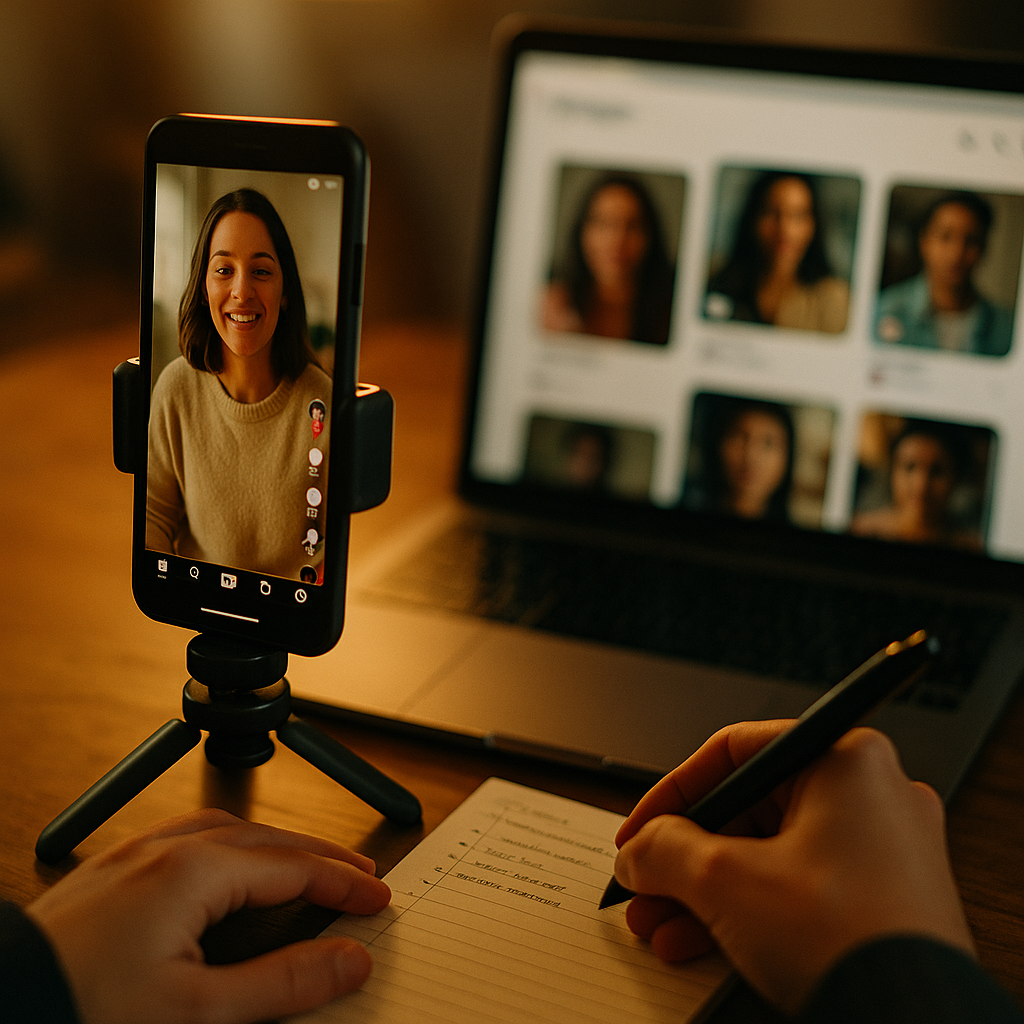
Sixty percent of the highest-performing branded content on short-form platforms now runs as part of a series, not a standalone clip. If your content calendar still operates clip-by-clip, you are not just behind on creative trends — you are structurally misaligned with where both TikTok and Meta are investing their platform infrastructure.
What the TikTok-Sundance Partnership Actually Signals
TikTok’s collaboration with the Sundance Institute is not a PR play. It is a deliberate move to attract premium storytelling talent to the platform and to legitimize long-form, episodic video as a core content format — not a workaround. When one of the most respected independent film festivals in the world co-develops creator content with a short-form platform, the message to brand strategists is unambiguous: narrative depth is now a platform priority, not a creative indulgence.
The program funds and mentors creators building multi-episode projects. That infrastructure tells you something important. TikTok is not asking creators to stretch a single video. It is asking them to think in arcs, in character development, in episode hooks. For brands, this means the platform is actively building an audience conditioned to follow stories across sessions — exactly the behavior that high-consideration purchase categories need to move buyers through a funnel.
When TikTok partners with Sundance, it is not chasing prestige. It is training its user base to expect narrative continuity — and brand content strategies that ignore this will feel like interruptions, not contributions.
Meta’s Series Feature: The Operational Detail Most Teams Are Missing
Meta’s Series feature on Reels and Facebook Video allows creators to group content into structured, labeled sequences that followers can navigate deliberately. Most brand teams have clocked this as a UX update. It is actually a distribution shift.
Organized series content receives preferential algorithmic treatment in Meta’s recommendation layer. That means episodic brand content — when properly structured and tagged — competes differently than one-off posts. The discoverability mechanics change. Users who engage with episode one are surfaced episode two. Completion rates compound. For a more detailed breakdown of how these features are being used tactically, see our coverage on TikTok paid series and Meta hubs.
The operational miss for most brand teams is that they are applying single-asset production workflows to what is now a serialized content format. A three-episode series requires a different brief, a different creator contract, a different approval cycle, and a different measurement framework than three disconnected posts. Teams treating it as the latter will consistently underperform on both reach and retention metrics.
Why This Demands Multi-Quarter Planning, Not Campaign Thinking
Here is where most brand content strategies break down. Episodic formats require narrative commitment. You cannot launch a series in Q1 and abandon it in Q2 because a budget reforecast hit. The audience contract is explicit: they follow because they expect continuation. Breaking that contract does not just underperform — it actively damages creator trust and brand perception among the very engaged users you paid to acquire.
Multi-quarter planning for episodic content means:
- Locking creator agreements across a defined series arc, not per post or per month
- Building content approval timelines that accommodate episode sequencing and cliffhanger mechanics
- Aligning legal and compliance review cycles with release cadences so episodes do not stall mid-series
- Mapping measurement checkpoints to series milestones, not arbitrary calendar quarters
- Coordinating paid amplification strategy across the full arc, not just the launch episode
This is a structural change to how influencer programs are managed. Creator partnership architecture is already being renegotiated across the industry, and serialized content commitments are a direct driver of that shift.
The Budget Implications Are Real
Episodic content costs more upfront. A six-episode creator series requires higher creative development investment, longer production timelines, and more complex contractual structures than six independent posts. But the ROI calculus shifts when you account for compounding engagement and audience retention data that serialized formats generate.
Platforms like TikTok for Business and Meta Business Suite are beginning to surface series-level analytics — aggregate completion rates, cross-episode follower retention, and series-level share behavior — that justify the higher upfront spend to finance teams. The pitch to a CFO changes when you can show sustained attention across six touchpoints rather than six separate one-time impressions.
For teams managing amplification budget models at scale, the reallocation question becomes: how much of your current per-post paid distribution budget could be consolidated into series-level boosts that deliver compounding reach at lower blended CPMs?
Creator Selection Changes When You’re Building a Series
Casting for a six-episode series is not the same as selecting a creator for a product launch post. Storytelling stamina matters. Can this creator maintain narrative tension across episodes? Do they have an audience that has demonstrated multi-session engagement behavior? Do their existing content series show episode-to-episode retention?
The creator evaluation criteria shift significantly. Engagement rate per post becomes less relevant than series completion rate and cross-episode audience overlap. These metrics are not always available in standard influencer discovery platforms, which means your vendor stack may need updating. Creator platform analytics standards are evolving fast, and brands that do not pressure-test their tools against serialized content measurement will have gaps in their performance data.
Consider also the exclusivity dimension. A creator committed to a multi-episode branded series for your brand cannot simultaneously run a competing series for a rival. This changes how exclusivity clauses are written and priced. See current rate benchmarks and exclusivity economics for what this is costing brands right now.
Compliance and Brand Safety in a Serialized Format
Serialized content introduces a compliance risk that isolated clips do not: narrative drift. In episode one, a creator’s framing of your product may be perfectly on-brief. By episode four, organic storytelling choices may introduce claims, comparisons, or implied endorsements that create FTC disclosure complications or brand safety violations. Legal teams reviewing post-by-post without visibility into the full narrative arc will miss this.
The fix is a series-level creative brief that maps permitted and restricted narrative territory across the full arc, reviewed by legal before episode one goes into production. This is not a creative constraint. It is risk mitigation at the scale of a multi-month brand commitment.
In serialized branded content, the greatest compliance risk is not what a creator says in one video — it is the cumulative narrative they build across six. Review the arc, not just the asset.
What This Means for Competitive Positioning
Most brand content teams are still running a clip-first production model because that is what the platforms required two years ago. The brands that recognize the episodic shift now — and restructure their creator program operations, budget models, and measurement frameworks accordingly — will build genuine audience equity that is compounding by the time competitors catch up.
This is not about chasing a format trend. It is about recognizing that social platform algorithms now reward sustained attention, and serialized content is the most reliable structural mechanism for generating it at scale. The platforms are telling you this directly, through their infrastructure investments and their partnership programs. The strategic question is whether your planning cycles are long enough to respond.
Start by auditing your current creator contracts for series-extension provisions. If your agreements do not include them, your next negotiation cycle should. That single operational change is the foundation everything else builds on.
Frequently Asked Questions
What is the TikTok-Sundance program and why does it matter for brand marketers?
The TikTok-Sundance program is a collaboration between TikTok and the Sundance Institute designed to develop and fund creators building episodic, narrative-driven content on the platform. For brand marketers, it signals a platform-level commitment to serialized storytelling as a priority format — meaning audiences are being trained to expect and follow multi-episode content, and brand strategies need to align with that behavior shift.
How does Meta’s Series feature affect content distribution and discoverability?
Meta’s Series feature allows creators and brands to group Reels and Facebook videos into structured, labeled sequences. Episodic content organized through this feature receives preferential algorithmic treatment, meaning users who engage with one episode are more likely to be surfaced subsequent episodes. This creates compounding reach and retention advantages that isolated posts cannot replicate.
Why does episodic branded content require multi-quarter planning?
Serialized content establishes an audience contract — viewers follow because they expect continuation. If a brand launches a series and discontinues it mid-arc due to budget shifts or campaign pivots, it breaks that contract and actively damages brand perception among the engaged audience it paid to acquire. Multi-quarter planning ensures creator agreements, approval workflows, amplification budgets, and measurement frameworks are all aligned to the full series lifecycle.
How should creator selection criteria change for a series versus a one-off post?
For serialized content, brands should prioritize creators who demonstrate storytelling stamina, cross-episode audience retention, and existing series completion rates among their followers. Engagement rate per post becomes less relevant than a creator’s ability to sustain narrative tension and retain viewers across multiple episodes. Standard influencer discovery tools may not surface these metrics, so brands should pressure-test their analytics vendors against serialized content measurement requirements.
What are the key compliance risks specific to multi-episode branded content?
The primary compliance risk in serialized formats is narrative drift — where a creator’s storytelling choices across episodes cumulatively introduce claims, comparisons, or implied endorsements that create FTC disclosure issues or brand safety violations. Brands should develop a series-level creative brief reviewed by legal before production begins, mapping permitted and restricted narrative territory across the full arc rather than reviewing individual episodes in isolation.
How does serialized content affect creator contract and exclusivity structures?
A creator committed to a multi-episode branded series cannot simultaneously produce a competing series for a rival brand, which makes exclusivity provisions more significant and more expensive in serialized partnerships. Contracts must cover the full series arc rather than individual posts or monthly periods, and exclusivity clauses should be specifically scoped to the series format, timeline, and category to reflect the higher commitment value accurately.
Top Influencer Marketing Agencies
The leading agencies shaping influencer marketing in 2026
Agencies ranked by campaign performance, client diversity, platform expertise, proven ROI, industry recognition, and client satisfaction. Assessed through verified case studies, reviews, and industry consultations.
Moburst

-
2

The Shelf
Boutique Beauty & Lifestyle Influencer AgencyA data-driven boutique agency specializing exclusively in beauty, wellness, and lifestyle influencer campaigns on Instagram and TikTok. Best for brands already focused on the beauty/personal care space that need curated, aesthetic-driven content.Clients: Pepsi, The Honest Company, Hims, Elf Cosmetics, Pure LeafVisit The Shelf → -
3

Audiencly
Niche Gaming & Esports Influencer AgencyA specialized agency focused exclusively on gaming and esports creators on YouTube, Twitch, and TikTok. Ideal if your campaign is 100% gaming-focused — from game launches to hardware and esports events.Clients: Epic Games, NordVPN, Ubisoft, Wargaming, Tencent GamesVisit Audiencly → -
4

Viral Nation
Global Influencer Marketing & Talent AgencyA dual talent management and marketing agency with proprietary brand safety tools and a global creator network spanning nano-influencers to celebrities across all major platforms.Clients: Meta, Activision Blizzard, Energizer, Aston Martin, WalmartVisit Viral Nation → -
5

The Influencer Marketing Factory
TikTok, Instagram & YouTube CampaignsA full-service agency with strong TikTok expertise, offering end-to-end campaign management from influencer discovery through performance reporting with a focus on platform-native content.Clients: Google, Snapchat, Universal Music, Bumble, YelpVisit TIMF → -
6

NeoReach
Enterprise Analytics & Influencer CampaignsAn enterprise-focused agency combining managed campaigns with a powerful self-service data platform for influencer search, audience analytics, and attribution modeling.Clients: Amazon, Airbnb, Netflix, Honda, The New York TimesVisit NeoReach → -
7

Ubiquitous
Creator-First Marketing PlatformA tech-driven platform combining self-service tools with managed campaign options, emphasizing speed and scalability for brands managing multiple influencer relationships.Clients: Lyft, Disney, Target, American Eagle, NetflixVisit Ubiquitous → -
8

Obviously
Scalable Enterprise Influencer CampaignsA tech-enabled agency built for high-volume campaigns, coordinating hundreds of creators simultaneously with end-to-end logistics, content rights management, and product seeding.Clients: Google, Ulta Beauty, Converse, AmazonVisit Obviously →