


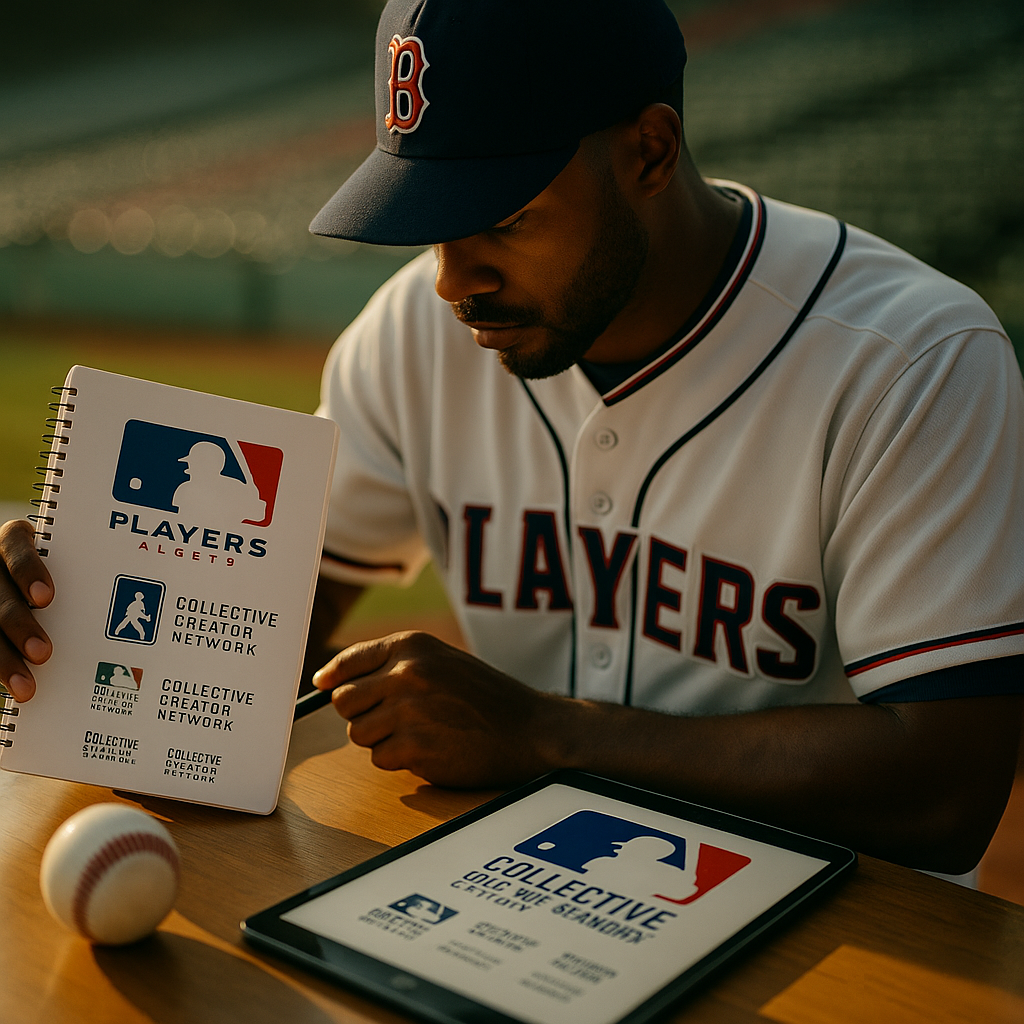
What if you could license access to 1,200 professional athletes as a single, programmable content layer? That’s the operational premise behind the MLB Players Inc. Collective Creator Network, and it’s forcing brand partnership teams to rethink how they structure deals, measure reach, and manage rights at scale.
Roster-as-Infrastructure: The Model Explained
MLB Players Inc. (MLBPI), the licensing and marketing arm of the MLB Players Association, has historically brokered group licensing deals for video games, trading cards, and apparel. The Collective Creator Network extends that logic into content: players opt into a shared creator pool, brand partners access the roster collectively, and content obligations are distributed across participants rather than concentrated in a single athlete ambassador.
Think of it less like a traditional endorsement deal and more like programmatic media. Instead of negotiating one hero contract with Aaron Judge, a brand can activate across dozens of players simultaneously, each producing platform-native content calibrated to their own audience demographics. The infrastructure handles rights clearance, brand safety review, and performance reporting centrally.
For brand teams, this changes the unit economics of athlete partnerships entirely.
Why the Old Athlete Partnership Playbook Is Breaking Down
Single-athlete ambassador deals are expensive, brittle, and increasingly poor at driving sustained algorithmic reach. A tier-one MLB star might command $500K+ for a season-long arrangement, with performance heavily dependent on how that player’s season unfolds. An injury in April, a slump in July, or a controversy in September can crater the investment mid-flight.
Distributed creator networks reduce single-point-of-failure risk. When one athlete’s content underperforms or a deal falls through, the program doesn’t collapse — it rebalances. That’s not a nice-to-have; it’s operational resilience.
The collective model hedges that risk structurally. It also solves an algorithmic reach problem that most brand teams haven’t fully internalized: platform algorithms reward consistency and volume, not just quality. One premium video from a star player every six weeks is no match for a drumbeat of authentic, high-frequency content across a distributed roster. Brands investing in creator partnership architecture are already learning this the hard way.
What “Content Infrastructure” Actually Means for Deal Structure
The terminology matters here. Calling a player roster “content infrastructure” isn’t marketing language — it’s a structural description of how the network functions operationally.
In a traditional sponsorship, the brand buys access to an individual and their audience. In an infrastructure model, the brand buys access to a system: a managed pool of creators with standardized rights frameworks, centralized brand safety protocols, a content distribution layer, and aggregate analytics. The individual players are nodes, not the product itself.
This has direct implications for how you structure contracts and budget:
- Rights bundling: NIL (Name, Image, Likeness) rights are pre-cleared across the pool, eliminating the per-athlete legal overhead that inflates costs in individual deals.
- Content cadence commitments: Brands negotiate a volume of content outputs, not a number of individual athletes. Delivery is managed collectively.
- Performance SLAs: With enough nodes in the network, aggregate performance metrics become predictable. You can model expected impressions and engagement ranges before signing.
- Category exclusivity: Exclusivity operates at the category level across the full roster rather than being negotiated athlete by athlete. This simplifies competitive conflict management significantly.
For brand teams already navigating exclusivity and partnership economics in traditional influencer programs, the parallel is instructive. The same questions apply here, just at a different scale and with a different rights holder at the center.
Platform Distribution and the Algorithmic Case for Roster Depth
Where this model gets genuinely interesting is platform strategy. Each MLB player in the network has a distinct audience profile: age skew, geographic concentration, platform preference, and engagement style. A brand activating across the roster isn’t just buying reach — it’s buying audience mosaic coverage that no single creator can replicate.
Consider a financial services brand targeting men 25-45. A single athlete partnership likely over-indexes on the player’s home market and primary platform. A roster-based activation lets the brand distribute content across Instagram, TikTok, and YouTube simultaneously, with different players anchoring each platform based on where their audiences actually live. The creator economy’s growth trajectory makes this kind of platform diversification a budget imperative, not a strategic luxury.
There’s also a content format dimension. Some players are natural short-form video talent. Others generate outsized engagement through static posts or Stories. Infrastructure-model networks, when properly managed, match content format to player strength rather than forcing every node to produce identical outputs.
The Operational Overhead Trade-Off
None of this comes without complexity. Managing a distributed roster at this scale requires significant operational infrastructure on the brand side as well. Your team needs clear creative briefs that can flex across player personalities without losing brand coherence. You need a content approval workflow that can handle volume without becoming a bottleneck. And you need analytics capability that aggregates node-level performance into program-level insight.
Brands that haven’t yet built scalable creator operations will struggle here. Collective networks don’t simplify the creative process — they amplify it. If your brief-to-publish cycle takes three weeks per piece, a 30-player activation won’t run any faster; it’ll just create 30 parallel bottlenecks. Teams thinking about influencer agency model selection should factor in whether their current partners can actually manage distributed roster activations at this operational tempo.
The brands that will extract full value from collective creator networks are the ones that have already standardized their creator workflows. Infrastructure partnerships reward operational maturity.
There’s also a measurement standardization question that the industry hasn’t fully resolved. Analytics standards across creator platforms remain fragmented, and aggregating performance data across 30 athletes posting across four platforms requires either a robust managed service from MLBPI or significant investment in your own measurement stack. Know which you’re buying before you sign.
Brand Safety and Compliance at Scale
One legitimate concern with roster-based networks: you’re accepting a level of brand safety exposure that scales with participant count. A single ambassador creates a manageable monitoring task. Thirty athletes posting weekly across multiple platforms is a materially different compliance surface area.
The FTC’s disclosure guidelines require sponsored content to be clearly labeled regardless of whether the relationship is with an individual or a collective. MLBPI’s managed infrastructure should include disclosure compliance as a core deliverable — if it’s not explicitly addressed in the contract, that’s a gap brands need to close before activation begins.
Best practice here is to require the network operator to maintain a compliance audit trail: confirmation of disclosure tagging on each post, documentation of brand safety review, and rapid-response protocols for any content that needs to be pulled. eMarketer data consistently shows brand safety as a top concern for marketing leaders scaling influencer programs, and that concern doesn’t diminish when the rights holder is a sports union rather than an individual creator.
Budget Architecture: How to Model the Investment
For budget planning purposes, collective creator networks sit in an interesting position. They’re not a media buy (no guaranteed impressions contract), not a traditional sponsorship (no asset-based value exchange), and not a standard influencer retainer (no individual creator relationship). Most existing budget frameworks struggle to classify them cleanly.
A practical approach: model it as a hybrid of content production budget and paid distribution. The network fee covers content generation at scale. Paid amplification of the top-performing posts is a separate line. Brands already shifting budget frameworks in response to rising creator amplification spend will find this two-bucket model familiar.
Return modeling should account for the full content lifecycle, including organic reach, earned media pickup, and the asset value of the content itself. Athlete-generated content, particularly with clean usage rights, has downstream value for paid social, OOH, and retail media that traditional influencer content often doesn’t carry. Sprout Social’s benchmarks and LinkedIn’s B2B content frameworks both point to content reuse as a significant multiplier on initial production investment — and with proper NIL rights clearance in the MLBPI structure, that multiplier is accessible.
Brands evaluating ROI against traditional broadcast partnerships should also factor in targeting precision. A creator ROI versus broadcast comparison consistently favors creator when audience specificity, engagement quality, and content flexibility are weighted properly. Roster networks add the reach dimension that has historically made broadcast hard to displace entirely.
What This Means for Partnership Teams Right Now
The MLBPI Collective Creator Network isn’t just a sports marketing story. It’s an early proof point for a broader architectural shift: rights-holding organizations packaging their talent as programmable content infrastructure rather than individual endorsement inventory. Expect other leagues, talent agencies, and creator collectives to build similar structures as they recognize the margin and scale advantages.
For brand partnership teams, the actionable question isn’t whether to engage with this model, but whether your operations are ready to activate it. Audit your brief-to-publish workflow, confirm your measurement stack can handle distributed attribution, and make sure your legal team has reviewed the rights framework before any content goes live. The infrastructure exists. The question is whether your team can plug into it efficiently enough to capture the value.
Frequently Asked Questions
What is the MLB Players Inc. Collective Creator Network?
The MLB Players Inc. Collective Creator Network is a managed creator program operated by MLB Players Inc. (the licensing arm of the MLB Players Association) that allows brand partners to activate content across a pooled roster of professional baseball players. Rather than negotiating individual athlete endorsement deals, brands access a collective of opted-in players with pre-cleared NIL rights, centralized brand safety protocols, and aggregate performance reporting.
How does the roster-as-content-infrastructure model differ from a traditional athlete sponsorship?
In a traditional sponsorship, brands negotiate with individual athletes and their representation for access to that player’s name, image, and audience. The roster-as-infrastructure model treats the entire player pool as a content delivery system: rights are pre-bundled, content obligations are distributed across participants, and the brand negotiates program-level deliverables (volume, reach, platform coverage) rather than individual contract terms. This reduces legal overhead, hedges performance risk, and enables higher content frequency at lower per-unit cost.
What budget category should collective creator networks sit in?
There is no universal consensus yet, but a practical framework treats the network access fee as a hybrid of content production budget and paid media. The fee covers content generation at scale; amplification of top-performing posts should be budgeted separately as paid social spend. This two-bucket approach aligns with how leading brand teams are already restructuring creator budgets as content and distribution costs converge.
How do brands manage brand safety across a large player roster?
Brand safety at roster scale requires a formal compliance framework in the network contract. Brands should require the network operator (in this case, MLBPI) to maintain disclosure compliance documentation for every post, conduct brand safety review before content is published, and provide rapid-response protocols for content removal if needed. The FTC’s endorsement disclosure rules apply to all sponsored athlete content regardless of whether it’s produced through a collective or an individual arrangement.
Is this model suitable for non-sports brands?
Yes. While the MLBPI network is sports-specific, the underlying architecture works for any brand targeting audiences with strong MLB player affinity: financial services, insurance, consumer goods, automotive, QSR, and apparel are all logical fits. The key qualification is whether the brand’s target audience overlaps meaningfully with MLB player followings on social platforms, and whether the brand’s creative brief can flex naturally across multiple player personalities without losing coherence.
How should brands measure performance from a collective creator network activation?
Performance measurement should operate at two levels: node-level (individual player post performance including reach, engagement rate, and click-through where applicable) and program-level (aggregate impressions, estimated reach, content volume delivered, and downstream conversion attribution). Brands should also account for earned media value from high-performing posts and the asset value of content with clean usage rights for repurposing in paid social and other channels.
Top Influencer Marketing Agencies
The leading agencies shaping influencer marketing in 2026
Agencies ranked by campaign performance, client diversity, platform expertise, proven ROI, industry recognition, and client satisfaction. Assessed through verified case studies, reviews, and industry consultations.
Moburst

-
2

The Shelf
Boutique Beauty & Lifestyle Influencer AgencyA data-driven boutique agency specializing exclusively in beauty, wellness, and lifestyle influencer campaigns on Instagram and TikTok. Best for brands already focused on the beauty/personal care space that need curated, aesthetic-driven content.Clients: Pepsi, The Honest Company, Hims, Elf Cosmetics, Pure LeafVisit The Shelf → -
3

Audiencly
Niche Gaming & Esports Influencer AgencyA specialized agency focused exclusively on gaming and esports creators on YouTube, Twitch, and TikTok. Ideal if your campaign is 100% gaming-focused — from game launches to hardware and esports events.Clients: Epic Games, NordVPN, Ubisoft, Wargaming, Tencent GamesVisit Audiencly → -
4

Viral Nation
Global Influencer Marketing & Talent AgencyA dual talent management and marketing agency with proprietary brand safety tools and a global creator network spanning nano-influencers to celebrities across all major platforms.Clients: Meta, Activision Blizzard, Energizer, Aston Martin, WalmartVisit Viral Nation → -
5

The Influencer Marketing Factory
TikTok, Instagram & YouTube CampaignsA full-service agency with strong TikTok expertise, offering end-to-end campaign management from influencer discovery through performance reporting with a focus on platform-native content.Clients: Google, Snapchat, Universal Music, Bumble, YelpVisit TIMF → -
6

NeoReach
Enterprise Analytics & Influencer CampaignsAn enterprise-focused agency combining managed campaigns with a powerful self-service data platform for influencer search, audience analytics, and attribution modeling.Clients: Amazon, Airbnb, Netflix, Honda, The New York TimesVisit NeoReach → -
7

Ubiquitous
Creator-First Marketing PlatformA tech-driven platform combining self-service tools with managed campaign options, emphasizing speed and scalability for brands managing multiple influencer relationships.Clients: Lyft, Disney, Target, American Eagle, NetflixVisit Ubiquitous → -
8

Obviously
Scalable Enterprise Influencer CampaignsA tech-enabled agency built for high-volume campaigns, coordinating hundreds of creators simultaneously with end-to-end logistics, content rights management, and product seeding.Clients: Google, Ulta Beauty, Converse, AmazonVisit Obviously →