


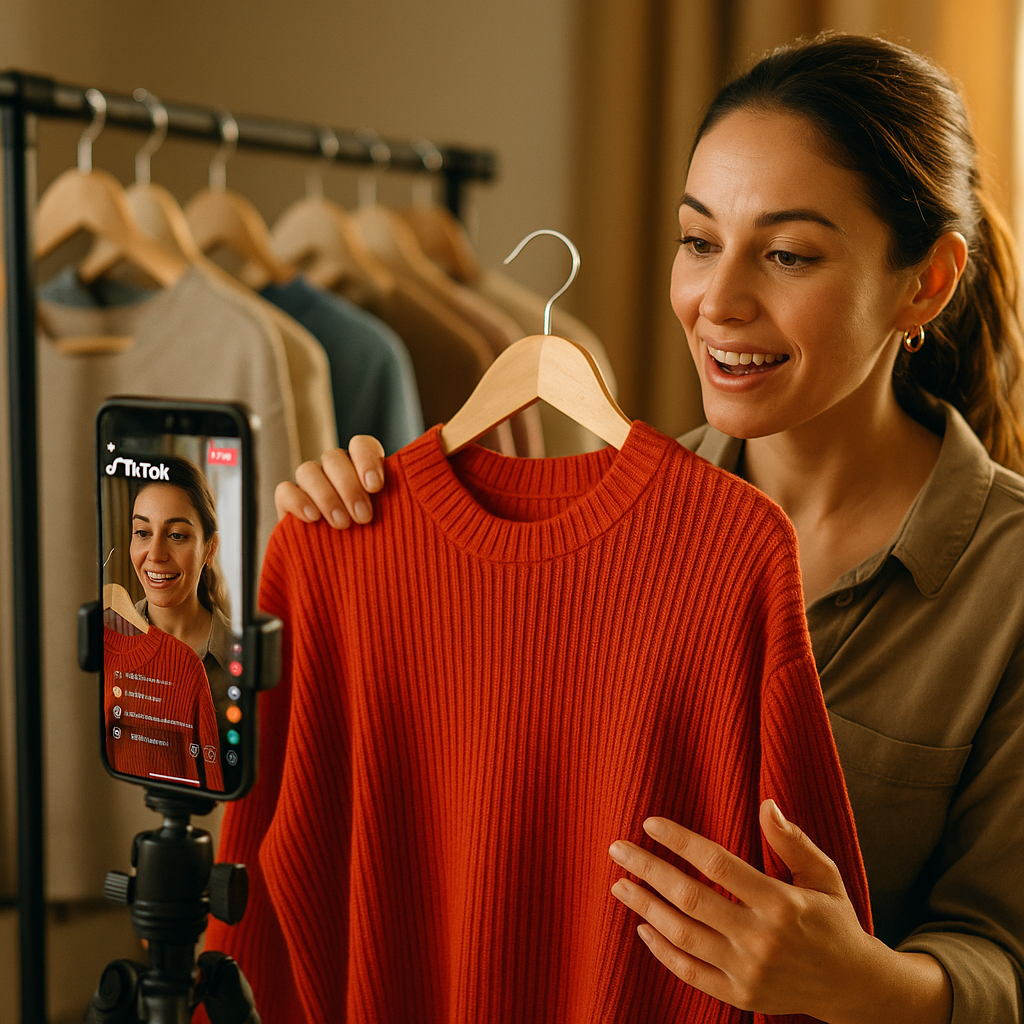
The Metric Most Brands Are Ignoring in TikTok Live Commerce
Brands running TikTok LIVE programs without a watch-time strategy are essentially paying for a broadcast nobody watches twice. TikTok livestream commerce is projected to account for a significant share of social commerce revenue globally, yet most brand briefs still focus on GMV targets and product mention frequency rather than the one signal TikTok’s algorithm actually uses to distribute live content: the 90th-percentile watch-time threshold.
That threshold is the point at which a live session’s average concurrent watch time places it in the top 10% of comparable streams. Cross it consistently, and TikTok’s recommendation engine starts serving your creator’s LIVE to cold audiences. Miss it, and you’re trapped in a loop of existing followers watching politely while your conversion window evaporates.
What the 90th-Percentile Threshold Actually Means for Brands
TikTok’s LIVE algorithm doesn’t reward length. It rewards sustained attention. The platform evaluates sessions based on concurrent viewers, average watch duration relative to session length, and the rate at which new viewers are entering versus leaving. When a session consistently holds attention at a level that puts it in the top decile for its category, the algorithm begins distributing it beyond followers into “For You” LIVE discovery feeds.
For brands, this creates a very specific operational challenge. A creator who is excellent at short-form video may not be trained to hold a live audience for 45 to 90 minutes. The content format, pacing, and product sequencing required to sustain watch time in a LIVE session is different from what works in a Reels brief. That’s why a six-month live selling schedule needs its own dedicated briefing architecture, separate from your standard content calendar.
The 90th-percentile watch-time threshold is not a creative goal — it’s an operational one. Brands that treat it as a KPI inside the creator brief, with specific session pacing instructions, consistently outperform those that brief only on product talking points.
If you’re already familiar with how watch-time briefs differ from standard content briefs, you’ll recognize the same logic applied at longer session durations.
Building the Six-Month Live Selling Schedule
Six months is the right planning horizon for TikTok live commerce for a specific reason: algorithmic trust compounds. A creator who runs two sessions per week for 24 weeks builds a historical data profile that TikTok’s system uses to predict session quality before a stream even starts. That predictive scoring affects how aggressively the platform surfaces the LIVE to new audiences.
The schedule should be structured in three phases:
- Months one and two (calibration): Focus on finding the session length and product sequence that maximizes watch time for this specific creator and audience. Run sessions at consistent times to train both the algorithm and the audience. Track average concurrent viewers per session, peak concurrent viewers, and watch time per viewer as primary metrics.
- Months three and four (optimization): Use the calibration data to tighten session pacing. Introduce scarcity mechanics (limited-time bundles, flash price drops) in the final third of each session, which is when watch-time drop-off typically accelerates. This is also the phase to introduce co-streaming with a second creator to spike concurrent viewer counts.
- Months five and six (scaling): With a proven session format, increase session frequency or duration based on performance data. Activate TikTok Ads Manager LIVE boosting to amplify sessions that have already hit 90th-percentile performance organically.
The compounding effect here is real. Brands that have maintained consistent live schedules on TikTok Shop report that sessions in months five and six routinely generate two to three times the GMV of equivalent sessions in month one, with the same creator and roughly the same ad spend. That’s the revenue doubling mechanism the headline promises — and it’s structural, not luck.
The Creator Brief Structure That Actually Works
Most brand briefs for TikTok LIVE read like product spec sheets. They list SKUs, approved claims, discount codes, and legal disclaimers. They do not address what the creator should do at minute eight when concurrent viewer count starts declining, or how to structure a hook sequence that re-engages viewers who join mid-session.
A brief built for live selling performance needs five components:
- Session architecture: A minute-by-minute framework for the first 15 minutes, because that’s when the algorithm makes its initial distribution decision. The opening hook, the first product reveal, and the first engagement prompt (poll, question, comment) all need explicit guidance.
- Re-engagement triggers: Specific scripts or prompts to use when live viewer count drops. These can include “If you just joined, here’s why you need to stay,” limited-time offer announcements, or audience participation mechanics.
- Product sequencing logic: Lead with a mid-price entry product to qualify the audience, then sequence into higher-AOV items. Don’t open with your flagship SKU. The audience needs a reason to stay, not a reason to buy immediately and leave.
- Watch-time KPIs: State the target metrics explicitly. Average concurrent viewer count goals, session length minimums, and watch-time retention benchmarks at the 30-minute mark should all appear in the brief. Creators perform better when they understand the metric they’re being evaluated against.
- Compliance and disclosure: All paid partnerships must be disclosed in real time during the LIVE, per FTC guidelines. Build the disclosure language into the brief as approved scripts, not an afterthought.
For brands running shoppable content across platforms, the logic here connects directly to how shop briefs for watch time operate in short-form formats. The principles are transferable; the execution scales up.
Creator Selection and Roster Risk
Not every creator with a large TikTok following can sustain a live selling format. The skills are different. Look for creators with an existing LIVE history (TikTok surfaces this data in the creator marketplace), a comment engagement rate during previous lives above 15%, and a demonstrated ability to handle product questions in real time without losing narrative momentum.
Roster concentration is a real risk here. Depending on a single creator for your entire six-month schedule creates schedule, performance, and compliance exposure. Build a primary and secondary creator structure from the start. If you’re thinking through creator concentration risk for other platforms, the same mitigation logic applies to TikTok LIVE programs.
A two-creator LIVE roster isn’t redundancy planning — it’s a growth strategy. Co-streaming events between a primary and secondary creator consistently generate 30-40% higher peak concurrent viewer counts than solo sessions.
Measurement: What to Track Beyond GMV
GMV is the outcome metric, not the diagnostic one. For a six-month program designed to compound algorithmic trust, you need to track leading indicators that predict whether you’re on a trajectory toward 90th-percentile performance.
The metrics that matter: average concurrent viewers as a percentage of total followers (this normalizes for audience size), watch time per viewer per session (available in TikTok LIVE analytics), new-follower conversion rate per session (a proxy for algorithm distribution quality), and product click-through rate inside the LIVE shopping cart. Sprout Social and Statista both track social commerce benchmarks that can help contextualize your session performance against industry norms.
For brands also running shoppable formats on Instagram, the overlap with shoppable post engagement strategy is worth examining — the attribution logic differs, but the audience retention principles carry over.
Report on these metrics monthly. If average watch time per viewer is declining in month two, the re-engagement trigger scripts need revision before you hit month three’s optimization phase. Fix the brief, not the budget.
Platform Tools Worth Using Now
TikTok’s native tools for live commerce have expanded significantly. TikTok Shop’s affiliate program allows creators to earn commission on products pinned to the LIVE shopping cart, which creates an alignment incentive that flat-fee briefs don’t generate. The LIVE gifting mechanics also contribute to session stickiness in ways that matter for watch-time thresholds.
TikTok’s paid LIVE promotion tools allow brands to boost sessions that are already performing organically, which is a more efficient use of budget than boosting cold sessions. The optimal approach is to identify which organic sessions crossed the 90th-percentile threshold and put paid media behind the next session by the same creator at the same time slot. The algorithm’s predictive scoring for that creator-time combination is already positive. You’re amplifying an established signal, not manufacturing a new one.
Additional context on how TikTok Shop structures its creator and commerce ecosystem for beauty and other categories is covered in detail in this breakdown of TikTok Shop storefronts and commissions.
Start your next planning cycle by auditing your existing creator roster for live selling aptitude before you build the schedule. One creator with proven LIVE watch-time performance is worth more than five with strong short-form metrics and no live history.
Frequently Asked Questions
What is the 90th-percentile watch-time threshold on TikTok LIVE?
It refers to the point at which a live session’s average concurrent watch time places it in the top 10% of comparable streams in its category. When a creator’s sessions consistently reach this level, TikTok’s algorithm increases distribution of that LIVE to cold audiences beyond the creator’s existing followers, which directly increases reach and commerce potential.
How long does it take to see revenue doubling from a six-month TikTok live commerce schedule?
Most brands with structured programs see the compounding effect begin in months three and four, with the most significant GMV increases occurring in months five and six. The revenue doubling is a result of cumulative algorithmic trust, improved creator performance, and refined product sequencing — not any single session. Consistency across the full schedule is essential.
What should a TikTok LIVE creator brief include that a standard content brief doesn’t?
A LIVE-specific brief needs session architecture guidance (minute-by-minute pacing for the critical first 15 minutes), re-engagement trigger scripts, product sequencing logic, explicit watch-time KPIs, and pre-approved FTC disclosure language for real-time use. Standard content briefs typically cover only product claims and visual guidelines, which are insufficient for sustaining live audience attention.
How many creators should a brand use for a six-month TikTok LIVE program?
A minimum of two: a primary creator and a secondary creator. This structure mitigates scheduling and performance risk while enabling co-streaming events that have been shown to increase peak concurrent viewer counts by 30-40%. Over-reliance on a single creator is a concentration risk that can derail an entire six-month schedule.
When should brands use paid TikTok LIVE promotion versus relying on organic reach?
Use paid LIVE promotion to amplify sessions that have already demonstrated organic 90th-percentile performance. Applying budget to sessions before organic signals are established is less efficient. Identify which creator-time slot combinations have a history of strong watch-time metrics, then use TikTok Ads Manager to boost the next session in that slot. The algorithm’s predictive model for that combination is already positive, making paid amplification more effective.
Top Influencer Marketing Agencies
The leading agencies shaping influencer marketing in 2026
Agencies ranked by campaign performance, client diversity, platform expertise, proven ROI, industry recognition, and client satisfaction. Assessed through verified case studies, reviews, and industry consultations.
Moburst

-
2

The Shelf
Boutique Beauty & Lifestyle Influencer AgencyA data-driven boutique agency specializing exclusively in beauty, wellness, and lifestyle influencer campaigns on Instagram and TikTok. Best for brands already focused on the beauty/personal care space that need curated, aesthetic-driven content.Clients: Pepsi, The Honest Company, Hims, Elf Cosmetics, Pure LeafVisit The Shelf → -
3

Audiencly
Niche Gaming & Esports Influencer AgencyA specialized agency focused exclusively on gaming and esports creators on YouTube, Twitch, and TikTok. Ideal if your campaign is 100% gaming-focused — from game launches to hardware and esports events.Clients: Epic Games, NordVPN, Ubisoft, Wargaming, Tencent GamesVisit Audiencly → -
4

Viral Nation
Global Influencer Marketing & Talent AgencyA dual talent management and marketing agency with proprietary brand safety tools and a global creator network spanning nano-influencers to celebrities across all major platforms.Clients: Meta, Activision Blizzard, Energizer, Aston Martin, WalmartVisit Viral Nation → -
5

The Influencer Marketing Factory
TikTok, Instagram & YouTube CampaignsA full-service agency with strong TikTok expertise, offering end-to-end campaign management from influencer discovery through performance reporting with a focus on platform-native content.Clients: Google, Snapchat, Universal Music, Bumble, YelpVisit TIMF → -
6

NeoReach
Enterprise Analytics & Influencer CampaignsAn enterprise-focused agency combining managed campaigns with a powerful self-service data platform for influencer search, audience analytics, and attribution modeling.Clients: Amazon, Airbnb, Netflix, Honda, The New York TimesVisit NeoReach → -
7

Ubiquitous
Creator-First Marketing PlatformA tech-driven platform combining self-service tools with managed campaign options, emphasizing speed and scalability for brands managing multiple influencer relationships.Clients: Lyft, Disney, Target, American Eagle, NetflixVisit Ubiquitous → -
8

Obviously
Scalable Enterprise Influencer CampaignsA tech-enabled agency built for high-volume campaigns, coordinating hundreds of creators simultaneously with end-to-end logistics, content rights management, and product seeding.Clients: Google, Ulta Beauty, Converse, AmazonVisit Obviously →