


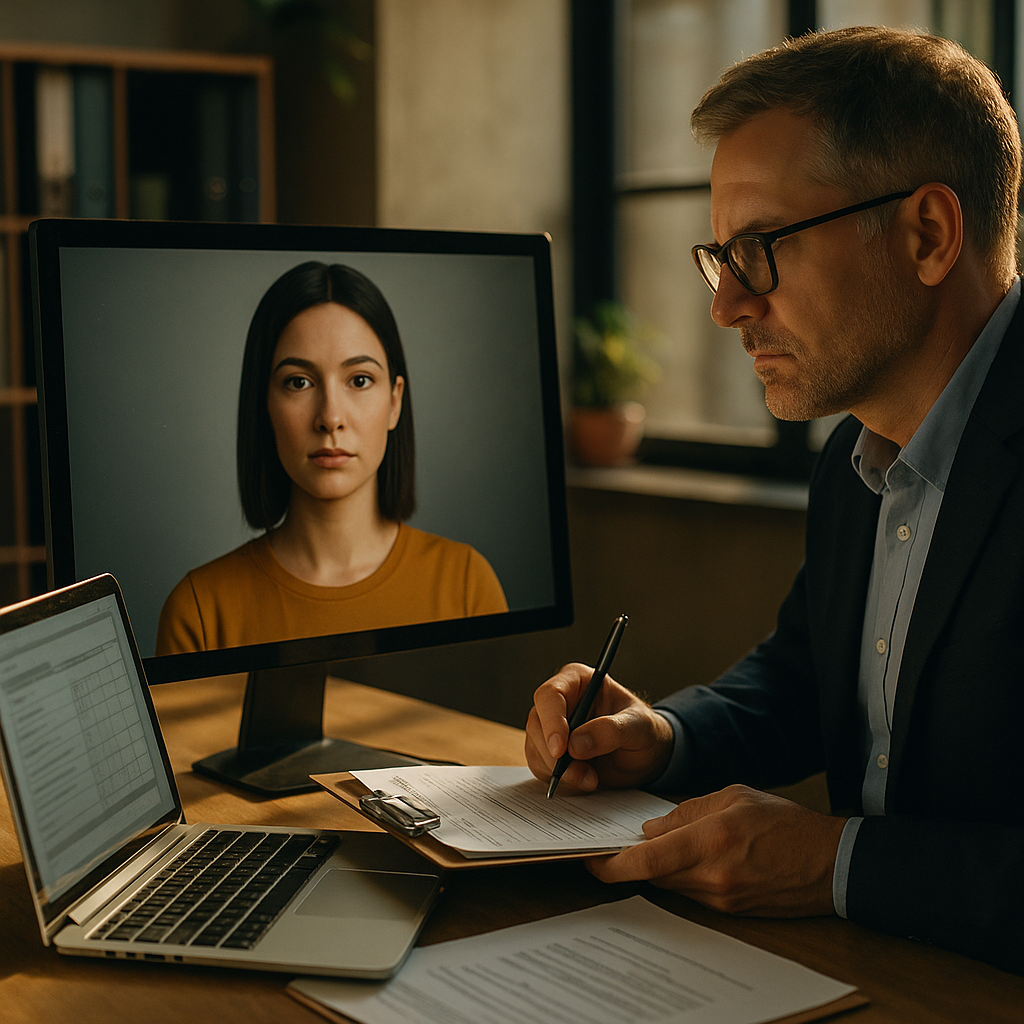
One Law, One Deadline, and No Room for Guesswork
Brands using AI-generated or AI-replicated performers in advertising have roughly one compliance window before New York’s Synthetic Performer Law begins carrying real financial teeth. The civil penalty structure under this law is not a warning system. It is a liability trigger. And most brand legal teams are not ready.
New York’s Synthetic Performer Law applies to any digitally created or modified performer likeness used in commercial content, including AI-generated avatars, voice clones, and deepfake-style image modifications. The June 9 enforcement date is not a grace period extension. It is when regulators begin counting.
Brands running AI talent in ads without documented consent agreements and disclosure workflows are not just violating a disclosure rule — they are exposing procurement, legal, and marketing to joint liability under a state statute with no federal preemption shield.
What the Civil Penalty Structure Actually Means for Brands
The law imposes civil penalties per violation, not per campaign. That distinction matters enormously. A single campaign running a synthetic performer across three placements on Meta, YouTube, and a brand-owned OTT channel could constitute multiple discrete violations if each lacks proper consent documentation and disclosure labeling.
Penalties can reach $2,500 per violation for general infractions, with enhanced exposure when violations involve performers who are deceased or minors. For brands running high-frequency programmatic placements, the math compounds quickly. A national campaign with 50 ad variants, each featuring an AI-generated spokesperson, is not one violation waiting to happen. It may be 50.
The law also creates a private right of action, meaning individuals or their estates can sue independently of any state enforcement action. This is the clause most brand legal teams have not internalized. It is not just regulatory risk. It is litigation risk from the performer side.
Who Counts as a “Synthetic Performer” Under the Law?
This is where scope ambiguity is creating real operational confusion inside marketing organizations. The law covers digital replicas of real individuals, including voice clones trained on a real person’s recordings, AI avatars built from a real person’s likeness, and deepfake-style video modifications of existing footage.
It does not cover fully fictional AI characters with no connection to a real person’s biometric data. But that line is blurrier than it sounds. Several popular AI video tools, including platforms like Synthesia and HeyGen, generate “stock” AI presenters that may have originated from real human scans. If your legal team cannot confirm the provenance of the underlying training data for the AI talent you are using, that ambiguity is your liability exposure.
For brands relying on third-party creative vendors, the compliance burden does not transfer automatically. Your contracts need explicit representations and warranties from vendors about the origin and consent status of any synthetic performer likeness they provide.
The Audit Your Legal Team Needs to Run Before June 9
Start with an inventory. Not a creative brief review. An actual inventory of every ad unit currently in-flight or in production that features a human-appearing figure generated or significantly modified by AI. This includes static images, video, audio-only formats, and interactive ad units.
For each asset, your audit should confirm:
- Consent documentation: Is there a signed agreement from the real person whose likeness or voice was used to train or generate the AI talent? Does that agreement explicitly cover commercial advertising use in New York?
- Disclosure labeling: Does each ad unit carry a clear, conspicuous disclosure that the performer is synthetic? Platform-specific placement matters here since a disclosure buried in fine print on a 6-second pre-roll will not satisfy the law’s conspicuousness standard.
- Vendor chain documentation: Can you trace the AI talent back to the tool or vendor that created it, and does that vendor’s terms of service include consent warranties for commercial use?
- Jurisdictional triggering: Is the ad running in New York, or targeting New York residents? The law applies based on where the audience is, not where the brand is headquartered.
This is not a one-time checklist exercise. It needs to become a standing gate in your creative approval workflow. The AI governance framework your team applies to content generation broadly should now include a synthetic performer compliance module.
Contract Gaps That Will Hurt You
Most existing creator contracts were not written with synthetic performer law in mind. They may grant broad usage rights for a creator’s appearance in content, but they almost certainly do not include explicit consent for AI training, voice cloning, or digital replication. Under New York’s law, that gap is a compliance hole.
Your legal team needs to add language to new contracts that specifically addresses: consent for AI-based replication of likeness or voice, the geographic scope of that consent (New York specifically, plus any other state with similar statutes), and the disclosure obligations the brand accepts when deploying synthetic versions. For context on how AI remix clauses are being structured in creator agreements, the contract language guidance published for AI remix scenarios provides a useful structural baseline to adapt.
Retroactive contracts with existing talent whose likeness has already been used in AI-generated content are also worth pursuing before enforcement begins. A signed acknowledgment of prior use and forward consent does not eliminate past liability, but it demonstrates good-faith compliance posture if a complaint is filed.
If your current creator contracts were executed before your brand adopted any AI production tools, assume they do not cover synthetic performer scenarios. Every one of them needs a legal review before any AI-generated content derivative ships to market.
Platform Disclosure Is Not Enough on Its Own
Meta’s AI label system, YouTube’s AI disclosure toggle, and TikTok’s creator disclosure tools are useful. They are not sufficient standalone compliance mechanisms under New York law. The law requires disclosure to viewers, but it also requires consent from the synthetic performer’s source. Platform labels address the first requirement partially. They do nothing for the second.
Brands that have been relying on platform-level AI disclosures as their complete compliance answer should read the FTC AI disclosure audit framework alongside the New York statute. The two frameworks are complementary but not identical. A campaign can be FTC-compliant on disclosure and still violate New York law on consent. For YouTube-specific workflow considerations, YouTube AI label requirements give a platform-specific lens that helps fill gaps in your disclosure process.
Operationalizing Compliance Before the Deadline
The brands that will navigate this cleanly are the ones that treat it as a procurement and operations problem, not just a legal review problem. Legal review catches issues. Procurement controls prevent them.
Practically, that means adding a synthetic performer attestation step to your vendor onboarding process. Any AI production tool, creative agency, or content studio you use for ad production should be required to certify, in writing, that synthetic performers in delivered assets comply with New York law. Build this into your standard MSA or SOW language now.
It also means briefing your media buying team. They are the ones activating campaigns in New York DMA buys or targeting New York ZIP codes programmatically. If an asset without proper documentation gets pushed live because a media buyer did not know it was out of compliance, the liability still lands on the brand. The FTC dual disclosure framework for AI campaigns provides a cross-functional coordination model that maps well onto this operational need.
Legal teams at the FTC and state attorneys general offices have been explicit about enforcement prioritization for AI-generated content in advertising. New York is not operating in isolation. California has AB 2602 already in effect. Illinois has BIPA. The state-by-state patchwork is getting denser, and a brand that builds a New York-compliant process now is building infrastructure that will scale to the next statute with minimal rework.
For brands running multinational campaigns, the EU Digital Services Act compliance considerations add another regulatory layer that your synthetic performer audit process should account for simultaneously.
The New York Attorney General’s office and the state legislature’s official NY Senate records are the authoritative sources for statute text and enforcement guidance. Bookmark them. Your legal team should be monitoring any clarifying guidance issued between now and June 9.
The brands that will face the steepest penalties are not the ones who knowingly ignored the law. They are the ones who ran AI talent in ads without realizing their vendor-provided assets triggered it. Inventory now, document everything, and treat June 9 as a hard launch date for a permanent compliance workflow rather than a one-time audit deadline.
FAQs
What is New York’s Synthetic Performer Law?
New York’s Synthetic Performer Law requires that any digitally created or AI-replicated performer likeness used in commercial advertising must have documented consent from the real person whose likeness or voice was used, and must include a clear, conspicuous disclosure to viewers that the performer is synthetic. The law applies to video, audio, and image-based ad formats.
What are the civil penalties for violating the law?
Civil penalties can reach $2,500 per violation. Because the law counts violations per ad unit or placement rather than per campaign, brands running multiple AI-generated ad variants across multiple platforms can accumulate significant penalty exposure. The law also creates a private right of action, meaning affected performers or their estates can sue independently of state enforcement.
Does the law apply to brands headquartered outside New York?
Yes. The law applies based on where the advertising audience is located, not where the brand is based. Any brand targeting New York residents with ads featuring synthetic performers, whether through programmatic buys, platform targeting, or geo-targeted OTT placements, is subject to the law’s requirements.
Are fully fictional AI characters covered by the law?
Generally, no. The law targets digital replicas of real individuals, including voice clones and AI avatars built from a real person’s biometric data. However, many AI video platforms generate presenters from real human scans, which may trigger coverage. Brands should require vendors to provide provenance documentation for any AI talent used in commercial content.
Do platform-level AI disclosure labels satisfy the law’s disclosure requirements?
Partially. Platform labels from Meta, YouTube, and TikTok address the viewer disclosure component but do not satisfy the consent requirement. A campaign can be compliant with platform AI labeling policies and still violate New York law if the underlying consent documentation for the synthetic performer is missing or inadequate.
What contract language should brands add to address synthetic performer compliance?
New creator and vendor contracts should include explicit consent for AI-based replication of likeness or voice, the geographic scope of that consent, disclosure obligations the brand accepts when deploying synthetic versions, and representations and warranties from vendors about the consent status of any AI talent they provide. Existing contracts should be reviewed and amended before any AI-generated derivatives go to market.
Top Influencer Marketing Agencies
The leading agencies shaping influencer marketing in 2026
Agencies ranked by campaign performance, client diversity, platform expertise, proven ROI, industry recognition, and client satisfaction. Assessed through verified case studies, reviews, and industry consultations.
Moburst

-
2

The Shelf
Boutique Beauty & Lifestyle Influencer AgencyA data-driven boutique agency specializing exclusively in beauty, wellness, and lifestyle influencer campaigns on Instagram and TikTok. Best for brands already focused on the beauty/personal care space that need curated, aesthetic-driven content.Clients: Pepsi, The Honest Company, Hims, Elf Cosmetics, Pure LeafVisit The Shelf → -
3

Audiencly
Niche Gaming & Esports Influencer AgencyA specialized agency focused exclusively on gaming and esports creators on YouTube, Twitch, and TikTok. Ideal if your campaign is 100% gaming-focused — from game launches to hardware and esports events.Clients: Epic Games, NordVPN, Ubisoft, Wargaming, Tencent GamesVisit Audiencly → -
4

Viral Nation
Global Influencer Marketing & Talent AgencyA dual talent management and marketing agency with proprietary brand safety tools and a global creator network spanning nano-influencers to celebrities across all major platforms.Clients: Meta, Activision Blizzard, Energizer, Aston Martin, WalmartVisit Viral Nation → -
5

The Influencer Marketing Factory
TikTok, Instagram & YouTube CampaignsA full-service agency with strong TikTok expertise, offering end-to-end campaign management from influencer discovery through performance reporting with a focus on platform-native content.Clients: Google, Snapchat, Universal Music, Bumble, YelpVisit TIMF → -
6

NeoReach
Enterprise Analytics & Influencer CampaignsAn enterprise-focused agency combining managed campaigns with a powerful self-service data platform for influencer search, audience analytics, and attribution modeling.Clients: Amazon, Airbnb, Netflix, Honda, The New York TimesVisit NeoReach → -
7

Ubiquitous
Creator-First Marketing PlatformA tech-driven platform combining self-service tools with managed campaign options, emphasizing speed and scalability for brands managing multiple influencer relationships.Clients: Lyft, Disney, Target, American Eagle, NetflixVisit Ubiquitous → -
8

Obviously
Scalable Enterprise Influencer CampaignsA tech-enabled agency built for high-volume campaigns, coordinating hundreds of creators simultaneously with end-to-end logistics, content rights management, and product seeding.Clients: Google, Ulta Beauty, Converse, AmazonVisit Obviously →