


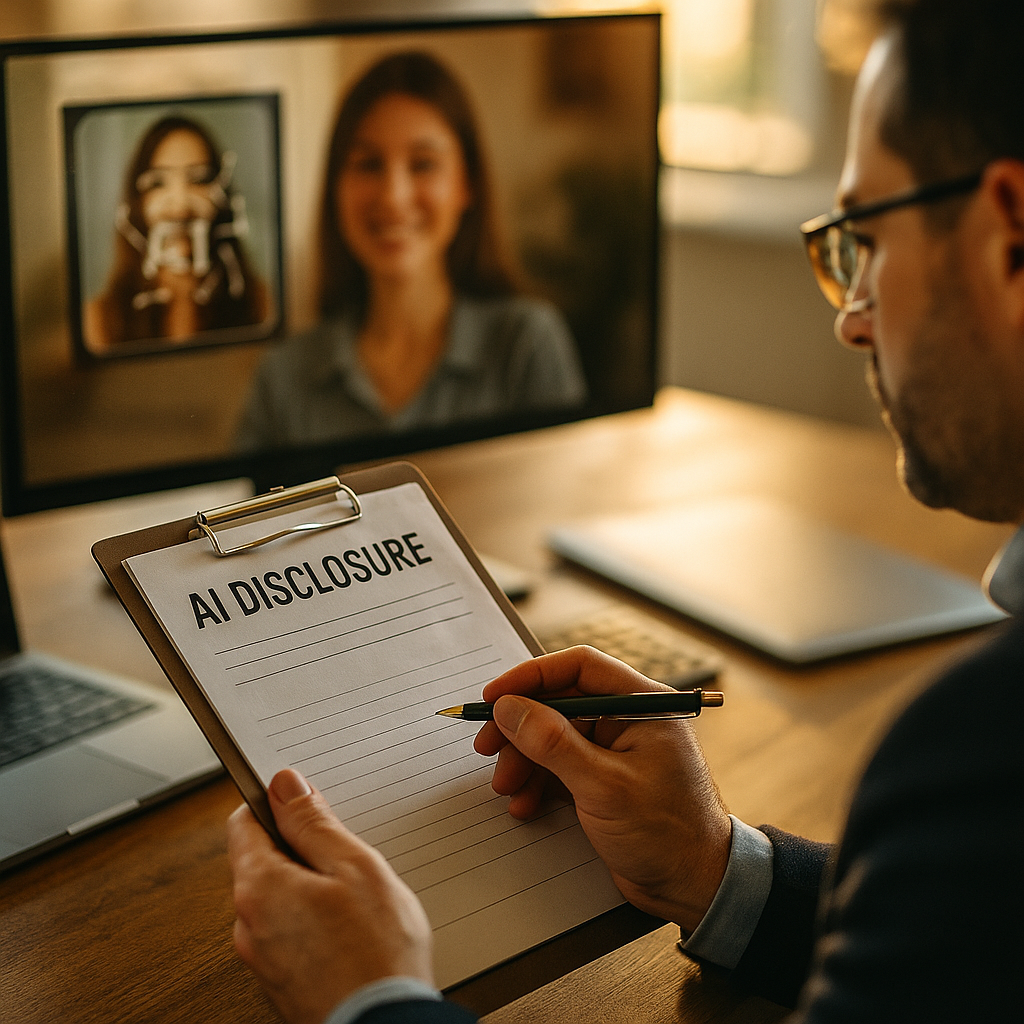
If a consumer can’t tell a human wrote it, the FTC doesn’t care that a human technically approved it. That’s the practical reality of the audience-perception trigger governing AI-generated UGC disclosure, and most brand compliance workflows aren’t built for it.
What the Audience-Perception Trigger Actually Means for Brand Teams
The FTC’s enforcement posture on AI-assisted content isn’t about the technology. It’s about consumer deception. The central question regulators ask is whether a reasonable person, seeing the content for the first time, would recognize it as marketing. If AI involvement obscures the commercial relationship, the material connection label is required, regardless of how much human editing happened downstream.
This matters enormously for UGC programs, where authenticity is the entire value proposition. A creator who uses generative AI to write captions, synthesize a voiceover, or produce a review-style video script has introduced a layer of commercial polish that can erase the organic signal audiences expect. When that content also carries brand compensation, you have a compounding disclosure risk that most standard contracts don’t address. For a detailed breakdown of how the FTC frames this test, the FTC AI disclosure trigger test framework is essential reading before you run this audit.
The FTC’s 2023 endorsement rule updates explicitly extended material connection disclosure requirements to cover “any AI-generated or AI-assisted content that a reasonable viewer would not identify as advertising.” The burden of proof sits with the brand, not the creator.
Step 1: Map Every AI Touchpoint in Your Creator Workflow
Start before a single post goes live. Build an inventory of every point where AI tools intersect with content creation across your active creator roster. This isn’t a one-time exercise. Platform-native AI features, including Instagram’s Creator AI tools, TikTok Symphony, and YouTube’s Dream Screen, ship updates constantly. A creator who wasn’t using AI-assisted scripting in Q1 may be using it by Q3 without informing your team.
Your inventory should capture:
- Scripting and caption drafting (ChatGPT, Claude, Jasper, platform-native tools)
- Voiceover synthesis or audio enhancement (ElevenLabs, Adobe Podcast, TikTok’s voice filters)
- Visual generation or enhancement (Midjourney, Adobe Firefly, Canva AI, DALL-E integrated tools)
- Review aggregation or sentiment synthesis used to build testimonial-style content
- Auto-dubbing or translation for multilingual campaigns
The key contractual mechanism here is a self-declaration clause requiring creators to disclose AI tool usage within 48 hours of posting, or ideally, before posting during a pre-approval workflow. If your contracts don’t include this clause yet, your creator contract AI provisions need an immediate revision cycle.
The Four-Question Disclosure Trigger Test
Once you have the AI touchpoint map, run every piece of AI-assisted content through this four-question filter. Any “yes” answer means a material connection label is required before the first scroll on static posts or within the first three seconds of video content.
Question 1: Does the AI involvement make the content appear more credible than it would organically? A handwritten-style caption with natural typos reads differently than a polished, benefit-forward paragraph generated by a language model. If AI has elevated the persuasive quality of the content, the audience-perception test is triggered.
Question 2: Would a consumer assume this reflects the creator’s unassisted personal experience? This is the core of the UGC authenticity premise. AI-synthesized review content, even when based on genuine product experience, doesn’t carry the same evidentiary weight as a creator’s own words. If the AI generated the framing, structure, or language of the endorsement, the answer here is almost always yes.
Question 3: Does the content appear in a format the platform associates with organic posts? Stories, Reels tagged without ad labels, TikTok FYP content, and YouTube Shorts all carry implicit organic signals. AI-produced content placed in these formats without disclosure exploits the format’s trust signal.
Question 4: Is there any compensation relationship, including gifting, affiliate revenue, or access? If the answer is yes and any of the first three questions also score yes, the disclosure obligation is unambiguous. Review your full FTC disclosure placement rules to ensure the label appears in the right position for each platform format.
Step 2: Audit Existing Live Content Retroactively
Most brands focus disclosure audits on future content. That’s a mistake. The FTC has pursued enforcement actions against brands for content already in circulation. Your retroactive audit should cover any AI-assisted creator post published under a paid, gifted, or affiliate agreement that’s still live and driving traffic or conversions.
Use a structured content review protocol. Pull all active creator posts from your influencer marketing platform (Grin, Aspire, Sprinklr, or equivalent), filter for posts where your AI touchpoint inventory flagged potential tool use, and score each against the four-question trigger test. For any flagged post, the remediation path is either requesting an edit to add a disclosure overlay or, in cases where the platform doesn’t allow post-editing, adding a comment-level disclosure and flagging the post in your compliance log.
Platform-specific nuances matter here. YouTube’s altered-content disclosure toggle is separate from a branded content label. Using one doesn’t satisfy the other. Your YouTube AI disclosure checklist should be a standalone document in your audit toolkit, not folded into a generic compliance checklist.
Step 3: Build the Pre-Publication Gate
Retroactive fixes are expensive and reputationally awkward. The operational goal is a pre-publication gate that catches disclosure gaps before content goes live. This requires two things: a creator-facing intake form and an internal review protocol.
The intake form should ask creators to specify which AI tools were used, what percentage of the script or caption was AI-generated versus human-written, and whether any visual assets were AI-produced or AI-enhanced. Keep it short. Three to five questions, not a legal questionnaire. Creators who find the process burdensome will skip it or find workarounds.
Internally, assign a compliance reviewer to score submissions against the four-question trigger test. For high-volume campaigns, consider a tiered review system where micro-creator content (under 50K followers) is batch-reviewed weekly and mid-to-macro creator content is reviewed individually before posting. Document every decision. If the FTC investigates, your paper trail is your defense. The broader creator content audit process should integrate this gate as a standing workflow, not a campaign-specific add-on.
Brands that treat FTC disclosure as a legal formality rather than a consumer trust mechanism are building campaigns on a liability that compounds with every post. The audience-perception trigger isn’t a technicality. It’s a reasonable-person standard that juries and regulators apply with common sense.
The Label Placement Problem: Before the First Scroll, Before the First Second
Where the disclosure appears is as legally consequential as whether it appears. The FTC’s guidance is explicit: disclosures must be unavoidable. For static posts, that means above the fold, before any “more” truncation. For video, the label must appear in the first three seconds and remain on screen long enough to be read, not flash past in a transition.
Common failure modes include disclosures buried in hashtag strings (#ad placed seventh in a twelve-hashtag block), disclosures that appear only in the description of a YouTube video but not in the video itself, and audio-only disclosures on content consumed with sound off. TikTok’s Branded Content toggle adds a label automatically, but it doesn’t override the obligation to disclose AI involvement separately if the content triggers the audience-perception test. For social commerce specifically, where the path from content to purchase is measured in seconds, review the FTC AI UGC disclosure rules for platform-specific placement requirements.
International campaigns add another layer. The EU’s Digital Services Act and the UK ICO guidelines on AI transparency don’t mirror FTC standards exactly. Multinational brands running creator campaigns across jurisdictions need jurisdiction-specific disclosure protocols, not a single global template.
Closing the Loop: Contractual Accountability and Indemnification
Compliance audits without contractual teeth are advisory documents. Your creator agreements need to explicitly allocate liability for undisclosed AI use. Standard language should require creators to indemnify the brand for FTC penalties arising from AI-assisted content they failed to disclose, warrant that all AI tool usage has been reported to the brand prior to publication, and grant the brand the right to require immediate takedown of non-compliant content without penalty to the brand.
Equally important: brands that brief creators with AI-generated campaign concepts or AI-produced sample scripts bear shared responsibility for the output. If your agency used an AI tool to generate the “authentic-sounding” talking points you sent the creator, and the creator read them verbatim, the material connection disclosure obligation doesn’t diminish because the brand’s fingerprints are on the AI input. Review how social media management platforms and FTC regulatory updates handle this shared-liability framing before your next campaign brief.
The smartest immediate action: run the four-question trigger test against your three highest-traffic active creator posts this week. If any score yes, remediate before the end of the business day. That single step will tell you more about your program’s actual compliance posture than any policy document sitting in your legal team’s shared drive.
Frequently Asked Questions
Does AI-assisted caption editing always require an FTC disclosure label?
Not automatically. The trigger is the audience-perception test: if the AI editing made the content appear more credible, more persuasive, or more polished than it would have organically, and the post carries a compensation relationship, then a material connection disclosure is required. Minor grammar corrections by an AI tool are unlikely to trigger the test. Fully AI-generated captions that frame a product endorsement almost certainly will.
What counts as a “material connection” in the context of AI-generated UGC?
The FTC defines material connection broadly: payment, gifting, affiliate commissions, free product access, or any other benefit that a consumer would find relevant to evaluating the endorsement. AI involvement doesn’t create a new category of material connection. It affects whether the existing material connection is adequately disclosed given the content’s apparent authenticity.
Can a platform’s built-in branded content label satisfy the FTC’s AI disclosure requirement?
No, not on its own. Platforms like TikTok, Instagram, and YouTube have branded content or paid partnership labels, but these don’t specifically address AI assistance. If the content involved AI-generated or AI-enhanced elements that affect the audience-perception test, a separate disclosure addressing both the commercial relationship and the AI involvement is required. YouTube’s altered-content toggle and the branded content label serve different compliance functions and both may be necessary.
Who is liable if a creator uses an AI tool without telling the brand?
Liability is shared when the brand had reasonable mechanisms to detect or prevent non-disclosure and failed to use them. If your contracts include AI disclosure clauses, your pre-publication workflow includes an intake form, and the creator deliberately omitted AI usage, the creator bears primary liability. Without those contractual and procedural safeguards, the FTC may treat the brand as jointly responsible, particularly if the content was amplified through paid media.
How quickly must an existing non-compliant post be remediated?
The FTC doesn’t specify a remediation window in its published guidance, but the standard applied in enforcement actions is “prompt action upon discovery.” Brands that self-identify non-compliant content and remediate within 24 to 48 hours, documenting the correction, are in a materially stronger position than those who delay. If the platform doesn’t allow editing (for example, a TikTok video), a pinned comment disclosure and an internal compliance log entry are the minimum interim steps while a takedown is arranged.
Top Influencer Marketing Agencies
The leading agencies shaping influencer marketing in 2026
Agencies ranked by campaign performance, client diversity, platform expertise, proven ROI, industry recognition, and client satisfaction. Assessed through verified case studies, reviews, and industry consultations.
Moburst

-
2

The Shelf
Boutique Beauty & Lifestyle Influencer AgencyA data-driven boutique agency specializing exclusively in beauty, wellness, and lifestyle influencer campaigns on Instagram and TikTok. Best for brands already focused on the beauty/personal care space that need curated, aesthetic-driven content.Clients: Pepsi, The Honest Company, Hims, Elf Cosmetics, Pure LeafVisit The Shelf → -
3

Audiencly
Niche Gaming & Esports Influencer AgencyA specialized agency focused exclusively on gaming and esports creators on YouTube, Twitch, and TikTok. Ideal if your campaign is 100% gaming-focused — from game launches to hardware and esports events.Clients: Epic Games, NordVPN, Ubisoft, Wargaming, Tencent GamesVisit Audiencly → -
4

Viral Nation
Global Influencer Marketing & Talent AgencyA dual talent management and marketing agency with proprietary brand safety tools and a global creator network spanning nano-influencers to celebrities across all major platforms.Clients: Meta, Activision Blizzard, Energizer, Aston Martin, WalmartVisit Viral Nation → -
5

The Influencer Marketing Factory
TikTok, Instagram & YouTube CampaignsA full-service agency with strong TikTok expertise, offering end-to-end campaign management from influencer discovery through performance reporting with a focus on platform-native content.Clients: Google, Snapchat, Universal Music, Bumble, YelpVisit TIMF → -
6

NeoReach
Enterprise Analytics & Influencer CampaignsAn enterprise-focused agency combining managed campaigns with a powerful self-service data platform for influencer search, audience analytics, and attribution modeling.Clients: Amazon, Airbnb, Netflix, Honda, The New York TimesVisit NeoReach → -
7

Ubiquitous
Creator-First Marketing PlatformA tech-driven platform combining self-service tools with managed campaign options, emphasizing speed and scalability for brands managing multiple influencer relationships.Clients: Lyft, Disney, Target, American Eagle, NetflixVisit Ubiquitous → -
8

Obviously
Scalable Enterprise Influencer CampaignsA tech-enabled agency built for high-volume campaigns, coordinating hundreds of creators simultaneously with end-to-end logistics, content rights management, and product seeding.Clients: Google, Ulta Beauty, Converse, AmazonVisit Obviously →