


The Premium Is Real. So Is the Justification Problem.
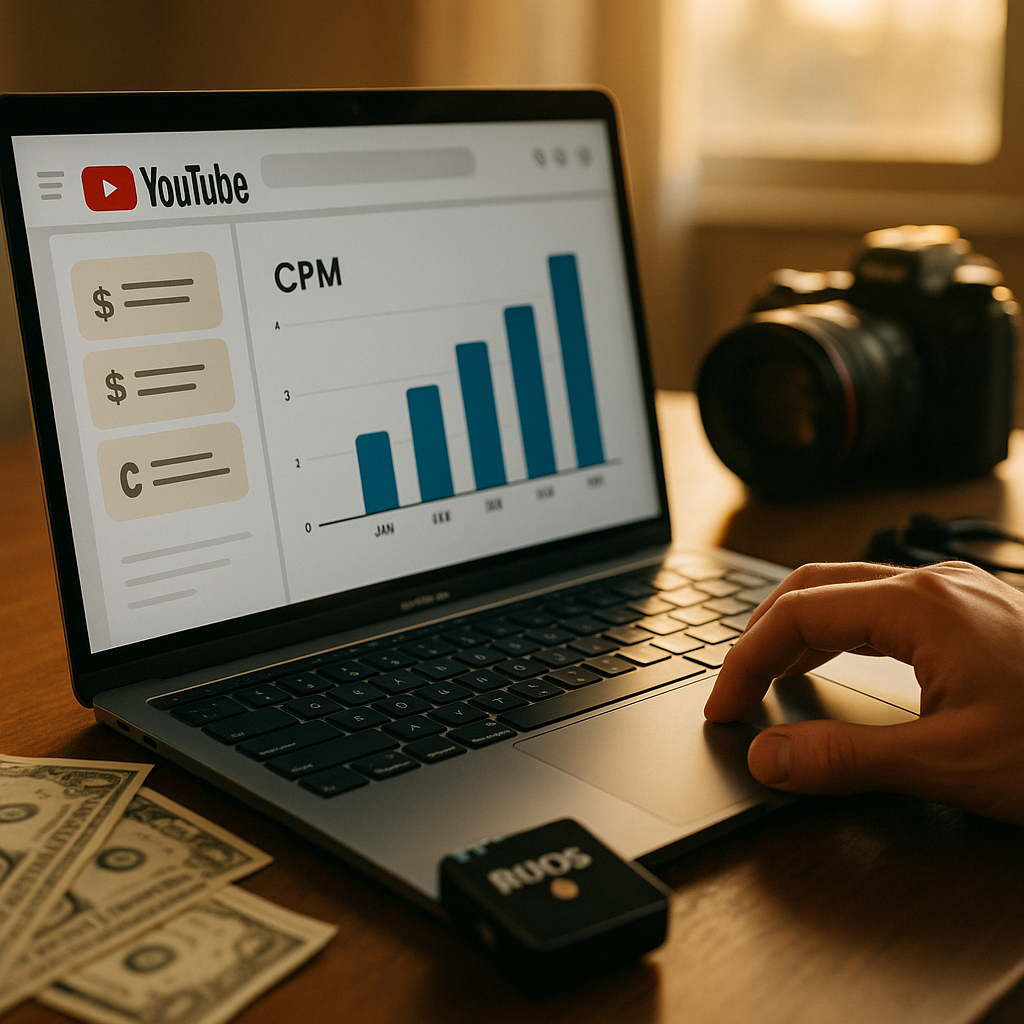
YouTube’s bundled video, podcast, and AI scheduling packages are commanding $50 to $150 CPM premiums over standard paid social inventory. That’s not a rounding error. That’s a line-item conversation with your CFO, and you’d better have the answer ready before the ink dries on an upfront commitment.
The brands winning these negotiations aren’t paying the premium blindly. They’re running a structured evaluation against three criteria: audience co-mingling risk, attribution confidence, and scheduling efficiency gains. If your team isn’t doing the same, you’re either overpaying or walking away from a genuinely superior vehicle.
A $100 CPM that delivers a 4.2x brand recall lift against a relevant, verified audience can outperform a $12 CPM impression that hits the same person for the fifth time this week across Meta’s network. CPM comparisons without context are fiction.
What’s Actually Inside a Bundled Package
Before evaluating the premium, you need to understand what “bundle” actually means in YouTube’s upfront context. A standard bundle at the mid-tier price point typically includes: guaranteed placements across a creator’s long-form video library, integration into their companion podcast episodes (which live natively on YouTube), and access to AI-assisted scheduling tools that optimize delivery windows based on creator audience activity data.
That last component deserves scrutiny. AI scheduling tools for brand campaigns on YouTube are not simply automating when your pre-roll fires. At the upfront bundle level, they’re pulling from first-party YouTube audience signals to determine when a specific creator’s subscriber base is most receptive, most likely to complete a view, and least likely to skip. For categories with long purchase consideration cycles — automotive, enterprise software, financial services — that temporal targeting is worth real money.
The podcast integration is equally misunderstood. This isn’t a host-read ad bolted onto an RSS feed. YouTube podcast listeners are consuming video alongside audio, which means brand recall mechanics differ significantly from traditional podcast sponsorships. CPM benchmarks and audience overlap data consistently show that YouTube podcast viewers over-index on household income and category purchase intent compared to audio-only podcast listeners on Spotify or Apple.
Where the $50–$150 Premium Earns Its Keep
The math works when four conditions are present simultaneously.
First: audience exclusivity. YouTube upfront bundles give brands priority access to a creator’s audience before open auction. If you’re operating in a competitive category where two or three rivals are fighting over the same high-intent viewers, that lock-in has a defensible dollar value. Compare this to paid social CPM benchmarks where audience exclusivity is essentially nonexistent — you’re bidding in real-time against every competitor who’s identified the same segment.
Second: content depth alignment. Long-form YouTube video and companion podcast formats support complex product narratives. If your product requires more than fifteen seconds to explain, a 60-second mid-roll inside a 25-minute creator video delivers message comprehension that a 6-second bumper ad simply cannot. This is why the premium holds particularly well for regulated categories, where compliance-heavy messaging needs room to breathe.
Third: cross-format frequency management. Bundled packages allow you to negotiate frequency caps across video and podcast placements simultaneously, which suppresses the ad fatigue problem that plagues fragmented paid social buys. If you’re also running creator sponsorships beyond pre-roll, bundling can consolidate frequency management under a single deal structure rather than managing it across three separate DSP lines.
Fourth: first-party data leverage. Google’s data clean room integrations allow certain upfront buyers to match their own CRM data against YouTube’s audience graph within a privacy-compliant framework. That’s a capability you cannot replicate on Meta at equivalent CPMs, and it’s a material differentiator for brands with mature customer data infrastructure.
When It Doesn’t Justify the Price
Be honest about the failure modes.
If your product has a 48-hour purchase cycle and your attribution model is purely last-click, you will not capture the value embedded in the premium. YouTube upfront bundles are brand-building vehicles with downstream conversion effects. If your measurement infrastructure can’t see the halo, you’ll declare the buy inefficient and be wrong.
Niche or regional brands with tight geo-targeting requirements also face a structural problem. Creator audiences aren’t surgically geo-targeted. A creator with 2 million subscribers in your core demographic will still deliver significant impression waste across markets where you don’t distribute. For highly localized campaigns, the math often favors a leaner approach using micro-creator allocation models with tighter geographic controls.
And if the AI scheduling component isn’t being measured against a holdout group, you’re paying for a black box. Demand transparency in your upfront contract: require the platform to provide delivery timing reports that show when impressions were served relative to creator audience peak activity windows. If YouTube’s team can’t commit to that reporting, the scheduling premium is indefensible.
Negotiating the Bundle: Pressure Points That Matter
Upfront commitments are not take-it-or-leave-it. Three areas where experienced buyers consistently find room:
- Podcast-to-video weighting: Default bundles often weight toward video because inventory is more abundant. Push for a higher podcast ratio if your audience skews toward audio-preferred consumption behavior. The premium per podcast impression is often lower, and recall metrics are competitive.
- Creator approval rights: Insist on creator list approval before signing. “Creator bundle” can mean vastly different things depending on which creators are included. Brand safety and audience fit are non-negotiable, and you need contractual approval rights, not just advisory input.
- AI scheduling transparency: Request that AI scheduling parameters be disclosed in the insertion order. Know whether “optimized delivery” means optimized for completion rate, reach, or frequency management. These are different objectives and they affect your results differently.
For a deeper look at what’s actually negotiable in upfront structures, the breakdown of CPM premiums and negotiation levers is worth reviewing before you sit down with your YouTube rep.
Benchmarking Against the Competitive Landscape
Standard paid social CPMs on Meta’s network currently run $8 to $22 for video inventory depending on targeting sophistication and auction competition. TikTok TopView and in-feed video ranges from $10 to $35 at scale. Connected TV through programmatic channels runs $25 to $60 depending on network and audience quality.
YouTube upfront bundles entering the $50 to $150 CPM range are therefore competing most directly with premium CTV, not standard social inventory. The comparison set matters for your internal justification. If your team is benchmarking against Meta CPMs, the premium looks absurd. If you’re benchmarking against premium CTV with the addition of creator credibility transfer, interactive companion formats, and first-party AI scheduling, the gap narrows considerably.
eMarketer data consistently shows YouTube outperforming comparable CPM buys on brand recall and search lift, particularly in the 25-44 demographic that over-indexes on the platform. Statista audience engagement data confirms YouTube’s average session duration remains substantially higher than Meta video placements, which is material for message absorption.
Third-party brand lift studies from Google’s measurement suite and independent vendors like Kantar and Lucid consistently show 3-5x higher unaided awareness lift from contextually integrated creator content compared to standard pre-roll. That’s the empirical case for the premium, and it’s one your media team should be able to pull as a reference point in any CFO conversation.
The brands that lose this argument internally are the ones presenting CPM in isolation. Present cost-per-recall-point, cost-per-search-lift-action, or cost-per-qualified-site-visit, and the upfront premium reframes itself entirely.
For broader context on how creator assets are being integrated into AI-driven ad environments, the evolution of creator assets in Google’s AI ad placements is directly relevant to how upfront bundle value will compound as Google’s ecosystem tightens around first-party signals. IAB upfront guidelines and FTC disclosure requirements for creator integrations should also be reviewed before finalizing any bundle contract that includes embedded creator mentions.
The Actual Decision Framework
Run this four-question test before committing to a bundled upfront package:
- Can your measurement infrastructure capture brand lift, search lift, and view-through attribution? If no, fix that before buying the premium inventory.
- Does your product require more than 15 seconds of message delivery to generate meaningful purchase intent? If yes, long-form bundled formats have a structural advantage.
- Are you operating in a category with aggressive competitor spending on YouTube? If yes, audience lock-in through upfront commitments has a defensible competitive value.
- Can you negotiate creator approval rights and AI scheduling transparency into the insertion order? If no, the premium is carrying too much hidden risk.
Three or four yes answers: the premium is likely justified. Two or fewer: negotiate a hybrid approach with a smaller upfront commitment and retain budget flexibility for programmatic YouTube inventory where you maintain auction-level control.
Frequently Asked Questions
What does a YouTube upfront creator bundle typically include?
A standard YouTube upfront creator bundle includes guaranteed placements in a creator’s long-form video content, integration into companion podcast episodes hosted on YouTube, and access to AI-assisted scheduling tools that optimize delivery based on audience activity signals. Premium bundles at the higher CPM tier may also include custom content integration, brand lift measurement, and data clean room access for CRM matching.
Why is the CPM for YouTube creator bundles so much higher than paid social?
The CPM premium reflects several compounding value factors: contextual relevance through creator trust transfer, guaranteed audience access before open auction, longer message formats that support complex product narratives, AI-optimized delivery timing, and first-party data integration capabilities. Comparing the CPM directly to Meta or TikTok CPMs without accounting for these structural differences produces a misleading efficiency calculation.
How should brands measure ROI on a YouTube upfront bundle?
Effective measurement requires moving beyond last-click attribution. Brands should track brand lift (unaided awareness and message association), search lift (incremental branded search volume), view-through conversions with appropriate attribution windows, and where possible, match-back analysis using CRM data against exposed audiences. Google’s Brand Lift study tool and third-party vendors like Kantar or Lucid provide validated methodologies for this measurement approach.
What is the risk of audience overlap in a creator bundle?
Audience overlap occurs when the same viewer is reached through both the video and podcast components of a bundle, inflating reach estimates and compressing effective frequency management. Before signing, request audience deduplication reporting from YouTube and clarify how the platform handles cross-format frequency capping within the bundle structure. This is a contractual detail that directly affects your reach and frequency planning assumptions.
When does a YouTube upfront bundle NOT make sense?
Upfront bundles are a poor fit for brands with hyper-localized geographic targeting requirements, very short purchase consideration cycles where brand-building investment doesn’t translate to measurable conversion, or measurement infrastructures that rely exclusively on last-click attribution models. In these scenarios, programmatic YouTube inventory or micro-creator activations with tighter targeting controls typically deliver better measurable efficiency.
Are the AI scheduling tools in YouTube bundles transparent or a black box?
By default, they function closer to a black box unless you negotiate otherwise. Experienced buyers request delivery timing reports in the insertion order that show when impressions were served relative to peak audience activity windows. If YouTube’s team cannot commit to this reporting, the AI scheduling premium is difficult to validate independently and should be treated as an unverifiable add-on in pricing negotiations.
Top Influencer Marketing Agencies
The leading agencies shaping influencer marketing in 2026
Agencies ranked by campaign performance, client diversity, platform expertise, proven ROI, industry recognition, and client satisfaction. Assessed through verified case studies, reviews, and industry consultations.
Moburst

-
2

The Shelf
Boutique Beauty & Lifestyle Influencer AgencyA data-driven boutique agency specializing exclusively in beauty, wellness, and lifestyle influencer campaigns on Instagram and TikTok. Best for brands already focused on the beauty/personal care space that need curated, aesthetic-driven content.Clients: Pepsi, The Honest Company, Hims, Elf Cosmetics, Pure LeafVisit The Shelf → -
3

Audiencly
Niche Gaming & Esports Influencer AgencyA specialized agency focused exclusively on gaming and esports creators on YouTube, Twitch, and TikTok. Ideal if your campaign is 100% gaming-focused — from game launches to hardware and esports events.Clients: Epic Games, NordVPN, Ubisoft, Wargaming, Tencent GamesVisit Audiencly → -
4

Viral Nation
Global Influencer Marketing & Talent AgencyA dual talent management and marketing agency with proprietary brand safety tools and a global creator network spanning nano-influencers to celebrities across all major platforms.Clients: Meta, Activision Blizzard, Energizer, Aston Martin, WalmartVisit Viral Nation → -
5

The Influencer Marketing Factory
TikTok, Instagram & YouTube CampaignsA full-service agency with strong TikTok expertise, offering end-to-end campaign management from influencer discovery through performance reporting with a focus on platform-native content.Clients: Google, Snapchat, Universal Music, Bumble, YelpVisit TIMF → -
6

NeoReach
Enterprise Analytics & Influencer CampaignsAn enterprise-focused agency combining managed campaigns with a powerful self-service data platform for influencer search, audience analytics, and attribution modeling.Clients: Amazon, Airbnb, Netflix, Honda, The New York TimesVisit NeoReach → -
7

Ubiquitous
Creator-First Marketing PlatformA tech-driven platform combining self-service tools with managed campaign options, emphasizing speed and scalability for brands managing multiple influencer relationships.Clients: Lyft, Disney, Target, American Eagle, NetflixVisit Ubiquitous → -
8

Obviously
Scalable Enterprise Influencer CampaignsA tech-enabled agency built for high-volume campaigns, coordinating hundreds of creators simultaneously with end-to-end logistics, content rights management, and product seeding.Clients: Google, Ulta Beauty, Converse, AmazonVisit Obviously →