


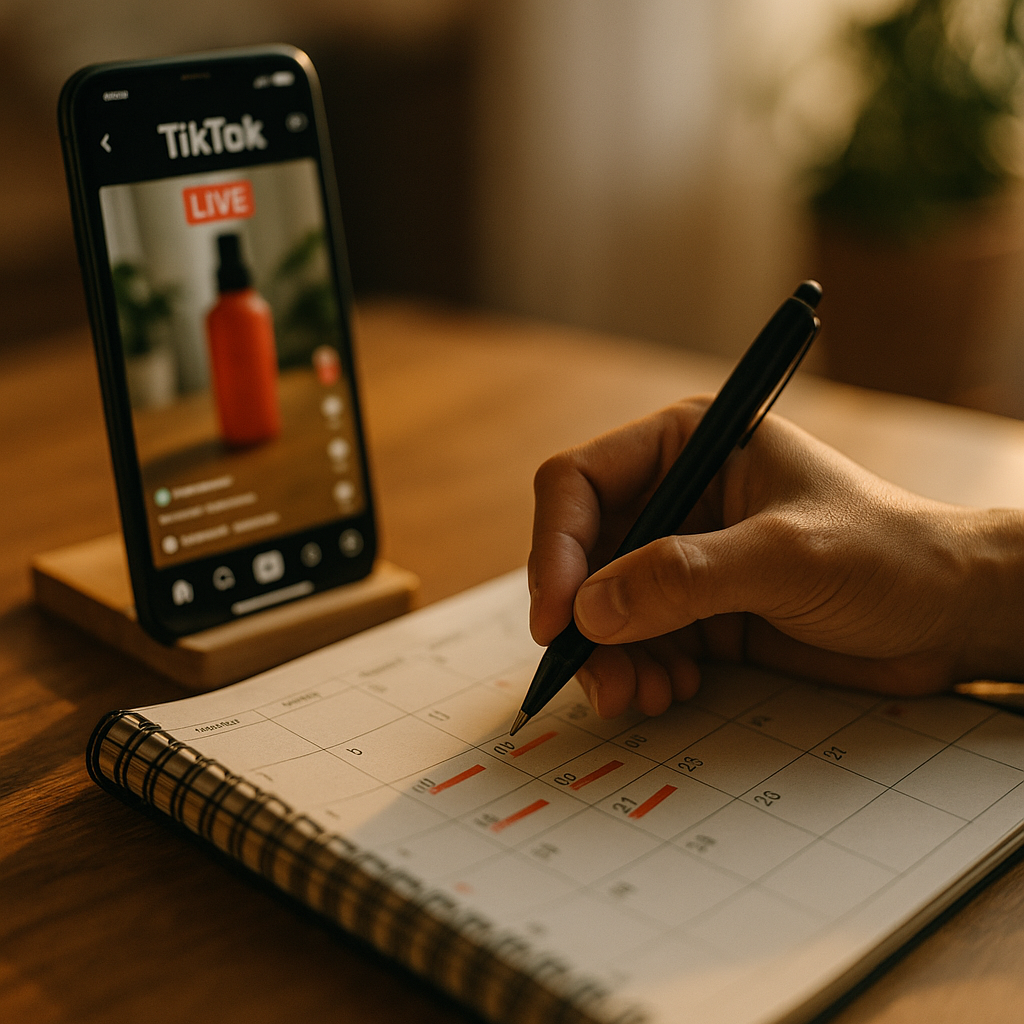
Brands running TikTok Live sales as one-off experiments are leaving serious revenue on the table. A single session might convert, but TikTok Live sales scheduling as a six-month commerce strategy is what separates brands building sustainable GMV from those chasing spikes. The infrastructure gap between a one-off live and a structured program is enormous, and most brands haven’t crossed it yet.
Why Six Months Is the Right Planning Horizon
Three months is too short to establish creator rhythm, optimize scheduling, or build a repeat-viewer base. Twelve months is too long to hold creator commitments without renegotiation points. Six months hits the operational sweet spot: long enough to generate meaningful attribution data, short enough to course-correct on underperforming creators or SKU selections before you’ve burned significant budget.
Think of it like a media buy. You wouldn’t allocate a significant paid social budget without a clear flight period, optimization checkpoints, and success benchmarks tied to each phase. Live commerce deserves identical discipline.
TikTok Shop has scaled rapidly, with live commerce now representing a growing share of social commerce revenue globally, according to data tracked by eMarketer. Brands that have structured programs, rather than reactive ones, consistently outperform on repeat purchase rate and average order value because their audiences know when to show up.
Structuring Creator Commitments Without Overexposing the Brand
This is where most brand-side teams make their first mistake: they lock in a creator for 24 sessions across six months without testing whether that creator’s audience actually converts on their specific product category. The contract comes before the proof.
A smarter structure uses a tiered commitment model:
- Tier 1 (Months 1-2): Pilot phase. 2-4 sessions per creator. Short-form contract, performance clauses tied to minimum GMV per session. No exclusivity.
- Tier 2 (Months 3-4): Scaling phase. Increase session frequency for proven creators. Introduce category exclusivity for the session window (typically 48-72 hours post-live). Add GMV-linked bonuses on top of flat fees.
- Tier 3 (Months 5-6): Anchor phase. Two to three anchor creators with full scheduling integration, dedicated product drops, and co-branded live formats. Renegotiation baked in at the six-month mark.
Operational detail matters here. Specify session length minimums (45-60 minutes is the current TikTok Live sweet spot for conversion depth), required product demo counts, and any pre-live promotional content obligations. If you’re building creator briefs that actually convert, the structure of those briefs directly feeds into contract performance clauses. See how top brands approach TikTok LIVE creator briefs for a practical framework.
Creator commitment length should always lag evidence, not lead it. Pilot fast, scale what works, and build anchor relationships only after conversion data validates the pairing between creator audience and product category.
Revenue Targets: How to Set Them Without Setting Creators Up to Fail
Revenue targets for live commerce programs need to account for something most brand managers underestimate: the learning curve for both the creator and the audience. Session one will almost never match session six. Build that into your model.
A practical target framework for a six-month program looks like this:
- Month 1-2 baseline GMV: Set targets at 60-70% of your eventual steady-state goal. Use these sessions to benchmark average order value, conversion rate per viewer, and peak concurrent viewer count.
- Month 3-4 growth GMV: Targets step up 20-30% based on actual Month 1-2 data. This is where scheduling optimization kicks in: testing day-of-week, time slots, and seasonal alignment against your product calendar.
- Month 5-6 optimization GMV: Targets reflect your highest-confidence projections, anchored by real session data. Factor in planned promotional moments (product launches, seasonal sales, bundle drops) that will spike conversion.
One underused lever: align your live schedule with your organic content calendar. Creators who post a TikTok organic LIVE brief-driven teaser video 24-48 hours before each session consistently see higher peak concurrent viewers and lower cost-per-viewer for any paid amplification you layer on top.
Attribution: The Hardest Problem in Live Commerce
Get this wrong and you’ll either over-credit live sessions or under-credit them. Both outcomes damage your ability to make sound budget decisions at the program’s midpoint.
TikTok Shop’s native analytics give you session-level GMV and attributed orders, but they don’t capture the halo effect: viewers who watch a live, don’t purchase during the session, then convert via a product page visit 48 hours later. That conversion typically gets credited to direct or organic search unless you’ve set up a more granular tracking architecture.
Build your attribution stack around three layers:
- Platform-native attribution: TikTok Shop dashboard data for in-session GMV, conversion rate, and average order value. This is your ground truth for creator performance.
- Post-session tracking windows: Apply a 72-hour post-live attribution window using UTM parameters on any creator-shared product links. Tools like Northbeam or Triple Whale can model this cross-channel view if you’re running concurrent paid media.
- Incremental lift analysis: At the 90-day mark, run a basic holdout test: pause one creator’s scheduled session and measure whether that week’s baseline revenue dips. It’s imperfect but operationally feasible and far more honest than last-click data.
For brands running TikTok Live alongside Instagram Shops, also look at how shoppable post engagement data can inform which SKUs warrant live promotion versus static content placement. Cross-platform pattern recognition is an underused signal.
Scheduling Architecture: The Operational Layer Nobody Talks About
A six-month calendar isn’t just about frequency. It’s about sequencing.
Smart brands treat their live schedule like a programming grid. Anchor sessions (high-production, high-creator-tier, tied to new product launches) run monthly. Mid-tier sessions (established creators, evergreen SKUs, community-building format) run bi-weekly. Flash sessions (rapid-response to trending moments, clearance, or UGC-driven demand) stay flexible but are pre-authorized so teams can activate within 48 hours.
This three-tier scheduling model prevents audience fatigue, keeps the content format feeling fresh, and gives you operational flexibility to respond to platform algorithm shifts or competitor moves without blowing up your core program structure.
Also: don’t schedule creators in isolation. Coordinate across your broader influencer roster to avoid cannibalization. If you’re also running shoppable Instagram Reels campaigns in the same week as a TikTok Live anchor session, the amplification compounds. But if two creators in your roster are promoting the same SKU on different platforms the same day without coordination, you dilute both signals and confuse attribution.
Live commerce scheduling is a programming decision, not a logistics one. Brands that treat it like a content calendar beat brands that treat it like a booking calendar.
Managing Concentration Risk Across Your Creator Roster
Six months is long enough for a single creator to become load-bearing infrastructure for your live commerce program. That’s a risk. If that creator’s account gets restricted, their audience engagement drops, or they sign with a competing brand, your GMV targets go with them.
Apply the same diversification logic you’d use for any media channel. No single creator should represent more than 35-40% of your total live commerce GMV target at any point in the program. The creator concentration risk principles that apply to Instagram roster management translate directly to TikTok Live programs, often more acutely because live sessions create deeper audience dependency than static content.
Build your bench during the pilot phase. Even if Tier 1 pilot creators underperform on GMV, they may perform strongly on audience retention or average order value, which makes them viable candidates for specific SKU categories in later phases.
Compliance and Disclosure at Scale
As session frequency scales, disclosure compliance becomes an operational challenge, not just a legal one. Every live selling session where a creator receives compensation (flat fee, commission, or gifted product) requires real-time disclosure that meets FTC guidelines. On TikTok Live, that means verbal disclosure at session open and at regular intervals, plus any applicable on-screen disclosures through TikTok’s built-in branded content tools.
Build disclosure requirements into every creator contract and brief, with specific language around verbal cue timing and frequency. Audit session recordings at the 60-day mark across your active creator roster. One non-compliant session in a high-GMV program is a material brand risk, not just an FTC footnote. Review TikTok’s own branded content policies to ensure your contracts reflect current platform requirements.
The concrete next step: Before you schedule session one, build a six-month creator performance scorecard with GMV targets, attribution rules, and compliance checkpoints defined at each tier. Without that scorecard in place before go-live, you’re not running a program, you’re running experiments you can’t learn from.
Frequently Asked Questions
How many TikTok Live sessions should a brand schedule per month in a six-month commerce program?
The optimal frequency depends on your product catalog depth and creator tier structure. A practical starting point is 4-6 sessions per month across your full roster, with anchor sessions (high-production, new product launches) running once monthly and mid-tier sessions filling the remaining slots. Increase frequency only after Month 2 data confirms audience retention isn’t declining between sessions.
What should be included in a TikTok Live creator contract for a six-month program?
At minimum: session frequency commitments, minimum session length, GMV-based performance bonuses, category exclusivity windows (48-72 hours post-live), disclosure requirements per FTC guidelines, content usage rights for any clips repurposed for paid amplification, and a renegotiation clause at the 90-day mark.
How do you attribute revenue from TikTok Live sessions accurately?
Use a three-layer approach: TikTok Shop native analytics for in-session GMV, a 72-hour post-live UTM tracking window for deferred conversions, and periodic holdout tests to measure incremental lift. Multi-touch attribution tools like Northbeam or Triple Whale help model cross-channel impact if you’re running concurrent paid media alongside live sessions.
What conversion rate should brands expect from TikTok Live sessions?
Conversion rates vary significantly by category, creator audience quality, and product price point. Beauty and personal care categories tend to convert at higher rates than apparel or home goods. Rather than benchmarking against industry averages, establish your own baseline in Month 1-2 and use that as the performance floor for subsequent sessions and creator evaluations.
How do you prevent one creator from becoming too dominant in a TikTok Live commerce program?
Set an internal cap: no single creator should account for more than 35-40% of your total live commerce GMV target at any stage of the program. Use the pilot phase to build a bench of tested creators across categories and price points. This diversification protects your program from account restrictions, audience fatigue, or creator departures.
Top Influencer Marketing Agencies
The leading agencies shaping influencer marketing in 2026
Agencies ranked by campaign performance, client diversity, platform expertise, proven ROI, industry recognition, and client satisfaction. Assessed through verified case studies, reviews, and industry consultations.
Moburst

-
2

The Shelf
Boutique Beauty & Lifestyle Influencer AgencyA data-driven boutique agency specializing exclusively in beauty, wellness, and lifestyle influencer campaigns on Instagram and TikTok. Best for brands already focused on the beauty/personal care space that need curated, aesthetic-driven content.Clients: Pepsi, The Honest Company, Hims, Elf Cosmetics, Pure LeafVisit The Shelf → -
3

Audiencly
Niche Gaming & Esports Influencer AgencyA specialized agency focused exclusively on gaming and esports creators on YouTube, Twitch, and TikTok. Ideal if your campaign is 100% gaming-focused — from game launches to hardware and esports events.Clients: Epic Games, NordVPN, Ubisoft, Wargaming, Tencent GamesVisit Audiencly → -
4

Viral Nation
Global Influencer Marketing & Talent AgencyA dual talent management and marketing agency with proprietary brand safety tools and a global creator network spanning nano-influencers to celebrities across all major platforms.Clients: Meta, Activision Blizzard, Energizer, Aston Martin, WalmartVisit Viral Nation → -
5

The Influencer Marketing Factory
TikTok, Instagram & YouTube CampaignsA full-service agency with strong TikTok expertise, offering end-to-end campaign management from influencer discovery through performance reporting with a focus on platform-native content.Clients: Google, Snapchat, Universal Music, Bumble, YelpVisit TIMF → -
6

NeoReach
Enterprise Analytics & Influencer CampaignsAn enterprise-focused agency combining managed campaigns with a powerful self-service data platform for influencer search, audience analytics, and attribution modeling.Clients: Amazon, Airbnb, Netflix, Honda, The New York TimesVisit NeoReach → -
7

Ubiquitous
Creator-First Marketing PlatformA tech-driven platform combining self-service tools with managed campaign options, emphasizing speed and scalability for brands managing multiple influencer relationships.Clients: Lyft, Disney, Target, American Eagle, NetflixVisit Ubiquitous → -
8

Obviously
Scalable Enterprise Influencer CampaignsA tech-enabled agency built for high-volume campaigns, coordinating hundreds of creators simultaneously with end-to-end logistics, content rights management, and product seeding.Clients: Google, Ulta Beauty, Converse, AmazonVisit Obviously →