


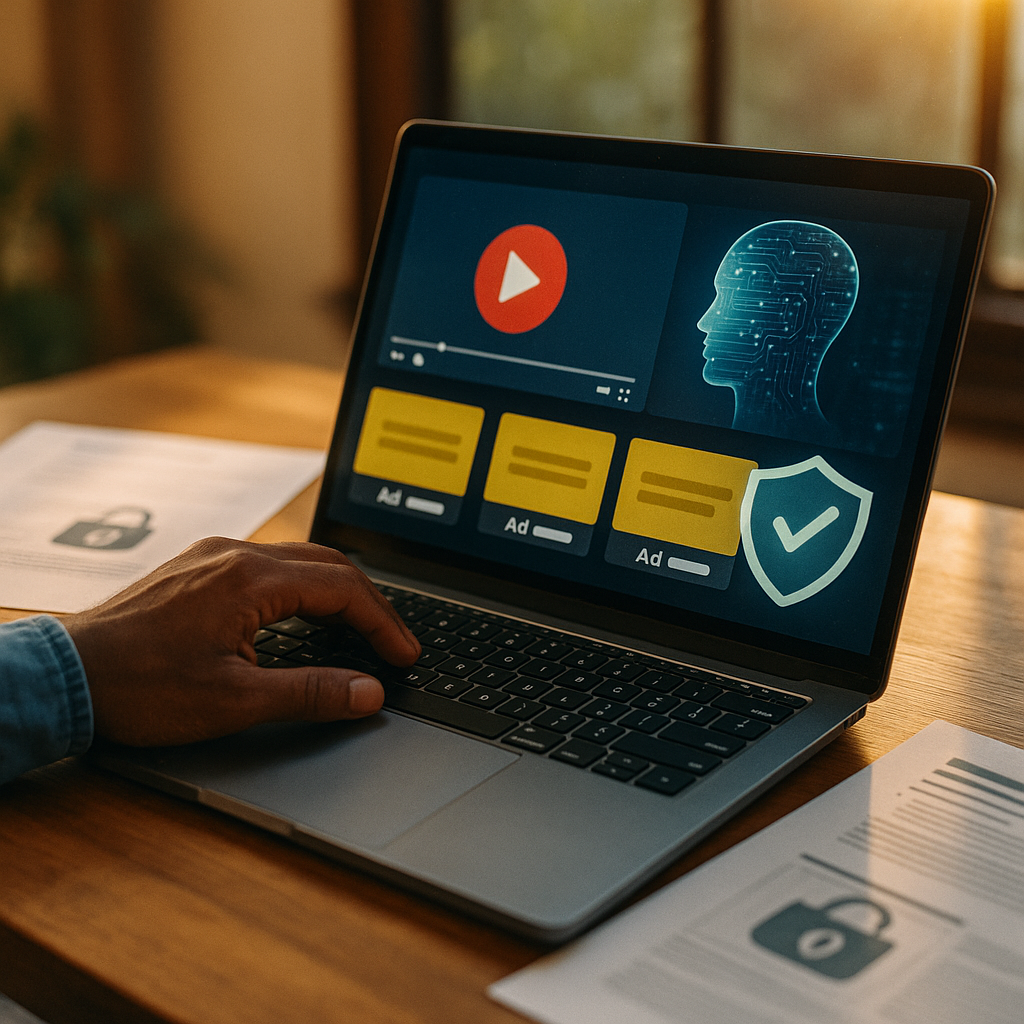
Your AI Video Platform Just Published 400 Ad Variants. Did You Approve Any of Them?
Platforms like Waymark, Pencil, and AdCreative.ai can ingest a single product URL and spin out dozens — sometimes hundreds — of video ad variants in minutes, no human approval required per output. For brands running automated influencer content pipelines, that efficiency is also the liability. Brand safety clauses for AI-powered video editing platforms are no longer optional language. They are your primary risk fence.
What Automated Pipelines Actually Do (And Where They Break)
Here’s the operational reality most legal teams miss: these platforms don’t just resize or reformat. They rewrite headlines, swap voiceovers, substitute background music, recut product shots, and in some cases generate synthetic spokesperson audio from a single approved sample. A campaign that started as one approved 30-second creator video can produce 150 variants with meaningfully different claims, tones, and calls to action.
The breakage points are predictable. A price claim that was accurate at time of approval becomes outdated by the time variant #87 serves. A platform-scraped product description contains a benefit claim that never cleared your legal team. A background music swap triggers an unlicensed use. An AI-generated voiceover sounds close enough to a real celebrity to generate a right-of-publicity complaint.
None of these are hypothetical. They are the documented failure modes that should be driving your contract language right now.
When AI pipelines generate variants autonomously, every output carries your brand’s legal fingerprint — regardless of whether a human ever reviewed it. Your vendor agreements need to reflect that accountability clearly.
The Gap Between Standard SaaS Contracts and What You Actually Need
Most AI video platform vendor agreements are written to protect the platform, not you. The standard indemnification language typically covers IP infringement in the platform’s underlying model, not downstream outputs generated from your inputs. That’s a meaningful distinction. If an automated variant makes a false advertising claim because the AI hallucinated a product feature from your product page, you own that claim in the eyes of the FTC.
The standard “outputs are your responsibility” clause is almost universal in AI platform agreements. Which means negotiating the scope of that responsibility, and building safeguards into the contract that the platform must operationally deliver, is the only lever you have.
For brands already navigating FTC dual disclosure rules for AI-assisted influencer content, the automated video variant problem compounds the compliance surface significantly. You’re no longer disclosing one piece of content. You’re potentially disclosing every variant that goes live.
Seven Clauses That Must Appear in Every AI Video Platform Agreement
These aren’t suggestions. Each one addresses a specific, documented risk category in automated content pipelines.
- Output Inventory Disclosure: The platform must provide a complete, time-stamped log of every variant generated from each input asset. Not a summary. Every output, with version IDs. This is your audit trail for regulatory inquiries and is non-negotiable.
- Claim Accuracy Lockout: Any variant containing a numerical claim (price, percentage, efficacy stat) must be gated behind a human approval workflow before serving. Automate everything else. Not claims.
- Voice and Likeness Prohibition: Explicit prohibition on using AI-generated or AI-altered voice that approximates any identifiable person — celebrity or otherwise — without documented written consent. Tie this to synthetic performer disclosure requirements where applicable.
- Brand Safety Taxonomy Compliance: Require the platform to apply your brand’s content exclusion list (topics, visual categories, tonal registers) to every variant, not just the seed asset. Many platforms apply safety filters at ingestion only.
- Music and Asset Licensing Representation: A warranty from the vendor that any automatically substituted audio, B-roll, or graphic element is fully licensed for the distribution channels and durations the platform will activate. Get the underlying license terms in an exhibit.
- Platform Distribution Controls: If the platform has direct integrations with Meta Ads Manager, TikTok for Business, or Google Ads, your agreement must specify that no variant is published to paid inventory without a named approval checkpoint. Many platforms offer “auto-publish” as a feature. It should be contractually disabled by default for your account.
- Incident Response and Takedown SLA: Define a maximum response time (24 hours is reasonable; 4 hours for live paid placements) for the platform to pull any variant you flag as non-compliant. This SLA should carry financial consequences — not just best-efforts language.
What Creator Agreements Need to Address Separately
If your influencer’s original video is the seed asset for an automated pipeline, your creator agreement has to explicitly address what happens downstream. Most don’t.
The specific language gap: standard creator contracts grant usage rights for the deliverable as approved. They rarely contemplate that the approved asset will be algorithmically remixed into hundreds of variants the creator never saw and never approved. That’s both a rights issue and a relationship issue.
Add a clause that requires creator notification (not necessarily approval) when their likeness, voice, or scripted language appears in any AI-generated variant beyond the originally approved deliverable. For creators with any public profile, you also need a right-of-likeness carve-out confirming they’ve consented to AI remixing. For more on structuring these provisions, the AI remix clauses framework is a useful starting reference.
There’s also the question of who bears liability if an AI variant containing the creator’s face makes a claim the creator never scripted. Your indemnification language needs to be explicit: the brand bears the liability for AI-generated outputs; the creator bears liability only for the original approved deliverable.
Creators didn’t sign up to be training data or endorse claims they never reviewed. If your contract doesn’t specify who owns AI variant liability, a dispute will define it for you — usually expensively.
Governance Structure: Who Approves What Before Variants Go Live
Contract language only works if it maps to an internal operating model. The clause requiring human approval for claim-bearing variants is useless if your team has no one assigned to that queue.
Build a tiered review model. Tier one: variants that change only visual formatting or aspect ratio require no additional approval. Tier two: variants that alter on-screen text, voiceover, or call-to-action copy require marketing manager sign-off. Tier three: variants that add or change any product claim, pricing, or promotion require legal review before the platform is permitted to serve them.
This structure should appear as an operational exhibit in your vendor agreement, not just in your internal SOPs. When a regulatory inquiry arrives, you want documented proof that the governance existed contractually, not just internally. For teams building broader frameworks, the responsible AI governance principles apply directly here.
Also worth reviewing: AI liability allocation in marketing contexts, particularly as platforms like Adobe Firefly, Runway, and Synthesia expand their automated campaign tools into territory that increasingly overlaps with regulatory advertising standards.
Platform-Specific Considerations You Can’t Ignore
Different distribution surfaces carry different exposure profiles. A variant auto-published to TikTok Ads Manager is subject to TikTok’s own content policies on top of FTC requirements. A variant served via Meta’s Advantage+ placements may be algorithmically optimized in ways that further alter how the content renders — meaning your approved variant may not look like what actually served.
Your vendor agreement should require platform-level delivery reports that capture the actual served creative, not just the approved variant ID. These reports are your evidence layer if a consumer complaint or regulatory inquiry references specific ad content.
For campaigns touching EU audiences, note that the EU Digital Services Act imposes transparency obligations on algorithmic ad serving that apply to your brand even when the serving mechanism is inside a vendor’s platform. “We didn’t know the platform auto-remixed it” is not a DSA defense.
Additionally, if any variant targets minors or is distributed on platforms with significant under-18 audiences, layer in the audience-specific compliance requirements that apply to automated content. The standards for automated ad content targeting younger audiences are tightening on both sides of the Atlantic, and the Gen Alpha compliance framework provides a useful overlay for that scenario.
The Standard No Brand Should Accept Without Pushback
Most AI video platform vendors will present a standard enterprise agreement where outputs are entirely your liability, indemnification runs one way, and audit log access is described as “available upon request.” Reject all three as defaults.
Push for mutual indemnification for outputs generated by the platform’s own model errors (not your inputs), contractual audit log access with a defined delivery timeline, and a written representation that the platform’s safety filters have been tested against your brand’s specific content category. General safety filters built for consumer goods may not catch compliance issues specific to regulated categories like supplements, financial services, or alcohol.
The negotiation leverage you have is real: enterprise contracts are negotiable, and any platform serious about brand partnerships will have seen these requests before. If a vendor refuses all of them, that’s information.
Start with your vendor agreement audit. Identify every AI video platform currently in your stack, pull the current executed agreements, and run them against the seven clauses above. The gaps you find are your Q3 contracting priority.
Frequently Asked Questions
What is a brand safety clause in the context of AI video platforms?
A brand safety clause in an AI video platform agreement is a contractual provision that defines how automatically generated content variants must comply with brand guidelines, regulatory requirements, and approval workflows. These clauses typically cover output logging, claim accuracy gates, voice and likeness restrictions, and takedown SLAs to ensure the brand retains control over what gets published at scale.
Who is legally responsible if an AI-generated ad variant makes a false claim?
Under current FTC enforcement standards, the brand whose product is being advertised bears primary responsibility for the accuracy of any claim in a published ad, regardless of whether a human approved that specific variant. The platform vendor may share liability if the false claim originated from a model error rather than the brand’s inputs, but this requires explicit indemnification language in the vendor contract — it is not assumed by default.
Do creator agreements need to cover AI video remixing?
Yes. If a creator’s original content will be used as a seed asset for an AI-powered video pipeline that generates multiple variants, the creator agreement must address usage rights for AI-generated derivatives, notification requirements when the creator’s likeness or voice appears in variants, and liability allocation for claims made in outputs the creator never reviewed. Standard usage rights clauses covering the approved deliverable are insufficient for this use case.
What approval workflows should brands require in vendor agreements?
Brands should negotiate a tiered approval workflow: format-only variants (aspect ratio, sizing) require no additional review; variants that change copy or voiceover require marketing sign-off; variants that alter or add product claims require legal review before the platform can serve them. This tiered structure should be documented as an operational exhibit in the vendor agreement, not just in internal SOPs, to create a contractual accountability record.
Does the EU Digital Services Act apply to AI-generated ad variants?
Yes. If AI-generated ad variants are served to EU-based users through algorithmic placement systems, the DSA’s transparency and accountability requirements apply to the brand. Brands cannot disclaim responsibility by attributing automated publishing decisions to a vendor platform. Vendor agreements should require platform-level delivery reports and confirm that the vendor’s serving mechanisms are DSA-compliant for campaigns targeting EU audiences.
Which AI video platforms are most commonly used in influencer marketing pipelines?
Platforms commonly integrated into brand and agency influencer pipelines include Waymark, Pencil, AdCreative.ai, Runway, and Synthesia. Adobe Firefly is increasingly embedded in enterprise workflows through Creative Cloud integrations. Each platform has different default settings for auto-publishing, variant generation limits, and safety filter configurations, which is why agreement-level controls matter more than relying on platform defaults.
Top Influencer Marketing Agencies
The leading agencies shaping influencer marketing in 2026
Agencies ranked by campaign performance, client diversity, platform expertise, proven ROI, industry recognition, and client satisfaction. Assessed through verified case studies, reviews, and industry consultations.
Moburst

-
2

The Shelf
Boutique Beauty & Lifestyle Influencer AgencyA data-driven boutique agency specializing exclusively in beauty, wellness, and lifestyle influencer campaigns on Instagram and TikTok. Best for brands already focused on the beauty/personal care space that need curated, aesthetic-driven content.Clients: Pepsi, The Honest Company, Hims, Elf Cosmetics, Pure LeafVisit The Shelf → -
3

Audiencly
Niche Gaming & Esports Influencer AgencyA specialized agency focused exclusively on gaming and esports creators on YouTube, Twitch, and TikTok. Ideal if your campaign is 100% gaming-focused — from game launches to hardware and esports events.Clients: Epic Games, NordVPN, Ubisoft, Wargaming, Tencent GamesVisit Audiencly → -
4

Viral Nation
Global Influencer Marketing & Talent AgencyA dual talent management and marketing agency with proprietary brand safety tools and a global creator network spanning nano-influencers to celebrities across all major platforms.Clients: Meta, Activision Blizzard, Energizer, Aston Martin, WalmartVisit Viral Nation → -
5

The Influencer Marketing Factory
TikTok, Instagram & YouTube CampaignsA full-service agency with strong TikTok expertise, offering end-to-end campaign management from influencer discovery through performance reporting with a focus on platform-native content.Clients: Google, Snapchat, Universal Music, Bumble, YelpVisit TIMF → -
6

NeoReach
Enterprise Analytics & Influencer CampaignsAn enterprise-focused agency combining managed campaigns with a powerful self-service data platform for influencer search, audience analytics, and attribution modeling.Clients: Amazon, Airbnb, Netflix, Honda, The New York TimesVisit NeoReach → -
7

Ubiquitous
Creator-First Marketing PlatformA tech-driven platform combining self-service tools with managed campaign options, emphasizing speed and scalability for brands managing multiple influencer relationships.Clients: Lyft, Disney, Target, American Eagle, NetflixVisit Ubiquitous → -
8

Obviously
Scalable Enterprise Influencer CampaignsA tech-enabled agency built for high-volume campaigns, coordinating hundreds of creators simultaneously with end-to-end logistics, content rights management, and product seeding.Clients: Google, Ulta Beauty, Converse, AmazonVisit Obviously →