


Organic Reach Is the New Media Buy
Sponsored content that earns algorithmic distribution costs a fraction of what paid-only placements do — and converts at nearly double the rate. That is the commercial reality shaping every serious brand’s short-form vertical video strategy right now, and it starts inside the creative brief.
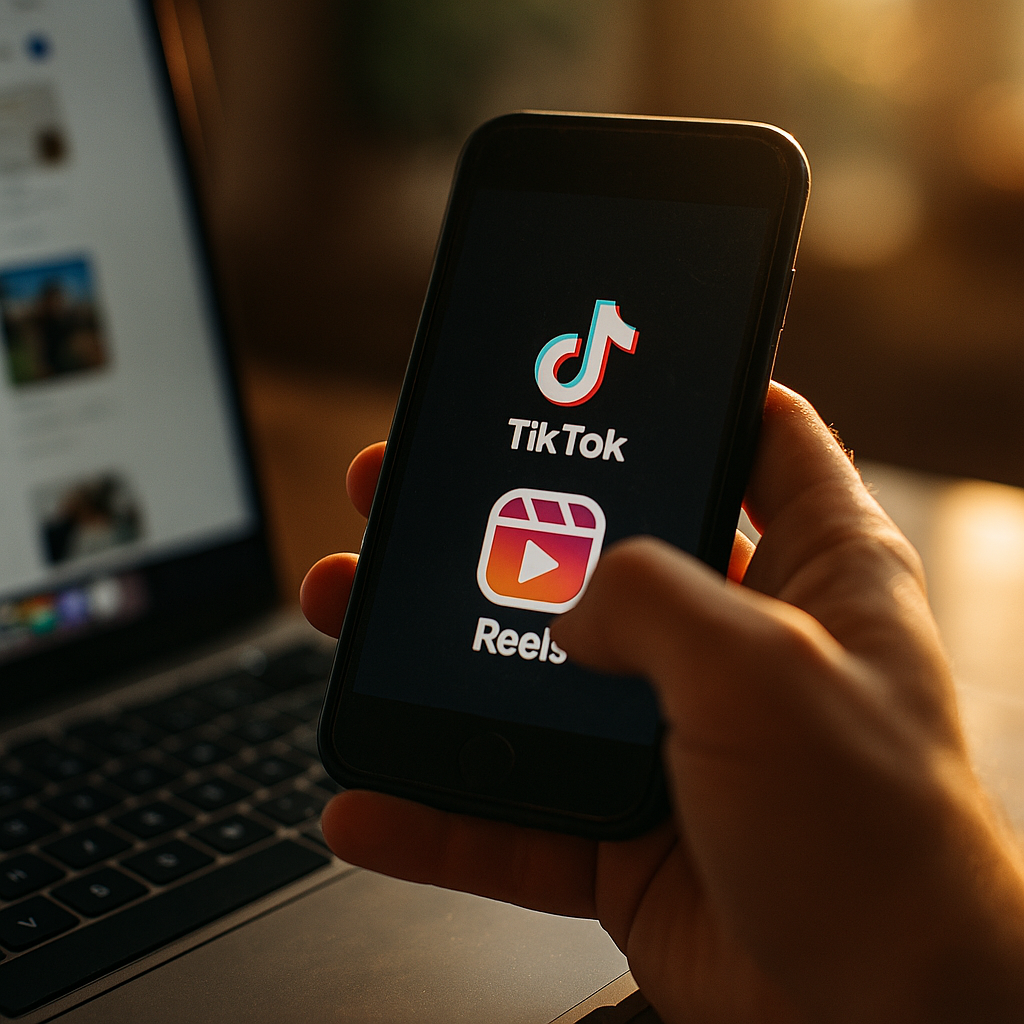
Short-form vertical video has consolidated its position as the dominant brand placement format. TikTok’s For You Page and Instagram Reels’ Explore surface reach audiences that paid amplification alone cannot replicate. The brands winning this format aren’t spending more. They’re briefing smarter.
What the Top-Performing Brand TikToks Actually Have in Common
Pull up the five most-shared brand TikToks from the past 18 months and a pattern emerges that most media planners miss. It isn’t production budget. E.l.f. Cosmetics, Duolingo, Chipotle, Scrub Daddy, and Rhode Skin all built organic traction through content that mimicked native creator behavior, not broadcast advertising logic.
Here is what they share structurally:
- A hook that fires before the brain engages. The first 1.5 seconds present a visual or audio cue that triggers pattern interruption. For Rhode, it was a phone case holding a lip gloss. For Duolingo, an anthropomorphic owl in a threatening situation. Neither required copy to explain the premise.
- A problem-resolution arc compressed into under 30 seconds. The algorithm rewards watch-through rate. Brands that front-load brand messaging sacrifice completion. The top performers bury the brand reveal until the emotional payoff lands.
- Sound design that works with trending audio, not against it. This is non-negotiable on TikTok. E.l.f. didn’t just use a trending sound — they commissioned an original track that became a sound itself, generating over 1.5 million user videos under their “Eyes Lips Face” audio.
- Subtitles baked into the edit. Not as an afterthought. As a design element. The algorithm reads dwell time and screen interaction as engagement signals. Subtitles extend watch time measurably.
The brief architecture behind these campaigns isn’t accidental. It reflects a deliberate decision to optimize for platform-native discovery signals before paid amplification is layered on top. If you want to understand how to encode these signals at the brief stage, the hook structures for TikTok and Reels framework is the right starting point.
How Instagram Reels Campaigns Diverge From TikTok — and Why It Matters for Your Brief
The instinct to repurpose TikTok assets for Reels is understandable. The cost efficiency argument is real. But the algorithmic logic of the two platforms diverges in ways that punish lazy adaptation.
Instagram’s Reels algorithm weighs relationship signals more heavily than TikTok’s FYP. A creator’s existing follower engagement meaningfully influences initial distribution. TikTok’s algorithm is more indifferent to follower count — it cold-starts content on interest clusters and adjusts based on early completion and share data. This means your Reels brief needs to front-load credibility and context signals that TikTok content can skip.
Brands that brief creators with a single platform-agnostic script consistently underperform against those that issue platform-specific creative guidance — particularly around pacing, on-screen text density, and CTA placement.
The leading Reels campaigns from brands like Glossier, Stanley, and Gymshark all embed what practitioners call “scroll-stop architecture”: a static-frame-worthy visual within the first three seconds that functions as a thumbnail for users who swipe but pause. TikTok doesn’t index on that signal the same way. Your brief needs to specify it explicitly for Reels.
For brands running shoots that need to serve both platforms without doubling production costs, the approach outlined in shoot once, repurpose for TikTok, Reels and Shorts gives a practical framework for building flexibility into the shoot day.
The Brief Architecture That Drives Algorithmic Amplification
Most brand briefs are still written for production teams, not algorithms. They specify deliverables, messaging hierarchies, and legal sign-off requirements. What they don’t specify are the behavioral signals the platform’s AI rewards.
A brief optimized for algorithmic reach includes:
- Hook variant requirements. Specify at least three distinct opening sequences testing different emotional triggers: curiosity, social proof, and pattern disruption. This is table stakes for any content going into paid testing, but it also gives the algorithm more surface area to find the right audience cluster.
- Comment-bait framing. Algorithmically amplified content drives comments. Brief creators to embed a genuine question or divisive statement that invites response. Not “drop a comment below” — that’s a dead CTA. Something like: “the second one is controversial and I’m standing by it.”
- Duet and stitch eligibility. For TikTok specifically, content structured to invite creator response multiplies reach without additional spend. Brief this explicitly. If your brand position allows for community remixing, flag it. If it doesn’t (highly regulated categories especially), brief against it.
- Brand signal timing. Platform-native sponsored content typically places the brand reveal between seconds 8 and 15. Before that, the content should be indistinguishable from organic creator posts. After that, the brand context reframes what the viewer already experienced emotionally.
The creator brief template for algorithmic reach on TikTok and Reels maps these elements into a workable document structure. For teams building performance-linked programs where creator compensation is tied to reach outcomes, the performance-linked brief framework adds the accountability layer.
Disclosure Without Distribution Penalty
The FTC’s updated endorsement guidelines and Meta’s branded content policies both require clear disclosure. The operational question isn’t whether to disclose — it’s how to do it without triggering the distribution penalty that platform algorithms apply to content flagged as purely commercial.
The data from TikTok for Business shows that sponsored content using the native “Paid Partnership” label within the creator’s own voice context outperforms content where the disclosure is tacked on as a pre-roll caption. The framing matters. “Gifted by” within a conversational sentence performs better than a cold label overlay.
Review FTC endorsement guidelines directly if your compliance team needs documentation. The practical brief implication: give creators explicit guidance on how to disclose in-voice, not just which label to apply. Brief the sentence, not just the tag.
Why Paid-Only Placements Are Getting More Expensive and Less Effective
CPMs for paid vertical video on Meta and TikTok have risen significantly as brand adoption saturated the format. According to eMarketer, short-form video ad spend continues to climb while organic reach for non-native-style content continues to decline. The gap between algorithmically amplified sponsored content and purely paid placements is now measurable in cost-per-acquisition, not just awareness metrics.
This is the fundamental ROI argument for investing in brief architecture. A creator post that earns organic amplification before the paid boost is applied starts from a higher engagement floor. The algorithm’s distribution engine is already running when you spend. The result is a lower effective CPM and a higher-quality audience signal.
Brands that treat the creative brief as a distribution tool — not just a production spec — are effectively buying algorithmic reach at the price of organic content creation.
For teams managing multi-format production across TikTok, Meta, and YouTube simultaneously, the multi-format creator brief approach reduces the operational cost of platform-specific creative without sacrificing the native signals each platform rewards.
The AI testing layer matters here too. Brands using tools like Sprout Social or dedicated creative intelligence platforms to run hook and CTA variant tests before full distribution are consistently identifying their highest-performing assets in the first 48 hours, not after full campaign spend. That’s a material budget efficiency gain.
The Operational Shift: Brief as Algorithm Strategy
The platforms are not neutral pipes. They have commercial incentives to surface content that generates watch time and engagement, because that engagement sells advertising inventory. Your brief should be written with that incentive structure in mind.
Brands that are winning short-form vertical video placement in this environment aren’t producing TV spots in a 9:16 ratio. They’re producing content that earns platform trust through behavioral signals, then amplifying what already works. The brief is where that logic gets encoded. Everything downstream — the creator’s performance, the editor’s choices, the CTA timing — flows from how clearly the brief articulates what the algorithm rewards.
If your current brief template was written before your team understood completion rate as a creative constraint, it’s time to rebuild it from the platform’s perspective outward.
Frequently Asked Questions
What makes short-form vertical video more effective than other formats for brand placements?
Short-form vertical video combines full-screen attention capture with algorithmic distribution that paid formats cannot replicate at equivalent cost. Platforms like TikTok and Instagram Reels reward content that generates high completion rates, comments, and shares with expanded organic reach — effectively providing additional distribution beyond the paid buy when content performs natively. This makes well-briefed sponsored content significantly more cost-efficient than standard display or pre-roll formats.
How does the TikTok algorithm differ from Instagram Reels when briefing creators?
TikTok’s For You Page algorithm cold-starts content based on interest clusters and adjusts distribution based on early watch-through and share signals, making follower count less relevant. Instagram Reels weights relationship signals and existing follower engagement more heavily in initial distribution. Briefs for Reels should include thumbnail-worthy visual moments and stronger credibility cues in the opening seconds, while TikTok briefs can prioritize pure pattern interruption and trending audio integration.
Where should the brand reveal appear in a short-form vertical video to avoid algorithmic suppression?
Platform-native sponsored content that earns organic amplification typically places the brand reveal between seconds 8 and 15 of the video. Content that opens with brand logos, product shots, or explicit promotional framing is more likely to be categorized as purely commercial by the algorithm, reducing its organic distribution potential. The opening should build emotional context or entertainment value before the brand element reframes the viewer’s experience.
How do you disclose paid partnerships without hurting algorithmic reach?
The most effective approach is to brief creators to incorporate disclosure language conversationally within the video’s natural dialogue rather than relying solely on label overlays. Native platform disclosure tools like TikTok’s “Paid Partnership” label and Meta’s branded content tags are required for compliance with FTC guidelines, but these should be paired with in-voice disclosure framing that feels organic. Placement of the label matters less than whether the surrounding content signals authentic creator voice to the algorithm.
What should a creator brief include to maximize algorithmic reach on TikTok and Reels?
An effective brief for algorithmic reach should specify: at least three hook variants testing different emotional triggers, comment-bait framing embedded in the narrative, explicit guidance on sound design and trending audio use, brand signal timing instructions, subtitle requirements as a design element, and platform-specific CTA placement guidance. For TikTok, briefs should also flag whether the content is structured for Duet or Stitch eligibility, as community remixing significantly multiplies organic reach without additional spend.
Top Influencer Marketing Agencies
The leading agencies shaping influencer marketing in 2026
Agencies ranked by campaign performance, client diversity, platform expertise, proven ROI, industry recognition, and client satisfaction. Assessed through verified case studies, reviews, and industry consultations.
Moburst

-
2

The Shelf
Boutique Beauty & Lifestyle Influencer AgencyA data-driven boutique agency specializing exclusively in beauty, wellness, and lifestyle influencer campaigns on Instagram and TikTok. Best for brands already focused on the beauty/personal care space that need curated, aesthetic-driven content.Clients: Pepsi, The Honest Company, Hims, Elf Cosmetics, Pure LeafVisit The Shelf → -
3

Audiencly
Niche Gaming & Esports Influencer AgencyA specialized agency focused exclusively on gaming and esports creators on YouTube, Twitch, and TikTok. Ideal if your campaign is 100% gaming-focused — from game launches to hardware and esports events.Clients: Epic Games, NordVPN, Ubisoft, Wargaming, Tencent GamesVisit Audiencly → -
4

Viral Nation
Global Influencer Marketing & Talent AgencyA dual talent management and marketing agency with proprietary brand safety tools and a global creator network spanning nano-influencers to celebrities across all major platforms.Clients: Meta, Activision Blizzard, Energizer, Aston Martin, WalmartVisit Viral Nation → -
5

The Influencer Marketing Factory
TikTok, Instagram & YouTube CampaignsA full-service agency with strong TikTok expertise, offering end-to-end campaign management from influencer discovery through performance reporting with a focus on platform-native content.Clients: Google, Snapchat, Universal Music, Bumble, YelpVisit TIMF → -
6

NeoReach
Enterprise Analytics & Influencer CampaignsAn enterprise-focused agency combining managed campaigns with a powerful self-service data platform for influencer search, audience analytics, and attribution modeling.Clients: Amazon, Airbnb, Netflix, Honda, The New York TimesVisit NeoReach → -
7

Ubiquitous
Creator-First Marketing PlatformA tech-driven platform combining self-service tools with managed campaign options, emphasizing speed and scalability for brands managing multiple influencer relationships.Clients: Lyft, Disney, Target, American Eagle, NetflixVisit Ubiquitous → -
8

Obviously
Scalable Enterprise Influencer CampaignsA tech-enabled agency built for high-volume campaigns, coordinating hundreds of creators simultaneously with end-to-end logistics, content rights management, and product seeding.Clients: Google, Ulta Beauty, Converse, AmazonVisit Obviously →