


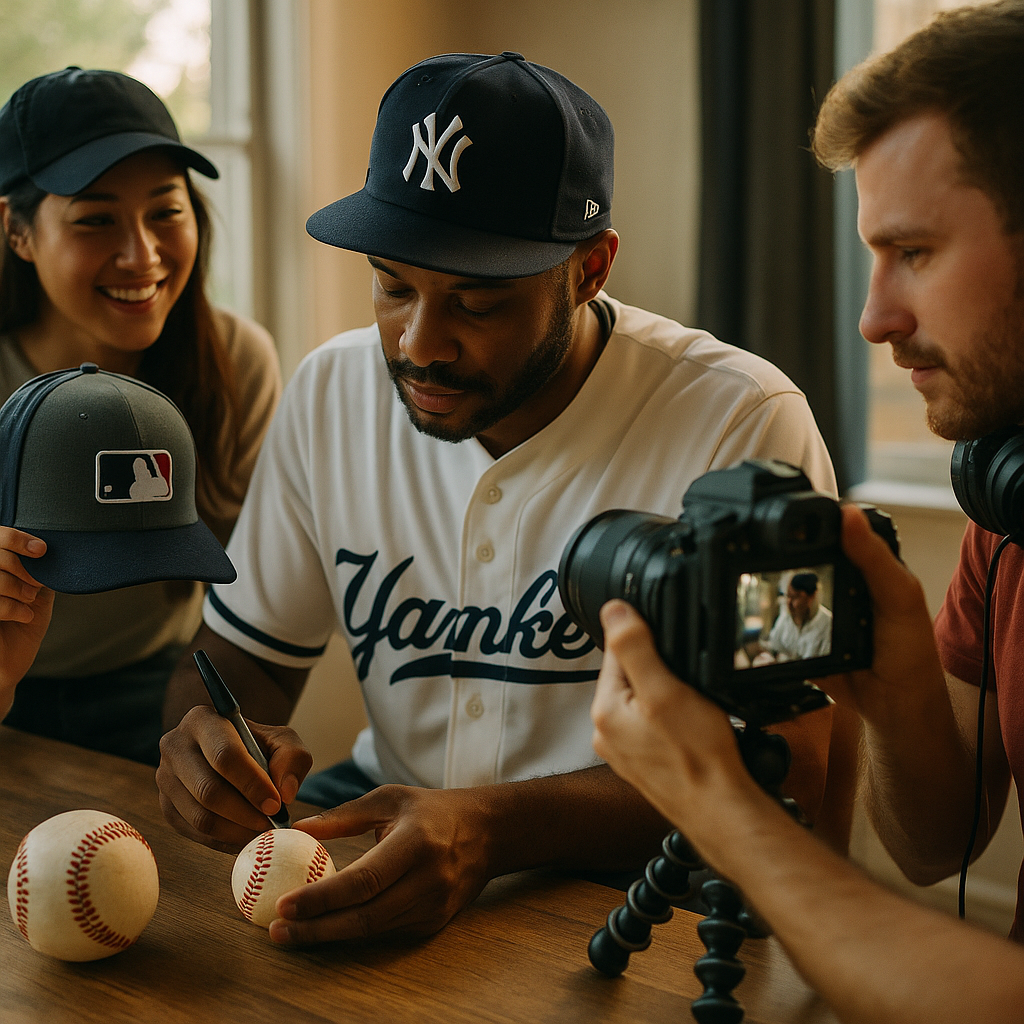
One Contract. 1,200 Athletes. What That Signals for Your Next Partnership Structure
What if you could activate 40 professional athletes under a single licensing agreement, with consistent rights, coordinated content windows, and centralized compliance oversight? That’s not a hypothetical. That’s the operational reality of the MLB Players Inc. group licensing model, and it represents one of the most underutilized templates in brand partnership strategy today.
The coordinated content hub model deserves serious attention from anyone running influencer programs at scale. Not because baseball is trending, but because the infrastructure logic behind it applies directly to how brands should be thinking about music collectives, creator cohorts, and any talent network that functions as a centralized distribution platform.
Why the “Roster-as-Network” Frame Changes Everything
Traditional sports sponsorship treats athletes as individual endorsers. You negotiate with an agent, lock in exclusivity windows, manage separate deliverables, and pray the athlete doesn’t post something off-brand between campaign flights. The operational overhead is punishing. More importantly, the reach is fragmented.
The roster-as-network model inverts this. Instead of treating each player as a standalone media property, MLB Players Inc. aggregates its membership into a single licensable entity. Brands access group rights, which means coordinated usage of names, images, and likenesses across the full roster without negotiating player-by-player. The compliance infrastructure is centralized. The rights are pre-cleared. The distribution points multiply exponentially.
This is infrastructure thinking, not talent thinking. And for brand strategists who are already treating creator networks as infrastructure, the parallel is immediate.
When you stop sourcing talent and start acquiring distribution infrastructure, your cost-per-reach drops, your legal exposure shrinks, and your campaign coordination becomes a media planning exercise rather than a talent wrangling operation.
The Four Structural Components Worth Replicating
Strip away the baseball context and the MLB Players Inc. model has four components that any brand partnership director should recognize as replicable:
- Centralized rights clearance: One agreement covers usage across the full roster. No individual holdouts, no surprise agent negotiations mid-campaign.
- Coordinated activation windows: Content can be scheduled across dozens of athletes simultaneously, creating a coordinated content surge rather than a trickle of individual posts.
- Compliance standardization: Disclosure requirements, brand safety guardrails, and usage restrictions are baked into the group agreement rather than negotiated separately with each talent’s legal team.
- Audience aggregation: The combined audience reach of a roster-as-network play is not additive — it’s multiplicative when fans follow multiple players and encounter the brand message repeatedly across trusted sources.
If you’ve been watching the multi-creator cohort campaign model emerge in the creator economy, you’re watching the same logic applied to digital-native talent pools. The mechanism is identical. The medium differs.
Music Collectives as the Next Frontier
The music industry has its own version of this model, and it’s dramatically underexploited by brand marketers. Think about what a collective like EMPIRE, YEAR0001, or a label-backed artist group actually represents from a distribution standpoint: multiple artists sharing a fanbase geography, a cultural moment, and a content distribution infrastructure. A brand that partners with the collective, rather than a single artist, gets coordinated social activation, synchronized release windows, and cross-pollinating audiences.
The challenge has historically been rights fragmentation. Music collectives don’t always have the kind of group licensing infrastructure that MLB Players Inc. has spent decades building. But that’s changing. Statista data shows the global music streaming market is now deep into nine-figure territory in terms of brand partnership spend, which is creating economic pressure on collectives to formalize their group rights offerings.
Brands that move early on formalizing collective-level partnerships, before standard deal terms exist, will capture the same asymmetric advantage that early sports league sponsors captured in the 1990s.
Creator Cohorts: The Digital-Native Equivalent
In the creator economy, the coordinated content hub model shows up as managed creator networks, exclusive creator houses, and platform-certified creator programs. The institutional procurement of creator talent is accelerating this. When a brand works with a managed cohort — say, a fitness creator collective with shared management, shared audience demographics, and pre-negotiated group rates — they are accessing the same structural advantages as a sports league group license.
The operational difference is maturity. MLB Players Inc. has decades of legal infrastructure. Most creator cohorts are 18 to 36 months old. The brands that help formalize that infrastructure, by insisting on standardized contracts, pre-cleared usage rights, and coordinated activation windows as conditions of partnership, are actually building the template that will make future partnerships cheaper and faster for everyone.
This connects directly to the broader shift in creator economy professionalization that procurement teams are now being asked to operationalize.
What the Brand Side Gets Wrong
Most brands engaging with these models make one critical error: they treat the hub as a media buy rather than a partnership infrastructure investment.
A media buy mindset optimizes for impressions and CPM. An infrastructure mindset optimizes for repeatability, rights leverage, and compound audience value. When you treat an MLB group license as a media buy, you’re leaving the long-tail content rights, the retail activation integration, the co-branded product licensing windows, and the first-party data collection opportunities on the table.
The brand strategy guide to MLB group licensing makes this explicit: the most sophisticated brand partners are not buying reach. They’re acquiring a coordinated distribution network that compounds over the length of the partnership.
Tools like Sprout Social and HubSpot are increasingly used by brand teams to track coordinated content performance across multi-creator or multi-athlete activations, pulling engagement, sentiment, and attribution data into unified dashboards that make the infrastructure value visible to CFOs and procurement teams who need to justify the partnership tier investment.
The brands winning with coordinated content hubs are the ones who show up with a multi-year infrastructure mindset, not a campaign-by-campaign media buying mentality.
Compliance and Rights: Where Centralized Models Actually Save Money
One underappreciated advantage of the coordinated content hub model is its compliance efficiency. When rights are pre-cleared at the group level, brand legal teams don’t need to review individual talent contracts for every activation. FTC disclosure requirements, exclusivity windows, and usage restrictions are standardized across the network. The due diligence overhead, which can consume significant legal budget in large influencer programs, compresses dramatically.
Given the regulatory pressure that continues to tighten around creator content (see the FTC’s updated guidance at ftc.gov and the international compliance complexity tracked by the ICO for UK and EU markets), centralized compliance infrastructure is increasingly a procurement requirement, not a nice-to-have.
For teams managing large creator programs, the operational parallels here also connect to how AI is reshaping the efficiency calculus. AI versus manual creator program management is a real decision point, and centralized hub models are inherently more compatible with AI-assisted workflow automation than dispersed, individually-negotiated creator rosters.
The Replication Playbook
If you’re a brand partnership director or an agency strategist looking to apply the coordinated content hub model outside of professional sports, the sequencing matters. Start by identifying talent networks that already share audience demographics, content cadence, and management infrastructure. That pre-existing coordination is the raw material. Your job is to formalize it into a group rights framework that mirrors what sports leagues have built over decades.
Negotiate for three things upfront: coordinated activation windows that allow simultaneous content drops, standardized disclosure and usage rights across the full cohort, and first-party data access tied to campaign-specific landing pages or QR codes that attribute audience action to the network, not individual creators. This positions the hub as a measurable distribution platform with a trackable return, which is what earns it a line item in next year’s media plan rather than a one-off test budget.
For brands serious about this, eMarketer’s creator economy data increasingly supports the case that coordinated multi-creator programs outperform equivalent individual-creator spend on aided brand recall and purchase intent metrics.
Start with the talent networks that already function like infrastructure. Build the rights framework that makes coordination repeatable. Then treat the resulting hub as a distribution platform with its own audience, reach, and attribution logic, because that’s exactly what it is.
FAQ
What is the coordinated content hub model in influencer marketing?
The coordinated content hub model refers to a partnership structure where a brand engages a centralized network of creators, athletes, or artists under a unified rights and activation framework. Rather than negotiating individually with each talent, the brand accesses a group-level agreement that enables simultaneous content deployment across the full roster, standardized compliance terms, and aggregated audience reach.
How does MLB Players Inc.’s group licensing model work for brands?
MLB Players Inc. aggregates the name, image, and likeness rights of Major League Baseball players into a single licensable entity. Brands can access group rights covering multiple players under one agreement, enabling coordinated activations, retail integrations, and co-branded product campaigns without player-by-player negotiations. This significantly reduces legal overhead and accelerates campaign timelines.
Can the roster-as-network model be applied outside of professional sports?
Yes. The structural logic applies directly to music collectives, managed creator cohorts, platform-certified creator groups, and any talent network with shared management and audience demographics. The key is formalizing group rights agreements that pre-clear usage, standardize disclosure requirements, and enable coordinated content activation windows across the full network.
What compliance advantages do centralized creator hub models offer?
Centralized hub models standardize FTC disclosure requirements, exclusivity windows, and usage restrictions at the group level. This compresses the legal review burden that typically multiplies with individually-negotiated creator contracts. For brands managing large influencer programs across multiple markets, this compliance efficiency can represent significant cost savings and risk reduction.
How should brands measure ROI from a coordinated content hub partnership?
Brands should measure ROI across three dimensions: reach efficiency (cost-per-reach across the full network versus equivalent individual-creator spend), compliance cost reduction (legal overhead saved by centralized rights clearance), and compound audience value (the multiplier effect when fans follow multiple network members and encounter the brand message repeatedly). First-party data collection tied to campaign-specific landing pages or tracking codes is essential for attribution at the network level.
Top Influencer Marketing Agencies
The leading agencies shaping influencer marketing in 2026
Agencies ranked by campaign performance, client diversity, platform expertise, proven ROI, industry recognition, and client satisfaction. Assessed through verified case studies, reviews, and industry consultations.
Moburst

-
2

The Shelf
Boutique Beauty & Lifestyle Influencer AgencyA data-driven boutique agency specializing exclusively in beauty, wellness, and lifestyle influencer campaigns on Instagram and TikTok. Best for brands already focused on the beauty/personal care space that need curated, aesthetic-driven content.Clients: Pepsi, The Honest Company, Hims, Elf Cosmetics, Pure LeafVisit The Shelf → -
3

Audiencly
Niche Gaming & Esports Influencer AgencyA specialized agency focused exclusively on gaming and esports creators on YouTube, Twitch, and TikTok. Ideal if your campaign is 100% gaming-focused — from game launches to hardware and esports events.Clients: Epic Games, NordVPN, Ubisoft, Wargaming, Tencent GamesVisit Audiencly → -
4

Viral Nation
Global Influencer Marketing & Talent AgencyA dual talent management and marketing agency with proprietary brand safety tools and a global creator network spanning nano-influencers to celebrities across all major platforms.Clients: Meta, Activision Blizzard, Energizer, Aston Martin, WalmartVisit Viral Nation → -
5

The Influencer Marketing Factory
TikTok, Instagram & YouTube CampaignsA full-service agency with strong TikTok expertise, offering end-to-end campaign management from influencer discovery through performance reporting with a focus on platform-native content.Clients: Google, Snapchat, Universal Music, Bumble, YelpVisit TIMF → -
6

NeoReach
Enterprise Analytics & Influencer CampaignsAn enterprise-focused agency combining managed campaigns with a powerful self-service data platform for influencer search, audience analytics, and attribution modeling.Clients: Amazon, Airbnb, Netflix, Honda, The New York TimesVisit NeoReach → -
7

Ubiquitous
Creator-First Marketing PlatformA tech-driven platform combining self-service tools with managed campaign options, emphasizing speed and scalability for brands managing multiple influencer relationships.Clients: Lyft, Disney, Target, American Eagle, NetflixVisit Ubiquitous → -
8

Obviously
Scalable Enterprise Influencer CampaignsA tech-enabled agency built for high-volume campaigns, coordinating hundreds of creators simultaneously with end-to-end logistics, content rights management, and product seeding.Clients: Google, Ulta Beauty, Converse, AmazonVisit Obviously →