


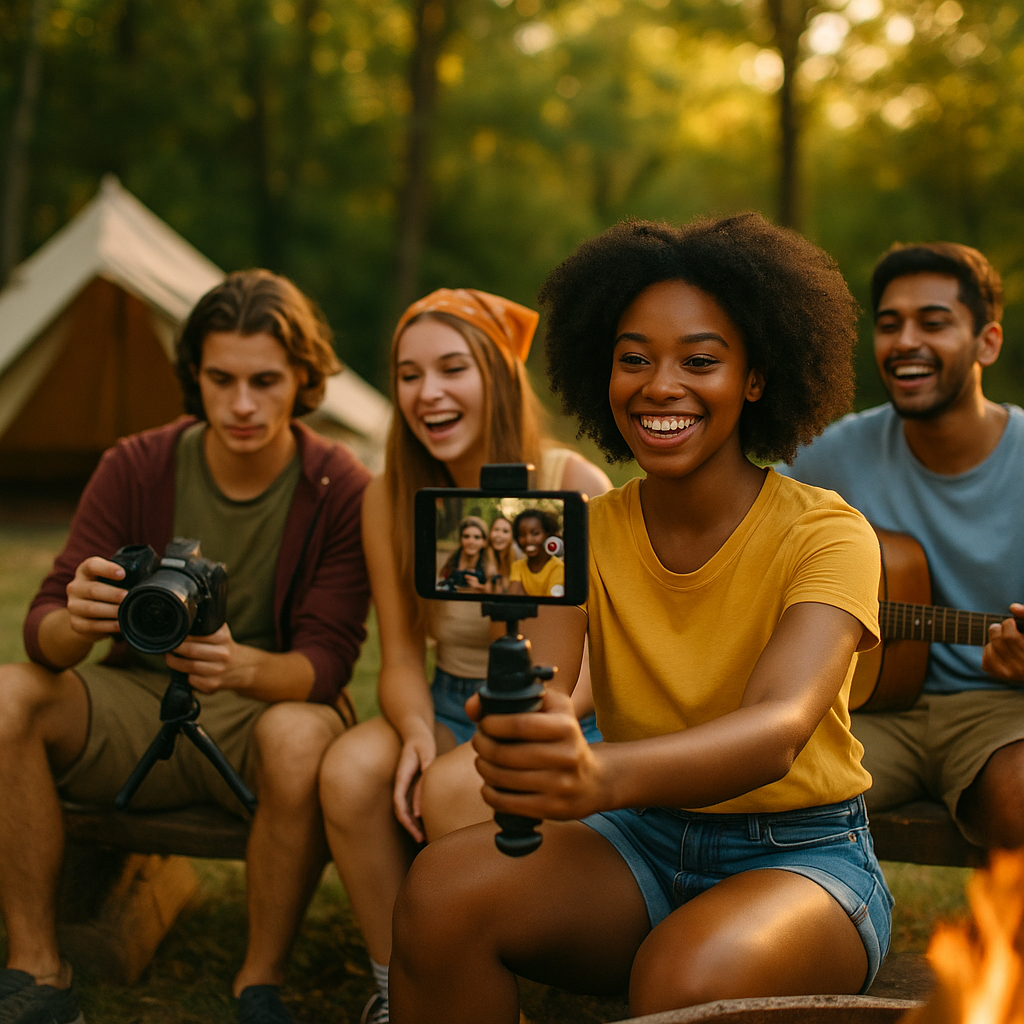
What if you could run a coordinated 30-creator content campaign that actually sounds like 30 different people? The “Creator Summer Camp” model is doing exactly that, and forward-thinking brands are using it to generate content velocity at scale without the homogenized output that kills engagement.
What the Creator Summer Camp Model Actually Is
Strip away the branding and the concept is straightforward: a brand recruits a cohort of creators (typically 15-50) for a time-boxed activation, often tied to a seasonal moment, and brings them through a shared experience, briefing process, or physical gathering. The output is a coordinated burst of content that hits across platforms within a compressed window, typically 2-4 weeks.
Think of it as the operational cousin of a media flight, but with human creative variability built in by design. Each creator interprets the same core brief through their own lens, their own audience relationship, their own storytelling style. The brand gets coverage. The creator gets an experience worth sharing. The audience gets content that feels earned rather than bought.
Brands like e.l.f. Cosmetics, American Eagle, and Marriott have run variations of this model, particularly around summer campaigns. But it’s no longer just a consumer brand play. B2B software companies, CPG conglomerates, and even financial services firms are adapting the framework for their own use cases.
Why Coordination Without Uniformity Is the Hard Problem
Most brands attempting multi-creator campaigns make the same mistake: they over-brief. They send a 12-page creative deck with approved phrases, font sizes, banned words, and shot lists. The creators produce technically compliant content that performs 40-60% below their organic benchmarks. Why? Because their audiences can smell the brief.
Over-briefing is the single biggest killer of multi-creator campaign performance. When every creator sounds like a press release, the coordinated burst becomes coordinated silence.
The Summer Camp model solves this by shifting the brief from “here’s what to say” to “here’s what to experience.” When you fly 25 creators to a brand experience, give them genuine access, let them form real opinions, and trust them to translate that into content, you get authentic variability at scale. The coordination happens at the logistical level. The authenticity happens at the creative level.
This is meaningfully different from the traditional ambassador model. Ambassadors develop deep brand familiarity over months. Cohort activations compress that relationship into days, which means the brand needs to be intentional about what that experience actually delivers. There’s no time to build loyalty slowly. The experience has to be worth talking about immediately.
Building the Operational Infrastructure
Running a 30-creator cohort activation is closer to event production than it is to influencer outreach. The operational requirements are substantial, and brands that underestimate them either spend too much, produce too little, or both.
Here’s what the infrastructure actually looks like:
- Tiered creator selection: Mix anchor creators (500K+ followers) with mid-tier (50K-200K) and niche micro-creators (10K-50K). The anchors drive reach; the micros drive credibility and conversion.
- Staggered publish schedules: Not everyone drops content on day one. Structure the window so the campaign builds momentum rather than peaking and collapsing. Tools like Sprout Social can help teams monitor the cadence in real time.
- Platform-specific brief variants: A single experience should yield TikTok content, Instagram Reels, YouTube Shorts, and long-form depending on the creator mix. Brief for the platform, not just the message.
- Rights and usage clarity upfront: Multi-creator cohorts create significant content volume. Brands need clear usage rights language baked into contracts before the activation, not negotiated post-production. This connects directly to how creator contracts and brand power interact in structured programs.
- Real-time sentiment monitoring: With 30 creators publishing simultaneously, brand safety incidents can compound fast. Platforms like Brandwatch or Talkwalker provide the kind of monitoring coverage this volume requires.
The contracting piece deserves particular attention. When you’re managing 30 creators across multiple platforms with usage rights, exclusivity windows, and FTC disclosure requirements, standardization is non-negotiable. Standardized creator contracts reduce legal exposure and speed up the activation timeline considerably.
The ROI Case: Content Velocity vs. Content Quality
Some CMOs push back on cohort activations because the per-post cost looks high relative to standard influencer sponsorships. That’s the wrong unit of measurement.
The relevant metrics are:
- Earned media value per activation dollar: A coordinated 30-creator burst generates algorithmic lift that a single creator post cannot. When multiple creators post similar content in a compressed window, platform algorithms read it as trending topic signal, not sponsored content.
- Content asset yield: A well-run Summer Camp activation produces 60-150 pieces of owned or licensed content. That’s creative production that would cost multiples more through traditional agency channels.
- Attribution across the funnel: Upper-funnel awareness from anchor creators, mid-funnel consideration from mid-tier creators, and lower-funnel conversion from niche creators can be tracked and mapped when the campaign is structured with intent.
According to eMarketer, influencer marketing spend continues to outpace traditional digital channels in ROI efficiency for consumer-facing brands. The Summer Camp model amplifies that efficiency by concentrating spend into high-impact windows rather than spreading it thin across year-round activations.
The payment and attribution models you use for cohort activations also matter significantly. Upfront payment structures with milestone-linked content deliverables give brands cleaner attribution data than performance-only deals, where creators optimize for their own metrics rather than the brand’s campaign objectives.
Keeping Authentic Voice Intact at Scale
Here’s the tension every brand manager faces: you need enough coordination to make the campaign coherent, and enough freedom to make the content believable. Get the balance wrong in either direction and the activation fails.
The most effective approach is what some agencies now call “anchor and air.” You anchor the campaign with 3-5 non-negotiables: the campaign hashtag, the disclosure language (required under FTC guidelines), the publishing window, and one core message or theme. Everything else is air. The creator fills that space with their own voice, their own format, their own aesthetic.
This is where creator selection becomes a strategic input rather than a checkbox. You’re not just selecting for follower count or engagement rate. You’re selecting for voice diversity. A cohort where every creator has a similar aesthetic and tone will produce uniform content even with maximum creative freedom. Intentional diversity in creator style is what generates the authentic variability the model depends on.
The best cohort activations look less like a campaign and more like a cultural moment. That only happens when creator selection reflects genuine audience diversity, not just demographic checkboxes.
AI tools are increasingly useful for the selection phase. Platforms like Grin, Aspire, and Modash allow brand teams to filter for voice characteristics, content style, and audience overlap in ways that weren’t operationally feasible with manual research. The efficiency gap between AI-assisted and manual programs becomes especially visible at the 30-creator scale.
Compliance and Brand Safety in a Cohort Context
One underrated risk in multi-creator cohort activations is compliance amplification. A disclosure error from a single creator in a standard program is a manageable incident. The same error multiplied across 25 creators in a synchronized campaign is a regulatory headline.
Age-gated products, financial services, and health-adjacent brands face elevated risk, and the cohort format doesn’t reduce that risk. It concentrates it. Age restriction and brand compliance protocols need to be built into the creator onboarding process before the activation, not reviewed after content goes live.
Pre-publication review workflows are essential at cohort scale. This doesn’t mean approving every piece of content line by line; that defeats the authenticity objective. It means establishing a 24-48 hour soft review window where the brand team can flag compliance issues without dictating creative direction. Most professional creator management platforms support this workflow natively.
Who Should Run the Program
The Summer Camp model sits at an operational intersection that most internal marketing teams aren’t structured to manage alone. It requires event logistics, influencer contracting, content rights management, multi-platform publishing coordination, and real-time performance monitoring running simultaneously.
Brands that have successfully operationalized cohort activations typically use one of three structures: a dedicated internal creator programs team (common at large CPG and retail brands), a specialist influencer agency with cohort activation experience, or a hybrid where internal brand strategy owns the brief and an external team owns the execution.
As creator inventory enters mainstream media planning, the expectation that these programs can run on a stretched social team with a modest budget is becoming increasingly unrealistic. The brands generating the best results are treating cohort activations as a media investment with production budget attached, not as an influencer line item managed by a coordinator.
Platforms like Meta Business Suite and TikTok for Business have also developed branded content partnership tools that make multi-creator campaign management more structured, including creator discovery, brief distribution, and performance aggregation in a single interface.
If you’re evaluating whether the Summer Camp model fits your next seasonal activation, start with one concrete question: does your brand have an experience worth gathering creators around? If the answer requires manufacturing a moment rather than revealing one that genuinely exists, the model will underperform. Build the experience first. Then build the cohort around it.
Frequently Asked Questions
How many creators should be in a Summer Camp cohort activation?
The optimal cohort size depends on budget, platform mix, and campaign objectives. Most brand teams find that 15-30 creators is the sweet spot: large enough to generate algorithmic momentum and audience coverage, small enough to manage quality and maintain authentic differentiation. Cohorts above 50 creators require significant operational infrastructure and are typically reserved for major seasonal tentpoles with dedicated program management teams.
How do you maintain authentic creator voice while ensuring brand message consistency?
The most effective approach is to brief on experience and theme rather than specific messaging or scripts. Define 3-5 non-negotiables (hashtag, disclosure language, publishing window, one core theme) and leave all creative decisions to the creator. Authentic voice is preserved when creators are treated as interpreters of an experience, not distributors of a message.
What is the typical budget range for a multi-creator cohort activation?
Budgets vary significantly based on creator tier mix, whether the activation involves a physical gathering or a virtual experience, and the platforms targeted. Activations involving a physical experience with 20-30 creators typically range from $150,000 to $500,000+ when creator fees, event logistics, travel, content rights, and campaign management are fully accounted for. Virtual cohort activations can be structured for significantly less.
How do you handle FTC disclosure requirements across 30 creators simultaneously?
Disclosure compliance must be standardized at the contract and onboarding level, not left to individual creator interpretation. Build disclosure language directly into the brief and the contract, conduct a pre-campaign compliance briefing, and use a soft content review window to catch issues before publication. Consider using a platform with built-in disclosure monitoring to flag non-compliant posts in real time.
Can the Summer Camp model work for B2B brands?
Yes, with adaptation. B2B cohort activations typically replace physical summer experiences with virtual summits, early product access programs, or expert roundtables. The core mechanic (shared experience, diverse creator voices, coordinated publish window) transfers effectively to LinkedIn and YouTube, which are the primary platforms for B2B creator content. The key is selecting creators who hold genuine professional credibility with the target audience, not just follower counts.
Top Influencer Marketing Agencies
The leading agencies shaping influencer marketing in 2026
Agencies ranked by campaign performance, client diversity, platform expertise, proven ROI, industry recognition, and client satisfaction. Assessed through verified case studies, reviews, and industry consultations.
Moburst

-
2

The Shelf
Boutique Beauty & Lifestyle Influencer AgencyA data-driven boutique agency specializing exclusively in beauty, wellness, and lifestyle influencer campaigns on Instagram and TikTok. Best for brands already focused on the beauty/personal care space that need curated, aesthetic-driven content.Clients: Pepsi, The Honest Company, Hims, Elf Cosmetics, Pure LeafVisit The Shelf → -
3

Audiencly
Niche Gaming & Esports Influencer AgencyA specialized agency focused exclusively on gaming and esports creators on YouTube, Twitch, and TikTok. Ideal if your campaign is 100% gaming-focused — from game launches to hardware and esports events.Clients: Epic Games, NordVPN, Ubisoft, Wargaming, Tencent GamesVisit Audiencly → -
4

Viral Nation
Global Influencer Marketing & Talent AgencyA dual talent management and marketing agency with proprietary brand safety tools and a global creator network spanning nano-influencers to celebrities across all major platforms.Clients: Meta, Activision Blizzard, Energizer, Aston Martin, WalmartVisit Viral Nation → -
5

The Influencer Marketing Factory
TikTok, Instagram & YouTube CampaignsA full-service agency with strong TikTok expertise, offering end-to-end campaign management from influencer discovery through performance reporting with a focus on platform-native content.Clients: Google, Snapchat, Universal Music, Bumble, YelpVisit TIMF → -
6

NeoReach
Enterprise Analytics & Influencer CampaignsAn enterprise-focused agency combining managed campaigns with a powerful self-service data platform for influencer search, audience analytics, and attribution modeling.Clients: Amazon, Airbnb, Netflix, Honda, The New York TimesVisit NeoReach → -
7

Ubiquitous
Creator-First Marketing PlatformA tech-driven platform combining self-service tools with managed campaign options, emphasizing speed and scalability for brands managing multiple influencer relationships.Clients: Lyft, Disney, Target, American Eagle, NetflixVisit Ubiquitous → -
8

Obviously
Scalable Enterprise Influencer CampaignsA tech-enabled agency built for high-volume campaigns, coordinating hundreds of creators simultaneously with end-to-end logistics, content rights management, and product seeding.Clients: Google, Ulta Beauty, Converse, AmazonVisit Obviously →