


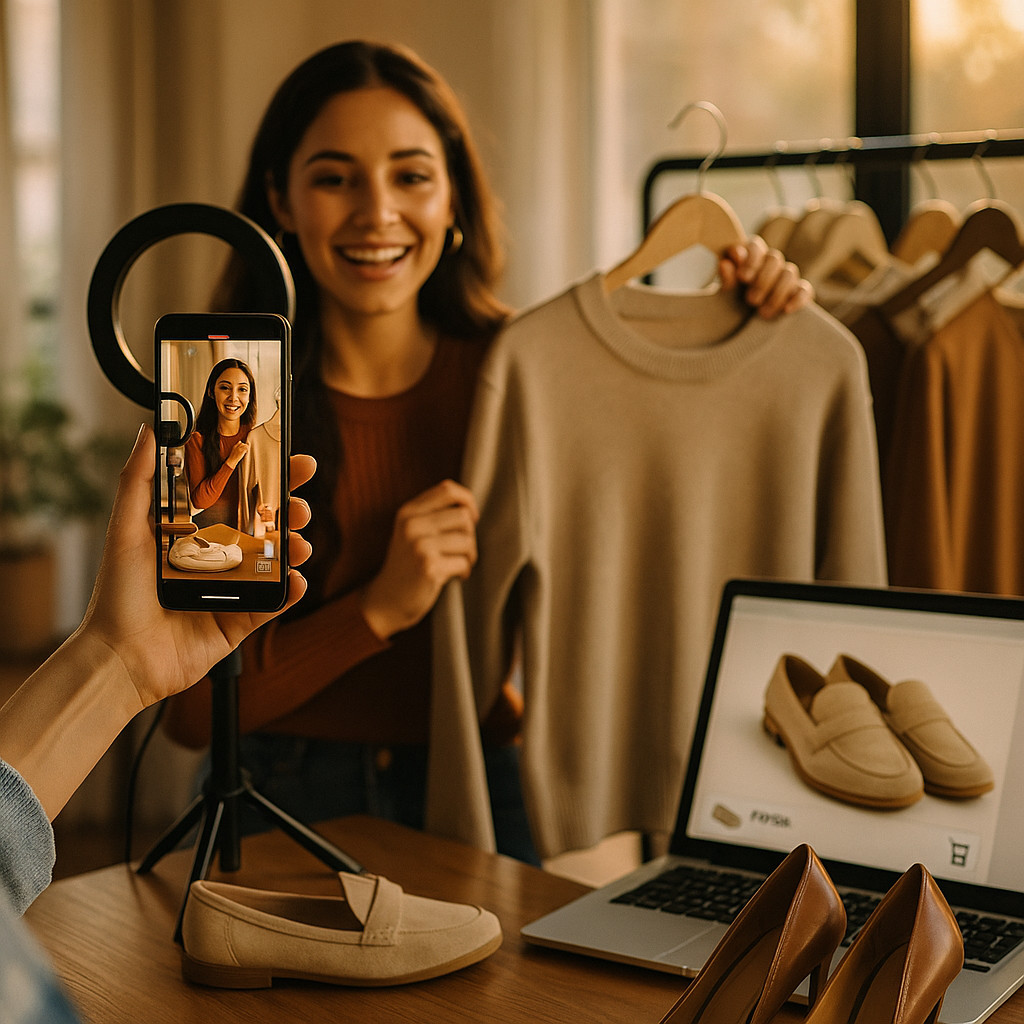
Short-form video drove clicks. Immersive shoppable experiences drive revenue. That distinction is why brands like J.Crew are restructuring their creator programs around interactive commerce events, and why the average order value from a live shoppable session outpaces a standard influencer post by more than 30%, according to data tracked across major social commerce platforms.
The Limitation Short-Form Video Can’t Solve
A 15-second clip can spike awareness. It can even generate a purchase. But it can’t hold a shopper in a decision-making environment long enough to upsell, explain fit, or answer a question that would close a hesitant buyer. That’s the fundamental ceiling brands hit when they anchor their entire creator strategy to short-form video.
The shift happening now isn’t about abandoning short-form. It’s about recognizing that the format serves awareness, not conversion depth. When J.Crew built out its shoppable live events on TikTok Shop and its own DTC channel, the brand wasn’t replacing its Reels strategy. It was adding a format engineered for buyers who are already warm. That’s a meaningful operational distinction for any marketing director allocating budget across a creator program.
Immersive shoppable experiences don’t replace short-form video — they capture the revenue that short-form video creates intent for but fails to close.
What “Immersive Shoppable” Actually Means in Practice
The term gets used loosely. For operational clarity, an immersive shoppable experience has four components that separate it from a standard product post:
- Real-time interactivity: Viewers can ask questions, vote on options, or request styling demos mid-session.
- In-stream purchase mechanics: Products are tagged and purchasable without leaving the environment — no redirect friction.
- Creator authority: The host (whether a brand creator or external influencer) functions as a product expert, not just a face. This is why narrative-driven creator briefs matter more for this format than they do for short clips.
- Session-level analytics: Revenue, add-to-cart rate, and watch time are tracked per session, not just per post.
Platforms enabling this infrastructure currently include TikTok Shop Live, Meta’s live commerce tools, and dedicated shoppable video platforms like Firework and Bambuser. Each has different attribution windows and checkout mechanics, which matters enormously when you’re trying to isolate incremental revenue lift.
Measuring Incremental Revenue Lift: The Hard Part
Here’s where most brand teams fall short. They measure GMV (gross merchandise value) generated during a live event and call it a win. That’s not incremental lift. That’s gross revenue that may or may not represent net-new buyers.
Incremental revenue lift asks a different question: would this purchase have happened anyway, through a different channel? To answer it, brands need to run holdout tests, geo-splits, or matched-market analyses. J.Crew reportedly uses post-purchase surveys alongside pixel-based attribution to triangulate whether live event purchasers are genuinely new to a product category or simply channel-shifting from email and paid search.
The attribution tooling that supports this rigor includes platforms like Northbeam, Triple Whale, and Rockerbox, all of which now offer influencer-specific attribution modules. If you’re briefing creators for a shoppable event and haven’t connected session tracking to one of these tools, you’re measuring the wrong thing. For teams building performance-driven creator briefs, the attribution setup is non-negotiable before the first session goes live.
Why Creator Selection Changes for This Format
The creator who performs well in a 30-second Reel is not automatically the right host for a 45-minute shoppable event. Full stop.
Live commerce requires a specific creator profile: someone comfortable with long-form improvisation, capable of handling product questions in real time, and credible enough that their recommendations carry weight under scrutiny. The “vibes-first” micro-influencer who drives strong engagement on short clips often lacks the product fluency and on-camera stamina this format demands.
Brands investing in this space are increasingly developing what amounts to a creator talent bench: a small roster of two to five hosts who receive product training, brand voice coaching, and early access to new collections. J.Crew’s approach mirrors what Chinese live commerce platforms have normalized for years, where top hosts like Li Jia Qi effectively function as category authorities rather than ad placements.
This also changes how you brief creators. A shoppable event brief needs to cover session flow, Q&A protocols, product hierarchy, promotional mechanics, and fallback talking points if engagement drops. If you’re adapting existing short-form briefs and hoping they’ll stretch, they won’t. Reference frameworks for live event content briefs offer a more appropriate structural starting point.
The Compliance Layer Brands Skip
Live shoppable events introduce disclosure and consumer protection risks that static posts don’t. When a creator host demonstrates a product live, makes performance claims, and triggers an immediate in-stream purchase, the FTC’s endorsement guidelines apply in full, often with less editorial review time than a pre-produced post would receive.
Brands running these events need a pre-session compliance checklist that covers: disclosure language displayed on screen throughout the session (not just mentioned verbally once), prohibited claims by product category, and protocols if a viewer posts a negative experience in the live chat. The FTC’s endorsement guidelines have grown more explicit about real-time endorsement contexts, and enforcement risk scales with the revenue these sessions generate.
Platform Architecture and Where the Format Is Heading
TikTok Shop remains the most mature live commerce infrastructure in Western markets, with integrated fulfillment, in-app checkout, and creator affiliate commissions built natively into the session format. TikTok’s commerce ad tools now allow brands to boost in-progress live sessions as paid inventory, effectively turning an organic creator event into a targeted acquisition channel in real time.
Meta is closing the gap. Shoppable Reels and Instagram Live Shopping have received ongoing investment, and the briefing architecture for those formats — particularly how interactive elements like polls and AR overlays integrate into a shoppable session — is worth understanding if your audience skews older than TikTok’s core demographic. Teams building out Meta-specific shoppable content should review the mechanics behind Meta’s GEM polls and shoppable Reels before allocating significant creator budget there.
YouTube is the longer-term bet. Its integration of Shopping affiliate links with long-form video and live streams positions it as the platform best suited for considered-purchase categories: furniture, luxury fashion, skincare, fitness equipment. For brands whose products require demonstration time rather than impulse purchase mechanics, YouTube’s commerce infrastructure is worth a test budget now.
The brands winning at live commerce in the near term are those treating shoppable sessions as media buys with production standards, not organic posts with a checkout button attached.
Building the Business Case Internally
Securing budget for immersive shoppable events requires a different financial argument than a standard influencer campaign. The costs are higher upfront: production, creator training, platform fees, attribution tooling, and often dedicated ops support for session management. The CFO question is always the same: is the incremental revenue lift large enough to justify the cost premium over short-form?
The honest answer is format-dependent. For high-consideration products with AOVs above $80, the math tends to work. For impulse purchases under $30, a well-optimized short-form strategy often outperforms on a cost-per-acquisition basis. That calculus should drive your format selection, not trend pressure.
Teams building the internal case should model three scenarios: a conservative 15% incremental lift, a mid-range 30%, and an optimistic 50%, then back-calculate the session frequency and creator investment required to hit each threshold. Connecting that model to your existing social commerce creator strategy will surface where shoppable events fit versus where they’d cannibalize existing channel performance.
If you’re ready to move, start with one pilot session on TikTok Shop, instrument it with a proper holdout test, and use real incremental lift data to make the case for a full program build-out. One clean data point beats a dozen industry benchmarks in a budget meeting.
Frequently Asked Questions
What is an immersive shoppable experience in the context of creator marketing?
An immersive shoppable experience is a live or interactive content session where viewers can browse, ask questions about, and purchase products without leaving the platform. Unlike a static influencer post with a swipe-up link, these sessions involve real-time creator hosting, in-stream checkout mechanics, and session-level analytics that track revenue, add-to-cart rates, and watch time. Platforms like TikTok Shop Live, Instagram Live Shopping, and third-party tools like Firework and Bambuser power this format.
How do brands measure incremental revenue lift from shoppable events?
Incremental revenue lift measures whether a purchase would have happened without the live event, as opposed to simply tracking total sales during the session. Brands use holdout tests, geo-split analyses, matched-market comparisons, and post-purchase surveys to isolate net-new revenue. Attribution platforms like Northbeam, Triple Whale, and Rockerbox offer influencer-specific modules that help connect session-level data to broader channel attribution models.
Which creator profile works best for live commerce events?
Live shoppable events require creators with strong product knowledge, on-camera stamina, and the ability to handle unscripted Q&A in real time. This profile differs significantly from the typical short-form influencer. Brands running successful programs typically maintain a small bench of two to five trained creator hosts who receive product briefings, brand voice coaching, and early collection access ahead of each session.
What are the FTC compliance requirements for live shoppable content?
The FTC’s endorsement guidelines apply to live commerce sessions just as they do to pre-produced posts. Brands must ensure that disclosure language is displayed on screen throughout the session (not only stated verbally at the start), that product performance claims stay within approved boundaries, and that protocols exist for handling negative viewer feedback in real-time chat. Compliance review time is compressed in live formats, making pre-session checklists essential.
Is live commerce worth the higher production cost compared to short-form video?
For products with average order values above approximately $80, the incremental revenue lift from live shoppable events typically justifies the higher upfront cost of production, creator training, and attribution tooling. For lower-priced impulse purchases, well-optimized short-form video often delivers a better cost-per-acquisition. Brands should model conservative, mid-range, and optimistic lift scenarios before committing budget, and run a properly instrumented pilot session before scaling.
Top Influencer Marketing Agencies
The leading agencies shaping influencer marketing in 2026
Agencies ranked by campaign performance, client diversity, platform expertise, proven ROI, industry recognition, and client satisfaction. Assessed through verified case studies, reviews, and industry consultations.
Moburst

-
2

The Shelf
Boutique Beauty & Lifestyle Influencer AgencyA data-driven boutique agency specializing exclusively in beauty, wellness, and lifestyle influencer campaigns on Instagram and TikTok. Best for brands already focused on the beauty/personal care space that need curated, aesthetic-driven content.Clients: Pepsi, The Honest Company, Hims, Elf Cosmetics, Pure LeafVisit The Shelf → -
3

Audiencly
Niche Gaming & Esports Influencer AgencyA specialized agency focused exclusively on gaming and esports creators on YouTube, Twitch, and TikTok. Ideal if your campaign is 100% gaming-focused — from game launches to hardware and esports events.Clients: Epic Games, NordVPN, Ubisoft, Wargaming, Tencent GamesVisit Audiencly → -
4

Viral Nation
Global Influencer Marketing & Talent AgencyA dual talent management and marketing agency with proprietary brand safety tools and a global creator network spanning nano-influencers to celebrities across all major platforms.Clients: Meta, Activision Blizzard, Energizer, Aston Martin, WalmartVisit Viral Nation → -
5

The Influencer Marketing Factory
TikTok, Instagram & YouTube CampaignsA full-service agency with strong TikTok expertise, offering end-to-end campaign management from influencer discovery through performance reporting with a focus on platform-native content.Clients: Google, Snapchat, Universal Music, Bumble, YelpVisit TIMF → -
6

NeoReach
Enterprise Analytics & Influencer CampaignsAn enterprise-focused agency combining managed campaigns with a powerful self-service data platform for influencer search, audience analytics, and attribution modeling.Clients: Amazon, Airbnb, Netflix, Honda, The New York TimesVisit NeoReach → -
7

Ubiquitous
Creator-First Marketing PlatformA tech-driven platform combining self-service tools with managed campaign options, emphasizing speed and scalability for brands managing multiple influencer relationships.Clients: Lyft, Disney, Target, American Eagle, NetflixVisit Ubiquitous → -
8

Obviously
Scalable Enterprise Influencer CampaignsA tech-enabled agency built for high-volume campaigns, coordinating hundreds of creators simultaneously with end-to-end logistics, content rights management, and product seeding.Clients: Google, Ulta Beauty, Converse, AmazonVisit Obviously →