


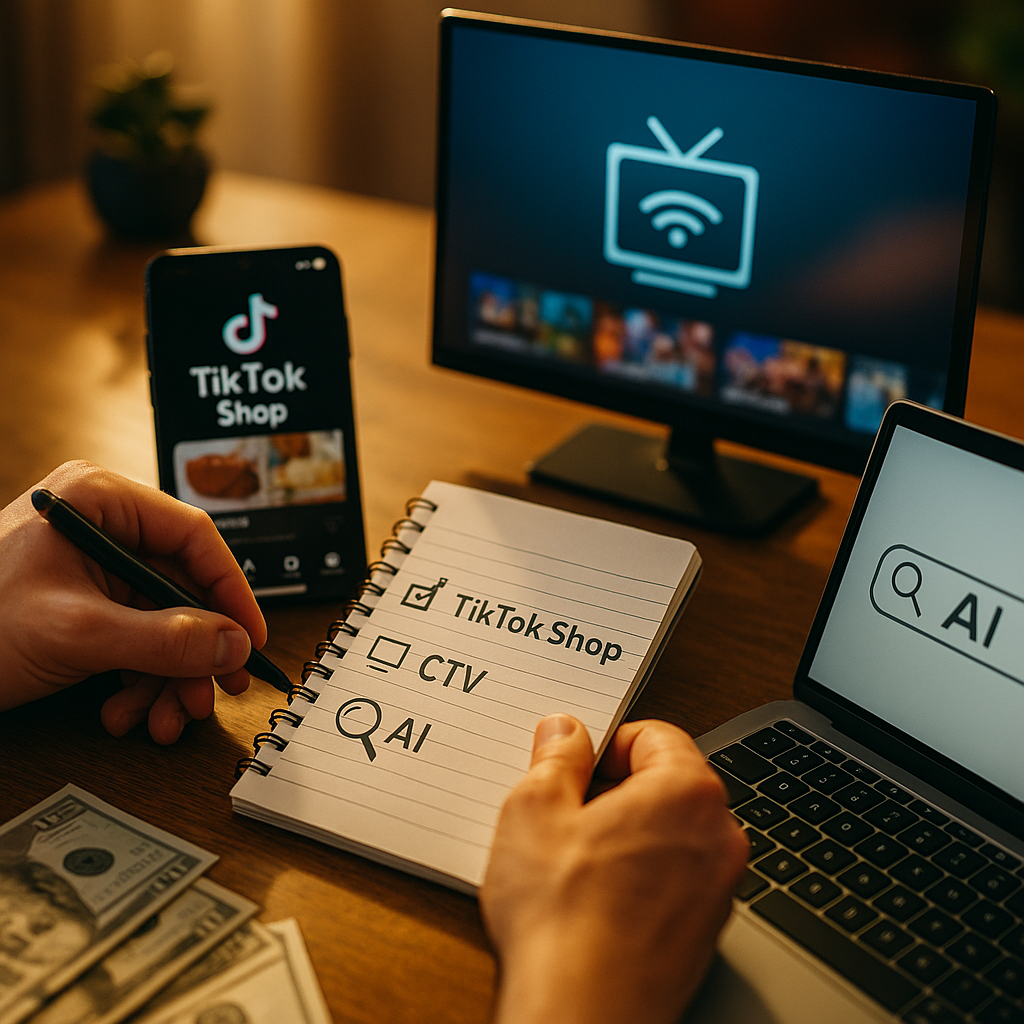
The Allocation Problem No One Wants to Name
Marketers are now competing for attention across more surfaces than any media plan was designed to handle. Over 60% of consumers regularly switch between five or more platforms daily, according to recent cross-platform behavior studies, and the average brand’s media mix hasn’t structurally changed to match that reality. The result is a tightly fragmented media landscape where creator investment allocation decisions made on last year’s data are quietly bleeding budget in the wrong direction.
This isn’t a channel proliferation problem. It’s a prioritization failure.
Why the Old Rebalancing Logic Doesn’t Hold
For years, the portfolio rebalancing conversation followed a predictable script: shift dollars toward wherever reach is cheapest, layer in some performance creative, and protect the brand safety of linear TV. That script is broken. CTV inventory is no longer the premium-only play it was. TikTok Shop has collapsed the funnel in ways that invalidate traditional CPM-to-conversion models. And generative search advertising is creating a completely new surface where brand visibility depends less on paid placement and more on whether your content is being cited by AI answer engines.
The problem is that most budget owners are still treating these as discrete channels rather than interconnected attention layers. A creator post that drives TikTok Shop conversion also influences what AI search surfaces when someone looks up the product category two weeks later. The ROI of that single asset is being measured in one silo while its value compounds across three others.
A creator asset’s value is no longer captured at the moment of conversion. It compounds across AI citations, CTV retargeting pools, and search intent signals — often invisibly, and often after the campaign has closed.
TikTok Shop: Commerce Layer or Conversion Trap?
TikTok Shop has matured from experimental to essential for DTC and CPG brands. The platform’s native checkout removes friction in a way that no affiliate link or swipe-up ever did. But the allocation risk is real: brands pouring disproportionate creator budget into TikTok Shop are discovering that the performance metrics flatter short-cycle, impulse categories while masking poor incrementality for considered purchases.
Before deepening TikTok Shop investment, run a clean incrementality test. If you haven’t pressure-tested your TikTok attribution against holdout groups, your reported ROAS is almost certainly overstated. The holdout testing methodology for creator revenue applies directly here: segment your TikTok Shop audience, suppress creator content for a test cell, and measure real lift against organic baseline. Most brands that do this find 20-35% of reported conversions were already going to happen.
That doesn’t mean pull back from TikTok Shop. It means allocate based on verified lift, not platform-reported numbers. TikTok for Business provides some conversion measurement tools, but they’re not designed to reveal the cannibalization problem. You need independent measurement.
CTV Is Not a Brand Safety Blanket
Connected TV investment has grown sharply, partly on the logic that it’s “safer” than social and more measurable than linear. Both of those claims deserve scrutiny. CTV fraud rates and measurement inconsistencies across platforms like Roku, Amazon Fire, and Samsung Ads remain significant operational headaches. And the audience overlap between CTV and creator content is higher than most media plans assume, meaning you may be paying premium CPMs to reach users already converted by your creator campaigns.
The smarter CTV play is sequential: use creator content to generate first-party intent signals, then deploy CTV to close or reinforce among high-intent segments. Several brands running this architecture through clean room partnerships (via platforms like LiveRamp or The Trade Desk) are seeing meaningful ROAS improvements compared to CTV-first buys. CTV works better as a retargeting and reinforcement layer than as a primary awareness vehicle when creator programs are already running at scale.
That said, for categories with long consideration windows — automotive, B2B SaaS, financial products — CTV’s brand-building function is harder to replicate. Don’t flatten the portfolio entirely. Protect CTV investment where it serves the top-of-funnel job that social can’t do at the right context and quality.
AI Search: The Invisible Reallocation Pressure
Here’s the allocation shift most brands haven’t fully priced in yet: AI search is quietly redistributing organic and paid search traffic in ways that undercut traditional SEO and SEM ROI assumptions. When a user asks an AI assistant about the best running shoe for flat feet, they’re not clicking ten blue links. They’re consuming a synthesized answer that may or may not cite your brand, depending on whether your content ecosystem has been optimized for AI answer engines.
This changes what creator content needs to do. Creator briefs that were written to drive platform engagement now need to produce content that AI systems can retrieve and cite. Structured, authoritative, specific content wins in AI search. Vague “vibes” content doesn’t get cited. Brands that align their creator briefs for AI answer engine optimization are building a compounding asset, not just a campaign. Those that don’t are paying for reach that has an increasingly short half-life.
The budget implication: a portion of what has historically been a pure SEO budget should now fund creator content with explicit AI citation intent. That’s a new hybrid line item that many finance teams don’t have a home for yet. Making that ROI case to the CFO requires new framing around long-term brand surface area, not campaign-cycle returns.
How to Actually Rebalance: A Working Framework
Stop thinking in channel percentages. Start thinking in attention moments and the conversion job each moment serves. The rebalancing question isn’t “should we shift 10% from CTV to TikTok Shop?” It’s “which creator investment produces assets that work across the most surfaces with the lowest marginal cost per additional touchpoint?”
A practical framework for budget allocation review:
- Audit asset portability first. Creator content that can be repurposed for CTV pre-roll, used in paid social amplification, cited in AI search, and embedded in TikTok Shop is worth more than content built for a single surface. Measure cost per versatile asset, not just cost per post. See how paid amplification budget connects to creator program ROI.
- Verify incrementality before scaling any channel. No channel deserves increased allocation based on platform-reported metrics alone. Mandate holdout testing as a standard practice, not a one-time experiment.
- Protect creator program investment as infrastructure. Creator content is now the raw material for CTV, AI search, paid social, and organic simultaneously. Cutting creator budgets to fund channel distribution is operationally backwards.
- Build AI search into creator KPIs. Track whether creator content is being surfaced in AI answer results for target queries. This is measurable using tools like Semrush’s AI overview tracker or manual query audits. Creator KPIs need to expand beyond engagement and conversion to include AI citation coverage.
- Use CTV for sequential reinforcement, not standalone awareness. Connect CTV buys to creator-generated first-party signals through clean room architectures. eMarketer data consistently shows that sequenced campaigns outperform single-channel buys on purchase intent metrics.
The brands winning the allocation game aren’t spending more. They’re producing fewer, more portable creator assets and distributing them across more surfaces with cleaner measurement attached to each touchpoint.
One more thing worth flagging: the operational cost of managing fragmented creator programs across multiple platforms is rising fast. If your team structure hasn’t been updated to reflect the complexity of running creator content across TikTok Shop, CTV, AI search, and paid social simultaneously, you’re likely absorbing inefficiency silently. AI-native org chart design for creator programs is increasingly relevant here, particularly for brands running eight or more concurrent creator relationships.
The platforms themselves won’t help you solve this. Meta Business will optimize for Meta outcomes. TikTok will optimize for TikTok outcomes. Google Ads will optimize for Google outcomes. Cross-surface budget architecture requires independent judgment and independent measurement. That’s the brand’s job, not the platform’s.
And if the measurement infrastructure to support this kind of cross-channel attribution isn’t in place, that’s where the investment conversation needs to start, because every rebalancing decision made without clean data is just an educated guess with a large budget attached to it.
Start your rebalancing process by auditing the portability of your last 90 days of creator content: how many surfaces did each asset actually serve, and what was the true cost per touchpoint across all of them? That single analysis will tell you more about where to reallocate than any channel benchmark report.
FAQs
How should brands split creator budget across TikTok Shop, CTV, and AI search?
There’s no universal split that works across categories. The right allocation depends on your product’s consideration cycle, your existing first-party data infrastructure, and your ability to measure incrementality independently. As a starting point, audit which channel produces assets with the highest portability across surfaces. Brands with strong creator programs typically find that investing in fewer, higher-quality creator assets and distributing them across CTV, paid social, and AI-optimized content outperforms siloed channel buys.
What’s the biggest mistake brands make when reallocating media budgets in a fragmented landscape?
Treating channels as independent buckets rather than interconnected attention layers. A creator asset that drives TikTok Shop conversion also influences AI search citation, feeds CTV retargeting pools, and builds organic brand signals. Optimizing each channel in isolation leads to undercounting creator ROI and overcounting platform-specific spend efficiency. The measurement model needs to reflect how attention actually flows across surfaces before reallocation decisions are made.
How does AI search change the role of creator content in a media plan?
AI search rewards structured, authoritative, and specific content over engagement-optimized posts. Creator briefs need to be updated to produce content that AI answer engines can retrieve and cite when users ask category-level questions. This means creator content now has a long-tail SEO and AI visibility function that compounds over time, separate from its immediate campaign conversion role. Brands that align creator output with AI citation intent are building durable brand surface area, not just campaign reach.
Is TikTok Shop worth increased creator investment?
For impulse and short-consideration categories, TikTok Shop has demonstrated strong native conversion performance. However, platform-reported ROAS figures frequently overstate true incrementality. Before increasing TikTok Shop creator investment, run holdout tests to verify genuine lift against organic baseline. Most brands that do this find a meaningful portion of reported conversions were already captured through existing demand. Invest based on verified incremental lift, not platform metrics.
How should CTV fit into a creator-led media strategy?
CTV works best as a sequential reinforcement layer rather than a primary awareness channel when creator programs are running at scale. Use creator content to generate first-party intent signals, then deploy CTV to reach high-intent segments who have already engaged with creator content. Clean room partnerships through platforms like LiveRamp or The Trade Desk enable this architecture. For long-consideration categories, CTV retains a standalone brand-building function that social and creator content alone can’t replicate.
Top Influencer Marketing Agencies
The leading agencies shaping influencer marketing in 2026
Agencies ranked by campaign performance, client diversity, platform expertise, proven ROI, industry recognition, and client satisfaction. Assessed through verified case studies, reviews, and industry consultations.
Moburst

-
2

The Shelf
Boutique Beauty & Lifestyle Influencer AgencyA data-driven boutique agency specializing exclusively in beauty, wellness, and lifestyle influencer campaigns on Instagram and TikTok. Best for brands already focused on the beauty/personal care space that need curated, aesthetic-driven content.Clients: Pepsi, The Honest Company, Hims, Elf Cosmetics, Pure LeafVisit The Shelf → -
3

Audiencly
Niche Gaming & Esports Influencer AgencyA specialized agency focused exclusively on gaming and esports creators on YouTube, Twitch, and TikTok. Ideal if your campaign is 100% gaming-focused — from game launches to hardware and esports events.Clients: Epic Games, NordVPN, Ubisoft, Wargaming, Tencent GamesVisit Audiencly → -
4

Viral Nation
Global Influencer Marketing & Talent AgencyA dual talent management and marketing agency with proprietary brand safety tools and a global creator network spanning nano-influencers to celebrities across all major platforms.Clients: Meta, Activision Blizzard, Energizer, Aston Martin, WalmartVisit Viral Nation → -
5

The Influencer Marketing Factory
TikTok, Instagram & YouTube CampaignsA full-service agency with strong TikTok expertise, offering end-to-end campaign management from influencer discovery through performance reporting with a focus on platform-native content.Clients: Google, Snapchat, Universal Music, Bumble, YelpVisit TIMF → -
6

NeoReach
Enterprise Analytics & Influencer CampaignsAn enterprise-focused agency combining managed campaigns with a powerful self-service data platform for influencer search, audience analytics, and attribution modeling.Clients: Amazon, Airbnb, Netflix, Honda, The New York TimesVisit NeoReach → -
7

Ubiquitous
Creator-First Marketing PlatformA tech-driven platform combining self-service tools with managed campaign options, emphasizing speed and scalability for brands managing multiple influencer relationships.Clients: Lyft, Disney, Target, American Eagle, NetflixVisit Ubiquitous → -
8

Obviously
Scalable Enterprise Influencer CampaignsA tech-enabled agency built for high-volume campaigns, coordinating hundreds of creators simultaneously with end-to-end logistics, content rights management, and product seeding.Clients: Google, Ulta Beauty, Converse, AmazonVisit Obviously →