


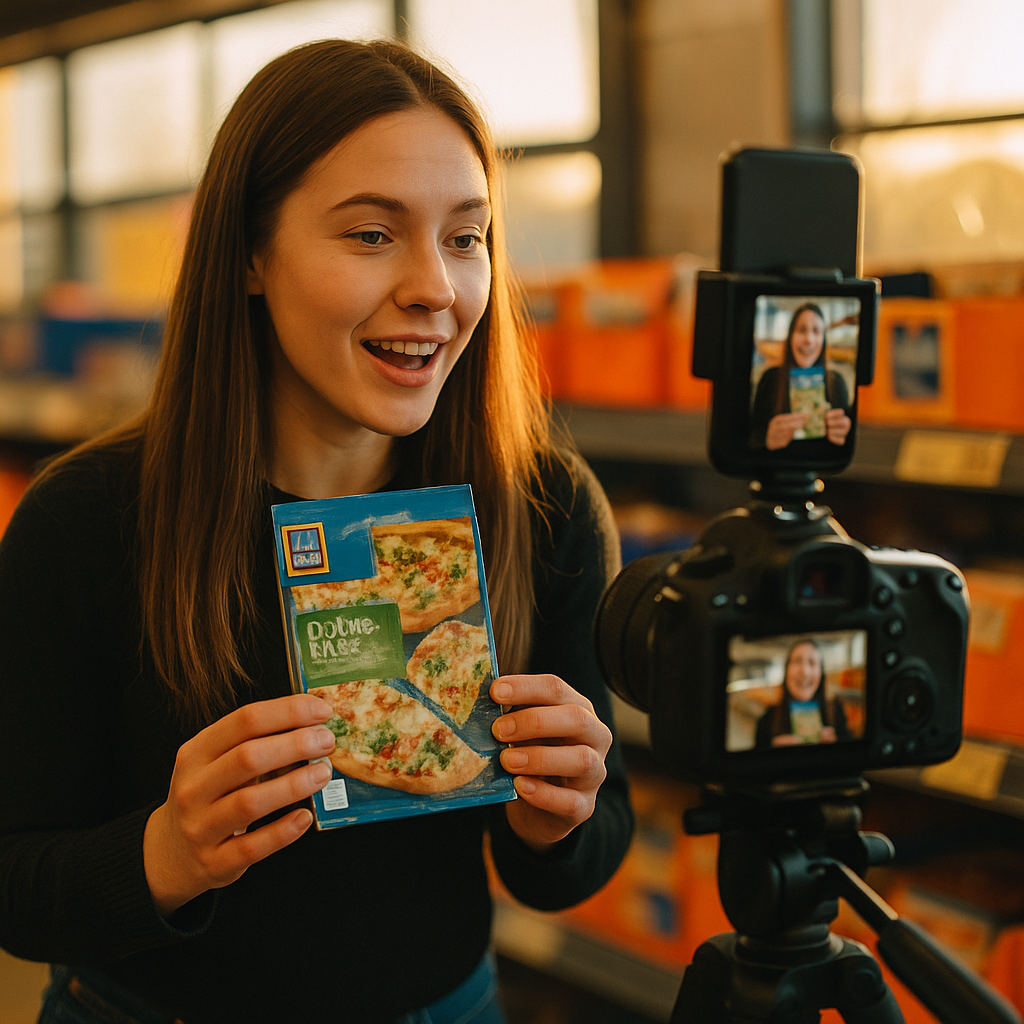
Zero paid media. Zero celebrity endorsements. One sold-out pallet of camping gear. That’s the Aldi UK nano-creator playbook in a sentence, and it’s forcing brand strategists across grocery and retail to rethink what a “media budget” is even for. The retailer’s Middle Aisle unboxing series proves that seasonal overstock isn’t a clearance problem, it’s a content opportunity waiting for the right voices.
The Problem Every Grocery Retailer Quietly Has
Aldi’s Middle Aisle, known to UK shoppers as the “Specialbuys” section, is a rotating gamble by design: kayaks in June, wellington boots in a dry spell, garden furniture that lands a week before a cold front. Overstock is baked into the model. Traditionally, that surplus gets marked down, dumped into end caps, or quietly written off.
What Aldi UK did differently was treat that overstock as a content asset rather than a margin problem. Instead of running paid social pushes or email blasts to move dead inventory, the retailer’s regional marketing teams began seeding unsold or slow-moving Middle Aisle items directly to nano-creators, typically accounts with 1,000 to 10,000 followers, based in the towns where specific stores were sitting on excess stock.
No scripts. No usage rights fights. No six-figure retainer. Just product, delivered to someone’s door, filmed as an unboxing because that’s what people already do with Aldi Specialbuys unprompted.
Why Nano-Creators Beat Paid Media Here
This is the part that should make CMOs uncomfortable: the format already existed organically. UK shoppers have been filming Aldi Middle Aisle hauls for years, unpaid, because the unpredictability of the section is genuinely entertaining. Aldi didn’t invent the unboxing culture. It industrialized it.
When your audience is already creating the content format you need, the smartest media buy is distribution, not production.
Paid media would have meant polished video, brand-safe messaging, and a media agency taking a cut. Nano-creator seeding meant Aldi could activate dozens of hyperlocal voices simultaneously, each one credible to their specific followers, for a fraction of a single paid campaign’s cost. According to eMarketer, creator-led content consistently outperforms branded social ads on engagement rate, and nano-tier creators in particular post the highest trust scores of any influencer segment because their audiences perceive them as peers, not performers.
That trust matters more in grocery than almost any other vertical. Shoppers are price-sensitive and skeptical of anything that smells like an ad. A neighbor filming a £39.99 pizza oven from the middle aisle reads as a tip-off. A brand-produced video of the same product reads as a sales pitch.
How the Seeding Actually Worked
The mechanics were deliberately low-friction. Aldi’s regional teams identified overstocked SKUs at store level, usually seasonal or one-off Specialbuys that hadn’t cleared inventory targets within the expected sell-through window. Rather than escalating to markdown, teams pulled a shortlist of nano-creators within a defined radius of the affected stores, often sourced through platforms similar to those used by nano-creator workwear campaigns in the US market.
- Product shipped directly to the creator’s home, no briefing deck attached
- Creators filmed genuine unboxing reactions, good or bad
- Posts tagged the specific store location, not just the Aldi UK brand handle
- No paid boost, no whitelisting, no spark ads
- Store teams tracked footfall and sell-through in the 48 hours following each post cluster
That store-location tagging is the detail most brands miss. It turned a national retailer’s overstock problem into dozens of hyperlocal sell-out events, each one driving foot traffic to a specific postcode rather than diffusing attention across the entire UK footprint. Shoppers didn’t just want the product, they wanted to beat their neighbors to the last one at their local branch.
The Numbers Behind the “Sell-Out Event”
Aldi UK doesn’t publish granular creator ROI the way a DTC brand might, but the pattern is consistent with what retail marketers have seen elsewhere in creator-led seeding. Stores flagged for nano-creator activation saw specific SKUs clear within 72 hours, compared to the typical 10-14 day sell-through window for a standard Specialbuy markdown cycle.
The cost comparison is where this gets genuinely interesting for anyone holding a trade budget. A single regional paid social campaign to move overstock might run £8,000-£15,000 in media spend alone, before production costs. Seeding ten nano-creators with product worth £300-£600 total, plus minimal coordination overhead, delivers comparable or better local reach with none of the ad fatigue that plagues repetitive retargeting campaigns.
Ten nano-creators seeded with under £600 of product outperformed the sell-through rate of a standard paid markdown push, at a fraction of the cost.
This mirrors what Liquid Death found when comparing nano-creator seeding against paid search CAC: the unit economics of small-scale, high-trust creator activation beat programmatic spend once you factor in production, agency fees, and diminishing ad returns.
Compliance Didn’t Slow This Down. Here’s Why.
Any brand strategist reading this is thinking the same thing: what about disclosure? UK creator marketing sits under the Advertising Standards Authority’s rules, and the ICO has separate data considerations if any personal information changes hands during the seeding process.
Aldi’s approach sidestepped most of the risk simply by keeping the gifting unconditional in spirit but transparent in execution. Creators were expected to disclose the product was sent free of charge, using standard #gifted or #ad tagging per FTC-style disclosure norms that the ASA mirrors domestically. Because there was no payment, no contract dictating content direction, and no usage rights negotiation, the legal surface area stayed small.
Compare that to a paid influencer campaign, where contracts, usage rights, exclusivity clauses, and payment terms all introduce compliance friction and legal review cycles. Gifting-based nano-creator seeding removes most of that overhead, which is exactly why it scales faster for time-sensitive overstock situations. You can’t wait three weeks for legal sign-off when the stock needs to move this weekend.
What Other Retailers Are Missing
The instinct in most retail marketing departments is still to treat overstock as a pricing lever: discount it, bundle it, bury it in a clearance email. Few treat it as a storytelling opportunity, and even fewer trust nano-creators enough to hand them product with zero creative brief.
That trust gap is the real barrier, not budget. Marketing teams accustomed to controlling messaging struggle to hand a $30 kayak pump to a stranger with 4,000 followers and let them say whatever they actually think. But that lack of control is precisely what makes the content credible. It’s the same principle behind Chubbies selling out shorts in 48 hours using nano-creators instead of paid ads. Authenticity requires relinquishing the script.
Grocery and mass retail have a structural advantage here that DTC brands don’t: constant product rotation. Every seasonal changeover, every Specialbuy cycle, every clearance shelf is a fresh seeding opportunity. Brands with static catalogs have to work harder to manufacture this kind of recurring content hook. Aldi’s Middle Aisle already does the work for them, week after week.
There’s also a broader lesson here about how creator economics are shifting entirely. As covered in our breakdown of Olipop’s creator whitelisting strategy, brands are increasingly finding that the cost of creator seeding scales down faster than paid media costs scale up. Aldi’s Middle Aisle series is just the grocery-retail version of that same math.
Where This Goes Next
Expect more regional and grocery retailers to formalize what Aldi has been doing semi-organically. The next iteration likely involves lightweight creator management platforms to track seeding-to-sell-through ratios at store level, rather than relying on manual coordination between regional marketing and store operations. Tools like those referenced across Sprout Social’s influencer tracking resources could formalize the attribution piece that Aldi is currently handling manually.
The bigger shift, though, is philosophical. Overstock stops being a write-off line item and starts being treated as a marketing asset with its own content lifecycle. That reframing alone could change how retail marketing budgets get allocated across the next few planning cycles.
The Takeaway
If your brand sits on seasonal or surplus inventory, stop routing it straight to markdown. Seed ten nano-creators in the affected region with product and zero script, tag the specific location, and measure sell-through against your standard clearance timeline. The data will likely surprise your finance team more than your marketing one.
Frequently Asked Questions
What is nano-creator seeding in retail marketing?
Nano-creator seeding involves sending free products to creators with roughly 1,000 to 10,000 followers, in exchange for genuine, unscripted content rather than paid promotion. It relies on trust and authenticity rather than reach.
Why did Aldi UK choose nano-creators over paid social ads?
Aldi’s Middle Aisle products already had an organic unboxing culture among shoppers. Seeding hyperlocal nano-creators let the brand tap into existing trust and content behavior without the cost or perceived inauthenticity of paid advertising.
How does gifting-based seeding affect compliance requirements?
Because no payment or contract dictates content direction, gifting-based seeding carries less legal complexity than paid influencer deals. Creators are still expected to disclose gifted products per ASA and FTC-style transparency norms, but usage rights and exclusivity negotiations are largely avoided.
Can this strategy work outside of grocery retail?
Yes. Any brand with rotating, seasonal, or surplus inventory can apply the same logic. Workwear, outdoor gear, and apparel brands have used comparable nano-creator seeding models to move stock quickly without paid media.
How do brands measure ROI on nano-creator seeding campaigns?
Most brands track sell-through rate within a defined window after seeding, compare it against standard markdown or paid campaign timelines, and calculate cost-per-unit-moved rather than traditional impression-based metrics.
FAQs
Frequently Asked Questions
What is nano-creator seeding in retail marketing?
Nano-creator seeding involves sending free products to creators with roughly 1,000 to 10,000 followers, in exchange for genuine, unscripted content rather than paid promotion. It relies on trust and authenticity rather than reach.
Why did Aldi UK choose nano-creators over paid social ads?
Aldi’s Middle Aisle products already had an organic unboxing culture among shoppers. Seeding hyperlocal nano-creators let the brand tap into existing trust and content behavior without the cost or perceived inauthenticity of paid advertising.
How does gifting-based seeding affect compliance requirements?
Because no payment or contract dictates content direction, gifting-based seeding carries less legal complexity than paid influencer deals. Creators are still expected to disclose gifted products per ASA and FTC-style transparency norms, but usage rights and exclusivity negotiations are largely avoided.
Can this strategy work outside of grocery retail?
Yes. Any brand with rotating, seasonal, or surplus inventory can apply the same logic. Workwear, outdoor gear, and apparel brands have used comparable nano-creator seeding models to move stock quickly without paid media.
How do brands measure ROI on nano-creator seeding campaigns?
Most brands track sell-through rate within a defined window after seeding, compare it against standard markdown or paid campaign timelines, and calculate cost-per-unit-moved rather than traditional impression-based metrics.
Top Influencer Marketing Agencies
The leading agencies shaping influencer marketing in 2026
Agencies ranked by campaign performance, client diversity, platform expertise, proven ROI, industry recognition, and client satisfaction. Assessed through verified case studies, reviews, and industry consultations.
Moburst

-
2

The Shelf
Boutique Beauty & Lifestyle Influencer AgencyA data-driven boutique agency specializing exclusively in beauty, wellness, and lifestyle influencer campaigns on Instagram and TikTok. Best for brands already focused on the beauty/personal care space that need curated, aesthetic-driven content.Clients: Pepsi, The Honest Company, Hims, Elf Cosmetics, Pure LeafVisit The Shelf → -
3

Audiencly
Niche Gaming & Esports Influencer AgencyA specialized agency focused exclusively on gaming and esports creators on YouTube, Twitch, and TikTok. Ideal if your campaign is 100% gaming-focused — from game launches to hardware and esports events.Clients: Epic Games, NordVPN, Ubisoft, Wargaming, Tencent GamesVisit Audiencly → -
4

Viral Nation
Global Influencer Marketing & Talent AgencyA dual talent management and marketing agency with proprietary brand safety tools and a global creator network spanning nano-influencers to celebrities across all major platforms.Clients: Meta, Activision Blizzard, Energizer, Aston Martin, WalmartVisit Viral Nation → -
5

The Influencer Marketing Factory
TikTok, Instagram & YouTube CampaignsA full-service agency with strong TikTok expertise, offering end-to-end campaign management from influencer discovery through performance reporting with a focus on platform-native content.Clients: Google, Snapchat, Universal Music, Bumble, YelpVisit TIMF → -
6

NeoReach
Enterprise Analytics & Influencer CampaignsAn enterprise-focused agency combining managed campaigns with a powerful self-service data platform for influencer search, audience analytics, and attribution modeling.Clients: Amazon, Airbnb, Netflix, Honda, The New York TimesVisit NeoReach → -
7

Ubiquitous
Creator-First Marketing PlatformA tech-driven platform combining self-service tools with managed campaign options, emphasizing speed and scalability for brands managing multiple influencer relationships.Clients: Lyft, Disney, Target, American Eagle, NetflixVisit Ubiquitous → -
8

Obviously
Scalable Enterprise Influencer CampaignsA tech-enabled agency built for high-volume campaigns, coordinating hundreds of creators simultaneously with end-to-end logistics, content rights management, and product seeding.Clients: Google, Ulta Beauty, Converse, AmazonVisit Obviously →