


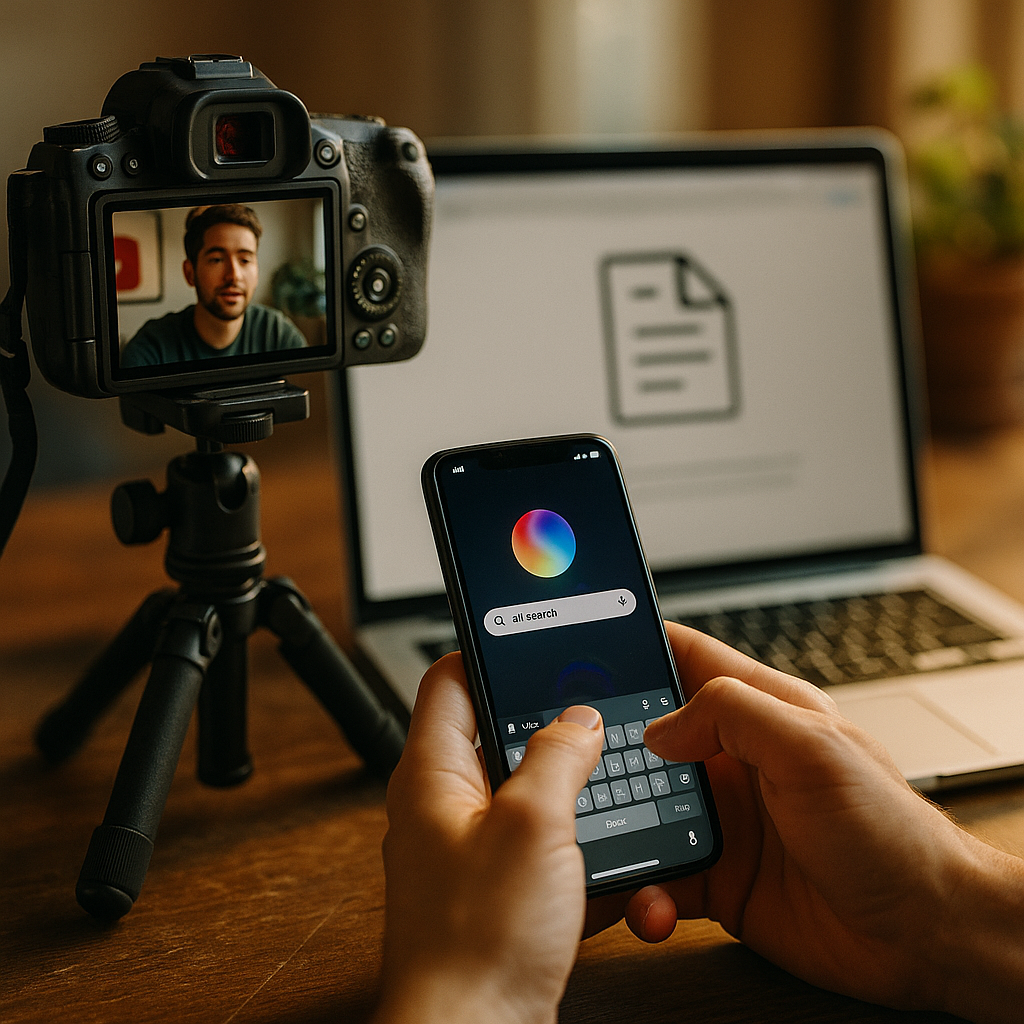
YouTube creators are showing up in Google AI Overviews at a rate that should make every brand strategist rethink their creator brief. Jellyfish’s research confirms video content is winning AI-generated search results — and most brands are still briefing creators for human eyeballs, not answer engines.
Why This Shift Is Bigger Than a Platform Update
Google’s AI Mode and AI Overviews don’t just surface links anymore. They synthesize answers. And when a user asks a complex product question — “what’s the best ergonomic chair for lower back pain under $500” or “how do I layer skincare actives correctly” — Google’s AI is increasingly pulling from YouTube video content to construct those answers.
Jellyfish’s data showed YouTube creators appearing prominently in AI Search results across multiple categories, particularly in how-to, comparison, and review formats. This isn’t accidental. YouTube is a Google property, its transcripts are indexable, and its structured formats map well onto the question-answer architecture that AI Overviews are built to serve.
For brands, this creates both a significant opportunity and a real risk. The opportunity: creator content becomes a durable brand signal inside AI-generated search results, extending reach far beyond the subscriber count of any individual channel. The risk: if you’re not briefing creators with this outcome in mind, a competitor’s creator partner might own the answer to a question your brand should be answering.
Brands that brief creators only for social engagement metrics are leaving AI Search real estate on the table. Every YouTube video is now a potential answer-engine asset.
How Google AI Search Actually Selects Creator Content
Understanding selection mechanics matters before you can engineer for them. Google’s AI Overviews pull from content that demonstrates clear expertise, structured answers, and semantic relevance to specific queries. For video, the transcript is the primary text artifact the AI reads. The title, description, chapter markers, and closed captions all feed into how the AI indexes and retrieves video content.
Creators who naturally structure their videos around a central question — stating it explicitly, answering it directly, and expanding with supporting detail — produce transcripts that look like well-structured long-form articles to a language model. That’s the content AI retrieval systems favor. Rambling vlogs with loose narrative arcs don’t survive the synthesis layer.
This also connects to broader trends in GEO strategy for AI search — generative engine optimization is no longer a niche SEO concern. It’s a direct lever on customer acquisition cost, and creator content is one of the highest-leverage inputs brands can control.
What Your Creator Brief Is Missing Right Now
Most creator briefs are built around three axes: messaging pillars, content format, and disclosure requirements. That framework isn’t wrong, but it’s incomplete for an answer-engine world.
Here’s what’s missing:
- A target query list. Brief creators with the exact questions their content should answer. Not topics. Questions. Use Google Search Console data, Semrush, or your own paid search query reports to identify the high-intent questions your audience is actually asking.
- A structured opening answer. The first 60 seconds of a video now carry disproportionate weight in AI retrieval. Brief creators to state the core answer early, explicitly, and in plain language before expanding into detail, story, or demonstration.
- Chapter markers as semantic anchors. YouTube chapter markers create navigable structure that Google’s AI can treat like subheadings. Require creators to use them, and brief them on what each chapter should address.
- Transcript-quality language. Filler words, false starts, and vague references (“this thing,” “that stuff”) degrade transcript quality. Coaching creators toward cleaner verbal delivery, or requiring post-production transcript cleanup, improves AI readability without changing the authentic tone audiences expect.
- Description field optimization. The YouTube description is crawlable text. Brief creators to include a written summary of the video’s core answer, relevant product names, and natural language variations of the target query.
None of these requirements compromise creator authenticity. They’re structural, not stylistic. A creator can still be themselves — the brief just ensures their content is architected for retrieval as well as resonance. For more on how AI tools are being used to match creator formats to specific audience contexts, see this breakdown of AI mindset signals for creator formats.
The EEAT Angle Brands Keep Overlooking
Google’s helpful content framework, built around Experience, Expertise, Authoritativeness, and Trustworthiness, applies to video content as much as it does to editorial articles. AI Overviews favor sources that demonstrate genuine firsthand experience. This is actually where creators have a structural advantage over brand-owned content: a dermatologist creator reviewing a retinol serum carries more EEAT signal than a brand’s own product page, because the creator is a third-party expert with an audience who validated their knowledge over time.
Brands should be selecting and briefing creator partners with EEAT in mind, not just audience demographics. A micro-creator with 40,000 subscribers and clear professional credentials in a relevant field may deliver more AI Search value than a lifestyle mega-influencer with 2 million followers and no topical authority.
The selection criteria shift: move from reach-first to relevance-and-authority-first. Then brief for structure. That combination is what produces content the AI will surface.
This also has implications for creator campaign governance. If creator content is now functioning as a search asset, it needs to be managed with the same rigor as owned content, including version control, transcript archiving, and keyword performance tracking.
Operational Changes for Brand and Agency Teams
Briefing for answer-engine optimization isn’t just a creative direction change. It requires operational shifts across the campaign workflow.
Pre-production: Add a query research step to the brief development process. Pull target queries from SEO tools and align them with the creator’s topical lane. This takes an extra hour per brief and pays dividends across the video’s entire lifespan.
Approval workflows: Review transcripts or scripts (where available) against the target query list before production finalizes. Check that the core answer appears early and clearly. This is a lightweight addition to existing approval gates.
Post-publication tracking: Set up Google Search Console monitoring for the brand’s creator partners where possible. Track which videos appear in AI Overviews for target queries. This data informs future briefs and demonstrates the extended-value ROI of creator content beyond social engagement metrics.
Long-term content planning: AI Search favors content depth over breadth. A creator who publishes 12 videos across a single topic category builds more topical authority than one who publishes 12 videos across 12 different categories. Brief creator partners toward category depth, not product-by-product variety, if AI Search performance is a goal.
Topical authority in YouTube is now a search asset. Brands that plan creator content calendars around category depth, not campaign launches, will compound their AI Search presence over time.
For teams managing AI-generated content at scale alongside creator partnerships, the governance infrastructure described in GenStudio AI creative governance offers a parallel model worth adapting for creator brief management.
What Brands Should Do This Quarter
Audit your top 10 creator partners’ YouTube channels. Run their existing video titles through an AI Overview test for your highest-priority product queries. See what’s already surfacing, what’s competing, and what’s absent. That gap analysis is your brief upgrade roadmap. Then pilot the structural brief elements above with two or three creators before rolling out across your full program.
The brands that treat creator content as an answer-engine asset, not just an engagement play, will have a compounding advantage as AI Search continues to displace traditional blue-link results. Start building that asset base now, before the queries your brand should own get answered by someone else’s creator.
Frequently Asked Questions
What is answer-engine-optimized video content?
Answer-engine-optimized video content is structured to be retrieved and cited by AI-generated search results like Google AI Overviews. It involves targeting specific user questions, stating answers early and clearly in the video, using chapter markers for structure, optimizing transcripts, and building topical authority in a defined category.
Why are YouTube creators winning Google AI Search results?
YouTube is a Google property, which means its content is deeply integrated into Google’s indexing and retrieval systems. YouTube video transcripts, titles, descriptions, and chapter markers are all crawlable text that AI Overviews can parse. Creators who structure content around clear questions and direct answers produce transcripts that align well with how AI retrieval systems select and synthesize information.
How should brands change their creator briefs for AI Search?
Brands should add a target query list to every brief, require creators to answer the core question in the first 60 seconds, mandate the use of YouTube chapter markers, provide guidance on transcript-quality verbal delivery, and require optimized video descriptions that include the core answer in written form. These are structural requirements that don’t compromise creator authenticity.
Does creator EEAT affect AI Search visibility?
Yes. Google’s AI Overviews favor content that demonstrates Experience, Expertise, Authoritativeness, and Trustworthiness. Creators with verifiable credentials or demonstrated firsthand experience in a relevant field carry stronger EEAT signals. Brands should factor creator topical authority and professional credibility into selection criteria, not just audience size or engagement rate.
How can brands track whether creator content appears in AI Overviews?
Brands can use Google Search Console to monitor query performance for creator-published content where they have access. Manual AI Overview testing for target queries on Google is also a practical starting point. Third-party tools like Semrush and Sprout Social are developing AI Search visibility tracking features that can supplement this monitoring.
Is this strategy relevant for smaller creator budgets?
Yes, and in some ways it favors smaller budgets. Micro-creators with strong topical authority and smaller audiences often outperform larger influencers in AI Search because they produce more focused, expertise-driven content in a defined category. The structural brief changes required are low-cost and apply regardless of creator fee level.
Top Influencer Marketing Agencies
The leading agencies shaping influencer marketing in 2026
Agencies ranked by campaign performance, client diversity, platform expertise, proven ROI, industry recognition, and client satisfaction. Assessed through verified case studies, reviews, and industry consultations.
Moburst

-
2

The Shelf
Boutique Beauty & Lifestyle Influencer AgencyA data-driven boutique agency specializing exclusively in beauty, wellness, and lifestyle influencer campaigns on Instagram and TikTok. Best for brands already focused on the beauty/personal care space that need curated, aesthetic-driven content.Clients: Pepsi, The Honest Company, Hims, Elf Cosmetics, Pure LeafVisit The Shelf → -
3

Audiencly
Niche Gaming & Esports Influencer AgencyA specialized agency focused exclusively on gaming and esports creators on YouTube, Twitch, and TikTok. Ideal if your campaign is 100% gaming-focused — from game launches to hardware and esports events.Clients: Epic Games, NordVPN, Ubisoft, Wargaming, Tencent GamesVisit Audiencly → -
4

Viral Nation
Global Influencer Marketing & Talent AgencyA dual talent management and marketing agency with proprietary brand safety tools and a global creator network spanning nano-influencers to celebrities across all major platforms.Clients: Meta, Activision Blizzard, Energizer, Aston Martin, WalmartVisit Viral Nation → -
5

The Influencer Marketing Factory
TikTok, Instagram & YouTube CampaignsA full-service agency with strong TikTok expertise, offering end-to-end campaign management from influencer discovery through performance reporting with a focus on platform-native content.Clients: Google, Snapchat, Universal Music, Bumble, YelpVisit TIMF → -
6

NeoReach
Enterprise Analytics & Influencer CampaignsAn enterprise-focused agency combining managed campaigns with a powerful self-service data platform for influencer search, audience analytics, and attribution modeling.Clients: Amazon, Airbnb, Netflix, Honda, The New York TimesVisit NeoReach → -
7

Ubiquitous
Creator-First Marketing PlatformA tech-driven platform combining self-service tools with managed campaign options, emphasizing speed and scalability for brands managing multiple influencer relationships.Clients: Lyft, Disney, Target, American Eagle, NetflixVisit Ubiquitous → -
8

Obviously
Scalable Enterprise Influencer CampaignsA tech-enabled agency built for high-volume campaigns, coordinating hundreds of creators simultaneously with end-to-end logistics, content rights management, and product seeding.Clients: Google, Ulta Beauty, Converse, AmazonVisit Obviously →