


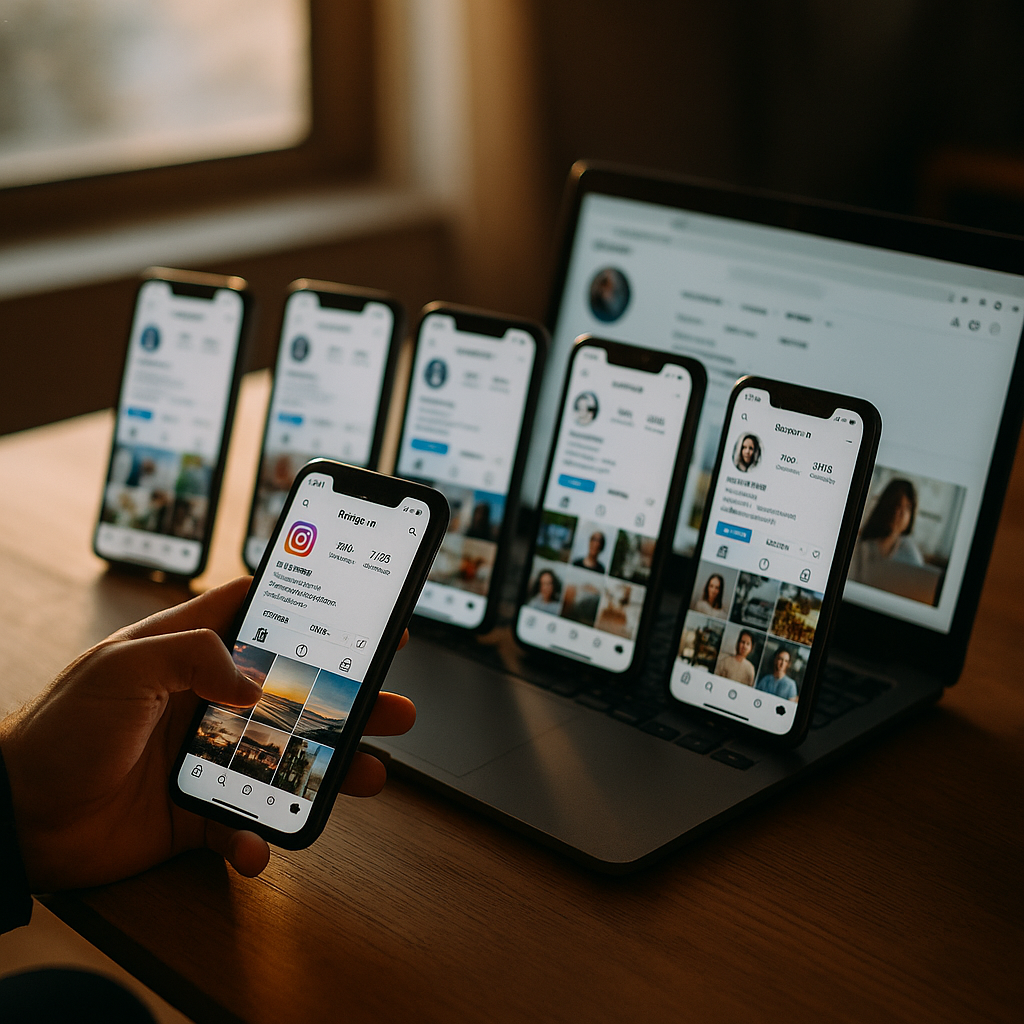
What if the most scalable organic reach strategy isn’t a single creator with 10 million followers, but a coordinated ecosystem of thousands of authentic accounts operating in concert? Coordinated social account distribution networks are reshaping how brands think about amplification — and most marketing teams are completely unprepared to evaluate them.
The Infrastructure Behind Billion-View Organic Reach
Traditional influencer programs are built around individuals. You find a creator, negotiate a rate, brief them, and hope the algorithm cooperates. That model has a hard ceiling. Even the most viral individual post decays within 72 hours, and platform algorithms increasingly penalize what they detect as coordinated paid distribution disguised as organic.
Coordinated social account distribution networks (often called UGD infrastructure, or user-generated distribution) operate differently. Instead of routing brand messages through one account, they distribute content across hundreds or thousands of authentic accounts simultaneously — accounts with real engagement histories, follower relationships, and algorithmic trust. The result is a reach multiplier that individual creator posting simply cannot replicate.
Think of it less like a single loudspeaker and more like a distributed speaker system in a stadium. Every seat hears the message at the right volume.
Brands using coordinated distribution networks report organic view totals in the hundreds of millions per campaign cycle — figures that would require eight-figure paid media budgets to replicate through traditional channel buys.
How Authentic Account Ecosystems Actually Work
The word “authentic” is doing heavy lifting here. There’s a meaningful difference between bot networks (which platforms like TikTok and Meta actively suppress) and genuine account ecosystems built on real users who have opted into a distribution arrangement. The latter group typically includes micro-creators, niche community moderators, active enthusiasts, and brand advocates who post consistently, have organic follower growth, and carry platform trust signals.
Vendors in this space, including companies like Influential, Pearpop, and newer UGD-specific platforms, manage these ecosystems by recruiting real users, verifying engagement authenticity, and matching account profiles to campaign targeting criteria. The brand brief goes out centrally; individual accounts adapt and post according to platform-specific creative guidelines.
What makes this operationally complex is the verification layer. Not every vendor who claims to run an authentic ecosystem actually does. Understanding interest graph versus follower count signals is essential when auditing whether an account ecosystem will actually reach the right audience, not just generate raw impressions.
Platforms detect inauthentic coordination through posting velocity, device fingerprinting, IP clustering, and content similarity scores. Legitimate UGD vendors build in randomization layers — varied posting times, localized content tweaks, distinct captions — to preserve algorithmic authenticity. When vetting vendors, ask specifically how they handle similarity suppression.
Evaluating Vendors: What Due Diligence Actually Looks Like
Most brand teams approach UGD vendors the same way they approach influencer agencies — with a brief, a budget conversation, and a case study review. That’s insufficient. This is infrastructure procurement, not talent booking.
Start with account provenance. Demand a sample cohort audit. A credible vendor can provide a statistically meaningful sample (at least 200 accounts) with verifiable public profiles, authentic engagement histories going back at least 18 months, and follower growth patterns that don’t show sudden spikes. Run those accounts through tools like HypeAuditor or Modash to cross-reference audience quality scores.
Next, assess platform compliance posture. Every major platform — TikTok, Meta, and YouTube — maintains terms of service that prohibit artificial amplification. Legitimate UGD vendors operate within disclosure frameworks and can demonstrate how their contracts with account holders include FTC-compliant posting requirements. Ask for a copy of their standard account holder agreement. If they hesitate, that’s a red flag.
Then evaluate content governance. How does the vendor handle brand safety incidents? If an account in the ecosystem posts something brand-adjacent that violates your standards, what is the remediation protocol and SLA? For context, TikTok’s brand safety configuration tools cover paid placements, but organic distribution networks are outside that protection layer — meaning brand safety is entirely contractual.
Finally, require a pilot structure. No credible procurement of distribution infrastructure should begin with a full-scale buy. Negotiate a 30-day pilot covering 5 to 10 percent of projected campaign scale, with agreed measurement benchmarks that trigger or kill the full deployment.
Contracting for Scale Without Losing Control
The contract structure for UGD infrastructure differs materially from a standard influencer agreement. You are not contracting with individual creators; you are contracting with an infrastructure operator. That distinction changes almost everything about how liability, IP, and performance are structured.
Key contractual provisions to negotiate:
- Account minimum guarantees with audit rights. Specify not just how many accounts will be activated, but your right to audit account authenticity at any point during the campaign term.
- Disclosure compliance indemnification. The FTC’s disclosure requirements apply to material connections regardless of whether the post looks organic. Your contract should place indemnification responsibility on the vendor for any disclosure failures by their account holders.
- Content similarity thresholds. Define acceptable ranges of content variation to protect against platform suppression while maintaining brand message integrity.
- Performance-gated payment schedules. Milestone payments tied to verified view delivery, engagement rate benchmarks, and audience quality metrics — not just posting confirmation.
- Termination triggers. Explicit clauses allowing immediate termination if the vendor’s ecosystem is found to include inauthentic accounts, or if platform terms of service violations are documented.
If your legal team hasn’t reviewed a UGD vendor contract before, allocate time for that education. The risk profile is genuinely different from standard influencer agreements, and standard marketing contract templates won’t cover the gaps.
Measuring What Billion-View Campaigns Actually Deliver
Raw view counts are the most seductive and least useful metric in UGD reporting. A campaign that generates 800 million views across a network of accounts is impressive only if those views are reaching your actual target audience and producing downstream commercial signal.
Build your measurement framework around three tiers:
Tier 1: Distribution quality indicators. Account-level engagement rates (targeting above 3.5 percent for most verticals), audience demographic alignment versus campaign targets, and content survival rate (posts remaining live and un-suppressed after 14 days).
Tier 2: Brand impact metrics. Lift in branded search volume during and after campaign windows (Google Trends provides directional signal at no cost), share of voice shifts in social listening tools like Brandwatch or Sprout Social, and sentiment analysis across the organic conversation generated.
Tier 3: Commercial attribution. This is where most brands underinvest. Coordinate your UGD campaign windows with tagged landing pages, unique promotional codes distributed through the network, and pixel-based attribution where platform permissions allow. Cross-reference with your TikTok Shop creator network performance data to understand the incremental lift UGD generates over individual creator posts.
The measurement gap in UGD campaigns isn’t a data problem — it’s a planning problem. Brands that fail to instrument their campaigns before launch are left reconciling 800 million views with zero provable revenue impact.
For multi-platform UGD campaigns that span TikTok, Instagram, and YouTube simultaneously, consider coordinating with your broader paid strategy. Understanding how multi-surface creator campaigns integrate with CTV and YouTube can sharpen your attribution model when organic and paid signals overlap.
The Compliance Reality No Vendor Will Volunteer
Here is what most vendor pitch decks omit: platform algorithms are getting significantly better at detecting coordinated distribution, even when accounts are authentic. TikTok’s 2025 algorithm updates introduced graph-level analysis that identifies clusters of accounts amplifying the same content within compressed time windows, regardless of whether those accounts are “real.” Instagram’s systems apply similar logic.
This doesn’t make UGD infrastructure obsolete. It makes operational sophistication the differentiator. Vendors who run staggered posting schedules, apply genuine content localization, and maintain authentic account behavior outside campaign windows consistently outperform those running low-sophistication blast operations. Ask vendors directly: what is your average content suppression rate across the last six campaigns? A number below 8 percent on TikTok is credible. Above 15 percent signals platform friction problems.
Data privacy compliance is a parallel concern. Account holders in these networks are often located across multiple jurisdictions. Ensure your vendor can demonstrate GDPR compliance (see ICO guidelines) for any European audience data generated, and that their account holder agreements include appropriate data handling provisions. Review this against eMarketer’s research on privacy-first marketing infrastructure for context on where this regulatory landscape is heading.
If you’re running B2B adjacent campaigns through LinkedIn-connected networks, the LinkedIn Creator Marketplace operates under separate terms. Review the LinkedIn creator vetting framework before assuming UGD vendor practices translate cleanly across platforms.
Start With the Audit, Not the Contract
Before any UGD vendor earns a signed contract, run an independent audit of their account cohort using third-party tools. That single step separates operational marketers from teams that will spend six figures on reach metrics that don’t survive scrutiny.
Define your commercial attribution model before the campaign launches. If you can’t connect distribution to revenue signal, you’re buying impressions — not infrastructure.
FAQs
What is a coordinated social account distribution network?
A coordinated social account distribution network is an infrastructure system where brand content is distributed simultaneously across a large ecosystem of authentic social media accounts rather than through a single creator or paid media placement. These networks use real users with genuine engagement histories to generate organic amplification at scale, often producing billions of views per campaign cycle.
How is UGD infrastructure different from influencer marketing?
Traditional influencer marketing contracts with individual creators who produce and post content to their own audience. UGD infrastructure distributes pre-approved content across hundreds or thousands of accounts operated by real users who have opted into a distribution arrangement. The scale, measurement framework, contract structure, and compliance requirements are fundamentally different from standard influencer agreements.
Are coordinated distribution networks compliant with FTC disclosure rules?
They can be, but compliance depends entirely on the vendor’s practices and the contracts they maintain with their account holders. The FTC requires disclosure of any material connection between a poster and a brand, regardless of whether the post appears organic. Brands must contractually require their UGD vendor to enforce disclosure standards across all accounts in the network, and should negotiate indemnification clauses covering disclosure failures.
What metrics should brands use to evaluate UGD campaign performance?
Brands should measure across three tiers: distribution quality indicators (engagement rates, demographic alignment, content survival rate), brand impact metrics (branded search lift, share of voice, sentiment), and commercial attribution (tagged URLs, unique promo codes, pixel-based attribution where available). Raw view counts alone are insufficient to evaluate whether a UGD campaign delivered business value.
How do platforms detect and suppress coordinated distribution networks?
Platforms like TikTok and Meta use graph-level analysis, posting velocity monitoring, device fingerprinting, IP clustering, and content similarity scoring to detect coordinated distribution. Even authentic account ecosystems can trigger suppression if content is too uniform or posted within compressed time windows. Reputable UGD vendors mitigate this through staggered posting schedules, content variation, and maintaining authentic account behavior outside of active campaigns.
What should be included in a UGD vendor contract?
Key provisions include account minimum guarantees with audit rights, FTC disclosure compliance indemnification, content similarity thresholds, performance-gated payment schedules tied to verified engagement metrics, explicit brand safety remediation protocols and SLAs, and termination triggers for platform terms of service violations or discovery of inauthentic accounts within the ecosystem.
Top Influencer Marketing Agencies
The leading agencies shaping influencer marketing in 2026
Agencies ranked by campaign performance, client diversity, platform expertise, proven ROI, industry recognition, and client satisfaction. Assessed through verified case studies, reviews, and industry consultations.
Moburst

-
2

The Shelf
Boutique Beauty & Lifestyle Influencer AgencyA data-driven boutique agency specializing exclusively in beauty, wellness, and lifestyle influencer campaigns on Instagram and TikTok. Best for brands already focused on the beauty/personal care space that need curated, aesthetic-driven content.Clients: Pepsi, The Honest Company, Hims, Elf Cosmetics, Pure LeafVisit The Shelf → -
3

Audiencly
Niche Gaming & Esports Influencer AgencyA specialized agency focused exclusively on gaming and esports creators on YouTube, Twitch, and TikTok. Ideal if your campaign is 100% gaming-focused — from game launches to hardware and esports events.Clients: Epic Games, NordVPN, Ubisoft, Wargaming, Tencent GamesVisit Audiencly → -
4

Viral Nation
Global Influencer Marketing & Talent AgencyA dual talent management and marketing agency with proprietary brand safety tools and a global creator network spanning nano-influencers to celebrities across all major platforms.Clients: Meta, Activision Blizzard, Energizer, Aston Martin, WalmartVisit Viral Nation → -
5

The Influencer Marketing Factory
TikTok, Instagram & YouTube CampaignsA full-service agency with strong TikTok expertise, offering end-to-end campaign management from influencer discovery through performance reporting with a focus on platform-native content.Clients: Google, Snapchat, Universal Music, Bumble, YelpVisit TIMF → -
6

NeoReach
Enterprise Analytics & Influencer CampaignsAn enterprise-focused agency combining managed campaigns with a powerful self-service data platform for influencer search, audience analytics, and attribution modeling.Clients: Amazon, Airbnb, Netflix, Honda, The New York TimesVisit NeoReach → -
7

Ubiquitous
Creator-First Marketing PlatformA tech-driven platform combining self-service tools with managed campaign options, emphasizing speed and scalability for brands managing multiple influencer relationships.Clients: Lyft, Disney, Target, American Eagle, NetflixVisit Ubiquitous → -
8

Obviously
Scalable Enterprise Influencer CampaignsA tech-enabled agency built for high-volume campaigns, coordinating hundreds of creators simultaneously with end-to-end logistics, content rights management, and product seeding.Clients: Google, Ulta Beauty, Converse, AmazonVisit Obviously →