


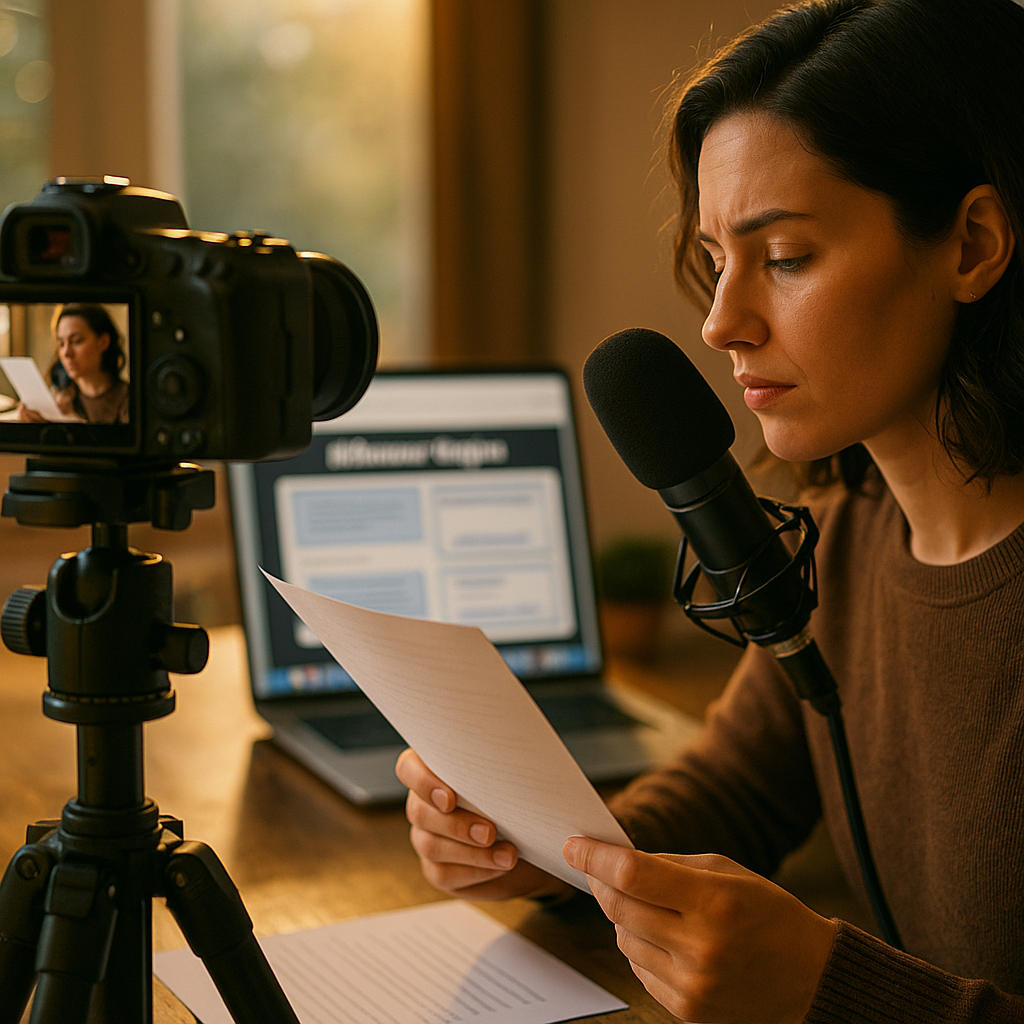
Nearly 60% of search queries now return zero clicks because AI answer engines resolve them directly. If your creator content isn’t structured to win those citations, you’re funding someone else’s brand mention. This guide covers the AI answer engine optimization brief: a production-level template for structuring every layer of creator video output to earn placement in ChatGPT, Perplexity, and Google AI Overviews.
Why Creator Video Is Now an AI Retrieval Asset
Most brand teams still think of influencer content as a reach play. Get views, drive awareness, maybe convert. That framework is incomplete. AI answer engines now crawl, index, and cite creator content at scale, which means a well-structured TikTok caption or YouTube description can surface in a Perplexity response to a consumer asking “What’s the best collagen supplement for joint pain?” without a single traditional search ranking involved.
The retrieval logic matters here. Systems like Perplexity AI and Google’s AI Overviews prioritize content that is specific, attributed, and structured around direct questions and clear answers. Vague lifestyle content gets ignored. Precise, claim-forward creator content gets cited.
This is why the brief itself has to change. AI-citation-ready briefs require a different production architecture than traditional influencer briefs. You’re not just directing a video. You’re engineering a citable asset.
The Four-Layer Production Framework
Think of every creator video as having four distinct content layers, each of which AI systems parse independently: the title, the spoken content, the on-screen text, and the metadata (captions, descriptions, tags). Optimizing one layer without the others leaves retrieval potential on the table. Here’s how to brief each layer deliberately.
Layer 1: Video Title Architecture
The title is the first signal any crawler encounters. For AI retrieval, titles need to front-load the product category, the specific benefit claim, and ideally a comparison or qualifier. A title like “This Protein Powder Changed My Morning” is a reach play. A title like “AG1 vs. Bloom: Which Greens Supplement Actually Reduces Bloating?” is a retrieval play. It matches the exact language a consumer uses in a conversational AI query.
Brief creators with a title formula, not a title suggestion. The formula: [Product/Category] + [Specific Outcome Claim] + [Qualifier or Audience Signal]. Example: “Ritual Protein for Women Over 40: Real Results After 90 Days.” That structure matches AI query syntax and gives indexing systems a clean semantic anchor.
Layer 2: Spoken Product Claims
This is where most brands underinvest in their briefs. Creators default to conversational, hedged language (“I feel like it kind of works for me”) because it sounds authentic. Authentic is fine; vague is a retrieval failure.
Your brief needs to specify claim windows: the first 30 seconds, typically, where AI systems weight spoken content most heavily based on transcript indexing behavior. Within that window, creators should state the product name, the primary benefit, and a measurable or time-bound qualifier. “I’ve been using Momentous creatine for eight weeks and my recovery time between sessions dropped noticeably” is structurally retrievable. “This stuff is just so good” is not.
AI answer engines treat creator transcripts as primary source text. A vague spoken claim is structurally identical to no claim at all from a retrieval standpoint. Brief for specificity the same way you’d brief a landing page headline.
FTC compliance intersects here directly. Claims need to be truthful, not just structured. Your legal team should approve specific benefit language before it goes into the brief. This also protects you if a claim gets widely cited. For more on compliance architecture in creator production, see FTC-compliant brief structures that balance disclosure with performance claims.
Layer 3: On-Screen Text
On-screen text is a second, independent text layer that AI vision systems and auto-captioning tools parse separately from spoken audio. Use it to reinforce, not just decorate. Best practice: display the product name and key claim as on-screen text simultaneously with when the creator speaks them. Redundancy across layers increases the signal strength for retrieval systems.
Keep on-screen claims to seven words or fewer. Not because of attention spans, but because AI parsing of visual text degrades with length and overlap. “8 Weeks. Noticeably Faster Recovery. Momentous Creatine.” That’s a three-line on-screen sequence that indexes cleanly.
Do not bury the product name in small text. Position it in the lower third, high contrast, for at least three seconds per appearance. This is not aesthetic guidance. It’s retrieval guidance.
Layer 4: Caption and Metadata Architecture
YouTube descriptions, TikTok captions, Instagram alt text, and closed captions are all indexed by AI engines. Most brands treat these as afterthoughts. They are your most controllable optimization layer.
Brief creators to include a structured first paragraph in every description: product name, primary benefit claim, and a one-sentence personal experience statement. Everything in that first paragraph should read like an answer to a specific consumer question, because that’s exactly how Perplexity will use it.
Hashtags have a secondary role here. Use category-specific tags (#collagenprotein, #jointhealth) rather than vanity tags (#ad #sponsored only). The former provide topical clustering signals. Closed captions should be manually reviewed, not auto-generated and left uncorrected. A misparsed product name in a caption is a retrieval failure waiting to happen.
Briefing Creators Without Killing Authenticity
The pushback you’ll get internally: “Won’t this make the content feel scripted?” The answer is that structure and authenticity are not opposites. A creator who knows they need to name the product in the first 30 seconds and hit one specific claim is not more robotic; they’re more effective.
The brief should provide the structural requirements as constraints, not scripts. Give the creator the claim window timing, the approved benefit language options (two or three variants), and the on-screen text sequence. Let them deliver it in their voice. Constraint-based briefs consistently outperform open-ended briefs for both retrieval performance and viewer retention, because they force clarity. This principle applies whether you’re working on short-form social or longer YouTube formats.
Platform-Specific Adjustments That Actually Matter
Not all platforms feed AI engines equally. YouTube has the most robust indexing infrastructure: transcripts, chapters, descriptions, and closed captions all contribute to AI retrieval. YouTube content is disproportionately cited in emerging AI search environments. If you have budget prioritization decisions to make, YouTube indexing is the highest-leverage platform for AI citation right now.
TikTok’s captions and on-screen text index well in TikTok’s own search environment, and increasingly in Google AI Overviews as Google’s crawl of short-form platforms expands. Instagram is the weakest for AI retrieval due to limited link infrastructure and lower caption indexing depth, but alt text and product tags contribute marginally.
For multi-platform campaigns, your AI-first discovery brief should specify platform-specific caption lengths and title formats as separate deliverables, not repurposed from a single master version. The structural requirements differ enough to warrant it.
Measurement: How to Know If It’s Working
Attribution here is genuinely hard, but not impossible. Set up brand mention monitoring in Perplexity, ChatGPT (via manual queries at scale), and Google AI Overviews using your product name combined with category queries. Run these queries monthly: “best [product category] for [your target use case]” and document whether your creator content appears as a citation source.
Track share-of-voice in AI environments separately from traditional SEO share-of-voice. These are different signals. A brand can rank on page one of Google and get zero AI citations if their creator content lacks structural optimization.
AI citation share-of-voice is a new brand equity metric. The brands that start measuring it now will have a structural advantage when it becomes a standard reporting requirement in 12-18 months.
Use content tracking tools to monitor which specific creator posts generate downstream AI citations. When you find a format that wins citations, reverse-engineer the brief from that asset and use it as your structural template going forward.
For brands running episodic creator content, episodic measurement frameworks need to include AI citation tracking as a KPI alongside traditional engagement and conversion metrics. Build this into your reporting infrastructure before your next series launches, not after.
The Compliance Layer You Cannot Skip
AI systems that cite creator content do not strip disclosure language. In fact, content that includes clear FTC-compliant disclosures (“This video is sponsored by [Brand]”) may carry higher trust signals for retrieval systems designed to surface reliable, attributed content. There’s a practical argument for disclosure beyond ethics: disclosed content is treated as a primary source, not an advertisement to be filtered.
Brief creators to include disclosure language in the spoken content, in the on-screen text, and in the caption metadata. All three layers. Partial disclosure is a legal risk and potentially a retrieval handicap.
Your Next Step
Audit your last five creator briefs against the four-layer framework above. If title architecture, spoken claim windows, on-screen text sequencing, and metadata structure aren’t explicitly specified, you have retrieval gaps. Fix the brief template before the next campaign launches.
Frequently Asked Questions
What is AI answer engine optimization for creator content?
AI answer engine optimization (AEO) for creator content refers to structuring influencer video titles, spoken claims, on-screen text, and caption metadata so that AI systems like ChatGPT, Perplexity, and Google AI Overviews can retrieve, parse, and cite that content when answering consumer queries. It differs from traditional SEO in that it focuses on conversational query matching, claim specificity, and multi-layer content signals rather than keyword density and backlink profiles.
Which platforms are most valuable for AI citation of creator content?
YouTube offers the highest AI retrieval value due to its robust indexing of transcripts, chapters, descriptions, and closed captions. TikTok indexes well within its own search environment and increasingly within Google AI Overviews. Instagram provides the weakest AI citation infrastructure due to limited link indexing and lower caption depth, though alt text and product tags offer marginal signals.
How do I brief creators to optimize for AI retrieval without compromising authenticity?
Provide structural constraints rather than scripts. Specify the claim window timing (first 30 seconds), give two or three approved benefit language options, and define the on-screen text sequence. Allow creators to deliver these elements in their own voice. Constraint-based briefs produce content that is both structurally retrievable by AI systems and authentic in delivery.
Do FTC disclosure requirements affect AI citation eligibility?
Disclosure language does not disqualify content from AI citation. In practice, content with clear, transparent attribution may carry higher trust signals for AI retrieval systems designed to surface reliable sources. FTC-compliant disclosures should appear in spoken content, on-screen text, and caption metadata across all three layers to satisfy both regulatory requirements and retrieval best practices.
How do I measure whether my creator content is being cited by AI engines?
Set up a monthly monitoring routine using brand name and category query combinations in ChatGPT, Perplexity, and Google AI Overviews. Track whether creator content appears as a citation source for those queries. Build AI citation share-of-voice as a separate metric from traditional SEO rankings, and use content tracking tools to identify which specific creator assets are generating downstream citations.
Top Influencer Marketing Agencies
The leading agencies shaping influencer marketing in 2026
Agencies ranked by campaign performance, client diversity, platform expertise, proven ROI, industry recognition, and client satisfaction. Assessed through verified case studies, reviews, and industry consultations.
Moburst

-
2

The Shelf
Boutique Beauty & Lifestyle Influencer AgencyA data-driven boutique agency specializing exclusively in beauty, wellness, and lifestyle influencer campaigns on Instagram and TikTok. Best for brands already focused on the beauty/personal care space that need curated, aesthetic-driven content.Clients: Pepsi, The Honest Company, Hims, Elf Cosmetics, Pure LeafVisit The Shelf → -
3

Audiencly
Niche Gaming & Esports Influencer AgencyA specialized agency focused exclusively on gaming and esports creators on YouTube, Twitch, and TikTok. Ideal if your campaign is 100% gaming-focused — from game launches to hardware and esports events.Clients: Epic Games, NordVPN, Ubisoft, Wargaming, Tencent GamesVisit Audiencly → -
4

Viral Nation
Global Influencer Marketing & Talent AgencyA dual talent management and marketing agency with proprietary brand safety tools and a global creator network spanning nano-influencers to celebrities across all major platforms.Clients: Meta, Activision Blizzard, Energizer, Aston Martin, WalmartVisit Viral Nation → -
5

The Influencer Marketing Factory
TikTok, Instagram & YouTube CampaignsA full-service agency with strong TikTok expertise, offering end-to-end campaign management from influencer discovery through performance reporting with a focus on platform-native content.Clients: Google, Snapchat, Universal Music, Bumble, YelpVisit TIMF → -
6

NeoReach
Enterprise Analytics & Influencer CampaignsAn enterprise-focused agency combining managed campaigns with a powerful self-service data platform for influencer search, audience analytics, and attribution modeling.Clients: Amazon, Airbnb, Netflix, Honda, The New York TimesVisit NeoReach → -
7

Ubiquitous
Creator-First Marketing PlatformA tech-driven platform combining self-service tools with managed campaign options, emphasizing speed and scalability for brands managing multiple influencer relationships.Clients: Lyft, Disney, Target, American Eagle, NetflixVisit Ubiquitous → -
8

Obviously
Scalable Enterprise Influencer CampaignsA tech-enabled agency built for high-volume campaigns, coordinating hundreds of creators simultaneously with end-to-end logistics, content rights management, and product seeding.Clients: Google, Ulta Beauty, Converse, AmazonVisit Obviously →