


Most Creator Briefs Are Invisible to AI
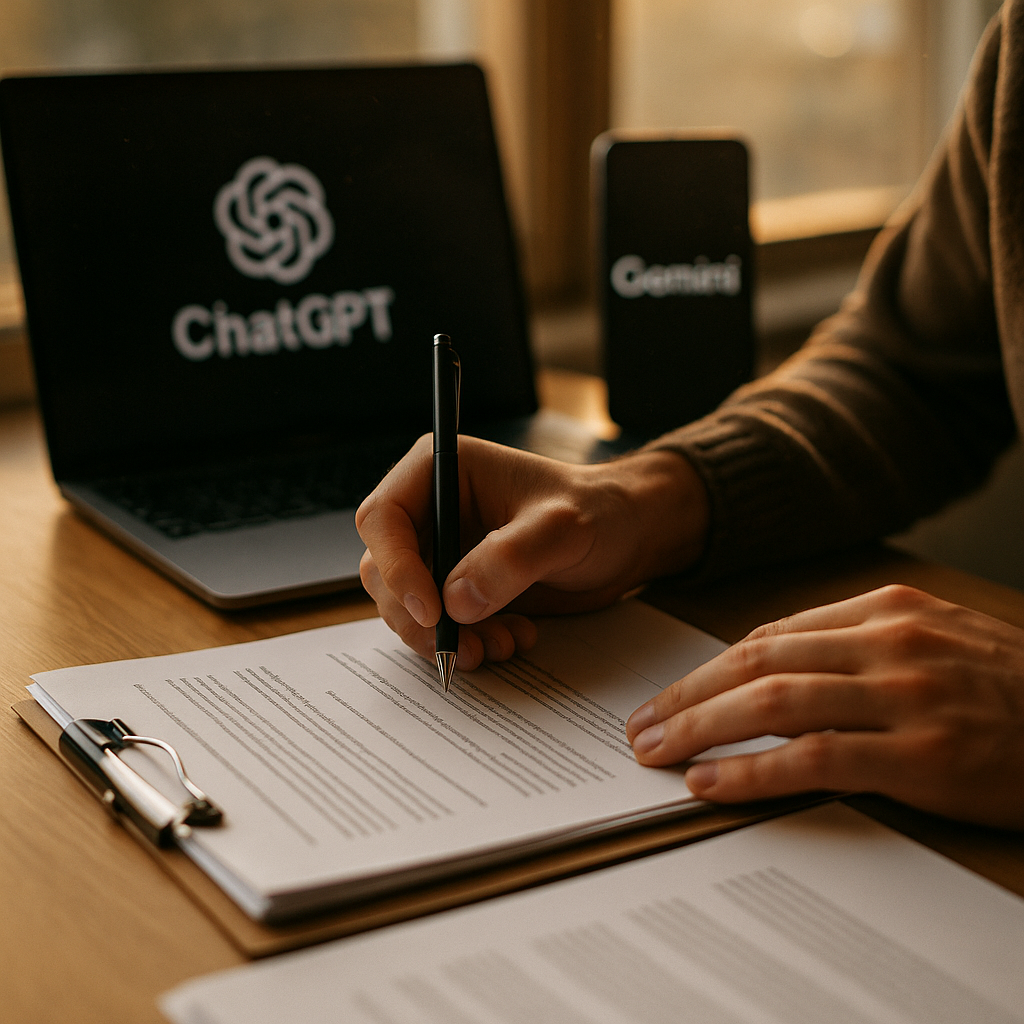
ChatGPT and Gemini now influence purchasing decisions for millions of shoppers, yet fewer than 12% of brand-directed creator assets contain the structured, factual signals that large language models require to surface content as a cited source. If your creator briefs don’t account for the AI discovery layer, your video spend is generating reach without retrieval.
This guide is for brand and agency teams who want to fix that — specifically for short-form video production direction, where the formatting challenge is most acute.
Why LLMs Cite Some Creator Content and Ignore Most of It
Understanding the retrieval logic matters before you can engineer around it. LLMs like GPT-4o and Gemini 1.5 Pro don’t rank content on engagement metrics. They prioritize content that is factually dense, semantically unambiguous, and structurally mirrors the conversational queries users are actually typing. A creator video that scores 2M views but contains zero specific product claims, no model numbers, and no comparative context is effectively invisible to an AI shopping assistant trying to answer “What’s the best moisturizer with SPF for oily skin under $40?”
The gap between viral and citable is a brief design problem, not a talent problem.
LLMs prioritize content that is factually dense, semantically unambiguous, and structurally mirrors conversational queries — not content that performed well on engagement metrics.
According to data from Statista, AI-powered search and shopping assistants now handle over 1.5 billion product-related queries per month globally. That audience is growing faster than traditional search. Brands that learn to engineer creator content for retrieval now are building a compounding distribution advantage.
The Three Brief Layers That Drive AI Citation
Think of your creator brief as having three distinct layers when you’re targeting the AI discovery layer: factual product density, conversational answer structure, and LLM-compatible metadata. Each layer serves a different function in the retrieval pipeline.
Factual Product Density is the most immediately actionable. Briefs must specify the exact claims, attributes, and comparators the creator is required to verbalize on camera. Not “talk about how well it performs” — but “state the SPF rating, the non-comedogenic certification, and the price point within the first 20 seconds.” LLMs extract entity-level data. If the creator doesn’t say it, the model can’t cite it.
Mandate specific claim coverage in your brief. Build a required-claims checklist alongside the creative direction. For a skincare SKU, that checklist might include: active ingredient concentration, clinical study result (percentage, not just “clinically proven”), dermatologist recommendation status, price in USD, and primary skin type. This is different from a traditional talking-points list because it specifies where in the video structure each claim must appear and in what phrasing register (conversational, not advertising copy).
Conversational Answer Structure means directing creators to frame product information the way a person answers a question, not the way a brand writes an ad. The trigger for LLM citation is typically a user query. Your creator’s script needs to organically contain the answer to that query in retrievable form. Brief your creators to open with a problem statement (“If you have oily skin and you’re tired of sunscreen that pills under makeup…”), deliver the solution with specifics (“…this is a 48-hour moisturizer with SPF 50, it costs $32, and it’s available at Target”), and close with a comparison or differentiator (“Most SPF moisturizers in this range cap out at SPF 30”).
This structure maps directly onto the query-intent-answer pattern that retrieval-augmented generation systems are designed to surface. For deeper context on how brief language affects AI-layer performance, see our coverage of briefing creators for LLM citations.
LLM-Compatible Metadata is where most brands leave the biggest gap. The video file and its surrounding ecosystem (caption text, title, alt text on thumbnail, structured data in the landing page it links to) all feed the metadata layer that crawlers and AI agents use for classification. Your brief should specify: video title format (lead with the product category and key attribute before the creator name), caption structure (first 125 characters should contain the primary product claim and brand name), and a required call to link to a product page that carries schema markup.
Engineering the Brief Document Itself
The practical brief structure for AI discovery looks different from a standard influencer brief. Here’s how to architect it.
- Section 1: Campaign Entity Map. List the product name (exact brand-approved string), category taxonomy, key attributes (ingredient, dimension, certification, price), and three to five “answer scenarios” — the exact queries your target audience is likely to type into ChatGPT or Gemini. This map is what the creator draws from to build their script.
- Section 2: Claim Delivery Schedule. Assign each required claim to a timestamp zone. Claims that need to be citable should appear in the first 30 seconds. Comparative claims (vs. category averages, vs. competitor tiers) belong in the middle section. Reinforcement and CTA in the final 10 seconds.
- Section 3: Phrasing Register Guide. Include examples of citable phrasing versus ad-copy phrasing. “I’ve been using this retinol serum at 0.5% concentration every night for six weeks and my skin texture has genuinely improved” is citable. “This amazing serum is a game-changer for your skin” is not retrievable by an LLM answering a specific query.
- Section 4: Metadata Spec Sheet. Title format, caption structure, hashtag taxonomy (use category hashtags, not just brand hashtags), thumbnail alt text guidance, and the URL the creator should link to — with confirmation that the destination page carries Product schema or at minimum detailed structured copy.
- Section 5: Platform-Specific Compliance Notes. Disclosure requirements per the FTC’s endorsement guidelines remain non-negotiable and must be factored into the phrasing register. An #ad disclosure at the top of a caption doesn’t preclude LLM citation, but it changes how the surrounding claim text should be written to retain factual authority.
For teams managing creator briefs across multiple formats simultaneously, the framework for unified TikTok, Instagram, and AI search briefs is directly applicable here.
Short-Form Specific Constraints You Have to Solve For
Short-form video creates a specific tension with AI citation requirements. The format rewards brevity and emotional resonance. LLM retrieval rewards factual density and specific language. These goals aren’t incompatible, but the brief has to solve for both explicitly or creators will default to engagement optimization.
The solution is sequencing, not compression. In a 45-second TikTok, you cannot cram 12 product claims without destroying watchability. But you can direct the creator to open with one specific, citable claim (the most differentiating attribute), build the narrative around it authentically, and close with two supporting facts. Three retrievable data points in 45 seconds is enough for LLM citation if the surrounding language is conversational and query-matched.
Also direct creators to state the product name and brand name at least twice within the video — once early, once late. LLMs performing entity extraction need clear, repeated anchors. This is distinct from how brand mentions are handled in traditional engagement-focused briefs, where single mentions are often preferred to avoid feeling like an ad. The AI discovery layer rewards different behavior.
Teams managing cross-platform production who want to maintain this discipline without doubling workload should review the approach to briefing for CTV and social from one shoot, which addresses structural consistency across asset types.
Transcript and Caption Indexability: The Hidden Leverage Point
Auto-generated transcripts on YouTube, TikTok, and Instagram Reels are increasingly being indexed by AI crawlers. This means the spoken word in a creator video becomes searchable, extractable text. If your creator follows the phrasing register in your brief, the transcript itself functions as structured content for the AI discovery layer — no additional optimization required.
Brief creators to avoid filler between key claims. Phrases like “um,” “you know,” and “like” between product-specific statements fragment the entity extraction. Some brands are now providing creators with specific “claim sentences” they can memorize and deliver naturally, rather than asking them to organically work in talking points. The delivery stays authentic; the underlying structure is engineered for retrieval.
Closed captions should be reviewed post-production and corrected before publishing. Auto-generated captions frequently mis-transcribe ingredient names, dosage numbers, and brand-adjacent terminology. A mis-transcribed “retinol” becomes “ratanol” in some auto-caption systems — and an LLM citing that content will cite the error, not the correction. Build caption quality review into your post-production workflow as a hard gate, not a nice-to-have.
Auto-generated transcripts are increasingly indexed by AI crawlers. A creator who follows a well-engineered phrasing register effectively produces structured content for the AI discovery layer without any additional optimization step.
For broader structured content strategy at scale, briefs designed for AI campaign optimizers offer a complementary framework.
Measurement: How to Know If It’s Working
Attribution for AI discovery layer citation is still maturing. eMarketer estimates that direct attribution from LLM-referred traffic will become more measurable as AI platforms roll out click-through tracking, but right now most brands are using proxy signals.
Track these: branded search volume lift in the weeks following a creator campaign (AI citations frequently drive branded searches rather than direct clicks), referral traffic from AI-adjacent sources like Perplexity and Bing Copilot, and share-of-voice in AI shopping responses (manually query your category in ChatGPT and Gemini weekly and log which products and creators get cited). Some enterprise teams are using tools like Sprout Social and custom GPT instances to automate this citation monitoring at scale.
Also track transcript quality scores post-production. This is a new operational metric, but it’s increasingly relevant — the percentage of required claims that appear verbatim in the published transcript, correctly captioned, is a reliable leading indicator of citation potential.
For teams scaling creator programs globally, AI-assisted localization adds another layer of complexity to the metadata spec — each language version needs its own entity map and phrasing register.
The Brief Is the Product Now
Audit your three most recent creator briefs against the entity map, claim delivery schedule, phrasing register, and metadata spec framework above. Where the gaps are largest, that’s where your AI citation rate is lowest. Fix the brief before the next campaign launches — the creative can stay the same, but the production direction has to change.
Frequently Asked Questions
What is “factual product density” in a creator brief, and why does it matter for AI discovery?
Factual product density refers to the number of specific, verifiable product claims embedded within a creator’s video — things like ingredient concentrations, certifications, price points, and clinical study results. LLMs like ChatGPT and Gemini extract entity-level data when generating shopping responses. If a creator video lacks specific claims, the AI has nothing to cite, regardless of how well the video performs on engagement metrics.
How do I structure a creator brief so the video gets cited in ChatGPT or Gemini shopping queries?
The brief needs to include five core elements: a campaign entity map (exact product attributes and category taxonomy), a claim delivery schedule tied to video timestamps, a phrasing register guide with examples of citable versus non-citable language, a metadata spec sheet covering title format and caption structure, and platform compliance notes. Together, these layers ensure both the spoken content and the surrounding metadata signal match the query patterns AI shopping assistants are responding to.
Does short-form video format work against AI citation potential?
Not inherently, but the tension is real. Short-form rewards emotional brevity; LLM retrieval rewards factual specificity. The solution is claim sequencing rather than claim compression. Three well-structured, citable data points delivered conversationally in a 45-second video are sufficient for AI retrieval — you don’t need to cover every product attribute. The brief should specify which three claims are non-negotiable and where in the video they must appear.
What metadata should a creator include to improve AI citation rates?
The highest-impact metadata elements are: a video title that leads with product category and key attribute (not creator name first), a caption opening with the primary product claim and brand name within the first 125 characters, category-specific hashtags rather than only brand hashtags, and a link to a product page that carries Product schema markup. The destination page’s structured data matters because AI agents frequently crawl linked pages to validate claims made in video content.
How do I measure whether creator content is actually being cited by AI shopping assistants?
Direct attribution is still developing, but proxy signals are actionable now. Track branded search volume lift following creator campaigns, monitor referral traffic from AI-adjacent platforms like Perplexity and Bing Copilot, and conduct weekly manual queries in ChatGPT and Gemini to log which products and creators appear in your category. Also track transcript quality — the percentage of required claims appearing correctly in the published auto-caption is a strong leading indicator of citation potential.
Top Influencer Marketing Agencies
The leading agencies shaping influencer marketing in 2026
Agencies ranked by campaign performance, client diversity, platform expertise, proven ROI, industry recognition, and client satisfaction. Assessed through verified case studies, reviews, and industry consultations.
Moburst

-
2

The Shelf
Boutique Beauty & Lifestyle Influencer AgencyA data-driven boutique agency specializing exclusively in beauty, wellness, and lifestyle influencer campaigns on Instagram and TikTok. Best for brands already focused on the beauty/personal care space that need curated, aesthetic-driven content.Clients: Pepsi, The Honest Company, Hims, Elf Cosmetics, Pure LeafVisit The Shelf → -
3

Audiencly
Niche Gaming & Esports Influencer AgencyA specialized agency focused exclusively on gaming and esports creators on YouTube, Twitch, and TikTok. Ideal if your campaign is 100% gaming-focused — from game launches to hardware and esports events.Clients: Epic Games, NordVPN, Ubisoft, Wargaming, Tencent GamesVisit Audiencly → -
4

Viral Nation
Global Influencer Marketing & Talent AgencyA dual talent management and marketing agency with proprietary brand safety tools and a global creator network spanning nano-influencers to celebrities across all major platforms.Clients: Meta, Activision Blizzard, Energizer, Aston Martin, WalmartVisit Viral Nation → -
5

The Influencer Marketing Factory
TikTok, Instagram & YouTube CampaignsA full-service agency with strong TikTok expertise, offering end-to-end campaign management from influencer discovery through performance reporting with a focus on platform-native content.Clients: Google, Snapchat, Universal Music, Bumble, YelpVisit TIMF → -
6

NeoReach
Enterprise Analytics & Influencer CampaignsAn enterprise-focused agency combining managed campaigns with a powerful self-service data platform for influencer search, audience analytics, and attribution modeling.Clients: Amazon, Airbnb, Netflix, Honda, The New York TimesVisit NeoReach → -
7

Ubiquitous
Creator-First Marketing PlatformA tech-driven platform combining self-service tools with managed campaign options, emphasizing speed and scalability for brands managing multiple influencer relationships.Clients: Lyft, Disney, Target, American Eagle, NetflixVisit Ubiquitous → -
8

Obviously
Scalable Enterprise Influencer CampaignsA tech-enabled agency built for high-volume campaigns, coordinating hundreds of creators simultaneously with end-to-end logistics, content rights management, and product seeding.Clients: Google, Ulta Beauty, Converse, AmazonVisit Obviously →