


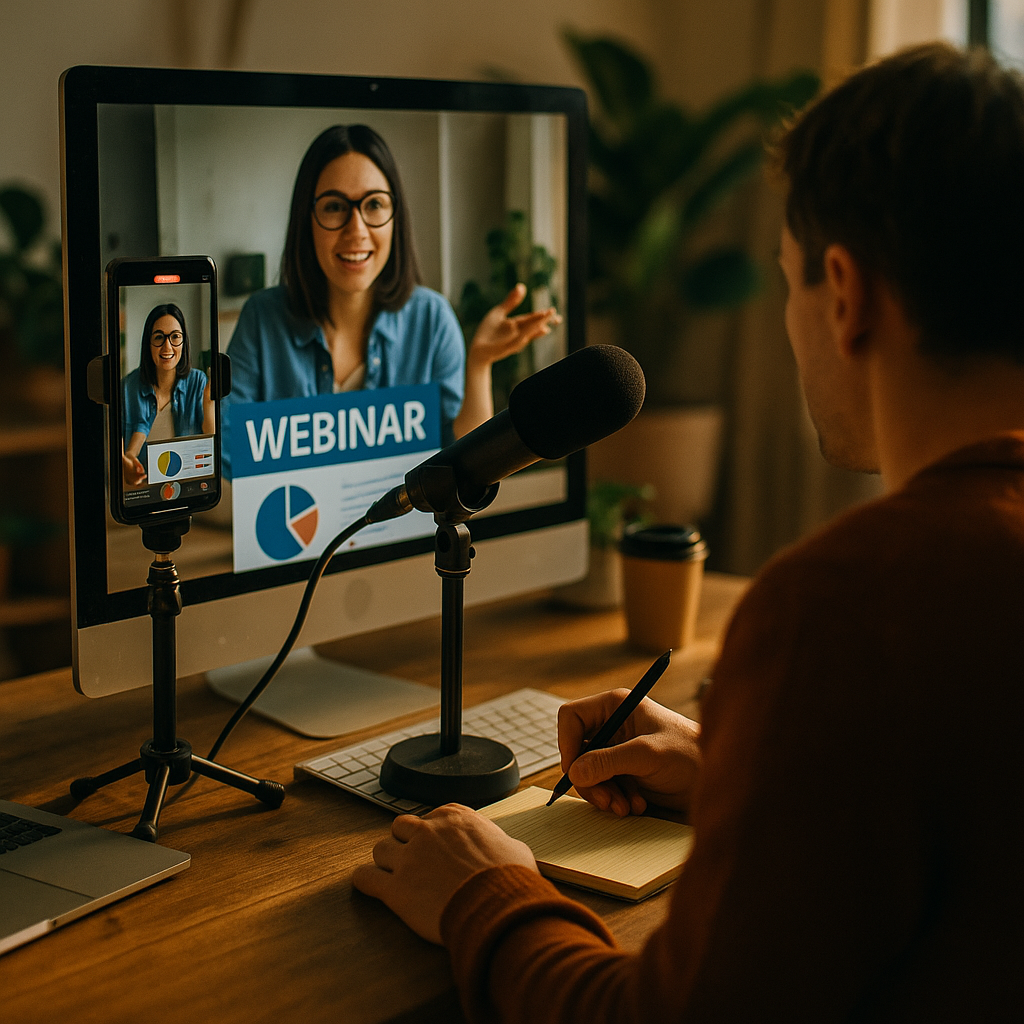
Only 3% of webinar registrants stay for the full session, according to data cited widely across the events industry — and yet brands keep greenlighting hour-long panels as their flagship B2B content play. If your webinar strategy still assumes anyone has 60 uninterrupted minutes, you’re building for an audience that no longer exists. It’s time to reimagine the social-first webinar as a system, not a single asset.
The Webinar Isn’t Dead. The Format Is.
Let’s kill the narrative that webinars are obsolete. Pipeline data from most B2B marketing teams still shows webinars converting leads at a higher rate than gated PDFs or static landing pages. The problem isn’t the tactic. It’s the delivery vehicle.
A 45-minute Zoom recording sitting on a resource page is a content graveyard. Nobody clicks play on a thumbnail of four talking heads and a shared screen. But strip that same session into eight sharp, vertical, captioned clips distributed across LinkedIn, Instagram, and short-form feeds? Now you’ve got a distribution engine instead of a dead asset.
Brands that treat the webinar recording as raw footage — not a finished product — get 5 to 10x more content mileage from the same production spend.
Why Social-First Matters for B2B Now
B2B buyers behave like consumers now. They scroll LinkedIn between meetings, watch Reels on lunch breaks, and research vendors the same way they research restaurants — in fragments, across multiple sessions, on mobile. LinkedIn’s own platform data consistently shows video posts outperforming static and document content on engagement, and short-form video is the fastest-growing format across the platform.
Attention spans didn’t shrink because people got dumber. They shrank because the volume of competing content exploded. Every brand fighting for a buyer’s attention is now, functionally, competing with TikTok dance trends and Instagram carousels — not just other webinars.
That means your creative brief for webinar content needs to stop thinking like an events team and start thinking like a social content team. Same substance, radically different packaging.
What “Social-First” Actually Means in Practice
Social-first doesn’t mean dumbing down the content. It means designing for the constraints of the feed from the start: vertical framing, captions burned in, a hook within the first three seconds, and a payoff that doesn’t require twenty minutes of context. This is the same discipline that governs creator-led formats — see how Meta’s engaged view threshold is already reshaping how brands cut creator hooks. Webinar content needs the same rigor.
The Creative Brief: Structuring Webinars for Chop-Ability
Most webinar content fails at the repurposing stage because it was never built to be repurposed. The fix starts before the recording button is even pressed. Here’s what a social-first creative brief should mandate:
- Modular segments, not a monologue. Structure the session into 5-8 minute thematic blocks with clear starts and stops. This makes clipping dramatically easier and reduces awkward mid-thought cuts.
- Front-load the hot takes. Save the safe, generic answers for the middle. Open with the spiciest opinion in the room — that’s your clip bait.
- Cast for camera presence, not just credentials. A brilliant CFO who mumbles into their lap will not clip well. Prioritize speakers who talk in quotable, complete sentences.
- Plan the B-roll during the live session. Have a second camera or screen-share angle running so editors have cutaway options beyond a static talking head.
- Write a “clip map” before the event. Assign your social team to flag timestamp-worthy moments live, in real time, rather than scrubbing a 60-minute recording after the fact.
This is the same operational logic behind turning one live stream into a week of content — the source format changes, but the repurposing discipline is identical.
Distribution: Match the Cut to the Channel
Not every clip belongs on every platform, and treating distribution as an afterthought wastes the editing spend you just made. A useful default framework:
- LinkedIn: 60-90 second clips with a strong opening line as native text, subtitles on, and a comment-bait question posted alongside.
- Instagram Reels / TikTok: 15-30 second punchy soundbites, fast cuts, bold on-screen text, less corporate polish.
- YouTube Shorts: Similar to Reels but slightly more tolerant of context-setting — you get an extra few seconds before the hook needs to land.
- Email / owned channels: The full-length recording still has a home here, for the smaller segment of your audience that actually wants depth.
The mistake most teams make is uploading the identical cut everywhere. A LinkedIn-native clip with burned-in captions and a professional tone will underperform on TikTok, and vice versa. Budget editing time accordingly — this is a resourcing conversation, not just a creative one, and it echoes the logic in content format diversification budget frameworks already used for creator programs.
What About the Data — Does Chopped Content Actually Convert?
Skeptics will ask, reasonably, whether short clips generate pipeline or just vanity metrics. The honest answer: clips are a top-of-funnel and mid-funnel tool, not a direct-response one. They build familiarity with a speaker or brand voice before a prospect ever fills out a form.
HubSpot’s benchmarking research has repeatedly shown that video content drives higher engagement rates than text-only posts across B2B social channels, and engagement compounds — each clip is a chance to appear in a target account’s feed again. That repetition is what warms a cold lead before your SDR ever picks up the phone.
Track it properly. Tag clip viewers with UTM parameters where possible, monitor branded search lift, and watch for engagement from named accounts on your target list. Platforms like Sprout Social make it straightforward to tie social engagement back to specific campaigns rather than treating it as a black box.
Compliance and Brand Safety Still Apply
Webinars often feature customer testimonials, analyst commentary, or partner endorsements — all of which carry disclosure obligations when repurposed into promotional social clips. If a customer speaker’s remarks get cut into a clip that functions as an endorsement, FTC guidance on endorsements still applies, even though the original context was an educational webinar, not a sponsored post. Legal review of clip scripts before publishing isn’t optional theater — it’s protecting the brand from a disclosure gap nobody thought to check.
The same caution applies to analyst or influencer speakers who may have a financial relationship with your brand. If that relationship isn’t already disclosed somewhere in the clip or caption, you’ve created risk out of a repurposing decision, not the original event. Teams already navigating FTC-safe formats for creator content — like the frameworks in FTC-safe creative briefs — should apply the same rigor here.
Second-Screen Thinking Applies to Webinars Too
Live webinars increasingly get watched the way TV does now: with a second screen open. Attendees half-watch while scrolling LinkedIn, checking Slack, or multitasking through email. That’s not a failure of engagement — it’s the new baseline. Brands that acknowledge this and design for it, rather than pretending everyone is glued to the screen, get better outcomes. The same co-viewing and second-screen principles covered in second-screen strategy apply directly: chat prompts, live polls, and social call-outs during the webinar itself keep the secondary attention channel productive instead of wasted.
Measuring Success Without Vanity Metrics
Views and likes feel good in a report but rarely justify budget in a renewal conversation. Instead, build a scorecard that ties back to pipeline:
- Clip-to-registration rate for the next live session
- Named-account engagement on repurposed clips
- Branded search volume lift in the two weeks following distribution
- Sales team feedback — are prospects referencing the webinar unprompted on calls?
That last one is underrated. When a prospect says “I saw your clip about pricing transparency” on a discovery call, that’s proof the repurposing strategy is working — no dashboard required.
Next step: before your next webinar, write the clip map and channel plan before the event airs, not after. Treat the live session as raw material for a two-week content calendar, and brief your speakers accordingly — the ROI shows up in pipeline, not just play counts.
Frequently Asked Questions
How many clips should we get from one webinar?
Most brands can realistically pull 6-10 usable clips from a well-structured 45-60 minute session, assuming the content was recorded with modular segments and a clip map planned in advance.
Do we need a separate camera setup to make webinars clip-friendly?
Not necessarily. A screen-share layout with a webcam overlay works fine for most tools, but having one additional B-roll angle or slide cutaway gives editors more flexibility and avoids monotonous static shots.
Should short clips have the same branding as the full webinar recording?
Keep core brand elements consistent — logo, colors, speaker lower-thirds — but adapt tone and pacing per platform. A LinkedIn clip can stay polished; a TikTok cut should feel rawer and faster.
How soon after the live webinar should clips go out?
Within 48-72 hours for maximum relevance, ideally with the first clip published same-day to capitalize on live-event momentum and any social mentions from attendees.
What’s the biggest mistake brands make when repurposing webinar content?
Uploading the same cut to every platform without adjusting length, captions, or tone. Each channel has different attention norms, and a one-size-fits-all clip underperforms everywhere.
Top Influencer Marketing Agencies
The leading agencies shaping influencer marketing in 2026
Agencies ranked by campaign performance, client diversity, platform expertise, proven ROI, industry recognition, and client satisfaction. Assessed through verified case studies, reviews, and industry consultations.
Moburst

-
2

The Shelf
Boutique Beauty & Lifestyle Influencer AgencyA data-driven boutique agency specializing exclusively in beauty, wellness, and lifestyle influencer campaigns on Instagram and TikTok. Best for brands already focused on the beauty/personal care space that need curated, aesthetic-driven content.Clients: Pepsi, The Honest Company, Hims, Elf Cosmetics, Pure LeafVisit The Shelf → -
3

Audiencly
Niche Gaming & Esports Influencer AgencyA specialized agency focused exclusively on gaming and esports creators on YouTube, Twitch, and TikTok. Ideal if your campaign is 100% gaming-focused — from game launches to hardware and esports events.Clients: Epic Games, NordVPN, Ubisoft, Wargaming, Tencent GamesVisit Audiencly → -
4

Viral Nation
Global Influencer Marketing & Talent AgencyA dual talent management and marketing agency with proprietary brand safety tools and a global creator network spanning nano-influencers to celebrities across all major platforms.Clients: Meta, Activision Blizzard, Energizer, Aston Martin, WalmartVisit Viral Nation → -
5

The Influencer Marketing Factory
TikTok, Instagram & YouTube CampaignsA full-service agency with strong TikTok expertise, offering end-to-end campaign management from influencer discovery through performance reporting with a focus on platform-native content.Clients: Google, Snapchat, Universal Music, Bumble, YelpVisit TIMF → -
6

NeoReach
Enterprise Analytics & Influencer CampaignsAn enterprise-focused agency combining managed campaigns with a powerful self-service data platform for influencer search, audience analytics, and attribution modeling.Clients: Amazon, Airbnb, Netflix, Honda, The New York TimesVisit NeoReach → -
7

Ubiquitous
Creator-First Marketing PlatformA tech-driven platform combining self-service tools with managed campaign options, emphasizing speed and scalability for brands managing multiple influencer relationships.Clients: Lyft, Disney, Target, American Eagle, NetflixVisit Ubiquitous → -
8

Obviously
Scalable Enterprise Influencer CampaignsA tech-enabled agency built for high-volume campaigns, coordinating hundreds of creators simultaneously with end-to-end logistics, content rights management, and product seeding.Clients: Google, Ulta Beauty, Converse, AmazonVisit Obviously →