


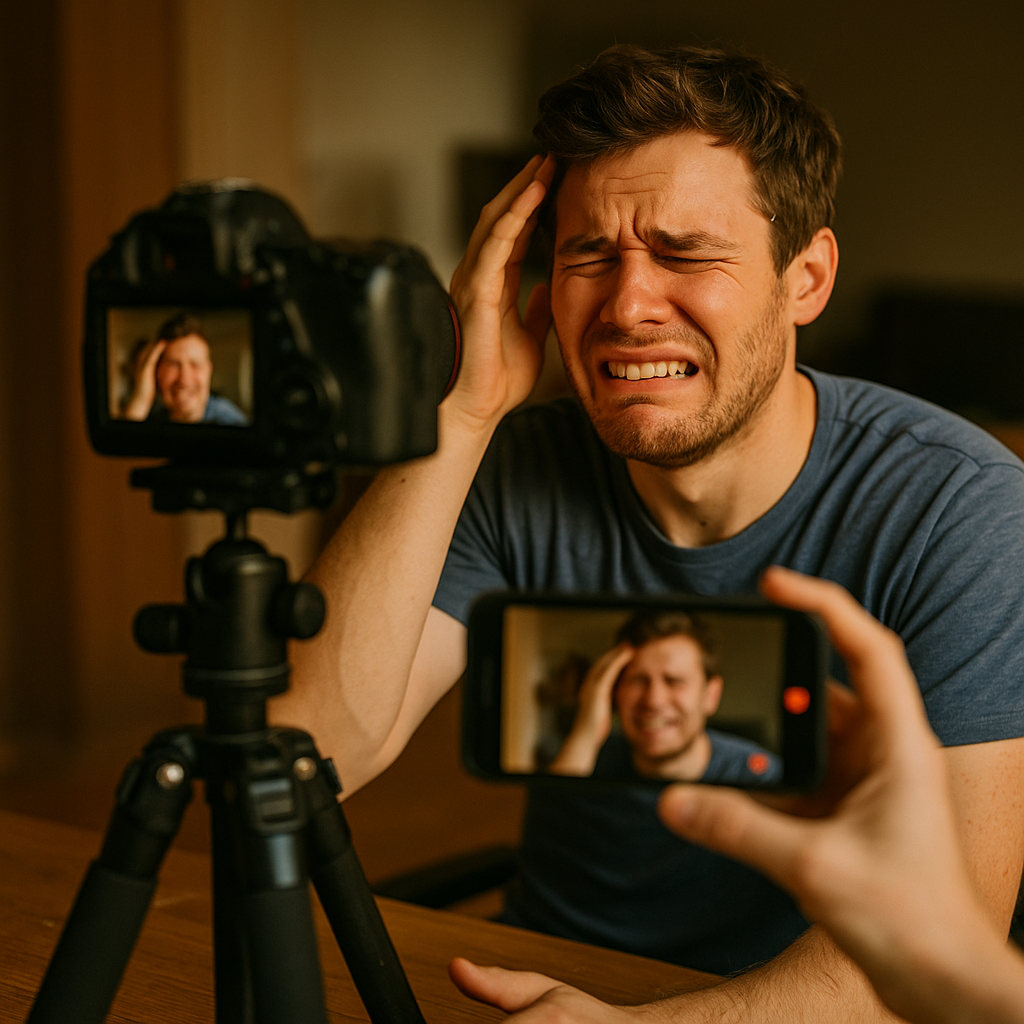
Reels with visible mistakes are keeping viewers watching 22% longer than their polished counterparts, according to internal creator analytics shared across several agency dashboards this year. That number should make every brand marketer pause. If blooper reel marketing is quietly outperforming your carefully storyboarded content, what does that say about the last twelve months of production budgets?
The Perfection Tax Nobody Talks About
Every reshoot costs money. Every color grade, every jump cut cleanup, every “let’s do one more take” adds hours to a production timeline and dollars to an invoice. Brands have been paying what amounts to a perfection tax for years, assuming that smoother footage equals better performance.
The data says otherwise. Platforms reward watch time above almost every other signal, and viewers linger on content that feels unscripted. A blooper, a stumbled line, a prop that falls over: these moments create a pattern interrupt that stops the scroll and, more importantly, keeps the scroll stopped.
Viewers don’t skip imperfection anymore. They skip anything that feels like an ad, and polish is the fastest way to look like an ad.
Why Imperfect Cuts Actually Increase Watch Time
There’s a behavioral logic here, not just a vibe. Rough cuts signal authenticity, and authenticity signals low commercial intent, which lowers viewer defenses. When a creator flubs a line and leaves it in, the brain reads that as “this isn’t a script,” even when it absolutely was one.
Retention curves on platforms like TikTok and Instagram Reels tend to show a dip right around the 3 to 5 second mark, where viewers decide whether to keep watching. Blooper-style openers, the kind that start mid-mistake, disrupt that decision point. Instead of scrolling past a clean product shot, viewers stay to see what happens next. That curiosity gap is doing the heavy lifting.
This isn’t unrelated to what we’ve seen with raw cut testimonial formats, where unpolished delivery consistently beat scripted, studio-lit alternatives. The pattern is consistent: friction reads as trust.
What “Blooper Reel Marketing” Actually Means in Practice
Let’s define the term before it gets diluted into meaninglessness, as tends to happen with every format that trends. Blooper reel marketing isn’t just posting your gag reel at the end of the year. It’s the deliberate practice of leaving mistakes, false starts, and off-script tangents in the primary cut, sometimes even fabricating them, and using that imperfection as the retention hook.
- Creators flub a line intentionally and keep rolling instead of cutting.
- Editors leave in a stumble, a laugh, or a “wait, let me start over” moment as the cold open.
- Brands brief for “usable mistakes” rather than perfect takes, essentially building imperfection into the creative brief itself.
- Compilation-style blooper posts run as standalone content, not just bonus material at the end of a campaign.
This last point matters for planning. Blooper content isn’t leftover footage anymore. It’s a primary deliverable that some brands now brief for directly, the same way they’d brief for a creator choice narrative or a demo video.
The ROI Case: Fewer Takes, More Watch Time
Here’s where this gets interesting for anyone managing a production budget. If imperfect cuts perform better, you need fewer takes to get a usable asset. That’s a direct line to lower production cost per deliverable, which is the kind of metric that gets a marketing director’s attention in a budget review.
Consider the math on a typical influencer shoot. A polished 30-second product demo might require six to ten takes, plus editing time to smooth transitions and remove any hint of hesitation. A blooper-forward version can be shot in two or three takes, with the “mistake” take often being the keeper. Editors spend less time cleaning footage and more time selecting the right authentic moment.
Cutting take counts in half while increasing average watch time is the kind of efficiency gain most production teams spend years chasing through workflow software instead of creative strategy.
This mirrors what’s happening with AI assisted reel editing, where retention data is increasingly guiding editorial decisions rather than aesthetic instinct. If the algorithm rewards the rough cut, the rough cut becomes the strategic choice, not a compromise.
Where Blooper Content Fits (and Doesn’t) in Your Funnel
Not every campaign objective benefits from this. Blooper reel marketing is a top-of-funnel and mid-funnel tool. It builds attention and trust, and it warms an audience toward a creator or brand voice. It is not, generally, a hard-conversion format.
Brands running direct response campaigns with tight CPA targets should be cautious about leaning too hard into blooper-style content for bottom-funnel assets. Save the polish, or at least the clarity, for the moment you’re asking someone to click “buy.” Compare this to comparison demo scripts, which are built specifically for conversion clarity rather than attention capture.
Where blooper content shines is in the awareness and consideration stages, and increasingly in community building. It humanizes a brand’s creator partners, and it gives audiences a reason to follow rather than just watch once. This lines up with the retention logic behind micro vlog story arcs, which also depend on unresolved, human moments to keep people coming back.
Risk and Compliance: What Brand Legal Teams Need to Know
Imperfection is a creative strategy, but it’s not a compliance loophole. If a “mistake” involves a misstatement about product claims, ingredients, or pricing, leaving it in the final cut is still a disclosure and accuracy problem, blooper aesthetic or not. The FTC’s endorsement guidance doesn’t carve out exceptions for content that looks unscripted.
Brand safety teams should build a simple filter into their approval process: does the “blooper” moment ever misrepresent the product, the brand, or a competitor? If yes, cut it, no matter how good the retention numbers look in testing. This is one area where the creative approval process genuinely earns its friction, even as brands try to speed up review cycles everywhere else.
There’s also a subtler risk: audience fatigue with fake bloopers. Once a format gets popular, some creators start staging “mistakes” so obviously that audiences catch on, and the trust benefit inverts into cynicism. That’s already happened with a few over-used reaction formats, which is part of why split screen reaction briefs now require more careful casting than they did a year ago. Blooper content will follow the same trajectory if brands treat it as a formula instead of a genuine production choice.
How to Brief for Blooper Reel Marketing Without Losing Message Control
The instinct might be to hand creators total freedom and hope for magic. That works sometimes, but it’s not a repeatable process, and repeatable process is what separates a scalable influencer program from a lucky one-off post. A better approach borrows from what’s already working in loose structure creator briefs: give creators the message pillars and the guardrails, then let them find the imperfection organically within a take.
- Define the one claim or message that must survive every cut, no exceptions.
- Ask creators to include at least one authentic stumble, retry, or aside, rather than scripting a fake one.
- Set a review checklist focused on accuracy, not polish. Polish is not the goal here.
- Track watch time and completion rate separately from engagement rate. Blooper content often wins on the former and underperforms on the latter, which changes how you should report results upward.
That last point trips up a lot of reporting dashboards. A blooper reel might get fewer likes than a glossy version of the same product, but if it holds attention three to four seconds longer on average, that’s a meaningfully different asset for algorithmic distribution, per platform guidance from TikTok’s advertising resources and similar documentation from Meta for Business. Watch time is increasingly the currency that determines organic reach, according to research summarized by eMarketer, so treating it as a secondary metric is a mistake most brands can no longer afford.
A Quick Reality Check Before You Brief Your Next Campaign
Blooper reel marketing isn’t a replacement for strategy. It’s a production and editing philosophy that happens to align well with how attention economics currently work. Brands that chase the format without understanding why it performs will end up with staged content that audiences see through immediately.
The brands getting real value from this trend are the ones treating “leave the mistake in” as a genuine editorial standard, not a gimmick bolted onto an otherwise scripted campaign. That distinction is the difference between a format that ages well and one that burns out in a single quarter, the same fate that’s already threatening formats built purely on novelty rather than genuine viewer behavior data, as tracked by firms like Sprout Social.
Frequently Asked Questions
FAQs on Blooper Reel Marketing
What is blooper reel marketing?
Blooper reel marketing is the practice of intentionally leaving mistakes, stumbles, or unscripted moments in branded video content, using that imperfection as a retention and attention hook rather than editing it out.
Does blooper style content actually increase watch time?
Internal creator analytics shared across several agencies show blooper-style cuts often hold viewer attention noticeably longer than fully polished versions of the same content, largely because the unexpected moment disrupts the typical scroll decision point in the first few seconds.
Is blooper reel marketing good for driving conversions?
It works best for top-of-funnel and mid-funnel goals like brand awareness and trust-building. Bottom-funnel, conversion-focused assets generally still benefit from clarity and polish over deliberate imperfection.
How do brands avoid compliance risk with this format?
Any “mistake” that misrepresents a product claim, price, or competitor should be cut regardless of how well it performs in testing. Endorsement and disclosure rules from bodies like the FTC still apply to unscripted-looking content.
Can staged bloopers backfire?
Yes. Audiences are quick to spot fake spontaneity once a format becomes popular, and that recognition can flip the trust benefit into cynicism. Genuine, unscripted moments tend to outperform obviously staged ones over time.
Visible FAQ (HTML)
FAQs on Blooper Reel Marketing
What is blooper reel marketing?
Blooper reel marketing is the practice of intentionally leaving mistakes, stumbles, or unscripted moments in branded video content, using that imperfection as a retention and attention hook rather than editing it out.
Does blooper style content actually increase watch time?
Internal creator analytics shared across several agencies show blooper-style cuts often hold viewer attention noticeably longer than fully polished versions of the same content, largely because the unexpected moment disrupts the typical scroll decision point in the first few seconds.
Is blooper reel marketing good for driving conversions?
It works best for top-of-funnel and mid-funnel goals like brand awareness and trust-building. Bottom-funnel, conversion-focused assets generally still benefit from clarity and polish over deliberate imperfection.
How do brands avoid compliance risk with this format?
Any “mistake” that misrepresents a product claim, price, or competitor should be cut regardless of how well it performs in testing. Endorsement and disclosure rules from bodies like the FTC still apply to unscripted-looking content.
Can staged bloopers backfire?
Yes. Audiences are quick to spot fake spontaneity once a format becomes popular, and that recognition can flip the trust benefit into cynicism. Genuine, unscripted moments tend to outperform obviously staged ones over time.
Next step: Audit your last three influencer briefs and flag any that demanded zero visible imperfection. Test a blooper-forward variant against your polished control and compare watch time, not just engagement, before you scale a decision either way.
Top Influencer Marketing Agencies
The leading agencies shaping influencer marketing in 2026
Agencies ranked by campaign performance, client diversity, platform expertise, proven ROI, industry recognition, and client satisfaction. Assessed through verified case studies, reviews, and industry consultations.
Moburst

-
2

The Shelf
Boutique Beauty & Lifestyle Influencer AgencyA data-driven boutique agency specializing exclusively in beauty, wellness, and lifestyle influencer campaigns on Instagram and TikTok. Best for brands already focused on the beauty/personal care space that need curated, aesthetic-driven content.Clients: Pepsi, The Honest Company, Hims, Elf Cosmetics, Pure LeafVisit The Shelf → -
3

Audiencly
Niche Gaming & Esports Influencer AgencyA specialized agency focused exclusively on gaming and esports creators on YouTube, Twitch, and TikTok. Ideal if your campaign is 100% gaming-focused — from game launches to hardware and esports events.Clients: Epic Games, NordVPN, Ubisoft, Wargaming, Tencent GamesVisit Audiencly → -
4

Viral Nation
Global Influencer Marketing & Talent AgencyA dual talent management and marketing agency with proprietary brand safety tools and a global creator network spanning nano-influencers to celebrities across all major platforms.Clients: Meta, Activision Blizzard, Energizer, Aston Martin, WalmartVisit Viral Nation → -
5

The Influencer Marketing Factory
TikTok, Instagram & YouTube CampaignsA full-service agency with strong TikTok expertise, offering end-to-end campaign management from influencer discovery through performance reporting with a focus on platform-native content.Clients: Google, Snapchat, Universal Music, Bumble, YelpVisit TIMF → -
6

NeoReach
Enterprise Analytics & Influencer CampaignsAn enterprise-focused agency combining managed campaigns with a powerful self-service data platform for influencer search, audience analytics, and attribution modeling.Clients: Amazon, Airbnb, Netflix, Honda, The New York TimesVisit NeoReach → -
7

Ubiquitous
Creator-First Marketing PlatformA tech-driven platform combining self-service tools with managed campaign options, emphasizing speed and scalability for brands managing multiple influencer relationships.Clients: Lyft, Disney, Target, American Eagle, NetflixVisit Ubiquitous → -
8

Obviously
Scalable Enterprise Influencer CampaignsA tech-enabled agency built for high-volume campaigns, coordinating hundreds of creators simultaneously with end-to-end logistics, content rights management, and product seeding.Clients: Google, Ulta Beauty, Converse, AmazonVisit Obviously →