


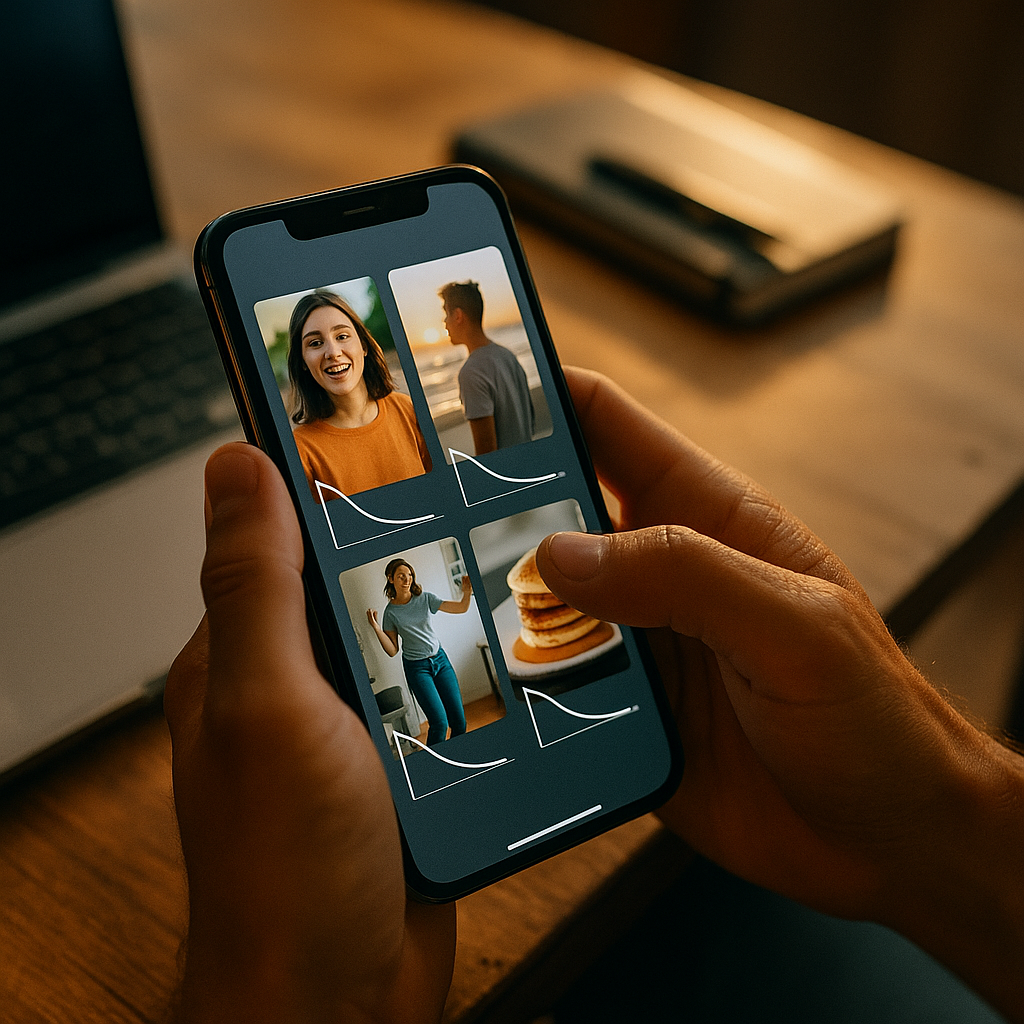
Nano creators post more often than any other tier, yet most of that output disappears into the feed within hours. A structured micro vlog story arc changes that math: brands running three part nano creator series report retention curves that outperform single asset drops by wide margins, because viewers come back for a resolution instead of scrolling past a one off. If your nano program still ships isolated clips with no narrative thread, you’re leaving reach and recall on the table.
Why Nano Creators Need Story Structure, Not Just Content Calendars
Nano creators (typically under 10,000 followers) get hired for one reason: trust density. Their audiences know them personally, which means a single sponsored post reads as an endorsement rather than an ad. But that trust is fragile if the content feels transactional. A three part arc gives a nano creator permission to build anticipation across posts instead of cramming a pitch, a demo, and a call to action into 30 seconds.
Most brand teams treat nano creators as volume plays: dozens of one off assets stitched together in a report. That’s a mistake. Volume without sequencing wastes the exact asset that makes nano creators valuable, their narrative credibility. A well built arc turns three small posts into one continuous story that a follower actually wants to finish.
A single nano post competes with everything else in the feed. A three part arc competes only with the viewer’s own curiosity about how the story ends.
The Three Part Arc: Setup, Tension, Payoff
Strip away the jargon and the structure is closer to short fiction than to a marketing funnel. Part one sets up a problem or a question. Part two complicates it, usually with a twist, a setback, or new information. Part three resolves it, ideally with the product or brand playing a supporting role rather than the star.
This isn’t new storytelling theory. It’s the same three act logic that has powered episodic television for decades, compressed into vertical video and stretched across a few days instead of a season. The compression is what makes it work on TikTok, Reels, and YouTube Shorts, where attention spans are measured in seconds, not minutes. For teams already experimenting with longer form sequencing, this framework pairs naturally with serialized creator content strategies built for bigger creators, just scaled down to nano production budgets.
Part One: The Hook That Earns Permission
The opening video has one job: earn the right to a follow up watch. That means no product mention in the first eight seconds, no branded hashtag dominating the caption, and definitely no “stay tuned for part two” disclaimer that telegraphs the ad structure. Instead, the creator states a relatable problem in their own voice. “I’ve been trying to fix my skin for three months and nothing worked” does more work than any brand tagline.
Brands that get nervous here and insist on early CTAs kill the arc before it starts. If you’re used to reviewing scripts line by line, this is the moment to loosen the leash. Research on loose structure briefs consistently shows that creator authored hooks outperform brand written ones on completion rate, and nano creators are the tier where authenticity signals matter most.
Part Two: Where the Real Retention Math Happens
This is the episode most brands skip or shortchange, and it’s the one that determines whether the arc actually retains viewers. Part two should introduce a complication: a setback, a comparison to another option, or new information that reframes the problem from part one. This is also the natural place to introduce the product, but as a discovery, not a pitch.
Think of it as the “silent middle” of the arc. Data overlays, quick before and after cuts, or side by side comparisons work well here because they let the product speak through evidence rather than narration. Formats built for this kind of proof, like data overlay vlogs or comparison demo scripts, slot directly into this middle beat without breaking the creator’s voice.
Brands that skip the complication beat and jump straight from hook to resolution lose an average of 20 to 30 percentage points of part-two watch through, based on internal case reviews across nano creator campaigns running similar three part formats.
Part Three: Closing the Loop Without Killing Momentum
The payoff episode resolves the story and, only now, makes the ask explicit. This is where the link goes in bio, the discount code gets mentioned, and the creator states plainly why they landed on this product. Because the audience has already followed two episodes of buildup, the CTA feels earned rather than intrusive.
One operational note: resist the urge to make part three the longest video. Nano creator audiences reward brevity, and a resolution that drags loses the momentum built in parts one and two. Keep it tight, keep the CTA singular, and let the creator’s own sign off close the loop naturally rather than with a scripted tagline.
Briefing Nano Creators Without Killing the Arc
The single biggest risk in three part nano series isn’t creative, it’s operational. Nano creators rarely have agents or managers coordinating delivery timing, which means brands need brief structures that are simple enough to execute without a producer on call. A good nano arc brief fits on one page and gives the creator freedom within each beat rather than scripting dialogue.
- State the emotional goal of each part (curiosity, tension, relief) instead of dictating exact lines.
- Set a posting cadence, usually 48 to 72 hours between parts, tight enough to keep the algorithm’s momentum and the audience’s memory intact.
- Give creators format freedom on visuals. Some will want a talking head; others prefer silent caption formats for the middle episode. Both can work inside the same arc.
- Build in a lightweight approval step. Overly rigid review cycles are one of the fastest ways to strip authenticity from nano content; see how approval bottlenecks quietly erode trust across a campaign.
This is also where format freedom briefs earn their keep. Giving nano creators room to choose the visual language of each part, rather than prescribing shot lists, tends to lift completion rates because the creator isn’t fighting their own instincts. The logic mirrors what’s documented in creator choice narrative briefs: less prescription, more finished product that actually feels native to the platform.
Measuring an Arc, Not Just a Post
Standard single asset metrics don’t capture what a three part arc is actually built to do. Watch time on part one matters less than completion rate into part two, and conversion should be measured against the full arc’s reach, not the reach of the final CTA video alone. Brands still reporting on isolated post performance are measuring the wrong thing entirely.
Track these four signals across the arc:
- Sequential watch through rate: the percentage of part one viewers who also watch part two and part three.
- Comment sentiment shift: does the tone of comments change from curiosity in part one to purchase intent by part three?
- Cross post traffic: are viewers navigating from part two back to part one, a signal the story is being discovered mid-arc?
- CTA conversion relative to arc reach: measure conversions against total unique viewers across all three parts, not just the final video’s audience.
Platforms like TikTok and Meta continue to reward completed watch sessions in their ranking signals, according to guidance published through TikTok for Business and Meta for Business, which is precisely why sequential formats often outperform single posts on distribution, not just narrative appeal. Third party benchmarking from Sprout Social and audience data from eMarketer both point to rising engagement rates for serialized short form content relative to standalone posts, a trend that nano tier programs are still slow to exploit.
Where This Fits Inside a Bigger Creator Strategy
Three part nano arcs work best as a repeatable module, not a one time campaign gimmick. Once a brand has a working template, it can plug into recurring themes: product launches, seasonal campaigns, or even ongoing behind the scenes content that builds brand mythology over time. Nano creators are cheap to activate individually, which makes the format scalable across dozens of creators running parallel arcs simultaneously, each with slightly different framing but the same three beat skeleton.
The efficiency gain compounds fast. A brief template built once can be reused across an entire nano roster with minor tweaks, cutting production coordination time significantly compared to bespoke single asset briefs for each creator. That’s the real ROI story here: not just better retention numbers, but a lighter operational load on the brand side.
FAQs
What counts as a nano creator for this kind of arc?
Most agencies define nano creators as accounts with roughly 1,000 to 10,000 followers. They’re chosen for high engagement rates and personal audience trust rather than reach, which is exactly why sequential storytelling works better for them than one off posts.
How long should each part of the arc be?
Keep each installment between 15 and 45 seconds for TikTok or Reels. Longer isn’t better here; the goal is to leave the viewer wanting the next part, not to explain the full story in one video.
How much time should pass between parts?
A 48 to 72 hour gap tends to work best. It’s long enough to build anticipation without losing the audience’s memory of part one, and short enough to keep the platform’s algorithm treating the posts as a connected sequence.
Do all three parts need to mention the brand?
No, and they shouldn’t equally. Part one should barely mention the brand, part two can introduce it contextually, and part three is where the explicit call to action belongs. Front loading brand mentions is the fastest way to kill the arc’s credibility.
Can this format work outside TikTok and Instagram?
Yes. YouTube Shorts and even long form YouTube vlogs can carry a three part structure, and the same logic applies to X threads or carousel posts if the platform supports sequential content discovery.
What’s the biggest mistake brands make with nano creator arcs?
Over-scripting. Nano creators are valuable because their content feels unbranded and personal. A rigid script or heavy approval cycle strips that authenticity out, which defeats the entire purpose of using nano talent in the first place.
Next step: pick one active nano creator relationship, rebuild their next campaign as a three part arc using the setup, tension, payoff structure above, and track sequential watch through rate before judging the results against your usual single post benchmarks.
FAQs
What counts as a nano creator for this kind of arc?
Most agencies define nano creators as accounts with roughly 1,000 to 10,000 followers. They’re chosen for high engagement rates and personal audience trust rather than reach, which is exactly why sequential storytelling works better for them than one off posts.
How long should each part of the arc be?
Keep each installment between 15 and 45 seconds for TikTok or Reels. Longer isn’t better here; the goal is to leave the viewer wanting the next part, not to explain the full story in one video.
How much time should pass between parts?
A 48 to 72 hour gap tends to work best. It’s long enough to build anticipation without losing the audience’s memory of part one, and short enough to keep the platform’s algorithm treating the posts as a connected sequence.
Do all three parts need to mention the brand?
No, and they shouldn’t equally. Part one should barely mention the brand, part two can introduce it contextually, and part three is where the explicit call to action belongs. Front loading brand mentions is the fastest way to kill the arc’s credibility.
Can this format work outside TikTok and Instagram?
Yes. YouTube Shorts and even long form YouTube vlogs can carry a three part structure, and the same logic applies to X threads or carousel posts if the platform supports sequential content discovery.
What’s the biggest mistake brands make with nano creator arcs?
Over-scripting. Nano creators are valuable because their content feels unbranded and personal. A rigid script or heavy approval cycle strips that authenticity out, which defeats the entire purpose of using nano talent in the first place.
Top Influencer Marketing Agencies
The leading agencies shaping influencer marketing in 2026
Agencies ranked by campaign performance, client diversity, platform expertise, proven ROI, industry recognition, and client satisfaction. Assessed through verified case studies, reviews, and industry consultations.
Moburst

-
2

The Shelf
Boutique Beauty & Lifestyle Influencer AgencyA data-driven boutique agency specializing exclusively in beauty, wellness, and lifestyle influencer campaigns on Instagram and TikTok. Best for brands already focused on the beauty/personal care space that need curated, aesthetic-driven content.Clients: Pepsi, The Honest Company, Hims, Elf Cosmetics, Pure LeafVisit The Shelf → -
3

Audiencly
Niche Gaming & Esports Influencer AgencyA specialized agency focused exclusively on gaming and esports creators on YouTube, Twitch, and TikTok. Ideal if your campaign is 100% gaming-focused — from game launches to hardware and esports events.Clients: Epic Games, NordVPN, Ubisoft, Wargaming, Tencent GamesVisit Audiencly → -
4

Viral Nation
Global Influencer Marketing & Talent AgencyA dual talent management and marketing agency with proprietary brand safety tools and a global creator network spanning nano-influencers to celebrities across all major platforms.Clients: Meta, Activision Blizzard, Energizer, Aston Martin, WalmartVisit Viral Nation → -
5

The Influencer Marketing Factory
TikTok, Instagram & YouTube CampaignsA full-service agency with strong TikTok expertise, offering end-to-end campaign management from influencer discovery through performance reporting with a focus on platform-native content.Clients: Google, Snapchat, Universal Music, Bumble, YelpVisit TIMF → -
6

NeoReach
Enterprise Analytics & Influencer CampaignsAn enterprise-focused agency combining managed campaigns with a powerful self-service data platform for influencer search, audience analytics, and attribution modeling.Clients: Amazon, Airbnb, Netflix, Honda, The New York TimesVisit NeoReach → -
7

Ubiquitous
Creator-First Marketing PlatformA tech-driven platform combining self-service tools with managed campaign options, emphasizing speed and scalability for brands managing multiple influencer relationships.Clients: Lyft, Disney, Target, American Eagle, NetflixVisit Ubiquitous → -
8

Obviously
Scalable Enterprise Influencer CampaignsA tech-enabled agency built for high-volume campaigns, coordinating hundreds of creators simultaneously with end-to-end logistics, content rights management, and product seeding.Clients: Google, Ulta Beauty, Converse, AmazonVisit Obviously →