


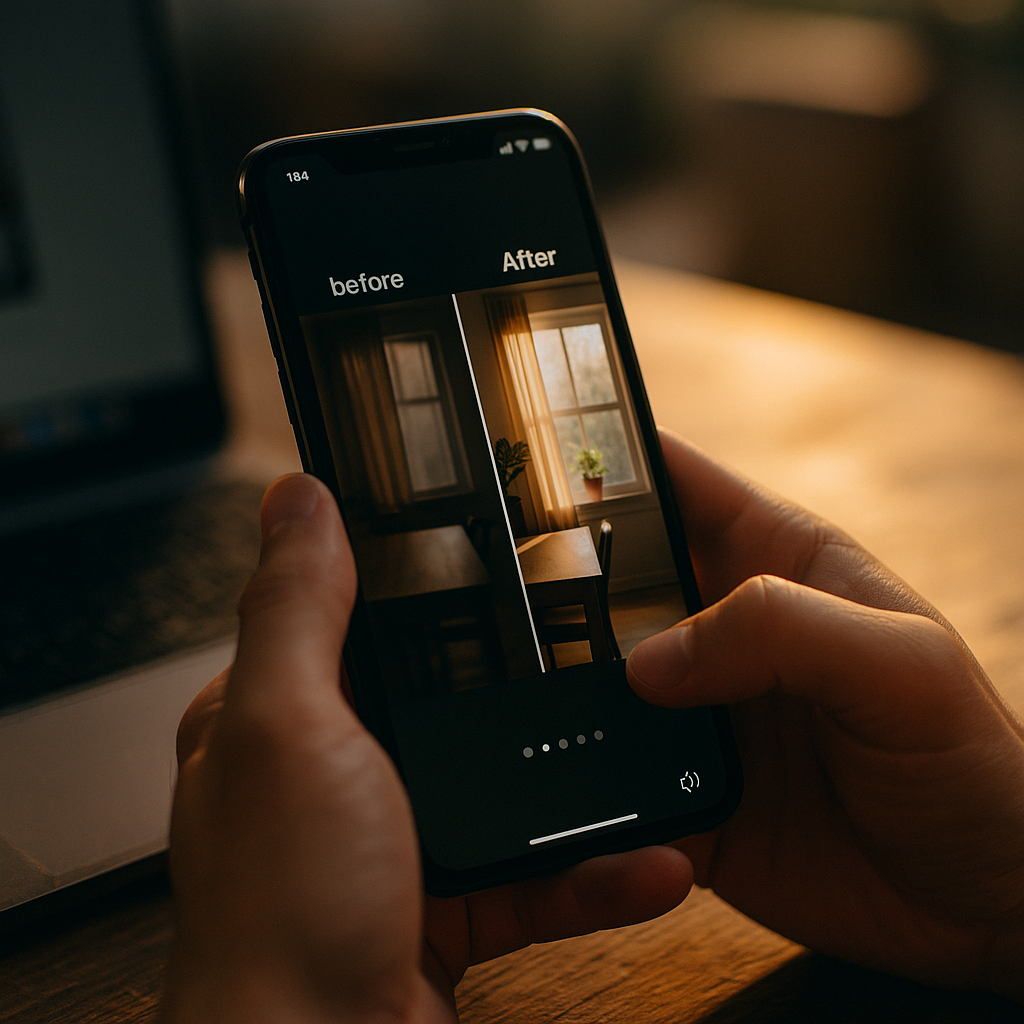
Beauty brands running before and after swipe reels are seeing conversion lifts that flat product shots simply can’t touch. One skincare DTC brand reported a 34% higher add-to-cart rate on swipe-format comparison reels versus static carousel posts, according to internal benchmarking shared at a recent industry panel. Why does a simple swipe gesture move buyers closer to checkout? Because it hands them proof, not promises, and lets them control the reveal.
The Swipe Is Doing More Than You Think
Most marketers treat the swipe as a UI convenience. It’s not. It’s a psychological trigger. When a viewer swipes from “before” to “after,” they’re performing the action themselves rather than watching it happen to them. That small act of agency creates a sense of discovery, and discovery reads as credibility. Compare that to a passive transformation video where the reveal is baked into the edit. The viewer is a spectator, not a participant.
This is the same mechanic that made hybrid UGC templates outperform polished brand content: authenticity signals beat production value when the buyer is trying to assess real-world results, not aspirational fantasy.
Swipe reels convert because they replace a claim with an interaction. The audience isn’t told the product works, they prove it to themselves in two seconds.
What the Data Actually Shows
Beauty and personal care remain among the highest-spending influencer marketing verticals, and comparison content is consistently cited as the top-performing creative type for the category, per eMarketer’s creator commerce research. Platforms have noticed too. Instagram’s algorithm favors interaction depth, and a swipe is a stronger engagement signal than a like or even a comment, because it requires sustained attention across two frames minimum.
Sprout Social’s engagement benchmarking has repeatedly flagged carousel and swipe formats as retention drivers on Instagram specifically because they reward slower, more deliberate consumption. Skincare and haircare advertisers have quietly shifted budget toward this format over the past two years, not because it’s trendy, but because it’s measurable. Swipe completion rate is a clean proxy for purchase intent that most brands didn’t have access to five years ago.
Anatomy of a Reel That Actually Converts
Not every before and after post works. The ones that convert share a specific structure, and brands that skip steps usually see the format flop and blame the creator instead of the brief.
- Frame 1 sets a believable baseline. No dramatic lighting tricks, no filters. If the “before” looks staged, the whole comparison collapses.
- The swipe transition is the hook, not the payoff. The best-performing reels use the drag itself to build anticipation, sometimes slowing the reveal with a partial swipe before the full frame loads.
- Timestamp or duration callouts matter. “Day 14” or “After one use” gives the viewer a frame of reference. Vague claims like “after using this” read as unverifiable.
- The caption carries the proof burden, not the video. Ingredient callouts, usage frequency, and skin type context all belong in text, freeing the visual to do the emotional work.
This structural discipline mirrors what’s worked in comparison demo scripts, where the brief itself, not the creator’s charisma, is the real conversion lever.
The Compliance Question Nobody Wants to Answer First
Here’s where most brand teams get nervous, and rightly so. Before and after content sits in one of the most scrutinized categories for advertising claims, especially in skincare, weight management, and haircare. The FTC has been explicit that testimonials implying typical results must reflect what consumers can generally expect, not best-case outliers.
Before you greenlight a swipe reel campaign, your legal and compliance teams should sign off on a few non-negotiables:
- Disclose material connections clearly, using platform-native disclosure tools, not buried hashtags.
- Avoid implying medical or dermatological claims unless substantiated by clinical data.
- Require creators to disclose product usage duration and any supporting routine changes (new diet, different lighting, professional treatments) that could skew the “after” result.
- Keep raw, unedited footage on file in case a regulator or platform trust and safety team requests verification.
Review the FTC’s endorsement guidance before scaling this format across multiple creators. One flagged post can trigger a review of your entire influencer roster’s disclosure practices, and that’s a compliance headache no CMO wants on their desk.
The brands winning with this format aren’t the ones with the most dramatic transformations. They’re the ones whose claims survive a legal audit.
Where This Format Fits in a Broader Content Mix
Swipe reels shouldn’t be your only proof point. They work best as the mid-funnel bridge between awareness content and the final purchase decision. Someone who’s already seen a text overlay testimonial reel or a silent product demo earlier in their journey is primed to act on a before and after comparison because they’re already familiar with the product’s core promise. The swipe reel closes the loop by making that promise tangible.
Retention data also matters here. If your swipe reels are getting high impression counts but low completion, the problem usually isn’t the transformation itself, it’s pacing. Teams using the same retention-analysis approach behind loop optimized reels have found that shortening the “before” segment by even two seconds meaningfully increases swipe-through rate, because viewers are impatient to see the payoff.
Common Mistakes That Kill Conversion
A few patterns show up repeatedly when swipe reel campaigns underperform, and none of them are hard to fix once you know to look for them.
- Over-editing the “after” frame. Heavy filters or ring-light glow make the result look fake, and skeptical beauty audiences notice immediately.
- Skipping the brief entirely. Letting creators freestyle the comparison without format guidance produces inconsistent proof quality across a campaign.
- Ignoring platform-specific swipe mechanics. A format built for Instagram’s carousel swipe won’t translate directly to TikTok, where the interaction model is different. Check TikTok’s ad specs before repurposing creative across platforms.
- No data overlay context. Numbers build trust. Brands that pair the visual swipe with a subtle stat overlay, like percentage improvement or dermatologist-tested language, see stronger completion, similar to what’s driving results in data overlay vlog formats.
How to Brief Creators for This Format
Your brief should specify baseline lighting conditions, minimum usage duration before filming the “after,” and required disclosure language, but leave the actual product experience and framing language to the creator. Over-scripting the emotional reaction reads as fake fast. Beauty audiences have gotten good at spotting a paid script from a genuine reaction, and swipe reels amplify that scrutiny because the format itself signals “proof,” raising the credibility bar.
Track swipe completion rate, save rate, and click-through to product page as your primary KPIs, not just views. Views tell you reach. Completion tells you whether the comparison actually landed. According to Statista’s social commerce data, save rate correlates more strongly with eventual purchase behavior in beauty categories than any other single engagement metric, largely because saves signal intent to reference the content again before buying.
Next Step
Run a small test batch with three to five creators before scaling this format across your roster, and require every “after” claim to be substantiated with usage duration and disclosure language your legal team has pre-approved. Get the compliance framework right first. The conversion lift only matters if the campaign survives scrutiny.
Frequently Asked Questions
What makes before and after swipe reels convert better than static comparison images?
The swipe gesture requires active participation from the viewer, which creates a stronger sense of discovery and perceived authenticity than a passive image or pre-edited video reveal.
Are before and after claims in beauty content regulated?
Yes. The FTC requires that testimonials reflect results consumers can typically expect and mandates clear disclosure of any material connection between the brand and the creator.
Which platforms support the swipe format best?
Instagram’s carousel and Reels swipe mechanics are the most established, though TikTok and Pinterest have adapted similar interactive comparison formats with different technical specs.
What metrics should brands track for swipe reel campaigns?
Swipe completion rate, save rate, and click-through to product page are stronger conversion indicators than raw view counts or likes.
How long should the “before” segment be in a swipe reel?
Shorter is generally better. Testing shows that trimming the “before” segment to build urgency toward the reveal increases swipe-through and completion rates.
Do brands need clinical proof to run before and after content?
Not always, but any claim implying measurable or typical results should be substantiated, and brands should keep raw footage and usage documentation on file in case of regulatory review.
Top Influencer Marketing Agencies
The leading agencies shaping influencer marketing in 2026
Agencies ranked by campaign performance, client diversity, platform expertise, proven ROI, industry recognition, and client satisfaction. Assessed through verified case studies, reviews, and industry consultations.
Moburst

-
2

The Shelf
Boutique Beauty & Lifestyle Influencer AgencyA data-driven boutique agency specializing exclusively in beauty, wellness, and lifestyle influencer campaigns on Instagram and TikTok. Best for brands already focused on the beauty/personal care space that need curated, aesthetic-driven content.Clients: Pepsi, The Honest Company, Hims, Elf Cosmetics, Pure LeafVisit The Shelf → -
3

Audiencly
Niche Gaming & Esports Influencer AgencyA specialized agency focused exclusively on gaming and esports creators on YouTube, Twitch, and TikTok. Ideal if your campaign is 100% gaming-focused — from game launches to hardware and esports events.Clients: Epic Games, NordVPN, Ubisoft, Wargaming, Tencent GamesVisit Audiencly → -
4

Viral Nation
Global Influencer Marketing & Talent AgencyA dual talent management and marketing agency with proprietary brand safety tools and a global creator network spanning nano-influencers to celebrities across all major platforms.Clients: Meta, Activision Blizzard, Energizer, Aston Martin, WalmartVisit Viral Nation → -
5

The Influencer Marketing Factory
TikTok, Instagram & YouTube CampaignsA full-service agency with strong TikTok expertise, offering end-to-end campaign management from influencer discovery through performance reporting with a focus on platform-native content.Clients: Google, Snapchat, Universal Music, Bumble, YelpVisit TIMF → -
6

NeoReach
Enterprise Analytics & Influencer CampaignsAn enterprise-focused agency combining managed campaigns with a powerful self-service data platform for influencer search, audience analytics, and attribution modeling.Clients: Amazon, Airbnb, Netflix, Honda, The New York TimesVisit NeoReach → -
7

Ubiquitous
Creator-First Marketing PlatformA tech-driven platform combining self-service tools with managed campaign options, emphasizing speed and scalability for brands managing multiple influencer relationships.Clients: Lyft, Disney, Target, American Eagle, NetflixVisit Ubiquitous → -
8

Obviously
Scalable Enterprise Influencer CampaignsA tech-enabled agency built for high-volume campaigns, coordinating hundreds of creators simultaneously with end-to-end logistics, content rights management, and product seeding.Clients: Google, Ulta Beauty, Converse, AmazonVisit Obviously →