


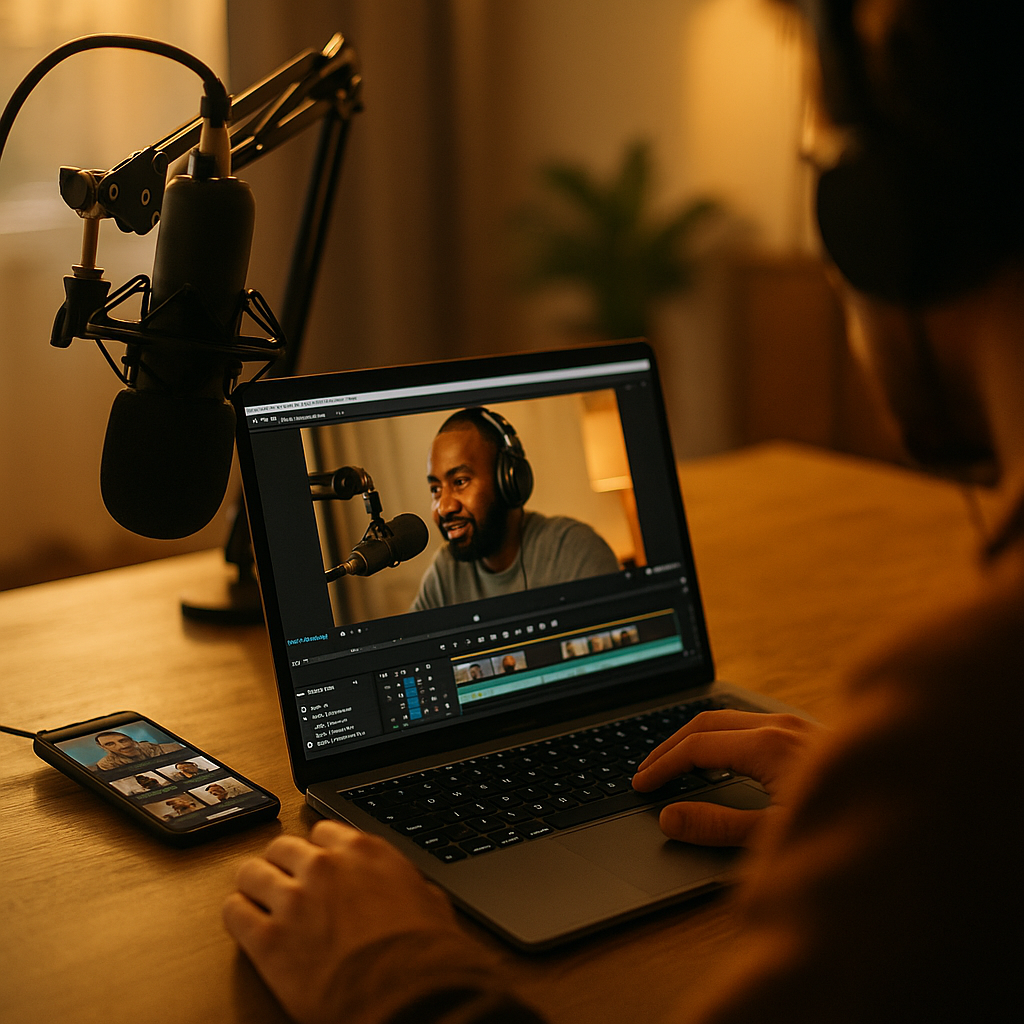
One 45 minute podcast episode can yield 20+ pieces of nano creator content, yet most brands still treat the recording as a single-use asset. Podcast clip repurposing is quietly becoming the highest-ROI line item in creator content calendars, and the brands sitting on unedited interview footage are leaving reach on the table. If your podcast strategy stops at “publish and promote,” you’re running the least efficient version of this playbook.
Why the Long Form to Short Form Pipeline Actually Works
Podcast interviews are unscripted, opinionated, and full of tangents. That’s exactly why they cut well. A guest who riffs for three minutes on a hot take almost always drops a 15 second soundbite that plays like native creator content once you strip out the studio polish. Nano creators, typically those with under 10,000 followers, thrive on this raw texture. Their audiences trust them because they don’t look like brand assets, and a clipped podcast moment reformatted with a creator’s own voiceover or reaction reads as authentic commentary rather than an ad.
There’s also a cost argument that’s hard to ignore. Commissioning fresh content from a roster of nano creators for every single talking point is expensive and slow. Repurposing a single podcast taping into a week’s worth of shorts compresses production cost per asset dramatically, because the expensive part (the interview, the guest booking, the studio time) already happened.
A single 60 minute podcast recording can realistically produce 15 to 25 usable short clips, meaning the true cost per piece of content often drops below what most brands pay for a single standalone UGC video.
Where the Clips Actually Come From
Not every minute of a podcast is repurposable. Editors and brand teams need a system for finding the gold, not just chopping the transcript into equal segments.
- The contrarian take: Moments where a guest disagrees with conventional wisdom. These generate comments and duets fast.
- The numbers drop: Any time a guest cites a specific stat or result, it becomes a natural hook for a data-driven caption or overlay.
- The emotional beat: Laughter, a personal story, a moment of vulnerability. Nano creators can react to these more convincingly than to dry product talk.
- The tactical how-to: A step-by-step answer that a creator can restitch into their own tutorial format.
Tag these moments during the recording itself. Most podcast production teams now have someone marking timestamps live, rather than waiting for a full transcript review after the fact. That single habit shift can cut clip-sourcing time by half.
Turning a Clip Into a Nano Creator Brief
Here’s where most brands get it wrong. They hand a nano creator the raw podcast clip and ask them to “post it.” That’s not repurposing, that’s just redistribution, and it rarely performs because it still looks like brand media.
The better model treats the clip as raw material, not the finished product. Give the creator the timestamped moment plus a loose creative direction, then let them build around it: a reaction, a duet, a voiceover explaining why the clip resonated. This mirrors the logic behind creator choice narrative briefs, where format freedom consistently beats prescriptive shot lists for completion rate. Nano creators know their audience’s scroll behavior better than any brand strategist does. Constrain the message, not the execution.
If the clip includes strong audio (a laugh, a punchy line, a memorable phrase), consider releasing it as a standalone sound asset too. That approach lines up with what we’ve covered in original sound briefs, where a reusable audio hook does more organic distribution work than the original video ever could.
The Editing Workflow, Simplified
Most mid-market brands are now running podcast repurposing through a hybrid workflow: AI-assisted rough cuts followed by a human pass for tone and brand safety. Tools that auto-detect high-energy moments, generate captions, and reframe horizontal footage into vertical crops have cut turnaround time from days to hours. That said, AI still misses sarcasm and context more often than teams expect, so a human editor should always review before anything ships to a creator or goes live. The same retention logic that governs AI assisted reel editing applies directly here: automated tools are excellent at surfacing candidates, but a person still needs to make the final call on what actually earns a completed view.
A practical workflow looks like this:
- Record the full interview with a dedicated timestamp log for standout moments.
- Run the raw file through an AI clipping tool to generate 15 to 30 candidate cuts.
- Have a human editor shortlist the 8 to 10 clips with the strongest hook in the first 3 seconds.
- Package each clip with a one-line creative direction, not a script, for the nano creator.
- Track performance by clip theme, not just by creator, so you learn which podcast moments travel best.
Approval Speed Is the Real Bottleneck
Even with a fast editing pipeline, plenty of brands lose the advantage in legal and brand review. A clip that’s relevant today is stale in 72 hours if it’s still sitting in an approval queue. This is the same failure mode described in creative approval bottlenecks: long review cycles quietly kill the authenticity that made the format work in the first place. Build a pre-approved list of topics, claims, and phrases that guests are allowed to riff on during the recording, and most clips can skip a full legal review entirely. Save deep review for clips involving specific product claims, pricing, or comparative statements, where regulatory exposure is real. The FTC’s endorsement guidance still applies to nano creator posts even when the underlying footage originated from your own podcast, so disclosure requirements don’t disappear just because the source material is owned media.
What Gets Measured, Gets Funded
Podcast clip programs die on the vine when marketing teams can’t tie them to a metric leadership cares about. Track completion rate and saves per clip theme, not just aggregate views. According to eMarketer, short-form video continues to outpace other formats in engagement growth across platforms, and nano creator content specifically benefits from higher perceived trust relative to macro influencer posts, per data cited by Sprout Social. Pair that with your own first-party numbers: cost per completed view, cost per clip, and creator repeat rate are the three metrics that actually justify budget renewal.
Brands running structured podcast repurposing programs report that nano creator clips cost 60 to 80 percent less per completed view than newly commissioned UGC, simply because the source interview is a sunk cost.
Text-forward audiences deserve attention here too. Some of the strongest-performing clips aren’t spoken commentary at all, they’re captioned quote cards pulled straight from the transcript. That approach borrows heavily from the logic in silent caption scripts, where muted-feed viewers convert just as well when the message is legible without sound. If your podcast has a strong guest quote, don’t assume it needs a talking head. A static caption card, seeded to a handful of nano accounts, sometimes outperforms the video cut entirely.
Common Mistakes That Waste the Source Material
A few patterns show up again and again in underperforming programs:
- Cutting for length instead of hook strength. A 12 second clip with a weak opener will always lose to a 25 second clip that grabs attention in the first beat.
- Treating every guest quote as equally shareable. Rank moments by emotional or informational punch before handing anything to creators.
- Skipping platform-specific recuts. A clip built for TikTok’s pacing rarely works unmodified on LinkedIn or YouTube Shorts. Check current specs on Meta for Business and TikTok for Business before assuming one export fits all.
- Never revisiting the archive. Old episodes often outperform new ones once the topic becomes relevant again. Build a tagging system so past interviews stay searchable.
That last point matters more than most teams admit. A guest comment from six episodes ago can suddenly become the most relevant clip in your library the moment a news cycle or platform trend catches up to it. Treat your podcast archive like a content bank, not a finished product.
Where This Fits Into a Broader Creator Strategy
Podcast repurposing rarely works as a standalone tactic. It performs best layered into an existing nano creator seeding program, feeding the same distribution channels used for other short-form formats. If your team already runs micro vlog series or reaction content, podcast clips slot in as another raw material source rather than a separate workflow. The goal isn’t a dedicated “podcast content team,” it’s a shared clip library that any creator format can draw from, whether that’s a micro vlog story arc or a straightforward reaction cut.
For teams building this out from scratch, benchmark your production costs against industry averages using resources like HubSpot’s marketing research before pitching budget internally. Numbers travel further with finance teams than enthusiasm does.
Next Step
Pull your last three podcast recordings, timestamp the five strongest moments in each, and brief two nano creators per clip this week. If the cost per completed view beats your standard UGC benchmark, you’ve found your next quarter’s content engine, not just a one-off experiment.
FAQs
How many usable clips can one podcast episode really produce?
A well-recorded 45 to 60 minute episode typically yields 15 to 25 usable short clips, though quality matters more than volume. A handful of strong hooks will outperform a large batch of mediocre cuts.
Do nano creators need to disclose that a clip came from a brand podcast?
Yes, if there’s any material connection, such as payment or free product, standard disclosure rules apply regardless of whether the footage originated from owned media. Review current FTC endorsement guidance before launching a program.
Should clips be edited before or after they reach the nano creator?
Do a rough edit first to isolate the strongest 15 to 30 second window, then hand that raw segment to the creator for their own voiceover, reaction, or caption treatment. Fully finished clips tend to look too polished for nano audiences.
What’s the biggest reason podcast repurposing programs fail?
Slow internal approval cycles. By the time a clip clears legal and brand review, the moment has often lost relevance, especially if it’s tied to a trending topic or news cycle.
Is podcast clip repurposing cheaper than commissioning original UGC?
Generally yes, since the interview cost is already sunk. Brands often see a 60 to 80 percent reduction in cost per completed view compared to newly commissioned UGC content.
Top Influencer Marketing Agencies
The leading agencies shaping influencer marketing in 2026
Agencies ranked by campaign performance, client diversity, platform expertise, proven ROI, industry recognition, and client satisfaction. Assessed through verified case studies, reviews, and industry consultations.
Moburst

-
2

The Shelf
Boutique Beauty & Lifestyle Influencer AgencyA data-driven boutique agency specializing exclusively in beauty, wellness, and lifestyle influencer campaigns on Instagram and TikTok. Best for brands already focused on the beauty/personal care space that need curated, aesthetic-driven content.Clients: Pepsi, The Honest Company, Hims, Elf Cosmetics, Pure LeafVisit The Shelf → -
3

Audiencly
Niche Gaming & Esports Influencer AgencyA specialized agency focused exclusively on gaming and esports creators on YouTube, Twitch, and TikTok. Ideal if your campaign is 100% gaming-focused — from game launches to hardware and esports events.Clients: Epic Games, NordVPN, Ubisoft, Wargaming, Tencent GamesVisit Audiencly → -
4

Viral Nation
Global Influencer Marketing & Talent AgencyA dual talent management and marketing agency with proprietary brand safety tools and a global creator network spanning nano-influencers to celebrities across all major platforms.Clients: Meta, Activision Blizzard, Energizer, Aston Martin, WalmartVisit Viral Nation → -
5

The Influencer Marketing Factory
TikTok, Instagram & YouTube CampaignsA full-service agency with strong TikTok expertise, offering end-to-end campaign management from influencer discovery through performance reporting with a focus on platform-native content.Clients: Google, Snapchat, Universal Music, Bumble, YelpVisit TIMF → -
6

NeoReach
Enterprise Analytics & Influencer CampaignsAn enterprise-focused agency combining managed campaigns with a powerful self-service data platform for influencer search, audience analytics, and attribution modeling.Clients: Amazon, Airbnb, Netflix, Honda, The New York TimesVisit NeoReach → -
7

Ubiquitous
Creator-First Marketing PlatformA tech-driven platform combining self-service tools with managed campaign options, emphasizing speed and scalability for brands managing multiple influencer relationships.Clients: Lyft, Disney, Target, American Eagle, NetflixVisit Ubiquitous → -
8

Obviously
Scalable Enterprise Influencer CampaignsA tech-enabled agency built for high-volume campaigns, coordinating hundreds of creators simultaneously with end-to-end logistics, content rights management, and product seeding.Clients: Google, Ulta Beauty, Converse, AmazonVisit Obviously →