


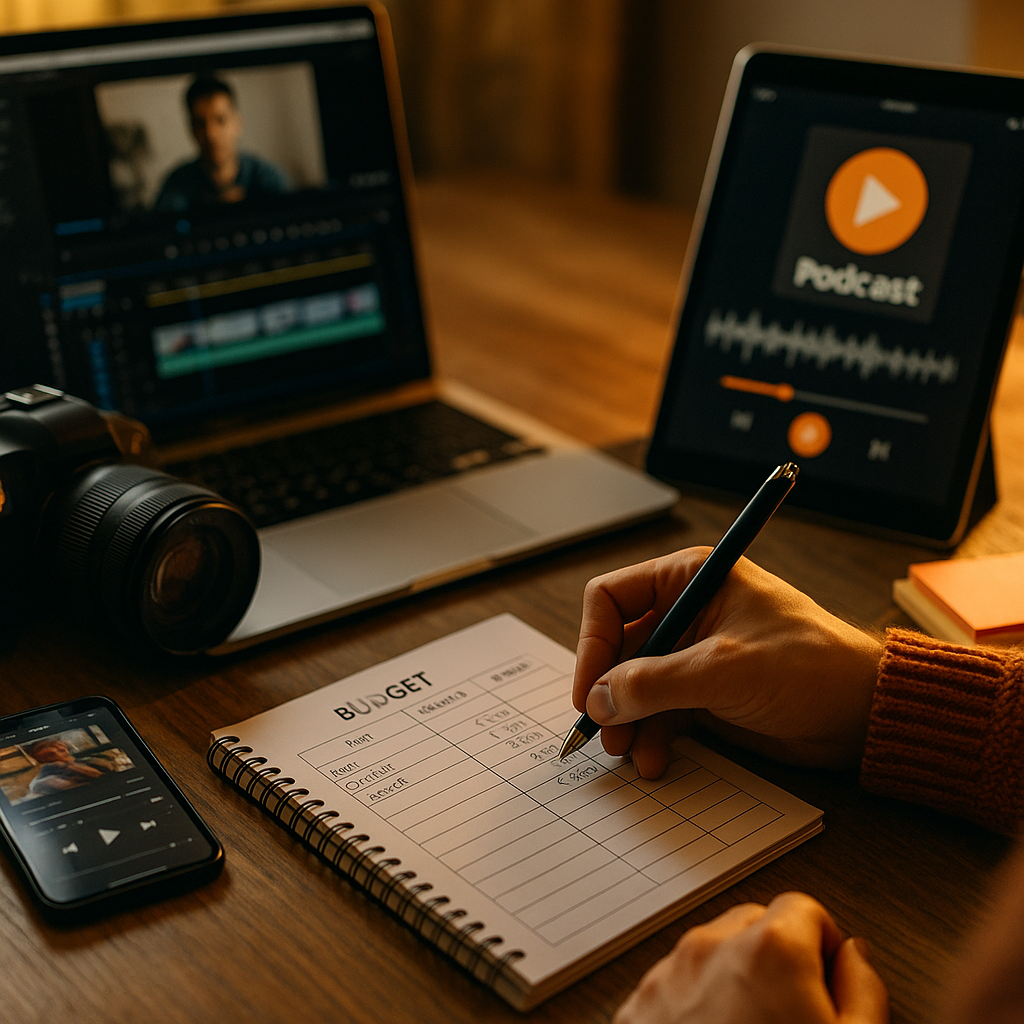
Brands running six content formats and one message get more reach than brands running one format and six messages. That’s the uncomfortable truth behind content format diversification heading into this year: the winners aren’t picking a lane, they’re building a distribution engine. If your influencer program still treats TikTok clips and YouTube long-form as separate budget lines run by separate teams, you’re already behind.
The pressure is coming from every direction. Platforms are rewarding native formats over repurposed ones. Audiences are splitting attention across shortform scrolls, hour-long podcasts, live shopping events, and paid skill-building content from the same creators they follow for entertainment. Marketers who treat these as competing channels rather than complementary layers are leaving reach, and revenue, on the table.
Why One Format Isn’t a Strategy Anymore
Short-form got you the algorithm’s attention. It doesn’t get you a relationship. That’s the gap brands are waking up to. TikTok and Reels remain the top-of-funnel discovery engines, but conversion, retention, and lifetime value increasingly happen downstream, in longer formats, live formats, and now, paid formats.
Consider the funnel shift: a viewer sees a 15-second product demo, clicks through to a creator’s YouTube channel for a 20-minute deep dive, joins a livestream Q&A the following week, and eventually buys a $79 course the creator sells on how to use the product category properly. That’s not four separate audiences. That’s one audience moving through four format layers, each doing a different job.
Brands that only fund the first layer are subsidizing someone else’s funnel. The creator captures the high-intent, high-LTV audience further down, and the brand gets credited with a view.
Format diversification isn’t about being everywhere. It’s about matching content depth to buyer intent at each funnel stage, then paying for the stage that actually drives your KPI.
Short-Form: Still the Front Door, Not the Whole House
Short-form isn’t going away, and nobody serious is arguing it should. eMarketer’s creator economy data consistently shows short vertical video driving the majority of impression volume across TikTok, Reels, and Shorts. The job of short-form is discovery and hook-testing, full stop.
Where brands go wrong is treating short-form performance as the only signal that matters. A clip that gets 2 million views but zero downstream engagement told you something about the hook, not about the product-market fit. Use short-form to test messaging cheaply, then feed winning hooks into longer formats. Meta’s own engagement benchmarks increasingly weight watch-through over raw views, which means the re-cut discipline matters more than ever. If you haven’t looked at how engaged view thresholds affect hook structure, that’s the first place to tighten your briefs.
Practical move: brief creators for modular short-form from day one. A single shoot should yield a 15-second hook, a 60-second explainer, and raw footage that can be recut for a longer piece later. The multi-format creator brief approach exists precisely because reshooting for every channel is the single biggest waste in most influencer budgets.
Long-Form Is Where Trust Compounds
Fifteen seconds can make someone curious. It cannot make someone trust you. That takes time, context, and enough runway for a creator to actually demonstrate expertise or product performance without cutting corners.
Long-form YouTube, podcast appearances, and even extended Instagram carousels serve a specific function: they let skeptical buyers do their due diligence inside your funnel instead of leaving to do it on Reddit. This matters enormously in categories with high consideration cycles, supplements, financial products, home goods, B2B software. A viewer who watches an 18-minute honest breakdown is a fundamentally different lead than one who watched a 12-second ad.
Formats built around earned skepticism perform disproportionately well in long-form. The skeptic-to-convert arc works precisely because it needs room to breathe, a creator who starts doubtful and gets won over needs more than a few seconds to be believable. Same logic applies to no-script comparison formats, where the absence of a hard sell is the entire point, and that only lands with enough runway to show, not tell.
Budget-wise, long-form deserves a bigger line item than most brands give it. HubSpot’s ongoing content marketing research has repeatedly shown long-form assets generating disproportionate organic search value relative to production cost, a benefit short-form simply doesn’t replicate. If your team is still allocating 80% of influencer spend to sub-60-second content, you’re optimizing for a metric (views) that doesn’t correlate with the outcome you actually want (revenue).
Livestreams: The Underused Middle Layer
Livestreams get treated as an afterthought in most brand strategies, usually bolted onto a launch as a “bonus” activation. That’s a mistake. Live formats do something no pre-recorded content can: they let the audience ask the question that’s actually stopping them from buying, in real time, and get an answer from a person they already trust.
Live shopping in particular has matured well past the novelty phase. TikTok’s TikTok Shop ecosystem and Instagram Live shopping tools now integrate checkout directly into the stream, collapsing the consideration-to-purchase gap to minutes. But the real underused opportunity is what happens after the stream ends.
A single 90-minute livestream is a content goldmine sitting idle if you’re not chopping it up. Brands running AI-assisted repurposing on livestream footage are turning one session into a week of shorts, quote graphics, and highlight reels, without a second shoot day. That’s not a nice-to-have anymore. It’s the difference between a livestream costing you money once and paying you back for seven days.
Second-screen viewing habits reinforce this. Audiences increasingly watch a livestream on one screen while browsing product pages, reviews, or a creator’s other content on a second device. If your second-screen strategy isn’t accounting for that split attention, you’re briefing creators for a viewing behavior that no longer matches reality. The co-viewing research on this is worth building into any livestream brief going forward.
Paid Courses: The Format Nobody’s Budgeting For, Yet
Here’s the format most brand marketers still haven’t factored into their creator strategy: paid education. Creators across fitness, finance, beauty, and B2B skills are increasingly monetizing expertise directly through cohort-based courses, paid Substack tiers, and gated video libraries. Skillshare, Maven, and Kajabi have all reported steady creator-side growth in course creation tools, and that’s audience time and trust that brand sponsorships now compete against, or could partner with.
Why does this matter for brand distribution strategy? Two reasons. First, a creator’s paid course audience is their highest-trust segment, full stop. People who pay $200 for a course believe that creator more than anyone else in their feed. Sponsoring a module, gifting course access as a giveaway mechanic, or co-developing a branded course chapter puts your product in front of the most convinced, least skeptical audience a creator has.
Second, course content is a goldmine for repurposed long-form and short-form assets, if you structure the partnership right from the start. A creator’s course module on “how to actually use retinol” can be clipped into five short-form explainers, a long-form YouTube teaser, and a livestream Q&A follow-up. One paid asset, four distribution layers.
The brands moving fastest here aren’t sponsoring courses as a standalone media buy. They’re treating paid course partnerships as a content sourcing mechanism that happens to also generate direct revenue share.
This is early. Most brand safety and FTC disclosure guidance hasn’t caught up to paid-course sponsorships the way it has for standard sponsored posts. Legal teams should treat any brand mention inside gated, paid content with the same disclosure rigor as a standard ad, per FTC endorsement guidelines, even though the audience already paid to be there.
Building the Distribution Spine That Connects All Four
None of this works if each format lives in its own silo with its own creative brief, its own approval chain, and its own success metric disconnected from the others. The operational fix is a unified content pool: one shoot, one asset library, multiple cuts distributed by format and platform.
This is the same logic behind unified library distribution models that treat UGC as a shared asset pool rather than platform-specific deliverables. Apply that thinking across your whole format mix: a livestream generates the raw footage for short clips, a long-form recap, and course-adjacent educational content, all from one creator session, one invoice, one brief.
- Short-form: discovery, hook-testing, top-of-funnel reach.
- Long-form: trust-building, SEO value, considered-purchase support.
- Livestream: real-time objection handling, direct conversion, raw content sourcing.
- Paid courses: high-trust audience access, deep repurposing potential, incremental revenue share.
Map your creator briefs to this structure and stop measuring every format against the same KPI. A livestream’s job isn’t to go viral. A paid course sponsorship’s job isn’t top-line reach. Judge each layer by the job it’s actually doing in the funnel, and your CFO will finally see why the budget is split four ways instead of one.
Next step: audit your last quarter of creator content by format, then map each piece to a funnel stage. If 90% of your spend sits in one stage, you’re not diversifying, you’re just repeating yourself louder.
FAQs
What does content format diversification actually mean for brand budgets?
It means splitting influencer and content spend across short-form, long-form, livestream, and increasingly paid course partnerships, rather than concentrating budget in a single format because it has the most visible view counts.
Which format should get the largest share of budget?
There’s no universal answer, it depends on your funnel and category. High-consideration products (finance, health, B2B) typically need more long-form and livestream investment for trust-building, while impulse-purchase categories can lean harder into short-form discovery content.
How do brands measure ROI across such different formats?
By tying each format to the funnel stage it actually serves: short-form to reach and hook performance, long-form to search value and time-on-page, livestream to real-time conversion and repurposing yield, and paid courses to audience trust signals and revenue share.
Are paid course sponsorships subject to FTC disclosure rules?
Yes. Any brand mention or product placement inside gated or paid content still requires clear disclosure under FTC endorsement guidelines, regardless of whether the audience paid for access.
Can one shoot really produce content for all four formats?
Largely yes, with the right brief. Structuring a single creator session to capture modular footage, a hook, a demo, a longer explainer, and B-roll, lets teams cut short clips, long-form pieces, and livestream recap content from one production budget.
Visible FAQ (HTML)
FAQs
What does content format diversification actually mean for brand budgets?
It means splitting influencer and content spend across short-form, long-form, livestream, and increasingly paid course partnerships, rather than concentrating budget in a single format because it has the most visible view counts.
Which format should get the largest share of budget?
There’s no universal answer, it depends on your funnel and category. High-consideration products (finance, health, B2B) typically need more long-form and livestream investment for trust-building, while impulse-purchase categories can lean harder into short-form discovery content.
How do brands measure ROI across such different formats?
By tying each format to the funnel stage it actually serves: short-form to reach and hook performance, long-form to search value and time-on-page, livestream to real-time conversion and repurposing yield, and paid courses to audience trust signals and revenue share.
Are paid course sponsorships subject to FTC disclosure rules?
Yes. Any brand mention or product placement inside gated or paid content still requires clear disclosure under FTC endorsement guidelines, regardless of whether the audience paid for access.
Can one shoot really produce content for all four formats?
Largely yes, with the right brief. Structuring a single creator session to capture modular footage, a hook, a demo, a longer explainer, and B-roll, lets teams cut short clips, long-form pieces, and livestream recap content from one production budget.
Top Influencer Marketing Agencies
The leading agencies shaping influencer marketing in 2026
Agencies ranked by campaign performance, client diversity, platform expertise, proven ROI, industry recognition, and client satisfaction. Assessed through verified case studies, reviews, and industry consultations.
Moburst

-
2

The Shelf
Boutique Beauty & Lifestyle Influencer AgencyA data-driven boutique agency specializing exclusively in beauty, wellness, and lifestyle influencer campaigns on Instagram and TikTok. Best for brands already focused on the beauty/personal care space that need curated, aesthetic-driven content.Clients: Pepsi, The Honest Company, Hims, Elf Cosmetics, Pure LeafVisit The Shelf → -
3

Audiencly
Niche Gaming & Esports Influencer AgencyA specialized agency focused exclusively on gaming and esports creators on YouTube, Twitch, and TikTok. Ideal if your campaign is 100% gaming-focused — from game launches to hardware and esports events.Clients: Epic Games, NordVPN, Ubisoft, Wargaming, Tencent GamesVisit Audiencly → -
4

Viral Nation
Global Influencer Marketing & Talent AgencyA dual talent management and marketing agency with proprietary brand safety tools and a global creator network spanning nano-influencers to celebrities across all major platforms.Clients: Meta, Activision Blizzard, Energizer, Aston Martin, WalmartVisit Viral Nation → -
5

The Influencer Marketing Factory
TikTok, Instagram & YouTube CampaignsA full-service agency with strong TikTok expertise, offering end-to-end campaign management from influencer discovery through performance reporting with a focus on platform-native content.Clients: Google, Snapchat, Universal Music, Bumble, YelpVisit TIMF → -
6

NeoReach
Enterprise Analytics & Influencer CampaignsAn enterprise-focused agency combining managed campaigns with a powerful self-service data platform for influencer search, audience analytics, and attribution modeling.Clients: Amazon, Airbnb, Netflix, Honda, The New York TimesVisit NeoReach → -
7

Ubiquitous
Creator-First Marketing PlatformA tech-driven platform combining self-service tools with managed campaign options, emphasizing speed and scalability for brands managing multiple influencer relationships.Clients: Lyft, Disney, Target, American Eagle, NetflixVisit Ubiquitous → -
8

Obviously
Scalable Enterprise Influencer CampaignsA tech-enabled agency built for high-volume campaigns, coordinating hundreds of creators simultaneously with end-to-end logistics, content rights management, and product seeding.Clients: Google, Ulta Beauty, Converse, AmazonVisit Obviously →