


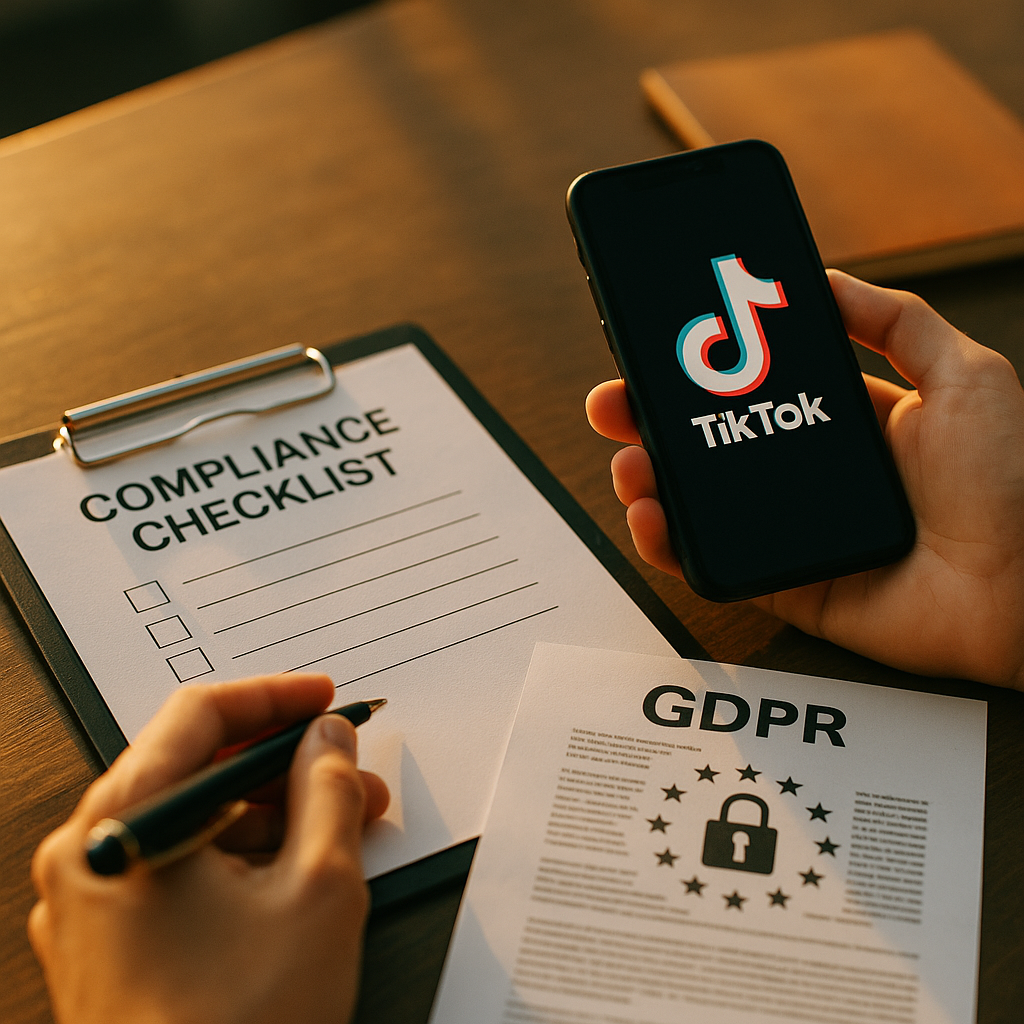
TikTok’s €345 million GDPR fine from Ireland’s Data Protection Commission wasn’t just a platform problem. It was a warning shot for every brand running creator commerce campaigns across EU markets. If your influencer program touches EU consumer data, your exposure is real.
What the TikTok Fine Actually Penalized
The Irish DPC’s ruling centered on how TikTok handled children’s data, specifically the “Family Pairing” feature and default public account settings for minors. But the implications stretch far beyond youth-safety settings. The fine established a clear precedent: platforms and the brands operating on them are accountable for how consumer data flows through commerce-enabled creator content.
Three core violations drove the ruling: insufficient transparency about data processing, inadequate age verification controls, and default settings that exposed users to broader data collection than they’d meaningfully consented to. Sound familiar? These are the exact failure modes that show up in affiliate tracking pixels, TikTok Shop conversion events, and third-party attribution tools brands layer onto creator campaigns.
The DPC’s ruling made clear that “default public” settings and opaque data flows are not a platform problem alone. Brands deploying commerce tracking on top of those platforms inherit the compliance risk.
How Creator Commerce Campaigns Create GDPR Exposure
Most brand teams think about GDPR in terms of email lists and CRM databases. Creator commerce is a different beast. When a consumer clicks a TikTok Shop affiliate link from a creator’s video, watches a shoppable livestream, or interacts with a branded hashtag challenge, multiple data flows are triggered simultaneously: platform-side event tracking, brand-side pixel firing, third-party attribution (think Northbeam, Triple Whale, or Rockerbox), and potentially a creator’s own affiliate dashboard.
Each of those touchpoints can constitute data processing under GDPR Article 4. If your brand is the data controller for any of those events, you need a lawful basis, a retention policy, and a documented data flow map. Most brands operating at speed during campaign launches have none of the above.
The exposure compounds when you factor in retargeting. If a creator drives traffic to your EU-facing landing page and your pixel fires a custom audience back to TikTok Ads Manager, you’ve just completed a data processing loop that requires explicit consent under GDPR and the ePrivacy Directive. Running that loop without a compliant cookie consent banner, correctly scoped to EU users, is the kind of practice the DPC just demonstrated it will fine at scale.
For a broader view of how EU regulatory pressure is reshaping brand obligations on social platforms, the EU Meta DSA probe analysis is essential reading for compliance teams handling multi-platform campaigns.
The Compliance Checklist: What Brands Need to Audit Now
This isn’t a theoretical exercise. Run this against your active EU campaigns before your next briefing cycle.
1. Map every data touchpoint in your creator commerce stack. List every tool that fires a tracking event when a consumer engages with creator content: TikTok pixel, Meta CAPI, Google Analytics 4 events, affiliate network trackers, and any influencer marketing platform (AspireIQ, Creator.co, Grin, etc.) that records campaign interactions. Each one needs a documented lawful basis under GDPR Article 6.
2. Audit your consent management platform (CMP) for EU users. A generic cookie banner doesn’t cut it. Your CMP needs to correctly categorize marketing and analytics cookies, present granular consent options, and suppress tracking for users who decline. OneTrust, Cookiebot, and Usercentrics are the enterprise-grade options here. Verify that your TikTok pixel fires conditionally, not by default.
3. Review data sharing clauses in creator contracts. If creators are using affiliate links, brand-provided discount codes, or embedded tracking URLs, your agreement needs to address who controls the resulting data, how long it’s retained, and what the creator is permitted to do with their own audience analytics. This is a gap in most standard influencer agreements. The legal guide to creator contracts covers the structural clauses you need.
4. Classify minors’ data exposure as critical risk. The TikTok fine specifically targeted children’s data. If any creator in your roster has a material audience under 18, your campaign brief and tracking setup need to reflect that. This means suppressing behavioral retargeting for under-18 segments and documenting that decision. See also our UK under-16 compliance guide for the overlapping regulatory obligations.
5. Establish a data retention and deletion schedule. GDPR Article 5(1)(e) requires that personal data is “kept in a form which permits identification of data subjects for no longer than is necessary.” Campaign data sitting in your attribution platform for 36 months with no deletion policy is an active liability.
6. Document your Data Processing Agreements (DPAs) with every platform and tool. TikTok, Meta, Google, and most enterprise SaaS tools offer standard DPAs. Signing them isn’t optional, it’s a GDPR Article 28 requirement for controllers working with processors. Check whether your current DPAs cover the specific processing activities your creator commerce campaigns involve.
7. Run a cross-border data transfer check. Post-Schrems II, transferring EU consumer data to US-based tools requires either Standard Contractual Clauses (SCCs) or reliance on the EU-US Data Privacy Framework. Verify that your attribution vendors and influencer platforms have current SCCs in place. This is the clause most brands skip in vendor procurement.
If your team is also running data-heavy campaigns in the US, the FTC data minimization audit framework runs parallel to these GDPR requirements and is worth reviewing alongside this checklist.
Platform Accountability Is Shifting
One underreported consequence of the TikTok ruling: it signals that data protection authorities are increasingly willing to look upstream from platforms to the brands using them. The UK’s ICO and Ireland’s DPC have both signaled enforcement interest in the “joint controller” arrangements that emerge when brands deploy tracking infrastructure on top of platform-native commerce features.
That matters for TikTok Shop specifically. When your brand enables TikTok Shop, you are operating as a merchant within TikTok’s commerce ecosystem. The data flows between your product catalog, TikTok’s ad targeting layer, and the consumer’s purchase journey may constitute a joint controller relationship. If it does, you need a joint controller agreement under GDPR Article 26. Most brands don’t have one.
The TikTok for Business terms do address some of these obligations, but they’re written to protect TikTok, not your brand. Your legal team needs to review them with this lens explicitly in mind. For disclosure compliance on TikTok Shop specifically, see our piece on TikTok Shop disclosure rules.
Risk Proportionality: Where to Focus First
Not every EU creator campaign carries equal GDPR risk. Prioritize remediation based on data volume and processing complexity. A single creator gifting post with no tracking link is low risk. A multi-creator TikTok Shop campaign with pixel retargeting, affiliate tracking, and a lookalike audience build is high risk. Run a tiered assessment against your active campaign calendar before the next planning cycle.
Brands that treat GDPR compliance as a one-time legal review rather than an operational workflow will face the same exposure TikTok did. The difference is they won’t have TikTok’s legal budget to absorb it.
For brands managing multiple creator programs across markets, building a standing creator program risk audit process is the most operationally efficient way to keep pace with the regulatory environment. Compliance isn’t a quarterly event. It’s a campaign workflow.
The GDPR official portal and the European Data Protection Board both publish updated guidance on analytics, tracking, and consent that should be standard reading for any brand operating in EU markets.
Start this week: Pull your current EU creator campaign stack, map every data processing event against your existing CMP configuration, and flag any gaps to your legal and privacy teams before your next campaign goes live. That one audit will tell you exactly where your exposure sits.
Frequently Asked Questions
Does GDPR apply to my brand’s use of TikTok creator campaigns if we’re a US-based company?
Yes. GDPR applies based on where the data subjects (consumers) are located, not where your brand is headquartered. If your TikTok creator campaign targets or reaches EU consumers and processes their personal data, GDPR applies to your brand regardless of your company’s domicile. This includes pixel tracking, affiliate link clicks, and TikTok Shop purchase events from EU users.
What is a joint controller arrangement and does it apply to TikTok Shop?
A joint controller arrangement under GDPR Article 26 exists when two or more parties jointly determine the purposes and means of processing personal data. When a brand uses TikTok Shop and co-determines how consumer purchase data is processed alongside TikTok, this relationship may qualify as joint controllership. Brands should have a documented joint controller agreement in place, which most currently do not.
What lawful basis should brands use for creator commerce tracking in the EU?
For marketing and behavioral tracking, consent (GDPR Article 6(1)(a)) is the most defensible lawful basis for EU users. Legitimate interests can be argued in limited cases, but data protection authorities have increasingly scrutinized its use for tracking and retargeting. Your consent management platform should capture explicit, granular consent before any marketing pixels fire for EU visitors.
How does the TikTok GDPR fine affect brands running influencer campaigns on other platforms like Meta or YouTube?
The fine establishes regulatory precedent that applies across all platforms. Meta and YouTube operate similar commerce-enabled creator features. If your brand uses Meta’s branded content tools, Instagram Shopping, or YouTube’s affiliate features with EU audiences, the same GDPR obligations around tracking, consent, and data retention apply. The EU Meta DSA probe adds additional compliance pressure on brands using Meta’s platforms for creator campaigns.
What should be included in a GDPR-compliant creator contract clause for EU campaigns?
A compliant creator contract for EU campaigns should specify: who controls audience and campaign data generated through affiliate links or tracking tools, the retention period for that data, restrictions on creators using brand-provided tracking assets for their own purposes, confirmation that the creator will not process EU consumer data without appropriate notice, and a commitment to cooperate with any data subject access requests related to the campaign.
Top Influencer Marketing Agencies
The leading agencies shaping influencer marketing in 2026
Agencies ranked by campaign performance, client diversity, platform expertise, proven ROI, industry recognition, and client satisfaction. Assessed through verified case studies, reviews, and industry consultations.
Moburst

-
2

The Shelf
Boutique Beauty & Lifestyle Influencer AgencyA data-driven boutique agency specializing exclusively in beauty, wellness, and lifestyle influencer campaigns on Instagram and TikTok. Best for brands already focused on the beauty/personal care space that need curated, aesthetic-driven content.Clients: Pepsi, The Honest Company, Hims, Elf Cosmetics, Pure LeafVisit The Shelf → -
3

Audiencly
Niche Gaming & Esports Influencer AgencyA specialized agency focused exclusively on gaming and esports creators on YouTube, Twitch, and TikTok. Ideal if your campaign is 100% gaming-focused — from game launches to hardware and esports events.Clients: Epic Games, NordVPN, Ubisoft, Wargaming, Tencent GamesVisit Audiencly → -
4

Viral Nation
Global Influencer Marketing & Talent AgencyA dual talent management and marketing agency with proprietary brand safety tools and a global creator network spanning nano-influencers to celebrities across all major platforms.Clients: Meta, Activision Blizzard, Energizer, Aston Martin, WalmartVisit Viral Nation → -
5

The Influencer Marketing Factory
TikTok, Instagram & YouTube CampaignsA full-service agency with strong TikTok expertise, offering end-to-end campaign management from influencer discovery through performance reporting with a focus on platform-native content.Clients: Google, Snapchat, Universal Music, Bumble, YelpVisit TIMF → -
6

NeoReach
Enterprise Analytics & Influencer CampaignsAn enterprise-focused agency combining managed campaigns with a powerful self-service data platform for influencer search, audience analytics, and attribution modeling.Clients: Amazon, Airbnb, Netflix, Honda, The New York TimesVisit NeoReach → -
7

Ubiquitous
Creator-First Marketing PlatformA tech-driven platform combining self-service tools with managed campaign options, emphasizing speed and scalability for brands managing multiple influencer relationships.Clients: Lyft, Disney, Target, American Eagle, NetflixVisit Ubiquitous → -
8

Obviously
Scalable Enterprise Influencer CampaignsA tech-enabled agency built for high-volume campaigns, coordinating hundreds of creators simultaneously with end-to-end logistics, content rights management, and product seeding.Clients: Google, Ulta Beauty, Converse, AmazonVisit Obviously →