


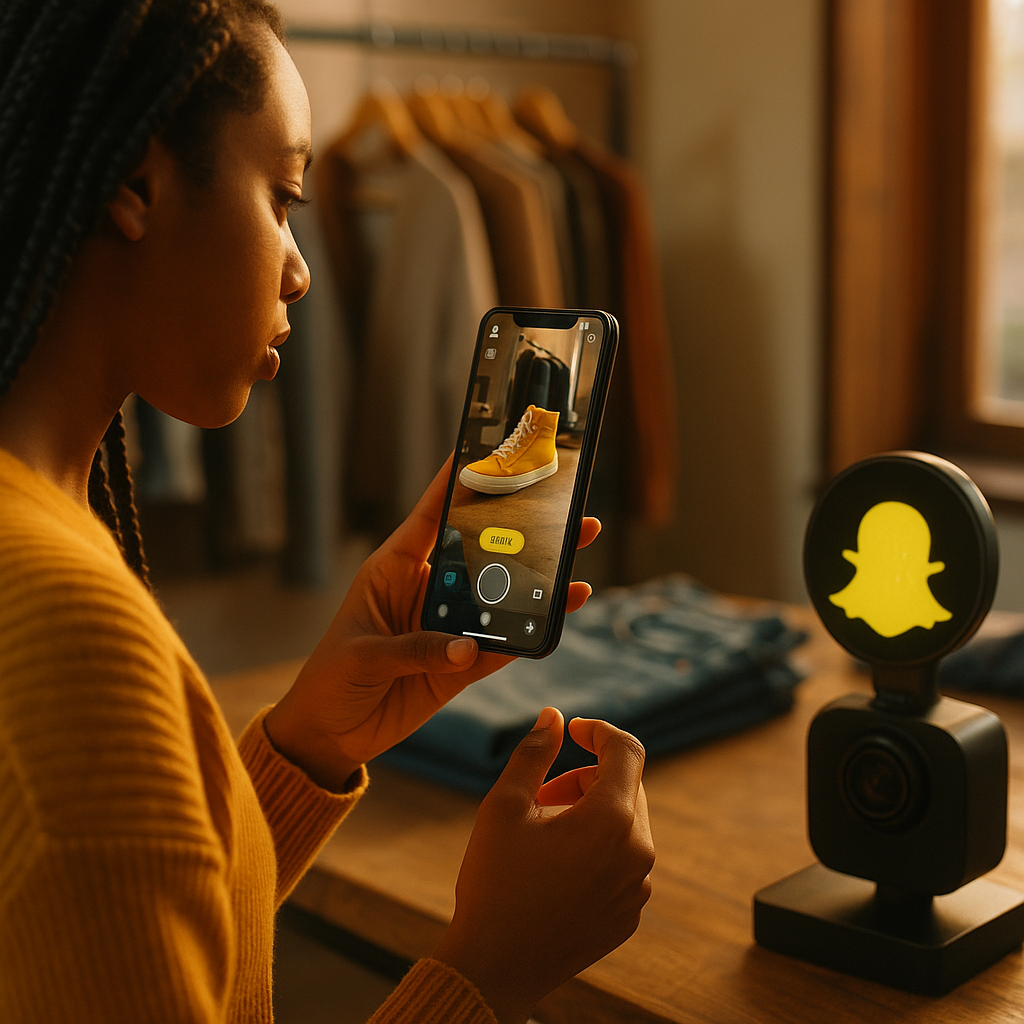
Fewer than 20% of brand briefs written for Snapchat creators actually account for AR-native behavior. That gap is costing brands reach, relevance, and now, revenue. Writing production direction for the Snap Creator Network requires a fundamentally different brief architecture than anything you’ve built for Instagram or TikTok.
Why Snapchat Briefs Fail Before the Creator Reads Them
Most brand teams make a category error when they approach Snapchat. They treat it like a vertical-video platform with a younger demographic skew, then apply the same brief template they use for Reels or TikTok. The result is content that feels imported, not native. Snapchat’s audience doesn’t just tolerate AR; they expect it. They grew up with lenses before they grew up with filters on other platforms. When your brief says “feel free to use effects,” you’ve already lost the room.
The Snap Creator Network is not a talent roster you book the same way you book an Instagram macro-influencer. It’s a production ecosystem with its own vernacular. Creators here build around lenses, Snap Maps, Stories, and Spotlight, and each of those surfaces carries different audience intent. Your brief has to speak that language from line one.
A brief that doesn’t specify AR integration isn’t just incomplete on Snapchat — it signals to the creator that the brand doesn’t understand the platform, which depresses creator effort and output quality.
The Anatomy of a Snap-Native Creator Brief
Start with surface selection. This is the decision most brand teams skip entirely. Are you briefing for Spotlight (Snapchat’s discovery feed, algorithmically distributed), Stories (the core ephemeral format consumed by existing followers), or Snap Map content (hyper-local, event-driven, geo-triggered)? Each requires different production direction. A Spotlight brief needs hooks front-loaded in the first two seconds. A Stories brief can breathe; it has context from the viewer’s existing relationship with the creator. Map content needs location logic baked in.
After surface, specify AR intent. Not “you can use a lens” but which lens mechanic serves the brand objective. Are you activating an existing branded lens you’ve built through Snap’s AR ad tools? Are you briefing the creator to build a custom lens through Lens Studio? Or are you asking them to use a trending community lens organically? These are three different production asks with three different budget, timeline, and rights implications.
The brief should also specify the commerce integration point explicitly. Snapchat’s shoppable product catalog integrations, Dynamic Ads tie-ins, and the platform’s expanding native checkout capabilities mean there’s now a direct line from creator content to conversion. If your campaign has a commerce objective, the brief needs to name the SKU, the catalog trigger behavior, and the CTA mechanic. Leaving this to the creator’s discretion produces inconsistent attribution and makes post-campaign measurement nearly impossible.
Ephemeral Doesn’t Mean Disposable
Here’s a mistake that costs brands real money. Teams treat Snapchat’s ephemeral format as a reason to invest less in production direction. The logic: “It disappears, so it doesn’t need to be as polished.” This is backwards.
Ephemerality creates urgency, and urgency drives action. But only if the content delivers on the implicit promise of exclusivity. When your brief says “make it feel authentic and spontaneous,” the creator has no usable direction. When it says “lead with a moment that only exists right now, a product drop, a behind-the-scenes access point, a time-limited offer, something the viewer can’t see anywhere else,” now you’re briefing for the platform’s actual psychological mechanics. That’s the difference between ephemeral content that converts and ephemeral content that evaporates.
For brands running episodic programs, the rights and measurement considerations on Snapchat content are distinct from other platforms. Saved Snaps, screenshot notifications, and Memories features create a semi-permanent layer under the ephemeral surface. Your brief should address whether creators can save and repurpose content, and how that intersects with your brand usage rights clauses.
What Goes in the AR Production Direction Section
Most briefs either ignore AR entirely or address it in one sentence. Neither works. The AR production direction section of a Snap Creator Network brief should cover four things:
- Lens objective: Is the AR element demonstrating a product feature, driving a try-on behavior, gamifying a CTA, or generating a shareable social moment? Each has different design logic.
- Creator role in AR: Is the creator activating a brand-built lens, co-creating a lens through Snap’s creator tools, or organically choosing a lens that fits the content? This affects your Lens Studio budget line and your approval workflow.
- On-screen placement guidelines: AR elements interact with the creator’s face, environment, and movement. Your brief should specify brand element placement so logos or product overlays don’t collide with the lens’s visual logic.
- Share mechanic: The most underused AR brief element. If viewers can share the lens independently, that’s earned distribution. Your brief should either direct the creator to prompt that share behavior or explicitly note whether brand guidelines permit independent consumer use of the lens.
This level of detail matters more on Snapchat than on any other platform because AR is not a feature here; it’s the primary creative surface. Treating it as an afterthought in your brief guarantees underperformance.
Commerce Integration: Writing Direction That Closes the Loop
Snapchat’s commerce capabilities have matured significantly. The platform’s integration with Shopify and its native product catalog tools mean that creator content can now trigger shoppable moments directly. For brand strategists, this is the brief section where the most operational clarity is needed.
Your commerce direction should specify: the exact product or SKU being featured, the swipe-up or tap destination (product page, catalog view, or checkout), whether the creator is expected to verbally reference the price or offer, and how the UTM or pixel attribution is being tracked. If you’re running a Snap Dynamic Ad alongside the creator content, note that in the brief so the creator understands the full consumer journey their content is entering.
For teams already building commerce-forward creator briefs for other platforms, Snap’s version requires one additional layer: the native checkout behavior is touch-and-hold, not click-through. That interaction pattern affects how creators verbally and visually direct their audience. “Tap to shop” is not the right CTA on Snapchat. Brief your creators on the correct interaction mechanic.
Snapchat’s native checkout interaction is touch-and-hold, not a click. If your brief doesn’t specify this, creators will give viewers the wrong CTA, and your conversion data will suffer for it.
FTC Compliance and Disclosure in an Ephemeral Environment
The FTC’s endorsement guidelines apply regardless of whether content disappears in 24 hours. Snapchat’s ephemeral format does not create a compliance exemption, and the Snap Creator Network’s own policies align with this position. Your brief must include explicit disclosure language requirements: #ad or #sponsored needs to appear in the text overlay or caption field, not just mentioned verbally in audio that may be consumed on mute.
For brands managing disclosure across multiple surfaces simultaneously, the FTC compliance framework in your brief architecture needs to account for Snapchat’s interface specifically. Text overlays can be added via Snapchat’s native tools, but placement matters. A disclosure buried in the lower third of a lens-heavy frame may not meet the FTC’s “clear and conspicuous” standard. Specify placement coordinates in your brief, or provide a reference screenshot.
Multi-Surface Distribution and Brief Modularity
If your campaign spans Spotlight, Stories, and a Snap Map activation, you need modular brief architecture, not a single document that tries to serve all three. The production logic is different enough that a creator trying to optimize for all surfaces simultaneously will produce content that’s mediocre on all of them.
The better approach: a master brand brief with three surface-specific production addenda. The master brief covers brand voice, key message, product claims, disclosure requirements, and rights. Each addendum covers the unique production direction for that surface, including format, duration, AR integration, commerce mechanic, and performance KPI. This is the same modular logic that applies to multi-surface brief design across other platform ecosystems, but the Snap version needs to be even more granular given how differently each surface performs.
Creators working across multiple Snapchat surfaces in a single campaign are a specialized subset of the Snap Creator Network. When you find them, brief them accordingly. They’re producing multiple distinct assets, and compensating them with a single flat rate while expecting three surface-optimized outputs is a sourcing failure, not a creative one. Align your brief scope to your contract scope before production begins.
For broader multi-platform programs where Snap is one node in a larger distribution strategy, platform-specific brief segmentation is the operational framework that prevents creative dilution across the full campaign.
Your next brief for a Snap Creator Network activation should include five named elements before it leaves your desk: surface selection, AR integration spec, commerce CTA with correct interaction mechanic, disclosure placement coordinates, and modular addenda for each distribution surface. Start there. Everything else follows.
Frequently Asked Questions
What makes a Snap Creator Network brief different from a TikTok or Instagram brief?
Snapchat’s audience is AR-native, meaning they expect augmented reality as a core content element, not a bonus feature. A Snap brief must specify AR lens objectives, interaction mechanics (including touch-and-hold for commerce), surface selection (Spotlight vs. Stories vs. Snap Map), and ephemeral content logic that creates exclusivity and urgency. TikTok and Instagram briefs rarely need this level of AR production direction.
How should brands handle FTC disclosure in Snapchat’s ephemeral format?
Ephemeral content does not create a compliance exemption under FTC guidelines. Disclosure language (#ad or #sponsored) must appear as a visible text overlay, not just verbal audio, because much Snapchat content is consumed on mute. The brief should specify the exact placement of the disclosure overlay to ensure it meets the FTC’s “clear and conspicuous” standard, particularly when AR lens elements occupy significant screen real estate.
What is the correct commerce CTA mechanic for Snapchat creator content?
Snapchat’s native checkout and product catalog interaction uses a touch-and-hold mechanic, not a standard click or swipe-up. Creator briefs must specify this explicitly so creators direct their audience with the correct verbal and visual CTA. “Tap to shop” or “swipe up” are incorrect instructions for Snapchat’s native commerce experience and will reduce conversion rates and compromise attribution data.
Should brands use a single brief for multiple Snapchat surfaces?
No. Spotlight, Stories, and Snap Map have meaningfully different production requirements, audience intent signals, and performance KPIs. The recommended architecture is a master brand brief covering voice, messaging, claims, and rights, paired with surface-specific production addenda. A single brief attempting to cover all three surfaces will produce content that underperforms on each one individually.
How do you specify AR integration in a creator brief without overcomplicating it?
Address four elements: the lens objective (product demo, try-on, gamified CTA, or shareable moment), the creator’s role in AR (activating a brand-built lens, co-creating, or choosing organically), on-screen placement guidelines to prevent brand asset collisions with the lens, and the share mechanic to capture earned distribution. This level of specificity gives creators clear production direction without removing their creative latitude within the AR format.
Top Influencer Marketing Agencies
The leading agencies shaping influencer marketing in 2026
Agencies ranked by campaign performance, client diversity, platform expertise, proven ROI, industry recognition, and client satisfaction. Assessed through verified case studies, reviews, and industry consultations.
Moburst

-
2

The Shelf
Boutique Beauty & Lifestyle Influencer AgencyA data-driven boutique agency specializing exclusively in beauty, wellness, and lifestyle influencer campaigns on Instagram and TikTok. Best for brands already focused on the beauty/personal care space that need curated, aesthetic-driven content.Clients: Pepsi, The Honest Company, Hims, Elf Cosmetics, Pure LeafVisit The Shelf → -
3

Audiencly
Niche Gaming & Esports Influencer AgencyA specialized agency focused exclusively on gaming and esports creators on YouTube, Twitch, and TikTok. Ideal if your campaign is 100% gaming-focused — from game launches to hardware and esports events.Clients: Epic Games, NordVPN, Ubisoft, Wargaming, Tencent GamesVisit Audiencly → -
4

Viral Nation
Global Influencer Marketing & Talent AgencyA dual talent management and marketing agency with proprietary brand safety tools and a global creator network spanning nano-influencers to celebrities across all major platforms.Clients: Meta, Activision Blizzard, Energizer, Aston Martin, WalmartVisit Viral Nation → -
5

The Influencer Marketing Factory
TikTok, Instagram & YouTube CampaignsA full-service agency with strong TikTok expertise, offering end-to-end campaign management from influencer discovery through performance reporting with a focus on platform-native content.Clients: Google, Snapchat, Universal Music, Bumble, YelpVisit TIMF → -
6

NeoReach
Enterprise Analytics & Influencer CampaignsAn enterprise-focused agency combining managed campaigns with a powerful self-service data platform for influencer search, audience analytics, and attribution modeling.Clients: Amazon, Airbnb, Netflix, Honda, The New York TimesVisit NeoReach → -
7

Ubiquitous
Creator-First Marketing PlatformA tech-driven platform combining self-service tools with managed campaign options, emphasizing speed and scalability for brands managing multiple influencer relationships.Clients: Lyft, Disney, Target, American Eagle, NetflixVisit Ubiquitous → -
8

Obviously
Scalable Enterprise Influencer CampaignsA tech-enabled agency built for high-volume campaigns, coordinating hundreds of creators simultaneously with end-to-end logistics, content rights management, and product seeding.Clients: Google, Ulta Beauty, Converse, AmazonVisit Obviously →