


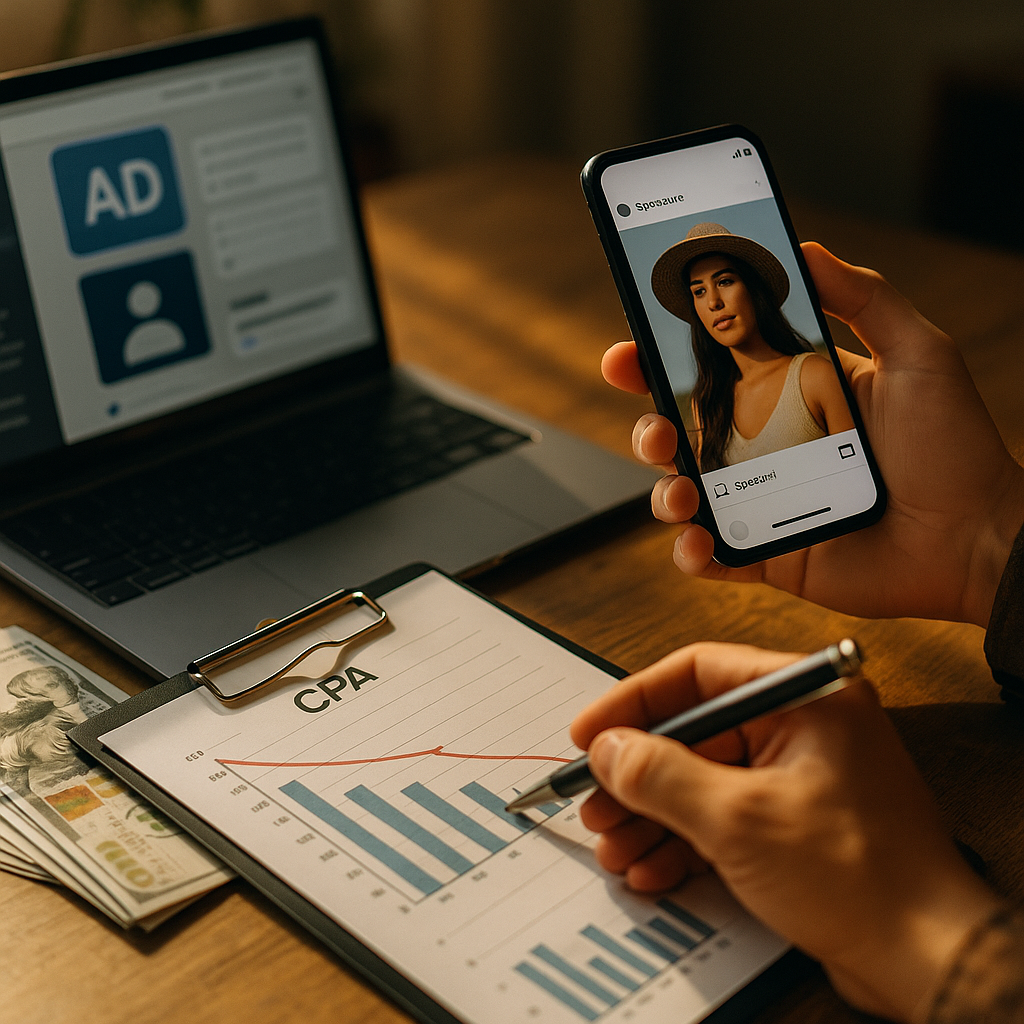
Brands running creator-whitelisted ads consistently outperform their own brand-run ads by 30 to 50 percent on cost-per-acquisition. Most teams leave that advantage on the table because they negotiate usage rights after the content is live, not before. That sequencing mistake is expensive.
Whitelisting vs. Dark Posting: They Are Not the Same Thing
These two terms get conflated constantly, and the confusion costs brands money at the contract stage.
Creator whitelisting (also called allowlisting) means the brand receives advertising access to a creator’s social account. The ad runs from the creator’s handle, carries their profile photo and name, and appears in-feed just like organic content. The creator’s existing audience sees it as a native post. New audiences targeted by the brand’s ad buy see a real person, not a corporate logo.
Dark posting is different. A dark post is a paid ad that never appears on anyone’s organic feed, not even the creator’s. It’s pushed only to targeted audiences via the brand’s own ad account. The creator’s identity may or may not be attached, depending on how the brand structures the creative. Dark posts built on creator content are sometimes called “boosted UGC,” but they don’t require handle access — only a content license.
Why does this distinction matter for rights negotiations? Because the permissions, platform mechanics, and fee structures are completely different. Whitelisting requires the creator to add your ad account as a partner inside Meta Business Manager, Meta Business Suite, or TikTok’s Spark Ads authorization flow. Dark posting only requires a signed content license granting paid media usage. One is an ongoing account access relationship; the other is a one-time rights grant. Treating them as interchangeable in your contracts creates legal and operational gaps.
Whitelisting gives brands the creator’s social proof at scale. Dark posting gives brands creative flexibility without account dependency. You need a clear rights framework for both — negotiated before a single frame of content is shot.
Why Pre-Campaign Rights Negotiation Is the Entire Game
The CPA advantage from whitelisted creator ads isn’t automatic. It depends on three conditions: the right creative, the right targeting permissions, and the right contractual runway. Miss any one of them and you’re running expensive tests, not optimized campaigns.
When brands negotiate usage rights retroactively (after content is approved and posted), they face two problems. First, creators have more leverage. The content already exists, the campaign clock is ticking, and the brand is negotiating under time pressure. Second, the permissions granted are often narrower than what the media team actually needs — a 30-day window instead of 90 days, Instagram only instead of Meta’s full inventory, no TikTok Spark Ads authorization at all.
Pre-campaign negotiation flips this dynamic. You define the scope during talent contracting, when both parties have the most flexibility. You specify whitelisting duration, platform coverage, dark post rights, creative variation permissions (can the media team write new headline copy over the creator’s video?), and geographic targeting limits. All of this belongs in the brief and the contract, not in a follow-up email three days before launch.
For a detailed breakdown of how whitelisting terms affect CPA, the mechanics are worth reviewing before you sit down with your legal team.
The Five Rights Clauses That Actually Move CPA
Not all usage rights language is created equal. These are the five clauses that media buyers specifically need to see in creator contracts before they’ll run efficient paid campaigns.
- Platform scope and inventory access. Name every platform explicitly: Meta (Facebook + Instagram + Audience Network), TikTok Spark Ads, YouTube, Pinterest, programmatic display, CTV. A generic “digital advertising” clause sounds broad but is routinely disputed. TikTok’s Spark Ads system, for instance, requires a separate authorization code from the creator — your contract needs to obligate the creator to generate and provide that code.
- Duration with renewal options. Ninety days is a common starting window, but high-performing creative routinely outlasts it. Negotiate a 90-day initial term with a brand-side option to extend for additional 30-day increments at a pre-agreed rate. This prevents renegotiation leverage shifting back to the creator mid-flight.
- Creative modification rights. Can your team add a CTA overlay? Swap the end card? Write new ad copy for A/B testing? Many creators will agree to moderate edits but not wholesale re-edits. Define “modification” precisely. This clause is the most frequently underdefined in standard influencer contracts.
- Exclusivity windows for competitive conquest. If you’re whitelisting a creator and running ads, you don’t want that same creator whitelisted by a direct competitor during your flight. Negotiate a category exclusivity period, even a narrow 30-day window, specifically tied to the paid amplification period.
- Dark post vs. whitelisted ad permissions as separate grants. Treat them as two distinct line items, both in the contract and in the fee discussion. This protects you legally and gives you operational clarity when your media team asks “which assets can we push as dark posts vs. which require handle access?”
For broader context on how UGC rights capture feeds into paid media attribution, the framework translates directly to whitelisting workflows.
Fee Structures That Don’t Blow the CPA Math
The 30 to 50 percent CPA advantage disappears fast if whitelisting fees aren’t structured correctly. A creator charging 3x their organic post rate for whitelisting access will eat your efficiency gains before the first ad impression is served.
Benchmark: whitelisting fees typically run 20 to 40 percent of the base content fee for a standard 30-day window, according to industry data tracked by platforms like EMARKETER. Dark post licensing (content rights only, no handle access) tends to run 10 to 25 percent of base rate for the same window. These are ranges, not ceilings — nano and micro creators often accept lower amplification fees because the paid distribution builds their audience too.
A practical structure that works: bundle whitelisting and dark post rights into a single “paid amplification rider” with a tiered fee based on media spend thresholds. At $0 to $10K ad spend, the rider fee is X. At $10K to $50K, it steps up to Y. This aligns creator compensation with actual commercial value and removes the awkward renegotiation if a piece of creative scales unexpectedly.
Understanding creator fee benchmarking beyond follower count is essential here, because the creators with the best whitelisting performance aren’t always the ones with the largest audiences.
Platform Mechanics Your Legal Team Needs to Understand
Contracts that don’t account for platform-specific mechanics create execution gaps. Three specifics worth flagging:
Meta’s Partnership Ads (formerly Branded Content Ads) require the creator to enable “allow business partner to boost” inside their Meta settings for each individual post. Your contract needs to obligate this action and specify a turnaround time. If the creator enables it three days late, your media plan slides.
TikTok Spark Ads require a unique authorization code generated by the creator, valid for a fixed period. The code expires. Your contract should require the creator to generate and deliver a new code before expiration if your campaign extends. This is a common operational failure point that delays campaigns by days.
YouTube BrandConnect uses a different model — the creator grants paid promotion disclosure tagging but YouTube’s media buying runs through Google Ads, not through creator handle access in the same sense. Rights language for YouTube should specify whether you’re licensing the video for YouTube advertising inventory or running a BrandConnect-facilitated deal. These are operationally distinct.
For brands running creator content across multiple channels simultaneously, the multi-platform syndication and rights routing framework addresses exactly these cross-channel complications.
Compliance Is Not Optional
Whitelisted ads run from creator handles but are paid placements. FTC guidelines require disclosure regardless of how native the ad looks. Your contract needs to specify disclosure language and placement — not leave it to the creator’s discretion. On Meta, the Partnership Ads label handles some of this automatically, but on TikTok Spark Ads and other platforms, explicit disclosure obligations need to be contractually defined.
GDPR and state-level privacy regulations also apply to the audience data collected when running ads from a creator’s handle. Your media team is effectively using the creator’s social identity to collect performance data. Ensure your data processing agreements cover this scope, particularly if you’re retargeting audiences built from whitelisted ad engagement. The ICO’s guidance on paid social data collection is worth reviewing if you’re running campaigns targeting EU audiences.
The FTC and platform disclosure requirements don’t disappear because an ad looks organic. Brief your legal team on whitelisting mechanics before contracts go out, not after your first campaign launches.
Tracking the actual performance lift from whitelisted creative versus brand-run ads requires proper attribution infrastructure. For teams building this out, the campaign measurement infrastructure guide covers the tagging and reporting setup needed to isolate whitelisting impact.
Measuring the Advantage You Negotiated For
You can’t optimize what you don’t measure separately. Run whitelisted creator ads and standard brand-run ads as distinct line items in your campaign structure, never pooled. Use UTM parameters and pixel events to isolate CPA by creative type. Most teams that report “whitelisting doesn’t outperform for us” have pooled their attribution and can’t actually see the signal.
Compare CPA at the ad set level, controlling for audience targeting. If you’re running the same audience against a whitelisted creator ad and a brand-produced ad, the performance difference is attributable to creative authenticity and social proof, not audience or bid strategy. That’s the clean read you need to build the internal business case for investing in pre-campaign rights negotiation at scale.
Also track whitelisting duration efficiency: what percentage of your contracted whitelisting windows see active media spend? If you’re only using 40 days of a 90-day window consistently, you’re over-contracting. Tighten the windows and use the savings to negotiate more creator relationships instead.
Your immediate next step: Pull your last three creator contracts and check whether “dark post rights” and “whitelisting access” are defined as separate permissions with separate fee structures. If they’re lumped together, your next campaign brief is the right moment to fix it. That single structural change is where the CPA advantage starts.
Frequently Asked Questions
What is the difference between creator whitelisting and dark posting?
Creator whitelisting gives a brand advertising access to run paid ads directly from the creator’s social account handle, so the ad appears to come from the creator. Dark posting uses creator content as ad creative but runs it through the brand’s own ad account without appearing on anyone’s organic feed. Both require usage rights agreements, but whitelisting also requires platform-level account access permissions, while dark posting only requires a content license.
Why do whitelisted creator ads outperform brand-run ads on CPA?
Whitelisted ads carry the creator’s social proof, handle, and profile image, which signals authenticity to the target audience. They blend into the feed more naturally than ads served from a brand account, resulting in higher engagement rates, lower CPCs, and ultimately lower CPAs. Industry data consistently shows a 30 to 50 percent CPA advantage over equivalent brand-run ads when creative quality and targeting are held constant.
When should usage rights be negotiated in the campaign timeline?
Usage rights should be negotiated and contractually defined before content creation begins, ideally during the talent contracting phase. Retroactive negotiation after content is live shifts leverage to the creator and typically results in narrower permissions, shorter windows, and higher fees. Pre-campaign negotiation gives brands the broadest rights at the most favorable rates.
What should a whitelisting fee structure look like?
A standard whitelisting fee runs 20 to 40 percent of the creator’s base content fee for a 30-day window. Dark post licensing (content rights only) typically runs 10 to 25 percent of the base rate for the same period. A tiered “paid amplification rider” linked to media spend thresholds is a practical structure that aligns creator compensation with actual commercial value and avoids renegotiation when high-performing content scales.
Do FTC disclosure rules apply to whitelisted creator ads?
Yes. Whitelisted ads are paid placements regardless of how native they appear. FTC guidelines require clear disclosure of the commercial relationship. On Meta, Partnership Ads labeling provides some automatic disclosure, but on platforms like TikTok Spark Ads, explicit disclosure obligations must be defined in the creator contract. Brands should not rely on creator discretion for compliance on paid amplification.
Which platform mechanics should brands account for in whitelisting contracts?
On Meta, creators must enable “allow business partner to boost” for each specific post. On TikTok, creators must generate a Spark Ads authorization code that has a fixed expiration date. On YouTube, whitelisting operates differently through Google Ads and BrandConnect. Contracts should obligate creators to complete these platform-specific steps within a defined timeframe and to renew authorizations before expiration if campaigns extend.
Top Influencer Marketing Agencies
The leading agencies shaping influencer marketing in 2026
Agencies ranked by campaign performance, client diversity, platform expertise, proven ROI, industry recognition, and client satisfaction. Assessed through verified case studies, reviews, and industry consultations.
Moburst

-
2

The Shelf
Boutique Beauty & Lifestyle Influencer AgencyA data-driven boutique agency specializing exclusively in beauty, wellness, and lifestyle influencer campaigns on Instagram and TikTok. Best for brands already focused on the beauty/personal care space that need curated, aesthetic-driven content.Clients: Pepsi, The Honest Company, Hims, Elf Cosmetics, Pure LeafVisit The Shelf → -
3

Audiencly
Niche Gaming & Esports Influencer AgencyA specialized agency focused exclusively on gaming and esports creators on YouTube, Twitch, and TikTok. Ideal if your campaign is 100% gaming-focused — from game launches to hardware and esports events.Clients: Epic Games, NordVPN, Ubisoft, Wargaming, Tencent GamesVisit Audiencly → -
4

Viral Nation
Global Influencer Marketing & Talent AgencyA dual talent management and marketing agency with proprietary brand safety tools and a global creator network spanning nano-influencers to celebrities across all major platforms.Clients: Meta, Activision Blizzard, Energizer, Aston Martin, WalmartVisit Viral Nation → -
5

The Influencer Marketing Factory
TikTok, Instagram & YouTube CampaignsA full-service agency with strong TikTok expertise, offering end-to-end campaign management from influencer discovery through performance reporting with a focus on platform-native content.Clients: Google, Snapchat, Universal Music, Bumble, YelpVisit TIMF → -
6

NeoReach
Enterprise Analytics & Influencer CampaignsAn enterprise-focused agency combining managed campaigns with a powerful self-service data platform for influencer search, audience analytics, and attribution modeling.Clients: Amazon, Airbnb, Netflix, Honda, The New York TimesVisit NeoReach → -
7

Ubiquitous
Creator-First Marketing PlatformA tech-driven platform combining self-service tools with managed campaign options, emphasizing speed and scalability for brands managing multiple influencer relationships.Clients: Lyft, Disney, Target, American Eagle, NetflixVisit Ubiquitous → -
8

Obviously
Scalable Enterprise Influencer CampaignsA tech-enabled agency built for high-volume campaigns, coordinating hundreds of creators simultaneously with end-to-end logistics, content rights management, and product seeding.Clients: Google, Ulta Beauty, Converse, AmazonVisit Obviously →