


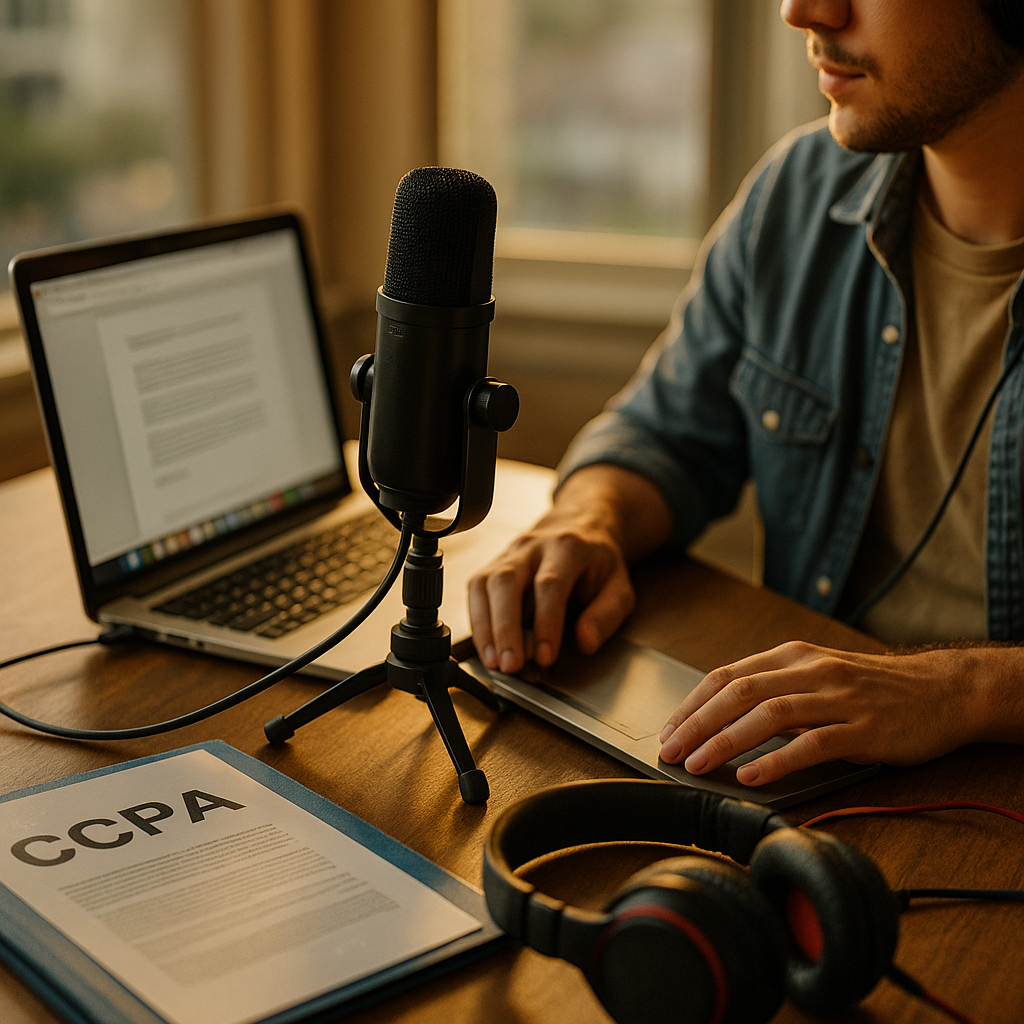
Your creator’s sponsored segment just got flagged for audio non-compliance on a major streaming platform. The ad spend is paused. Legal is asking questions. And nobody in the production brief specified a loudness target. This is the operational reality brands are now navigating under California’s streaming audio volume rule, and it has direct consequences for streaming platform creator content compliance across every ad-supported tier.
What California’s Audio Rule Actually Says
California’s audio volume regulation for streaming platforms, which extends consumer protection principles similar to the federal CALM Act audio standards into the streaming-specific context, requires that ad content distributed via ad-supported video-on-demand (AVOD) tiers maintain consistent loudness levels relative to surrounding programming content. The rule targets the jarring volume spikes that have migrated from broadcast television into connected TV and streaming environments.
The technical benchmark most platforms are now enforcing is -23 LUFS (Loudness Units Full Scale) for integrated loudness, with a true peak limit of -1 dBTP. These are the same standards recommended by the ITU-R BS.1770 framework and adopted by broadcasters in the EU and UK. California’s rule formalizes this expectation at the state level for streaming distributors operating within the state, which, practically speaking, means any major platform.
Platforms including Peacock, Hulu, Paramount+, and Amazon’s ad-supported Prime Video tier have all updated their technical delivery specifications to reflect these requirements. Non-compliant audio is increasingly being flagged at the ingestion stage, which means paused campaigns and re-delivery costs.
Audio non-compliance at ingestion can delay a campaign by 72 hours or more. For time-sensitive product launches, that gap is not recoverable through additional spend.
Why Creator Content Is the Problem Area
Traditional broadcast advertisers have had audio normalization baked into their post-production workflows for years. Creator content has not. A mid-tier creator shooting a sponsored segment in a home studio with consumer-grade recording equipment, mixed by a freelance editor who has never delivered to broadcast spec, is operating in a completely different production environment than an agency producing a 30-second TV spot.
The gap is measurable. Creator-produced content frequently comes in between -12 and -16 LUFS, which is significantly louder than the -23 LUFS target. When that content is distributed via a streaming platform’s ad insertion system, the volume differential against surrounding content is immediately noticeable to viewers and triggers platform-side compliance checks.
This creates a specific operational problem for brands that repurpose creator content for CTV distribution. A segment that performs well organically on YouTube or TikTok is not automatically ready for ad-supported streaming insertion. The production pipeline is different. The delivery spec is different. And the compliance burden is now legally different, at least in California.
For brands running UGC content for paid media, this means that the rights you’ve secured are only half the problem. You also need to ensure the asset itself is technically compliant before it enters the paid distribution pipeline.
What Production Briefs Are Missing Right Now
Pull up a standard creator production brief. You’ll likely find sections covering messaging hierarchy, key visuals, brand asset usage, hashtag requirements, disclosure language, and approval timelines. What you almost certainly will not find: any reference to audio loudness targets, true peak limits, or sample rate specifications.
That gap is now a compliance liability.
Brands that distribute creator content across ad-supported streaming tiers need to add a dedicated audio technical specification section to every production brief where CTV or AVOD distribution is planned. This section should specify:
- Integrated loudness target: -23 LUFS (or platform-specific variation, typically -24 LUFS for some platforms)
- True peak maximum: -1 dBTP
- Loudness range (LRA): Recommended maximum of 18 LU
- Delivery format: Stereo or 5.1 as required by platform spec
- Measurement tool: Specify which metering plugin or software (e.g., iZotope RX, Youlean Loudness Meter, or Adobe Audition’s built-in loudness meter) the creator or their editor should use for final QC
Specifying the measurement tool matters. Without it, a creator’s editor might guess, or skip the check entirely.
The Contract Angle Brands Are Overlooking
Technical specifications in a production brief are guidance. They become enforceable when they’re incorporated into the creator contract as a delivery requirement. Brands that have taken the time to rebuild creator contracts for modern distribution standards are better positioned here because they’ve already created the structural habit of treating technical delivery as a contractual obligation, not a suggestion.
The specific language to add is straightforward. Under the deliverables section, specify that all audio in sponsored content segments must meet the integrated loudness and true peak standards described in the attached technical specification sheet. Include a revision clause that places the cost of re-delivery on the creator if non-compliance is caused by their post-production process rather than a platform-side issue.
This matters for budget management. Re-rendering and re-delivering a non-compliant asset across multiple platform formats can run $500 to $2,000 depending on the complexity and the post-production vendor. At scale, across a creator roster of 20 or more, that’s a meaningful cost center if it’s not contractually assigned.
Given that compliance obligations are increasingly layered across jurisdictions (see how cross-border creator programs now require multi-regulatory checklists), audio standards should be treated as one more technical compliance layer, not an afterthought.
Platform-Specific Variations Worth Knowing
California’s rule establishes a baseline, but individual platforms have their own delivery specs that may be slightly more restrictive. Hulu specifies -24 LUFS integrated loudness. Amazon’s ad insertion guidelines align with -23 LUFS but include specific requirements for stereo downmix compatibility. Peacock’s ad standards reference the IAB digital video standards framework, which brands should review directly.
The practical implication: if a brand is distributing creator content across three AVOD platforms simultaneously, the production brief should specify the most restrictive common denominator, typically -24 LUFS, to ensure the asset passes QC everywhere without separate re-renders. One master spec. One delivery. No surprises at ingestion.
Brands should also verify platform specs directly through their platform partnerships or their agency’s ad operations team, since these specifications are updated periodically. The FTC and IAB provide reference frameworks, but platform-level implementation varies. For the most current technical delivery specs, Google’s ad support resources and individual platform media kits are the most reliable primary sources.
Building the QC Step Into Your Workflow
Specifying the standard in the brief is step one. Building the verification step into the content approval workflow is where brands actually catch problems before they hit the platform.
Add a loudness QC gate between creator asset delivery and ad operations handoff. This can be handled by an in-house producer, a post-production vendor, or increasingly by automated QC tools. Dolby’s media tools and cloud-based QC platforms offer automated loudness analysis that can process a batch of creator assets in minutes and flag non-compliant files before they enter the ad trafficking pipeline.
For brands managing large creator rosters, this automated QC step pays for itself quickly. The alternative is discovering non-compliance after a platform rejects an ad insertion, at which point the campaign is already delayed and the creator is already paid.
Teams overseeing broader creator program risk audits should add audio compliance to their audit criteria alongside disclosure practices, IP rights verification, and platform policy adherence. Audio is no longer a production detail. It is a regulatory compliance item.
The brands that will avoid audio compliance penalties at scale are the ones treating loudness normalization as a workflow requirement, not a post-production nicety.
Disclosures Don’t Disappear Either
One thing the audio compliance conversation can inadvertently crowd out: sponsored content on AVOD tiers still requires proper disclosure labeling. A technically compliant audio mix does not satisfy your ad labeling requirements. Both layers have to be right simultaneously. Brands distributing creator-produced sponsored content across streaming platforms need a checklist that addresses audio standards, disclosure placement, and platform-specific ad policy in a single coordinated review, not three separate processes that might never intersect.
Operationally, the cleanest solution is a unified pre-distribution compliance checklist that covers technical delivery specs, FTC disclosure requirements, and platform policy alignment in one document. That checklist should be version-controlled and updated quarterly as platform specs evolve.
Start with your next production brief: add the audio spec section this week, pass it to legal to incorporate delivery language into the standard creator contract, and brief your ad ops team on the QC gate. Three steps. Significant risk reduction.
FAQs
What is California’s new audio volume rule for streaming platforms?
California’s streaming audio volume regulation requires that advertising content distributed via ad-supported streaming tiers maintain consistent loudness levels relative to surrounding programming. The technical standard most platforms are enforcing is -23 LUFS integrated loudness with a true peak limit of -1 dBTP, consistent with international broadcast standards like ITU-R BS.1770.
Does this rule apply to creator-produced sponsored content or only traditional ads?
It applies to any audio content inserted as an ad on a covered streaming platform, including creator-produced sponsored segments that are distributed via programmatic or direct ad insertion. If a brand is using creator content as a paid ad unit on an AVOD tier, the audio must meet the platform’s technical delivery specification, which now reflects the California standard.
How should brands update production briefs to address audio compliance?
Production briefs for content intended for CTV or AVOD distribution should include a dedicated audio technical specification section listing the integrated loudness target (typically -23 or -24 LUFS), true peak maximum (-1 dBTP), loudness range, delivery format, and the specific metering tool the creator or editor should use for QC before delivery.
Which streaming platforms are enforcing these audio standards?
Major AVOD platforms including Hulu, Peacock, Amazon’s ad-supported Prime Video tier, and Paramount+ have updated their technical delivery specifications to reflect loudness normalization requirements. Platform-specific targets vary slightly, with Hulu specifying -24 LUFS and others aligning with -23 LUFS. Brands should confirm current specs directly with each platform or their ad operations team.
Can brands hold creators contractually responsible for audio non-compliance?
Yes. When audio technical specifications are incorporated into the creator contract as a delivery requirement (rather than left as guidance in a production brief), brands can include revision clauses that assign re-delivery costs to the creator if non-compliance results from their post-production process. This requires explicit contract language, not just a reference to the brief.
What tools can brands use to verify creator content meets loudness standards?
Common tools include iZotope RX, Youlean Loudness Meter, Adobe Audition’s built-in loudness analysis, and cloud-based QC platforms from providers like Dolby. Automated QC tools can process batches of creator assets quickly and flag non-compliant files before they enter the ad trafficking pipeline, making them practical for brands managing large creator rosters.
Top Influencer Marketing Agencies
The leading agencies shaping influencer marketing in 2026
Agencies ranked by campaign performance, client diversity, platform expertise, proven ROI, industry recognition, and client satisfaction. Assessed through verified case studies, reviews, and industry consultations.
Moburst

-
2

The Shelf
Boutique Beauty & Lifestyle Influencer AgencyA data-driven boutique agency specializing exclusively in beauty, wellness, and lifestyle influencer campaigns on Instagram and TikTok. Best for brands already focused on the beauty/personal care space that need curated, aesthetic-driven content.Clients: Pepsi, The Honest Company, Hims, Elf Cosmetics, Pure LeafVisit The Shelf → -
3

Audiencly
Niche Gaming & Esports Influencer AgencyA specialized agency focused exclusively on gaming and esports creators on YouTube, Twitch, and TikTok. Ideal if your campaign is 100% gaming-focused — from game launches to hardware and esports events.Clients: Epic Games, NordVPN, Ubisoft, Wargaming, Tencent GamesVisit Audiencly → -
4

Viral Nation
Global Influencer Marketing & Talent AgencyA dual talent management and marketing agency with proprietary brand safety tools and a global creator network spanning nano-influencers to celebrities across all major platforms.Clients: Meta, Activision Blizzard, Energizer, Aston Martin, WalmartVisit Viral Nation → -
5

The Influencer Marketing Factory
TikTok, Instagram & YouTube CampaignsA full-service agency with strong TikTok expertise, offering end-to-end campaign management from influencer discovery through performance reporting with a focus on platform-native content.Clients: Google, Snapchat, Universal Music, Bumble, YelpVisit TIMF → -
6

NeoReach
Enterprise Analytics & Influencer CampaignsAn enterprise-focused agency combining managed campaigns with a powerful self-service data platform for influencer search, audience analytics, and attribution modeling.Clients: Amazon, Airbnb, Netflix, Honda, The New York TimesVisit NeoReach → -
7

Ubiquitous
Creator-First Marketing PlatformA tech-driven platform combining self-service tools with managed campaign options, emphasizing speed and scalability for brands managing multiple influencer relationships.Clients: Lyft, Disney, Target, American Eagle, NetflixVisit Ubiquitous → -
8

Obviously
Scalable Enterprise Influencer CampaignsA tech-enabled agency built for high-volume campaigns, coordinating hundreds of creators simultaneously with end-to-end logistics, content rights management, and product seeding.Clients: Google, Ulta Beauty, Converse, AmazonVisit Obviously →