


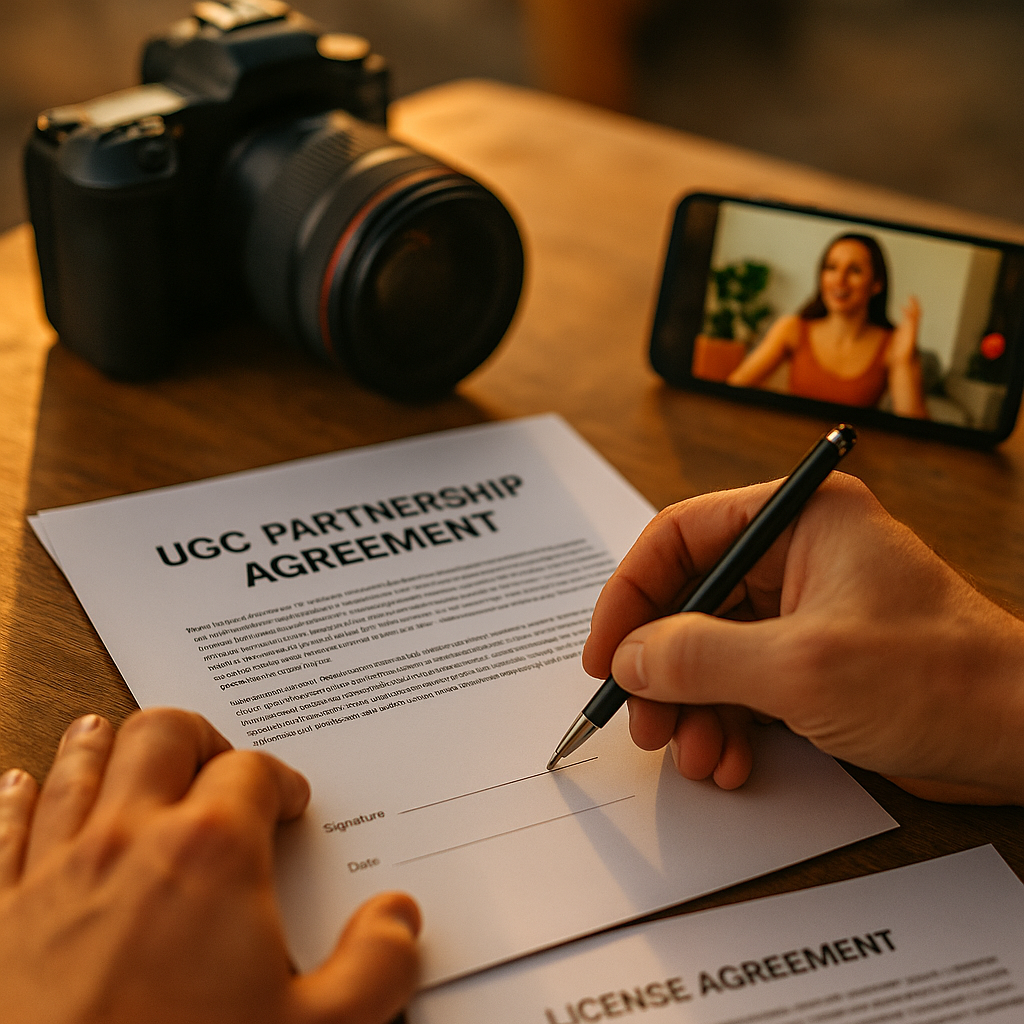
Roughly 85% of brands that repurpose creator content for paid media do so without a fully executed rights agreement in place at the time of distribution. That single oversight turns a cost-efficient UGC asset into a legal liability — and it’s entirely preventable if you redesign the contract before the brief goes out, not after the content performs.
The Rights Gap Nobody Talks About
Most influencer agreements are written to govern organic posting. The brand gets a deliverable, the creator posts it, the campaign runs. But the moment your media team spots a high-performing Reel and wants to amplify it as a paid dark post, you’ve entered different legal territory. The original contract almost certainly doesn’t cover it.
This isn’t a niche compliance edge case. FTC guidelines require that paid amplification of creator content carries proper disclosure, which means the creator needs to have agreed to that use explicitly. Beyond disclosure, you’re dealing with music licensing, platform-specific usage rights, likeness clearances, and in some jurisdictions, moral rights that creators can’t even waive by contract. The financial exposure from a single viral asset repurposed without proper rights clearance can dwarf the original campaign fee.
The operational fix isn’t complicated. It requires a deliberate restructuring of how partnership agreements are written and when rights discussions happen.
Why “Organic First, Rights Later” Fails at Scale
The appeal is obvious. Let the creator post naturally, see what resonates, then amplify the winners. Performance-driven logic, right? The problem is that by the time a piece of content outperforms the rest, the creator knows it too. Retroactive rights negotiations happen from a position of weakness for the brand, and savvy creators (especially those with experienced management) will price accordingly. You end up paying a premium for an asset that could have been secured at standard rates during the initial deal.
Retroactive rights negotiations routinely cost brands 3 to 5 times the original content fee for assets that could have been licensed at creation for a modest uplift — typically 15 to 30% above base rate.
There’s also a timing problem. Paid media windows are short. If your legal team needs two weeks to negotiate retroactive rights on an asset that’s already trending, the moment is gone. The content that could have fueled a performance campaign at peak relevance gets shelved.
The fix is structural: bake rights parameters into the brief stage, not the amplification stage.
What a Rights-Forward UGC Agreement Actually Contains
A properly structured UGC partnership agreement for brands that intend to run paid media should address six distinct elements.
- Scope of use: Paid social (dark posts, whitelisting, branded content ads), programmatic display, OTT/CTV, out-of-home digital, email, and owned website use should each be specified separately. Bundling them as “all digital” creates ambiguity that courts interpret against the drafter.
- Duration: Evergreen licenses are increasingly rare and expensive. Negotiate a defined window — 12 months is industry-standard for paid social; 24 months for OOH or broadcast derivatives — with an option to extend at a pre-agreed rate.
- Territory: A creator in the UK posting to a global audience doesn’t automatically grant you global paid media rights. Specify territories explicitly, especially if you’re running cross-border campaigns subject to ICO or EU data rules.
- Exclusivity: Non-exclusive licenses are cheaper and usually sufficient. Only pay for exclusivity if your category competitive risk genuinely requires it.
- Music and third-party IP clearances: The creator is responsible for ensuring any music, footage, or third-party material they include is cleared for the uses you’ve licensed. This must be stated explicitly, with indemnification language that travels with the asset.
- Whitelisting and account access: If your media team plans to run paid activity through the creator’s account (whitelisting), that requires separate platform-level permission grants on Meta, TikTok, or YouTube in addition to contractual rights. The contract should reference this and require the creator’s cooperation.
For a deeper dive into how platform-specific terms affect what you can and can’t do with creator content, the creator studio contract rewrite framework is worth building into your legal team’s review checklist.
Tiered Rights Structures: Pay for What You’ll Actually Use
One reason brands resist upfront rights negotiations is cost perception. The assumption is that asking for everything upfront will balloon creator fees. That’s true if you ask for everything. The smarter approach is a tiered structure tied to your actual distribution intent.
Tier one covers organic posting and owned channel repurposing (website, email). This is the baseline most agreements already include. Tier two adds paid social amplification via whitelisting or dark posts, which commands a 15 to 25% uplift over base in most mid-tier creator negotiations. Tier three adds programmatic, OTT, or broadcast derivatives — this is where significant additional licensing fees apply and where music clearances become critical.
Structure the agreement so the brand can exercise tier two and three rights at any point within the campaign window by providing notice and triggering a pre-agreed additional payment. This gives you optionality without committing to full amplification fees upfront on every asset. It also gives creators predictable upside rather than surprise renegotiation requests.
If your program involves multiple creators at volume, this tiered optionality structure integrates cleanly with performance-based contract models that tie payout to actual distribution and results rather than flat fees.
Platform Policies Are Part of the Rights Stack
Contractual rights and platform permissions are not the same thing. A creator can grant you full written rights to a TikTok video, but if you try to amplify it via TikTok Ads Manager without going through TikTok’s Spark Ads or authorized content framework, you’ll hit a platform enforcement wall regardless of what your contract says.
Meta’s branded content tools and TikTok’s Spark Ads system both require creator-side authorization within the platform, separate from any contractual agreement. Your brief and agreement should require creators to complete these platform authorization steps within a defined window after posting (48 hours is reasonable) as a deliverable, not an afterthought.
This is especially relevant for compliance across TikTok, Snap, and LinkedIn, where creator program terms impose additional constraints on how brand partners can use and amplify creator content.
FTC Disclosure Obligations Don’t Disappear When You Repurpose
A common operational mistake: a creator includes a proper #ad disclosure in their organic post, the brand repurposes the content as a paid ad, and the disclosure language gets cropped out or buried in the edit. That’s not a disclosure. That’s a violation.
When you license creator content for paid media use, the disclosure obligation travels with the asset and applies to every placement. Your media team and creative ops team need to treat FTC disclosure requirements as a production constraint, not a legal footnote. Contracts should specify that any edit or derivative of creator content used in paid placements must retain or recreate clear disclosure language, and that responsibility sits with the brand.
The UGC clipping and FTC disclosure intersection is an area regulators are actively watching, particularly as brands use AI-assisted tools to slice and reformat creator content for multi-platform distribution at scale.
Building Rights Clearance Into Campaign Operations
Rights management can’t live only in legal. By the time a contract reaches legal review, the brief has usually already been sent. The rights conversation needs to happen during campaign planning, when channel strategy is being set and distribution budgets are being allocated.
Operationally, this means your influencer marketing team needs a rights checklist that maps directly to media plan intent. If the media plan includes paid social amplification, the brief mandates tier two rights. If the plan includes CTV, tier three language goes into the contract. This alignment between media planning and contract structure is what converts creator content from organic output into a properly cleared paid media inventory.
The most efficient brands treat UGC rights clearance the same way they treat creative asset tagging: a non-negotiable production step that happens before anything goes to media buying, not after.
For brands managing complex multi-platform programs, integrating a creator program risk audit into your quarterly review cycle will surface rights gaps before they become distribution blockers or enforcement events.
External benchmarking resources like Statista’s influencer marketing data and Sprout Social’s content benchmarks can help you model the performance uplift from properly amplified creator assets, making the business case for the upfront rights investment much easier to make to finance and procurement stakeholders.
The immediate action: Pull your three most recent creator agreements and run them against the six rights elements listed above. If any element is missing or ambiguous, you have a gap that your media team will eventually walk into. Fix the template before the next campaign launches, not after a violation forces the conversation.
Frequently Asked Questions
What is a UGC rights agreement in influencer marketing?
A UGC rights agreement is a contractual document between a brand and a creator that specifies exactly how the brand can use content the creator produces. In influencer marketing, it goes beyond the organic posting deliverable to define paid media usage rights, territorial scope, duration, exclusivity, and platform-level permissions required for amplification via tools like Meta’s branded content ads or TikTok’s Spark Ads system.
Can a brand repurpose creator content for paid ads without a separate rights agreement?
Not safely. Most standard influencer agreements cover organic posting only. Using creator content in paid media placements without an explicit license for that use exposes the brand to copyright infringement claims, FTC disclosure violations (if the original disclosure is removed or obscured), and platform policy enforcement actions. A separate rights clause or tiered rights addendum is required before any paid amplification occurs.
How much more do content rights cost when negotiated upfront vs. retroactively?
Upfront rights negotiation for paid social typically adds 15 to 30% to a creator’s base fee. Retroactive negotiation after content has demonstrated strong organic performance routinely costs 3 to 5 times the original content fee, because the creator (or their management) has significant leverage once the asset has proven its value. Upfront negotiation is almost always the more cost-efficient approach.
What is creator whitelisting and does it require a contract clause?
Creator whitelisting is the process of running paid advertising through a creator’s social media account, allowing the brand to reach audiences beyond the creator’s organic followers while the ad appears to come from the creator’s handle. It requires both a contractual clause granting the brand permission to access and use the creator’s account for paid promotion and a platform-level authorization that the creator must complete within Meta Ads Manager, TikTok Ads Manager, or the relevant platform’s partner program.
Does FTC disclosure apply to repurposed creator content in paid ads?
Yes. FTC disclosure obligations apply to every paid placement of creator content, regardless of whether the original organic post was properly disclosed. If content is edited or reformatted for a paid ad and the disclosure is removed or made non-prominent, that constitutes a violation. Brands are responsible for ensuring that any derivative or repurposed creator asset used in paid media retains clear and conspicuous disclosure language in every placement.
Top Influencer Marketing Agencies
The leading agencies shaping influencer marketing in 2026
Agencies ranked by campaign performance, client diversity, platform expertise, proven ROI, industry recognition, and client satisfaction. Assessed through verified case studies, reviews, and industry consultations.
Moburst

-
2

The Shelf
Boutique Beauty & Lifestyle Influencer AgencyA data-driven boutique agency specializing exclusively in beauty, wellness, and lifestyle influencer campaigns on Instagram and TikTok. Best for brands already focused on the beauty/personal care space that need curated, aesthetic-driven content.Clients: Pepsi, The Honest Company, Hims, Elf Cosmetics, Pure LeafVisit The Shelf → -
3

Audiencly
Niche Gaming & Esports Influencer AgencyA specialized agency focused exclusively on gaming and esports creators on YouTube, Twitch, and TikTok. Ideal if your campaign is 100% gaming-focused — from game launches to hardware and esports events.Clients: Epic Games, NordVPN, Ubisoft, Wargaming, Tencent GamesVisit Audiencly → -
4

Viral Nation
Global Influencer Marketing & Talent AgencyA dual talent management and marketing agency with proprietary brand safety tools and a global creator network spanning nano-influencers to celebrities across all major platforms.Clients: Meta, Activision Blizzard, Energizer, Aston Martin, WalmartVisit Viral Nation → -
5

The Influencer Marketing Factory
TikTok, Instagram & YouTube CampaignsA full-service agency with strong TikTok expertise, offering end-to-end campaign management from influencer discovery through performance reporting with a focus on platform-native content.Clients: Google, Snapchat, Universal Music, Bumble, YelpVisit TIMF → -
6

NeoReach
Enterprise Analytics & Influencer CampaignsAn enterprise-focused agency combining managed campaigns with a powerful self-service data platform for influencer search, audience analytics, and attribution modeling.Clients: Amazon, Airbnb, Netflix, Honda, The New York TimesVisit NeoReach → -
7

Ubiquitous
Creator-First Marketing PlatformA tech-driven platform combining self-service tools with managed campaign options, emphasizing speed and scalability for brands managing multiple influencer relationships.Clients: Lyft, Disney, Target, American Eagle, NetflixVisit Ubiquitous → -
8

Obviously
Scalable Enterprise Influencer CampaignsA tech-enabled agency built for high-volume campaigns, coordinating hundreds of creators simultaneously with end-to-end logistics, content rights management, and product seeding.Clients: Google, Ulta Beauty, Converse, AmazonVisit Obviously →