


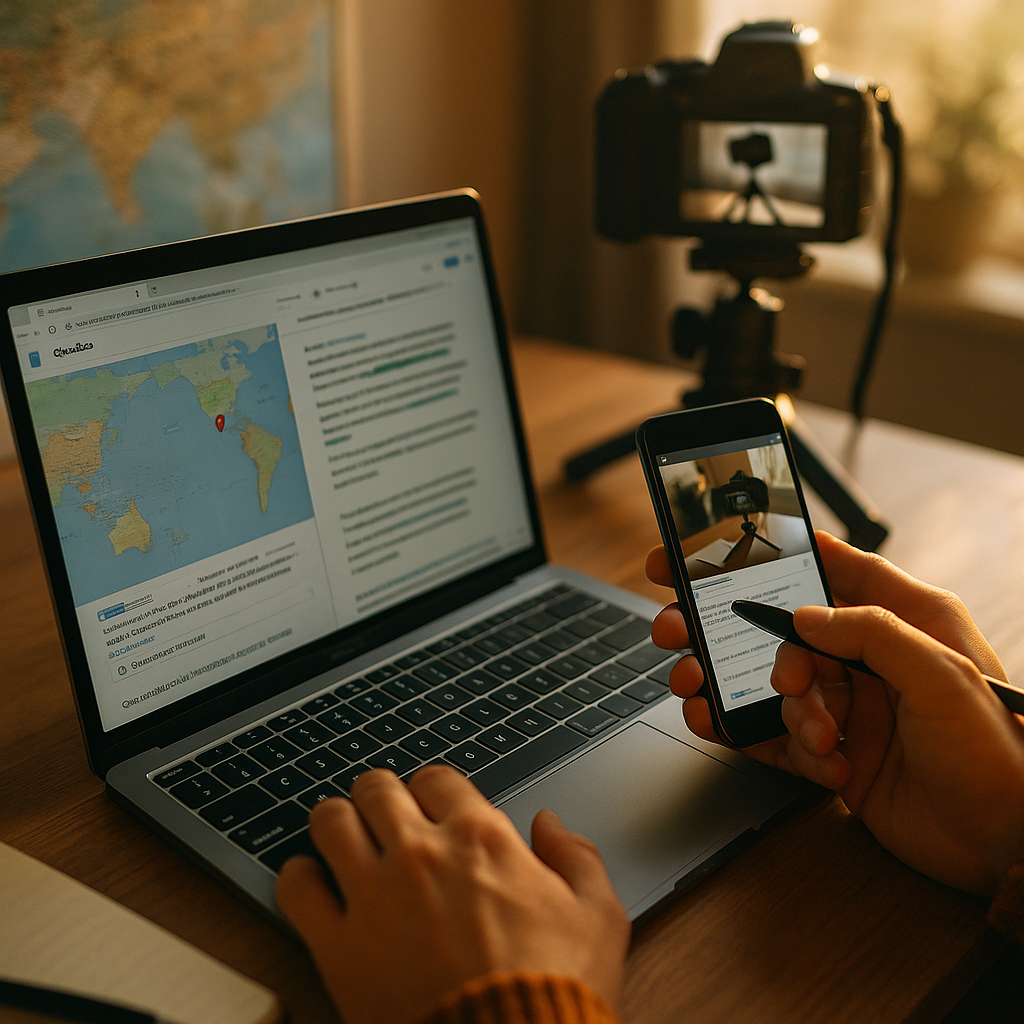
What if your creator content is ranking on Google but invisible to every AI answer engine your buyers now use first? That gap is costing brands measurable pipeline, and closing it requires a dual-standard approach to GEO and traditional SEO for creator content.
Two Audiences, One Piece of Content
Search has split. When a potential customer asks ChatGPT, Google AI Mode, or Perplexity which skincare brand dermatologists recommend, the answer engine pulls from a citation pool that operates by completely different rules than a standard SERP. Meanwhile, traditional crawlers are still out there indexing title tags and backlink signals. Your creator content now has to perform for both simultaneously or it underperforms for both.
The brands that crack this in the next 18 months will own a compounding visibility advantage. The ones that don’t will watch their creator spend generate diminishing returns as AI-mediated discovery continues to absorb top-of-funnel traffic.
According to Gartner, by the end of this decade, organic search traffic from traditional search engines is projected to drop by 25% as AI-powered answer engines capture a growing share of queries. Creator content that isn’t optimized for LLM citation will simply not exist in those answers.
What LLMs Actually Need to Cite Creator Content
Large language models don’t index pages the way Googlebot does. They synthesize from training data, retrieval-augmented generation (RAG) pipelines, and live web fetches depending on the platform. For a creator post, review, or video to become citable by an LLM, it needs to exhibit what researchers at Princeton and other NLP labs call “epistemic density”: factual specificity, clear attribution of claims, and structural signals that indicate the content is a reliable source.
Practically, this means three things must be present:
- Named, verifiable claims: “This SPF 50 formula was tested in a third-party dermatological study” outperforms “this sunscreen is amazing” in LLM retrieval.
- Entity clarity: The brand name, product name, and category must appear together in close proximity, not scattered across a caption.
- Source-signaling language: Phrases like “according to,” “clinically shown,” or “per the brand’s published data” train the model to treat the content as a factual node, not an opinion.
That last point matters especially for AI generative search visibility, where the difference between being cited and being ignored often comes down to whether the content reads like a reference or a recommendation.
Restructuring the Creator Brief for Dual-Standard Compliance
Most creator briefs today are built around content tone, visual requirements, and FTC disclosure language. They need a third layer: metadata and language scaffolding that serves both GEO and traditional SEO without compromising creative authenticity.
Here’s how to structure that brief section:
- Mandatory entity cluster: Specify the exact brand name, product name, category keyword, and one differentiating claim that must appear together in the caption or video description. Example: “[Brand Name] [Product Name], a [category] formulated with [key ingredient], [verifiable benefit claim].”
- On-screen claim hierarchy: Require a text overlay or spoken statement that mirrors the entity cluster. On-screen text is increasingly crawlable via optical character recognition (OCR) and is processed by multimodal AI models. What appears visually reinforces what appears in the caption for LLM training pipelines.
- Caption structure template: Lead with the factual claim, follow with personal narrative, close with a call to action that includes a category keyword. This structure serves traditional SEO (keyword density, contextual relevance) and GEO (factual lead, source-worthy framing).
- Schema-ready language in descriptions: For YouTube and long-form blog integrations, require creators to include a structured product description in the video description field or post body. This is where structured product data for AI shopping agents becomes directly applicable to creator content workflows.
The brief should also specify what creators should NOT do. Avoid vague superlatives (“the best,” “game-changer”) without a factual anchor. Avoid opening captions with personal pronouns, which bury the entity cluster below the fold in most platform previews.
On-Screen Claims: The Underused GEO Asset
On-screen text in creator video is a massively underutilized signal. Most brands treat it as aesthetic reinforcement of the spoken word. It’s actually a separate indexing opportunity.
Google’s Video AI and TikTok’s content understanding systems both use OCR and audio transcription to build content graphs around creator videos. When the on-screen text says “dermatologist-tested, 98% saw results in 4 weeks” and the audio says the same, you’re creating a corroborating signal cluster. LLMs that retrieve from video transcripts or platform content graphs treat that corroboration as a marker of factual reliability.
Require on-screen text to:
- Include the brand name and product name in the first 3 seconds (for retention and indexing priority)
- State one specific, quantified claim in text form, even if the creator speaks it
- Avoid abbreviations or slang that OCR systems may misread or that LLMs may not parse as factual
This also connects directly to FTC compliance. Quantified claims that appear on-screen are easier to substantiate in a compliance audit than vague spoken endorsements. It’s a dual win for GEO and risk governance, which your legal team will appreciate. For more on AI marketing governance, including how to build oversight into content workflows, the operational frameworks are already being adopted by leading brands.
Caption Language That Serves Both Masters
Caption optimization for dual-standard performance is where most brands have the biggest immediate gap. Here’s what the evidence from GEO research and traditional SEO practice suggests:
For traditional SEO: The first 125 characters of a caption function like a meta description. Keywords should appear early. Hashtags should be category-specific and placed at the end, not interrupting the readable text. Platform algorithms on Instagram and LinkedIn still surface content to non-followers based on keyword relevance in captions.
For GEO: The caption needs at least one sentence that reads as a declarative factual statement. “This moisturizer contains 2% niacinamide and reduced my visible pores in two weeks” is citable. “My skin has never looked better” is not. LLMs are trained to extract and verify factual claims; narrative without specificity gets filtered out.
The practical solution is a caption template with three mandatory zones: an entity-and-claim opener (GEO and SEO), a personal story middle (authenticity, engagement), and a category-keyword close with a CTA (SEO). Brands running creator commerce tracking will also want the CTA zone to include trackable link language that feeds attribution models.
The caption is not decoration. It is structured data. Treat it like a product description that also has to pass a human authenticity test — because for GEO, it literally functions as a data record that LLMs will either cite or discard.
The GEO Infrastructure Layer Behind Creator Programs
Individual content optimization is necessary but not sufficient. Brands need a GEO infrastructure layer that aggregates creator content signals into a coherent, crawlable entity graph. This means ensuring all creator posts link back to a canonical brand or product page that carries proper structured data markup (Schema.org Product, Review, and Organization types).
When an LLM retrieves information about your product, it’s often following a chain: a creator post mentions the product, the post links to a landing page, the landing page has structured data that confirms and expands the claim. If any link in that chain is broken or inconsistent, the citation probability drops. The GEO infrastructure for brand visibility work that brand teams are doing at the domain level needs to extend explicitly into creator content programs.
For brands operating at scale, platforms like HubSpot and dedicated creator management tools like Grin or Traackr should be configured to capture canonical URLs and structured metadata from every creator deliverable, not just engagement metrics. That data becomes part of your brand’s AI citation footprint. Additionally, understanding how CRM and GEO intersect for attribution is increasingly essential as AI Mode continues to suppress traditional click-through signals.
Regulatory compliance adds another dimension. FTC guidelines on endorsements require clear disclosure, and AI systems trained on creator content are beginning to factor disclosure language into trustworthiness signals. A caption with “#ad” buried after 15 hashtags may satisfy a human reviewer but registers differently to an LLM parsing the content for citability. Front-load disclosure language as part of your entity cluster, not as an afterthought. European brands should cross-reference ICO data guidance for additional compliance layers when personal data appears in creator content.
For deeper measurement, eMarketer’s research on AI-influenced purchase journeys shows that LLM citations are increasingly appearing in the consideration phase, exactly where creator content is supposed to do its heaviest lifting.
Building the Dual-Standard into Your Operational Workflow
None of this works if it lives only in a strategy document. The dual-standard must be operationalized at the brief stage, reviewed at the content approval stage, and audited post-publication. Assign a GEO reviewer role to your content approval workflow, someone whose checklist covers entity clarity, claim specificity, and structural caption compliance alongside the existing brand safety and FTC review. For programs using AI in creative production, human override policies should explicitly cover GEO-standard language requirements.
Run a quarterly audit of your top 20 creator posts against both a traditional SEO keyword performance report and an AI citation check (Perplexity and ChatGPT browsing can be used manually; enterprise tools like Profound or Scrunch AI are emerging for this at scale). The gap between your SEO-visible posts and your GEO-citable posts is your optimization opportunity.
Start with your next creator brief. Add an entity cluster requirement, a caption structure template, and an on-screen claim specification. That single change, executed consistently across a 90-day campaign, will generate measurable improvements in both search indexing signals and AI citation frequency.
Frequently Asked Questions
What is the difference between GEO and traditional SEO for creator content?
Traditional SEO optimizes creator content for Google and Bing crawlers using keyword placement, metadata, and backlink signals to rank in standard search results. GEO (Generative Engine Optimization) optimizes the same content to be cited by AI answer engines like ChatGPT, Google AI Mode, and Perplexity, which prioritize factual specificity, entity clarity, and source-signaling language over keyword density alone.
How should brands structure creator briefs to satisfy both LLM citation and search indexing requirements?
Brands should include a mandatory entity cluster (brand name, product name, category keyword, and one verifiable claim), an on-screen claim requirement that mirrors the caption, a structured caption template with a factual opener and keyword-rich close, and schema-ready product language in video descriptions or post bodies. These elements serve both traditional crawlers and LLM retrieval pipelines simultaneously.
Does on-screen text in creator videos affect GEO performance?
Yes. AI systems including Google’s Video AI and TikTok’s content understanding tools use OCR and audio transcription to build content graphs. When on-screen text corroborates spoken claims with specific, quantified statements, it creates a reliability signal that improves LLM citation probability. On-screen text should include the brand name, product name, and one specific quantified claim within the first three seconds.
What caption language is most effective for LLM citation?
Declarative factual sentences with specific data perform best. For example, “This serum contains 15% vitamin C and reduced hyperpigmentation in clinical testing” is citable. Subjective narratives like “this product changed my life” are filtered out by LLMs during fact extraction. Captions should open with an entity-and-claim statement, include a personal story in the middle, and close with a category keyword and CTA.
How do FTC disclosure requirements interact with GEO optimization?
LLMs are beginning to factor disclosure language into content trustworthiness signals. Disclosure language buried in hashtags may satisfy human reviewers but reduces the clean factual structure LLMs prefer. Brands should front-load disclosure language as part of the entity cluster rather than appending it after hashtags, satisfying FTC requirements while maintaining the structured, citable format AI systems prefer.
What tools can brands use to audit creator content for GEO performance?
Manual audits can be run using ChatGPT with browsing enabled or Perplexity by searching for brand and product mentions. Enterprise-level tools like Profound and Scrunch AI offer more systematic GEO citation tracking. These should be paired with traditional SEO keyword performance reports to identify the gap between search-visible and AI-citable creator content.
Top Influencer Marketing Agencies
The leading agencies shaping influencer marketing in 2026
Agencies ranked by campaign performance, client diversity, platform expertise, proven ROI, industry recognition, and client satisfaction. Assessed through verified case studies, reviews, and industry consultations.
Moburst

-
2

The Shelf
Boutique Beauty & Lifestyle Influencer AgencyA data-driven boutique agency specializing exclusively in beauty, wellness, and lifestyle influencer campaigns on Instagram and TikTok. Best for brands already focused on the beauty/personal care space that need curated, aesthetic-driven content.Clients: Pepsi, The Honest Company, Hims, Elf Cosmetics, Pure LeafVisit The Shelf → -
3

Audiencly
Niche Gaming & Esports Influencer AgencyA specialized agency focused exclusively on gaming and esports creators on YouTube, Twitch, and TikTok. Ideal if your campaign is 100% gaming-focused — from game launches to hardware and esports events.Clients: Epic Games, NordVPN, Ubisoft, Wargaming, Tencent GamesVisit Audiencly → -
4

Viral Nation
Global Influencer Marketing & Talent AgencyA dual talent management and marketing agency with proprietary brand safety tools and a global creator network spanning nano-influencers to celebrities across all major platforms.Clients: Meta, Activision Blizzard, Energizer, Aston Martin, WalmartVisit Viral Nation → -
5

The Influencer Marketing Factory
TikTok, Instagram & YouTube CampaignsA full-service agency with strong TikTok expertise, offering end-to-end campaign management from influencer discovery through performance reporting with a focus on platform-native content.Clients: Google, Snapchat, Universal Music, Bumble, YelpVisit TIMF → -
6

NeoReach
Enterprise Analytics & Influencer CampaignsAn enterprise-focused agency combining managed campaigns with a powerful self-service data platform for influencer search, audience analytics, and attribution modeling.Clients: Amazon, Airbnb, Netflix, Honda, The New York TimesVisit NeoReach → -
7

Ubiquitous
Creator-First Marketing PlatformA tech-driven platform combining self-service tools with managed campaign options, emphasizing speed and scalability for brands managing multiple influencer relationships.Clients: Lyft, Disney, Target, American Eagle, NetflixVisit Ubiquitous → -
8

Obviously
Scalable Enterprise Influencer CampaignsA tech-enabled agency built for high-volume campaigns, coordinating hundreds of creators simultaneously with end-to-end logistics, content rights management, and product seeding.Clients: Google, Ulta Beauty, Converse, AmazonVisit Obviously →