


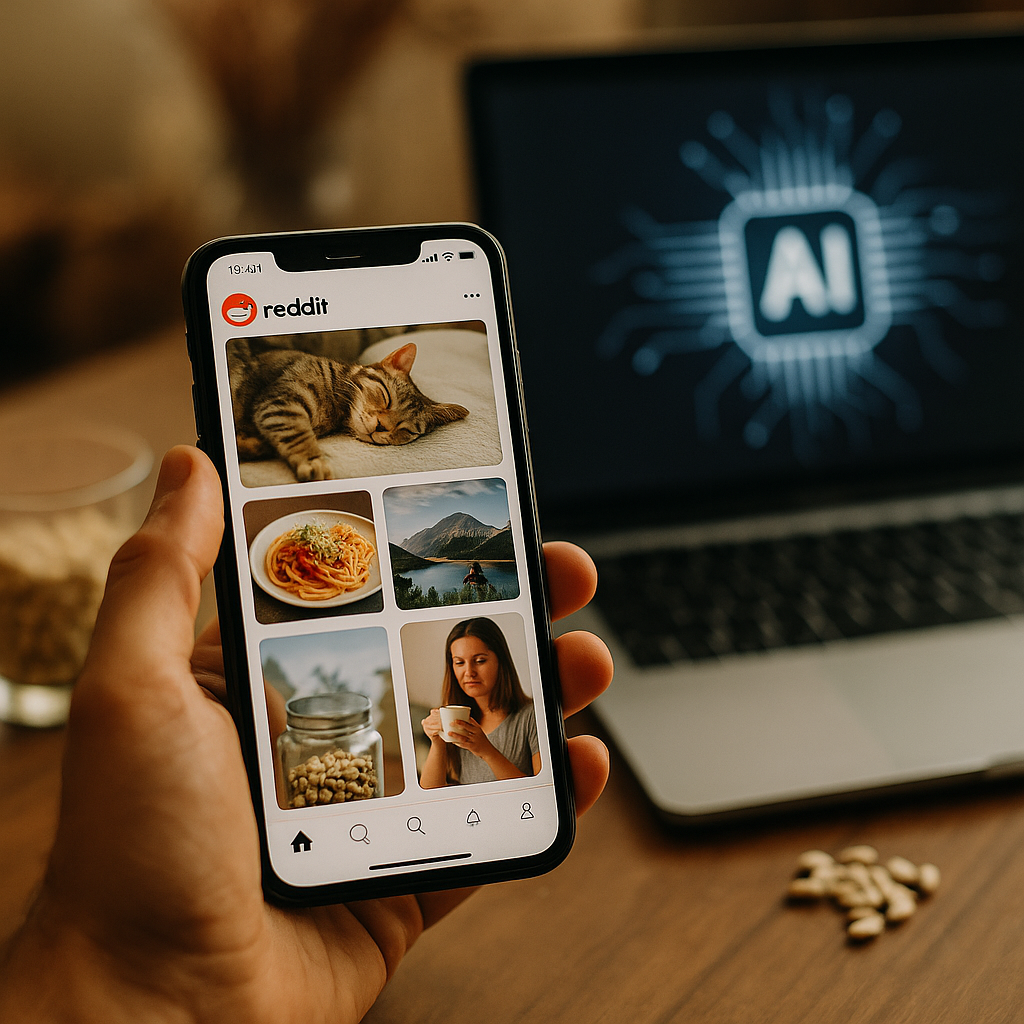
Reddit’s moderation sweep flagged over 40% of brand-seeded community posts as AI-generated or inauthentic in recent platform audits. If your UGC community program still relies on templated prompts, incentivized bulk posting, or AI-written “authentic” reviews, you are not just losing reach — you are building brand risk.
What Reddit’s Crackdown Actually Changed
Reddit’s shift wasn’t purely ideological. The platform deployed upgraded AI detection models capable of identifying linguistic fingerprints across coordinated post clusters: uniform sentence structure, suspiciously similar posting cadences, and account histories that don’t match the community engagement patterns of genuine users. The result was swift deindexing of threads and, in some cases, subreddit-wide trust penalties that affected organic brand mentions alongside the bad actors.
The downstream effect for brands is significant. Subreddit communities like r/SkincareAddiction, r/frugalmalefashion, and r/Supplements — high-intent spaces where purchase decisions are heavily influenced by peer reviews — are now actively hostile to anything that smells like coordinated seeding. Moderators have more detection tools. Regular users have sharper pattern recognition. And Reddit’s own algorithm now weights account karma depth, post history, and community participation before surfacing content in feeds.
The brands that survive Reddit’s new detection regime aren’t the ones posting less — they’re the ones whose community members post because they genuinely want to, not because they were templated into it.
TikTok and Instagram are on the same trajectory. TikTok’s trust and safety team has publicly committed to reducing “coordinated inauthentic behavior” in creator content, which increasingly includes brand-seeded UGC that uses identical hooks, hashtag clusters, or suspiciously synchronized posting windows. Instagram’s ranking algorithm now deprioritizes content that shows signals of mass production: repetitive audio layering, near-duplicate captions, or engagement patterns that spike unnaturally fast then flatline.
Why Most Brand Community Programs Are Built for the Old Playbook
The standard brand community seeding model was optimized for volume. Send product to 200 micro-creators or superfans, provide a brief with key messages and suggested hashtags, and let the posts roll in. Simple, scalable, cost-efficient. The problem is that this model was essentially optimized for a platform environment that no longer exists.
Volume-first UGC programs have four structural vulnerabilities in the current detection environment:
- Homogenized language patterns. When 150 people receive the same brief, their posts cluster around the same vocabulary, even when they think they’re being original. AI detection reads this as coordinated.
- Artificial posting synchronization. Campaign launch dates create unnatural posting spikes that platform algorithms now flag.
- Thin account histories. Superfan programs that recruit new accounts or low-activity users create the exact profile that detection models target first.
- Incentive disclosure gaps. FTC disclosure requirements have tightened, and platforms are cross-referencing gifting relationships with posting behavior. Non-disclosure isn’t just a legal risk — it’s a detection signal.
The brands building durable UGC programs are making a fundamental architectural shift: from seeding content to seeding conditions.
Redesigning Content Seeding for High-Authenticity Standards
Seeding conditions means engineering the circumstances that produce genuine, variable, high-quality posts — not providing a template and hoping for compliance.
Concretely, this looks like several specific changes:
Decouple the product experience from the posting prompt. Instead of sending a product with a brief that says “share your review using #BrandXGlow,” send the product with a curated experience context: a handwritten note, a use-case suggestion tailored to that specific user’s known interests, or an invitation to an exclusive community event. The posting decision — and the post content — emerges from the experience, not from the instructions. This produces genuine variance in language, timing, and format.
Invest in community depth before asking for content. Brands that maintain active, non-promotional community touchpoints — a Discord, a private Slack, a brand-hosted Reddit AMA — have a pool of participants whose posting history and account depth can withstand platform scrutiny. These aren’t influencers in the traditional sense; they’re genuine community members with real profiles. For how to structure this at scale, the nano creator programs at scale framework is directly applicable here, particularly the tiering logic for community depth versus posting frequency.
Accept asynchronous posting as a feature, not a bug. High-authenticity UGC programs produce posts over weeks, not in 72-hour windows. This actually looks more authentic to platform algorithms and generates longer-tail search and discovery value on Reddit and TikTok alike. Brief your internal stakeholders on why the reporting cadence needs to change.
Incentive Architecture That Doesn’t Trigger Detection
The incentive model is where most programs fail the authenticity test. Straight product-for-post arrangements are increasingly legible to both platform AI and human moderators as transactional, especially when the incentive-to-post ratio is high and the account history is shallow.
What works instead is a layered incentive structure that prioritizes community status over transactional exchange:
- Access before product. Early access to new launches, beta features, or behind-the-scenes content creates status-based motivation that produces genuine advocacy. The post isn’t about the product; it’s about the person’s position in a community they value.
- Recognition mechanisms. Public acknowledgment by the brand — reshares, creator spotlights, invitations to co-create — produces stronger posting motivation than product gifting in retention cohorts. See the creator co-designer model for a structured approach to turning community members into genuine stakeholders.
- Performance-linked rewards with transparent disclosure. For programs that do involve monetary or high-value product incentives, the hybrid contract model (flat engagement base plus performance bonus) distributes incentive across genuine performance metrics, not just posting volume. This also simplifies FTC compliance considerably.
Separate question worth addressing directly: does every community member need to disclose? On Reddit, the FTC’s current position is that any material connection — including free product — requires disclosure. On TikTok and Instagram, the platform-level disclosure tools now also feed into the algorithm’s authenticity scoring. Disclosure is no longer just legal protection; it’s a quality signal.
Quality Signals Platforms Actually Reward
Platform AI detection isn’t purely punitive. The same systems that downrank coordinated inauthentic content actively surface content with specific quality markers. Understanding what those markers are is the operational priority for brand content teams right now.
On Reddit, the high-trust signals are: account age (minimum 6 months of active community history), comment-to-post ratio (genuine users comment more than they post), karma distribution across multiple subreddits (not concentrated in one community), and post specificity (reviews that reference personal use context, product variants, or comparison experiences score higher than general praise).
On TikTok, the signals are slightly different. Completion rate and save rate matter more than likes. Content that generates genuine comment questions (not just emoji responses) is weighted more heavily. Posting frequency that matches the creator’s historical cadence — not a sudden spike — gets more algorithmic benefit of the doubt. For brands running UGC-to-paid social distribution stacks, this has direct implications for which pieces of organic UGC are worth amplifying.
On Instagram, the quality signals for UGC are increasingly tied to Reels completion, Story reply rates, and the depth of engagement in comments. A post with 200 genuine comments is algorithmically worth more than a post with 2,000 likes and 4 comments. This should inform how you evaluate UGC quality before deciding to whitelist or boost it.
Disclosure is no longer just a legal requirement — it’s a quality signal that platform algorithms use to assess content authenticity and determine organic distribution.
Governing AI Use Within Your Own Content Program
There’s a real tension here that brand teams need to name explicitly: most marketing operations are increasing AI tool use for content drafting, brief writing, and post ideation, even as platforms are cracking down on AI-generated content. The risk is that AI-assisted briefs produce AI-patterned UGC, even when human creators are doing the posting.
The practical governance rule is this: AI can assist research, ideation, and brief structure, but the specific language, hooks, and creative direction in any UGC brief should be human-authored and individually tailored to each creator or community member. Generic AI-generated briefs are a liability. The AI governance in marketing framework offers a workable definition of the “human creative minimum” that applies directly to UGC brief production.
Also worth reviewing: your brief architecture itself. If your current brief template could produce 150 near-identical posts, it needs a structural overhaul before your next campaign cycle.
The Operational Shift Your Team Needs to Make
High-authenticity UGC programs are not cheaper or faster than the old volume model. They require more relationship infrastructure, longer lead times, more nuanced incentive design, and more sophisticated quality evaluation before amplification decisions. The payoff is content that survives platform detection, builds durable community equity, and delivers compounding organic reach rather than a traffic spike followed by penalties.
Start with an audit of your current community program against the platform quality signals outlined above. Flag every structural feature that produces homogenized language, synchronized posting, or thin account participation. Redesign those features first — before the next campaign brief goes out.
Frequently Asked Questions
How does Reddit’s AI detection actually identify brand-seeded content?
Reddit’s detection models analyze linguistic patterns across post clusters, account karma depth, posting cadence, and community participation history. Content that shows uniform sentence structure, synchronized posting windows, or accounts with shallow subreddit engagement histories is flagged as potentially coordinated. Even genuinely human-written posts can be flagged if the brief that produced them was AI-generated, because the resulting language patterns cluster in ways the model recognizes.
Do community members need to disclose free product on Reddit?
Yes. The FTC’s current guidance requires disclosure of any material connection, including free products, regardless of platform. On Reddit, this means explicitly stating in the post body or comments that the product was received for free or through a brand program. Failure to disclose is both a legal risk and increasingly a platform-level detection signal that can result in post removal or account penalties.
What’s the difference between content seeding and seeding conditions?
Content seeding provides creators or community members with a brief, template, or specific instructions designed to produce a predictable post. Seeding conditions means engineering the experience, access, and community context that motivates genuine, variable posting without directing the content itself. The distinction matters because seeding conditions produce the authentic variance in language, timing, and format that platform AI reads as genuine.
Can AI tools still be used in UGC program management?
Yes, with boundaries. AI can assist with research, analytics, creator identification, and brief structure. The risk is using AI to generate the specific creative direction or language in briefs, which can produce AI-patterned UGC even when human creators write the final posts. Maintaining a “human creative minimum” — where the specific hooks, creative framing, and personalization in each brief are human-authored — is the practical governance standard.
How should brands evaluate UGC quality before boosting or whitelisting it?
Evaluate against the platform-specific quality signals: on Reddit, look for post specificity, comment depth, and account history. On TikTok, prioritize completion rate, save rate, and genuine comment engagement over like counts. On Instagram, comment depth and Story reply rates are stronger indicators than surface-level engagement metrics. UGC that scores well on these signals is worth amplifying; UGC that doesn’t will underperform even with paid budget behind it.
Top Influencer Marketing Agencies
The leading agencies shaping influencer marketing in 2026
Agencies ranked by campaign performance, client diversity, platform expertise, proven ROI, industry recognition, and client satisfaction. Assessed through verified case studies, reviews, and industry consultations.
Moburst

-
2

The Shelf
Boutique Beauty & Lifestyle Influencer AgencyA data-driven boutique agency specializing exclusively in beauty, wellness, and lifestyle influencer campaigns on Instagram and TikTok. Best for brands already focused on the beauty/personal care space that need curated, aesthetic-driven content.Clients: Pepsi, The Honest Company, Hims, Elf Cosmetics, Pure LeafVisit The Shelf → -
3

Audiencly
Niche Gaming & Esports Influencer AgencyA specialized agency focused exclusively on gaming and esports creators on YouTube, Twitch, and TikTok. Ideal if your campaign is 100% gaming-focused — from game launches to hardware and esports events.Clients: Epic Games, NordVPN, Ubisoft, Wargaming, Tencent GamesVisit Audiencly → -
4

Viral Nation
Global Influencer Marketing & Talent AgencyA dual talent management and marketing agency with proprietary brand safety tools and a global creator network spanning nano-influencers to celebrities across all major platforms.Clients: Meta, Activision Blizzard, Energizer, Aston Martin, WalmartVisit Viral Nation → -
5

The Influencer Marketing Factory
TikTok, Instagram & YouTube CampaignsA full-service agency with strong TikTok expertise, offering end-to-end campaign management from influencer discovery through performance reporting with a focus on platform-native content.Clients: Google, Snapchat, Universal Music, Bumble, YelpVisit TIMF → -
6

NeoReach
Enterprise Analytics & Influencer CampaignsAn enterprise-focused agency combining managed campaigns with a powerful self-service data platform for influencer search, audience analytics, and attribution modeling.Clients: Amazon, Airbnb, Netflix, Honda, The New York TimesVisit NeoReach → -
7

Ubiquitous
Creator-First Marketing PlatformA tech-driven platform combining self-service tools with managed campaign options, emphasizing speed and scalability for brands managing multiple influencer relationships.Clients: Lyft, Disney, Target, American Eagle, NetflixVisit Ubiquitous → -
8

Obviously
Scalable Enterprise Influencer CampaignsA tech-enabled agency built for high-volume campaigns, coordinating hundreds of creators simultaneously with end-to-end logistics, content rights management, and product seeding.Clients: Google, Ulta Beauty, Converse, AmazonVisit Obviously →