


When the Last Click Belongs to a Chatbot
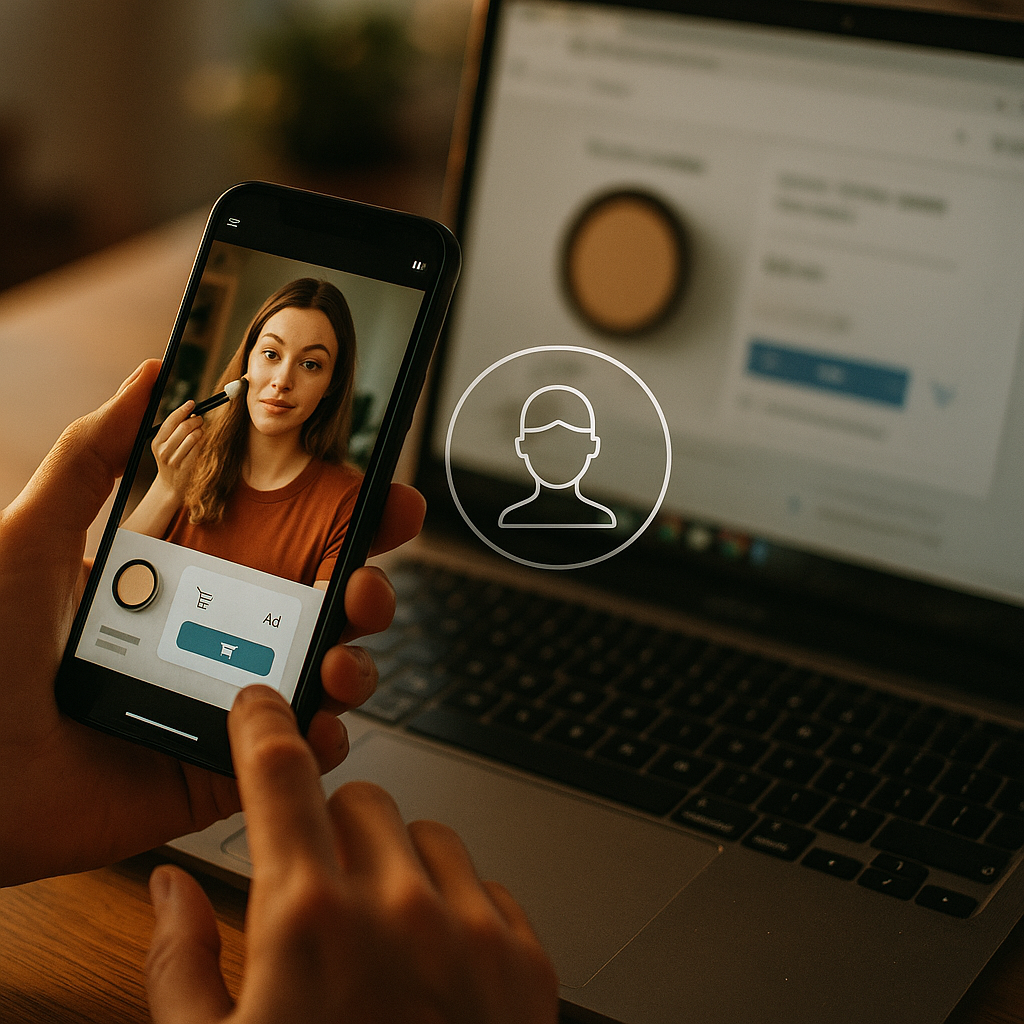
A consumer asks ChatGPT which skincare serum dermatologists recommend. The AI cites a creator’s video. The consumer buys. Your attribution model records zero organic touchpoints. This is not a future problem. It is happening right now, at scale, across every category from consumer electronics to CPG — and most influencer measurement frameworks are completely blind to it.
If your current influencer ROI story runs through last-click UTMs and platform-native dashboards, you are already undercounting creator influence. The AI purchase journey has fractured the traditional funnel in ways that demand a structural rethink of how influence is defined, captured, and reported.
Why Traditional Attribution Breaks in an AI-Mediated Journey
The classic influencer attribution stack was built for a specific assumption: consumers travel from creator content to a trackable click to a conversion. Affiliate links, discount codes, UTM parameters — all of these assume the consumer is the active navigator. AI assistants invert that assumption entirely.
When a user queries Perplexity, Google’s AI Overviews, or Claude for product recommendations, the AI synthesizes multiple sources and delivers a recommendation without requiring the user to click any of them. The creator whose video, blog post, or review informed that recommendation receives no referral credit. The brand gets no session data. The purchase happens, and the entire upstream influence chain is invisible.
According to data from eMarketer, AI-assisted search interactions are projected to account for a significant share of product discovery queries in key retail categories. When those queries resolve in zero-click AI answers, conventional tracking infrastructure captures none of the creator influence that shaped them.
This is not a gap in your analytics. It is a structural incompatibility between legacy measurement and a new consumer behavior pattern. Fixing it requires working at three layers simultaneously: citation tracking, proxy signal design, and measurement framework reorientation.
Zero-Click Attribution: Accepting What You Cannot Directly Measure
Zero-click attribution is not a new technique. It is a philosophical acceptance that some of your highest-value influence touchpoints will never produce a trackable click. The strategic response is to build measurement architectures that triangulate value rather than trace it linearly.
Start by reframing what you are trying to prove. In an AI-mediated journey, creator influence manifests as brand mention frequency in AI outputs, share of recommendation in category queries, and sentiment polarity when your brand is cited. None of these appear in a Shopify conversion report. All of them are measurable with the right instrumentation.
For zero-click attribution and proxy metrics, the practical starting point is systematic LLM query testing. Build a query bank of 50 to 200 category-relevant prompts — phrased the way real consumers ask — and run them weekly across ChatGPT, Perplexity, Google AI Overviews, and Claude. Track whether your brand appears, in what context, and whether creator-produced content is surfaced as a citation source. This is manual at first. It scales with tooling.
Proxy Signals That Actually Proxy Something Real
Proxy signals are leading indicators that correlate with purchase intent even when direct attribution is impossible. In an AI-assisted purchase journey, three proxy signals carry the most weight.
Branded search lift. When a creator’s content about your brand is cited by an AI assistant, consumers who receive that recommendation often conduct a follow-up branded search before purchasing. If a creator campaign runs concurrently with a measurable increase in branded search volume (tracked via Google Search Console or a tool like Semrush), that correlation is causal evidence of influence, even without a click path.
Direct traffic spikes. AI-recommended users frequently navigate directly to brand sites by typing URLs or using bookmarks rather than clicking links. Correlating direct traffic anomalies with creator campaign windows gives you another proxy layer. It is imprecise. Use it as corroborating data, not primary evidence.
Share of voice in AI outputs. Tools like Profound, Goodie AI, and Otterly.AI now offer structured LLM visibility tracking. They query AI systems at scale and report brand mention rates, sentiment, and citation sources. LLM brand tracking is becoming a standard CMO reporting layer, and creator content is one of the primary inputs that shapes those AI outputs.
These three signals, stacked together, build a proxy attribution case that holds up in budget conversations even without a direct click chain. The goal is a preponderance of evidence, not a single traceable path.
Multi-Model Citation Tracking: The Technical Infrastructure
Here is where most brand teams underinvest. Citation behavior varies significantly across AI models. A creator’s YouTube video might be cited heavily by Perplexity but ignored by Claude. A product review on a creator’s blog might surface in Google AI Overviews but never appear in ChatGPT responses. Tracking one model gives you a fragment. Tracking all of them gives you your actual AI presence footprint.
Multi-model citation tracking requires three things: a standardized query set, a consistent testing cadence, and a structured schema that makes creator content machine-readable in the first place. That last point is where most influencer programs fall short. If creator content is not structured for AI search visibility, it will not be retrieved, and therefore cannot be cited.
Work with creators to embed structured metadata, clear product mentions, and explicit brand associations in content descriptions, transcripts, and schema markup. This is not about keyword stuffing. It is about making the connection between creator content and your brand legible to AI retrieval systems. For a deeper technical foundation, GEO practices for creator content and briefs provide the operational blueprint.
On the attribution side, AI identity resolution for creator campaigns can help stitch together fragmented signals — connecting a consumer’s AI-assisted discovery moment to a later direct conversion, even without a continuous click path.
Redesigning Your Measurement Framework
A redesigned influence measurement framework for the AI purchase journey has four components.
- LLM presence scoring: A weekly or bi-weekly score measuring how often your brand and your creators’ content appear in AI outputs across a standardized query set. Baseline this before campaigns launch.
- Proxy signal dashboard: Branded search volume, direct traffic trends, and share of voice in AI responses, reported alongside campaign timing to surface correlations.
- Creator citation audit: A per-creator breakdown of which content pieces are being retrieved by AI systems, enabling optimization of briefs and content formats toward higher citation rates.
- Incrementality testing: Running holdout tests to measure whether LLM presence actually lifts conversion, not just awareness. Incrementality testing for agentic campaigns applies here.
The framework will not replace your existing attribution stack. It layers on top of it, capturing the influence that your current system cannot see.
Brands that treat LLM citation share as a vanity metric are making the same mistake marketers made with organic social reach in 2012. The AI-mediated purchase journey is not a niche behavior. It is a mainstream consumer pattern that will only deepen as AI assistants become the default interface for product discovery.
One note on compliance: as AI platforms like FTC-regulated disclosure environments evolve, creator content that influences AI recommendations may eventually carry disclosure obligations even when the recommendation is AI-generated. Monitor regulatory guidance actively. The FTC has been expanding its interpretation of endorsement rules, and AI-mediated creator influence sits in genuinely ambiguous territory right now.
For the operational side of scaling this kind of tracking, a strong AI data foundation is non-negotiable. Fragmented data pipelines will undermine every proxy signal you try to build. Invest in clean data infrastructure before you invest in new measurement tooling.
And if you need to understand how AI agents interact with brand content at a structural level, the mechanics of silent AI agent attribution covers the CRM and GEO layer in detail.
External platforms like Sprout Social and HubSpot are beginning to integrate AI mention tracking into their reporting suites, though coverage remains uneven. Statista data on AI assistant adoption rates in shopping contexts can help you build the business case internally for investing in this measurement layer.
The Only Measurement Mistake You Cannot Afford
Do not wait for a perfect attribution model before acting. Start querying AI systems for your brand today. Map which creator content is being cited. Build a baseline. The brands that build measurement infrastructure for the AI purchase journey now will have the data advantage when AI-mediated commerce becomes the dominant pattern — which, by most credible forecasts, is not far off.
Pick one measurement layer from this framework — LLM presence scoring is the fastest to stand up — and launch a 90-day pilot alongside your next creator campaign. That is the starting point.
Frequently Asked Questions
What is zero-click attribution in influencer marketing?
Zero-click attribution refers to the challenge of measuring creator influence when a consumer never clicks a trackable link before purchasing. In AI-mediated journeys, a chatbot or AI assistant may recommend a brand based on creator content, and the consumer buys directly without visiting any intermediate page. Standard UTM and affiliate link tracking cannot capture this. Zero-click attribution relies on proxy signals — branded search lift, direct traffic correlation, and LLM mention frequency — to infer influence rather than trace it.
How can brands track whether creator content is being cited by AI assistants?
Brands can use dedicated LLM visibility tools such as Profound, Goodie AI, or Otterly.AI to systematically query AI platforms like ChatGPT, Perplexity, Claude, and Google AI Overviews. By running a standardized set of category-relevant queries on a regular cadence, brands can track mention frequency, citation sources, and sentiment. Correlating this data with specific creator campaigns helps identify which content formats and creators drive the most AI citation share.
Why does AI citation tracking vary across different AI models?
Different AI systems use different retrieval and training methodologies, which means a creator’s content may be indexed and cited by one model but not another. Perplexity, for example, uses real-time web retrieval, while ChatGPT’s base model relies more heavily on training data with optional web browsing. Google AI Overviews draws from its own search index. Each system applies different ranking signals, so multi-model citation tracking is necessary to get an accurate picture of your brand’s AI presence footprint.
What proxy signals are most reliable for AI-mediated purchase attribution?
The three most reliable proxy signals are branded search volume lift (tracked via Google Search Console), direct traffic spikes correlated with creator campaign windows, and share of voice in AI outputs measured by LLM tracking tools. None of these signals is individually conclusive, but together they build a preponderance of evidence that creator influence is driving purchase intent even when no direct click path exists. Incrementality testing — comparing conversion rates between exposed and holdout groups — adds the strongest causal layer to this stack.
Does creator content need to be structured differently to appear in AI recommendations?
Yes. AI retrieval systems favor content that is clearly structured, uses explicit product and brand mentions, and includes machine-readable metadata such as schema markup. Creator content that relies entirely on visual storytelling without clear text descriptions, transcripts, or structured captions is much less likely to be retrieved and cited by AI systems. Brand teams should update creator briefs to include GEO (Generative Engine Optimization) requirements, including product naming conventions, explicit category language, and structured metadata in descriptions and transcripts.
Top Influencer Marketing Agencies
The leading agencies shaping influencer marketing in 2026
Agencies ranked by campaign performance, client diversity, platform expertise, proven ROI, industry recognition, and client satisfaction. Assessed through verified case studies, reviews, and industry consultations.
Moburst

-
2

The Shelf
Boutique Beauty & Lifestyle Influencer AgencyA data-driven boutique agency specializing exclusively in beauty, wellness, and lifestyle influencer campaigns on Instagram and TikTok. Best for brands already focused on the beauty/personal care space that need curated, aesthetic-driven content.Clients: Pepsi, The Honest Company, Hims, Elf Cosmetics, Pure LeafVisit The Shelf → -
3

Audiencly
Niche Gaming & Esports Influencer AgencyA specialized agency focused exclusively on gaming and esports creators on YouTube, Twitch, and TikTok. Ideal if your campaign is 100% gaming-focused — from game launches to hardware and esports events.Clients: Epic Games, NordVPN, Ubisoft, Wargaming, Tencent GamesVisit Audiencly → -
4

Viral Nation
Global Influencer Marketing & Talent AgencyA dual talent management and marketing agency with proprietary brand safety tools and a global creator network spanning nano-influencers to celebrities across all major platforms.Clients: Meta, Activision Blizzard, Energizer, Aston Martin, WalmartVisit Viral Nation → -
5

The Influencer Marketing Factory
TikTok, Instagram & YouTube CampaignsA full-service agency with strong TikTok expertise, offering end-to-end campaign management from influencer discovery through performance reporting with a focus on platform-native content.Clients: Google, Snapchat, Universal Music, Bumble, YelpVisit TIMF → -
6

NeoReach
Enterprise Analytics & Influencer CampaignsAn enterprise-focused agency combining managed campaigns with a powerful self-service data platform for influencer search, audience analytics, and attribution modeling.Clients: Amazon, Airbnb, Netflix, Honda, The New York TimesVisit NeoReach → -
7

Ubiquitous
Creator-First Marketing PlatformA tech-driven platform combining self-service tools with managed campaign options, emphasizing speed and scalability for brands managing multiple influencer relationships.Clients: Lyft, Disney, Target, American Eagle, NetflixVisit Ubiquitous → -
8

Obviously
Scalable Enterprise Influencer CampaignsA tech-enabled agency built for high-volume campaigns, coordinating hundreds of creators simultaneously with end-to-end logistics, content rights management, and product seeding.Clients: Google, Ulta Beauty, Converse, AmazonVisit Obviously →