


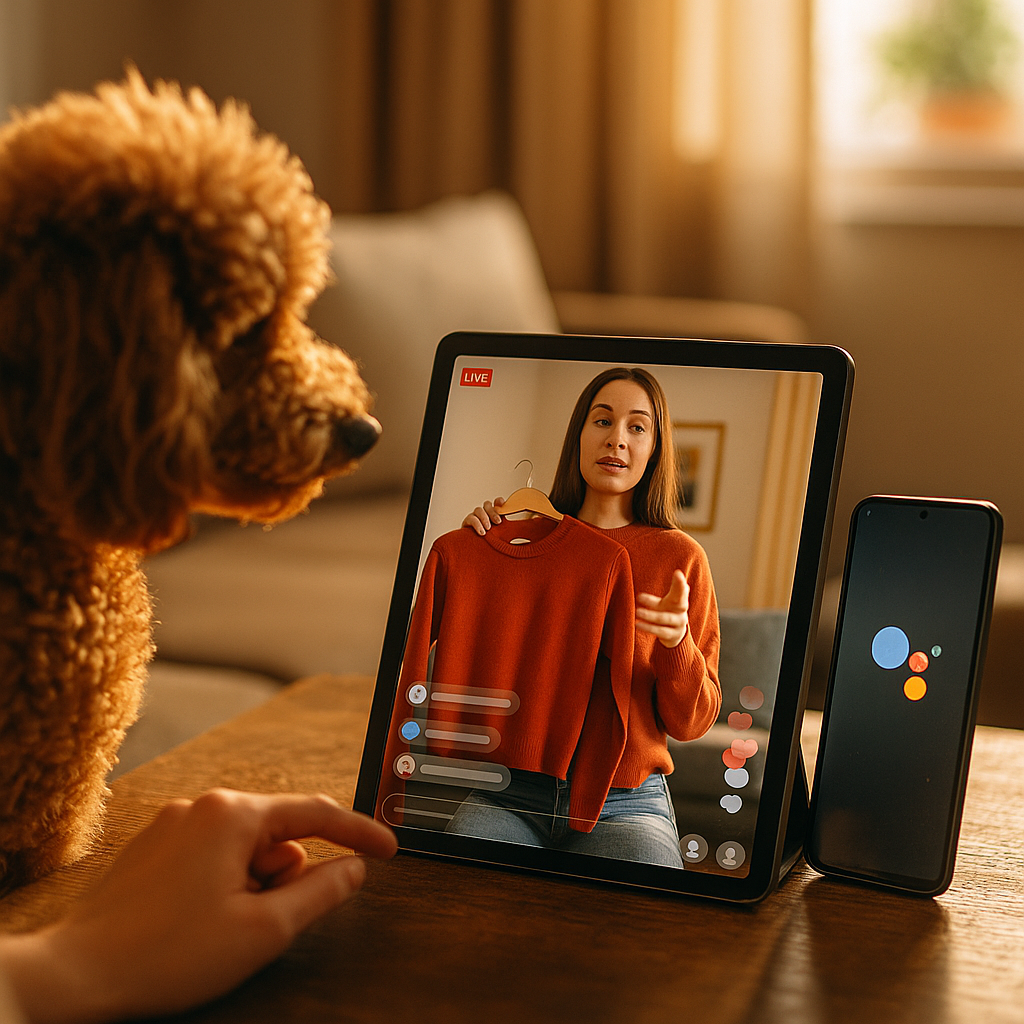
Amazon’s Rufus now influences an estimated 250 million-plus product interactions a month, and Google’s Gemini is quietly rewriting how shopping queries get answered before a human ever clicks a link. If your live-stream shopping product feed isn’t built for AI retrieval, you’re invisible to both. This isn’t a future problem. It’s a this-quarter problem.
Live-stream commerce and AI-driven discovery used to live in separate lanes. One was about real-time hype and creator charisma; the other was about structured data and machine parsing. That separation is gone. Rufus pulls from product listings to answer shopper questions inside Amazon. Gemini surfaces shopping results inside Google’s AI Mode and Shopping Graph. Neither cares how good your live stream looked if the underlying feed can’t be parsed, matched, and trusted.
Why Live-Stream Shopping Needs an AI-Readable Feed
Live commerce sells through urgency and personality. A host holds up a product, talks through it, answers comments, and viewers buy on impulse. That works beautifully in the moment. The problem is what happens after the stream ends.
Most of the products shown in a live stream still need to be discoverable through normal search and AI assistants for weeks afterward. A shopper who saw a serum on a TikTok Shop live last Tuesday might ask Gemini three days later, “what’s that vitamin C serum the skincare live-streamers were using.” If your product data doesn’t connect the dots, that query goes to a competitor with cleaner metadata.
Live-stream shopping generates the demand signal. AI search engines decide whether that demand converts later, and they only reward brands whose product data is structured enough to be retrieved with confidence.
This is the operational blind spot most brand teams have right now. Marketing owns the stream. Ecommerce ops owns the feed. Nobody owns the handoff between the two, and Rufus or Gemini won’t fill that gap for you.
What Rufus Actually Reads
Rufus is Amazon’s generative shopping assistant, and it draws from listing content, customer reviews, Q&A, and — increasingly — live shopping event metadata. It doesn’t “watch” your stream. It reads what your stream produced: titles, bullet points, attribute fields, and any structured event data tied to the listing.
Here’s what that means practically:
- Attribute completeness matters more than keyword stuffing. Rufus weighs structured fields (material, size, use case, ingredient list) heavily when answering comparison questions.
- Reviews mentioning live-stream context help. If shoppers reference “the live” or a host’s name in reviews, that becomes retrievable context Rufus can surface.
- Freshness signals count. Listings updated around a live event (new images, updated bullets, a bundle SKU) tend to get pulled into Rufus responses tied to trending queries.
Brands that treat Amazon listings as static after initial upload are leaving retrieval opportunities on the table. Every live-stream event should trigger a listing refresh, not just a sales push. This mirrors what we’ve seen in broader AI-referred purchase audits on Amazon — the brands winning Rufus visibility are the ones auditing listings on a schedule, not once at launch.
Gemini’s Shopping Graph plays a different game
Gemini doesn’t live inside a single retail platform. It pulls from Google’s Shopping Graph, which ingests merchant feeds, structured data markup, and increasingly, real-time inventory and pricing signals. When Gemini answers a shopping query inside AI Mode, it’s synthesizing across multiple retailers, not just recommending from one catalog.
That means your product feed needs to work in two directions at once: optimized for Google Merchant Center ingestion, and marked up with schema that Gemini’s retrieval layer can parse without ambiguity. Missing GTINs, vague product types, or inconsistent naming across SKUs quietly disqualify you from being considered at all. Gemini doesn’t guess. It skips.
The Feed Structure That Actually Works
Forget generic “SEO for product pages” advice. AI discovery for live-stream commerce needs a specific structure. Based on how Rufus and Gemini both retrieve and rank product data, here’s the baseline:
- Unique, descriptive titles per SKU — no duplicate titles across color or size variants. Include the core use case, not just the product name.
- Structured attributes in every field Amazon and Google Merchant Center offer, not just the required ones. Optional fields are often what differentiate you in an AI comparison answer.
- Schema.org Product and Offer markup on your DTC site, kept in sync with live inventory and pricing — stale schema actively hurts you with Gemini.
- Live-event metadata tagging: tie SKUs shown in a stream to a “live shopping” attribute or custom label so retailers and AI systems can associate timing with the product.
- Review and Q&A seeding post-stream, encouraging buyers to mention specific use cases, since this becomes retrievable long-tail context for Rufus.
- Consistent identifiers (GTIN, MPN, brand) across every channel the product appears in — TikTok Shop, Amazon, DTC site, Google Shopping — because AI systems cross-reference to build confidence in a match.
None of this is exotic. It’s disciplined feed hygiene applied to a channel — live commerce — that most teams still treat as a creative exercise rather than a data pipeline.
A quick gut check
Pull up your last three live-stream shopping events. Can you find the SKUs sold, the schema markup tied to them, and confirm it’s been updated since the stream aired? If the answer is no, you’re not ready for AI discovery — you’re just hoping for it.
Attribution Gets Murkier, Not Easier
Here’s the uncomfortable part. Even if you nail the feed structure, measuring whether Rufus or Gemini actually drove a sale is hard. These are largely zero-click or low-click discovery moments. A shopper asks Gemini a question, gets a synthesized answer with your product mentioned, and buys later through a different path entirely.
This isn’t unique to live commerce, but live-stream shopping makes it worse because you’re already dealing with fragmented attribution between the platform hosting the stream (TikTok, Amazon Live, Whatnot) and wherever the AI assistant surfaces the product afterward. Teams that have mapped this problem in adjacent contexts, like creator attribution in AI purchase journeys, are already building proxy metrics — branded query lift, AI citation frequency, assisted conversion windows — rather than waiting for clean last-click data that isn’t coming.
Set expectations with leadership now. If your reporting deck still assumes attribution parity with paid social, you’re setting up for an uncomfortable quarterly review. For a broader framework on this, see how zero-click AI attribution reporting is evolving across the industry.
Risk, Compliance, and the Live-Stream Wildcard
Live shopping adds a compliance layer that static product feeds don’t have: real-time claims made verbally by hosts. If a live-stream host makes an unsubstantiated claim (“this cured my eczema in three days”), and that claim gets captured in a review, transcript, or social clip that later feeds into an AI system’s training or retrieval corpus, you’ve created a durable liability, not a fleeting one.
The FTC’s endorsement guidance already applies to live commerce disclosures. What’s new is that AI search engines can inadvertently launder those claims into seemingly neutral, synthesized answers, stripping away the context that it was a single host’s opinion during a live event.
Brand and legal teams need a review process for live-stream scripts that’s as rigorous as what exists for paid ad copy. This isn’t optional anymore, given how much surface area AI assistants now cover.
An unscripted claim during a 40-minute live stream can outlive the stream itself by months, resurfacing in an AI-generated answer long after the host has forgotten they said it.
Platform-Specific Notes Worth Knowing
A few practical details that change your approach depending on where you’re streaming:
- TikTok Shop: Feed data pushed through TikTok’s catalog needs to match your Google Merchant Center feed closely, or cross-platform AI systems may treat them as different products, diluting review and signal density. TikTok’s own advertising and shop resources outline current catalog requirements.
- Amazon Live: Tie every live event to an Amazon Posts or Brand Story asset if eligible — this gives Rufus more contextual material to draw from beyond the bare listing.
- Whatnot and independent live platforms: These rarely feed directly into Rufus or Gemini, so your job is making sure the DTC or marketplace listing referenced during the stream is the one carrying all the structured data weight.
Cross-platform consistency is tedious. It’s also the single highest-leverage fix most brands can make this quarter, according to feed audits referenced in eMarketer’s recent commerce data coverage.
Building the Internal Workflow
None of this works as a one-off project. It needs to be a repeatable workflow between whoever plans live-stream calendars and whoever owns product data. A simple structure:
- Pre-stream: confirm every featured SKU has complete attributes and current schema markup.
- Day-of: tag live-event SKUs with a custom label or campaign identifier across all feeds.
- Post-stream (48 hours): refresh listing content, seed review requests, check schema sync.
- Weekly: pull AI citation checks — does Rufus or Gemini surface the product for relevant queries? Tools built for LLM brand tracking are increasingly built for exactly this kind of monitoring.
This is also where the broader shift toward generative search marketing intersects with live commerce operations. Feed structure isn’t a side project anymore. It’s core infrastructure, on par with how you’d treat paid media tracking or CRM hygiene.
Next Step
Audit your last live-stream shopping event this week: check whether the SKUs sold have complete structured data, current schema markup, and post-stream review seeding. If any of those three are missing, you’re not being discovered by Rufus or Gemini — you’re being skipped.
FAQs
What is Rufus and how does it affect product discovery?
Rufus is Amazon’s generative AI shopping assistant. It answers customer questions using listing content, reviews, and Q&A data, so incomplete or outdated product listings are less likely to be surfaced in its responses.
Does Gemini pull data directly from live-stream platforms?
No. Gemini retrieves from Google’s Shopping Graph, which ingests merchant feeds and schema markup. It doesn’t watch live streams directly, so the product data generated or updated around a stream needs to be pushed into feeds Gemini can actually parse.
How do I tag live-stream SKUs for better AI visibility?
Use custom labels or campaign identifiers in your product feed tied to the live event, keep titles and attributes consistent across every channel, and refresh listing content within 48 hours of the stream to strengthen freshness signals.
Can AI search engines pick up unverified claims made during a live stream?
Yes. Verbal claims from hosts can end up in reviews, transcripts, or social clips that later inform AI-generated answers, stripping away context that it was a single person’s opinion. Legal and compliance review of live-stream scripts is increasingly necessary.
What’s the biggest mistake brands make with live-stream product feeds?
Treating the live stream as a one-time sales event instead of a data trigger. The listing needs updated attributes, schema, and review seeding after every stream, not just an initial upload before launch.
How do I measure ROI from AI-driven live commerce discovery?
Traditional last-click attribution won’t capture most of this. Use proxy metrics like branded search lift, AI citation frequency for relevant queries, and assisted conversion windows instead of expecting clean, direct attribution.
Top Influencer Marketing Agencies
The leading agencies shaping influencer marketing in 2026
Agencies ranked by campaign performance, client diversity, platform expertise, proven ROI, industry recognition, and client satisfaction. Assessed through verified case studies, reviews, and industry consultations.
Moburst

-
2

The Shelf
Boutique Beauty & Lifestyle Influencer AgencyA data-driven boutique agency specializing exclusively in beauty, wellness, and lifestyle influencer campaigns on Instagram and TikTok. Best for brands already focused on the beauty/personal care space that need curated, aesthetic-driven content.Clients: Pepsi, The Honest Company, Hims, Elf Cosmetics, Pure LeafVisit The Shelf → -
3

Audiencly
Niche Gaming & Esports Influencer AgencyA specialized agency focused exclusively on gaming and esports creators on YouTube, Twitch, and TikTok. Ideal if your campaign is 100% gaming-focused — from game launches to hardware and esports events.Clients: Epic Games, NordVPN, Ubisoft, Wargaming, Tencent GamesVisit Audiencly → -
4

Viral Nation
Global Influencer Marketing & Talent AgencyA dual talent management and marketing agency with proprietary brand safety tools and a global creator network spanning nano-influencers to celebrities across all major platforms.Clients: Meta, Activision Blizzard, Energizer, Aston Martin, WalmartVisit Viral Nation → -
5

The Influencer Marketing Factory
TikTok, Instagram & YouTube CampaignsA full-service agency with strong TikTok expertise, offering end-to-end campaign management from influencer discovery through performance reporting with a focus on platform-native content.Clients: Google, Snapchat, Universal Music, Bumble, YelpVisit TIMF → -
6

NeoReach
Enterprise Analytics & Influencer CampaignsAn enterprise-focused agency combining managed campaigns with a powerful self-service data platform for influencer search, audience analytics, and attribution modeling.Clients: Amazon, Airbnb, Netflix, Honda, The New York TimesVisit NeoReach → -
7

Ubiquitous
Creator-First Marketing PlatformA tech-driven platform combining self-service tools with managed campaign options, emphasizing speed and scalability for brands managing multiple influencer relationships.Clients: Lyft, Disney, Target, American Eagle, NetflixVisit Ubiquitous → -
8

Obviously
Scalable Enterprise Influencer CampaignsA tech-enabled agency built for high-volume campaigns, coordinating hundreds of creators simultaneously with end-to-end logistics, content rights management, and product seeding.Clients: Google, Ulta Beauty, Converse, AmazonVisit Obviously →