


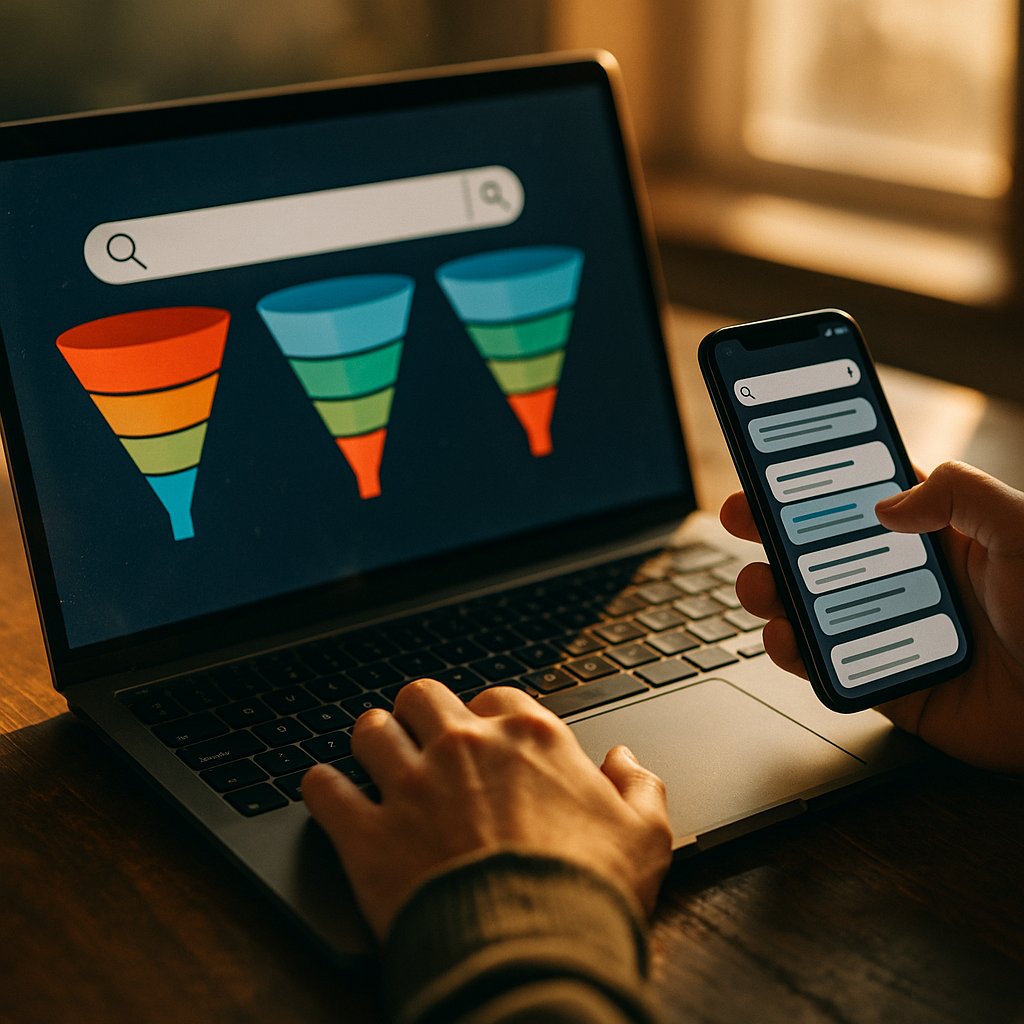
By some estimates, ChatGPT now fields over a billion queries a day. Perplexity has quietly become the research tool of choice for a generation that never learned to “Google it.” Gemini is baked into Android, Workspace, and Search itself, whether users notice or not. If your funnel still assumes one search box and one set of blue links, the fragmentation of search has already made that model obsolete.
This isn’t a niche shift for SEO teams to worry about quietly in the corner. It’s a structural change to how people discover, evaluate, and decide on brands. And most marketing orgs are nowhere close to ready.
The Single Search Box Is Dead
For two decades, the marketing funnel had a reliable front door: a search engine, a query, a page of results. You optimized for it, you bid on it, you built entire departments around it. That front door is now three or four doors, each with different rules, different visibility mechanics, and different user intent.
Google still commands the majority of search volume, no argument there. But the mix is shifting fast. eMarketer and other analysts have tracked meaningful year-over-year growth in AI chatbot usage for research and shopping-adjacent queries, and Google’s own product decisions — folding AI Overviews and AI Mode deeper into core search — are a tacit admission that the traditional results page is under pressure. We covered how Google’s own policy shifts are already signaling defensiveness about AI tools eating into its territory.
Here’s the uncomfortable part for brand marketers: each of these platforms answers questions differently, and none of them look like a SERP. ChatGPT synthesizes an answer and, increasingly, cites sources or suggests products conversationally. Perplexity shows its work with footnoted citations, which makes it feel more “trustworthy” to research-minded users. Gemini leans on Google’s index but reframes everything as a direct answer, often skipping the click entirely.
The fragmentation of search means brands are no longer optimizing for one algorithm — they’re optimizing for four or five different reasoning engines, each with its own idea of what counts as a credible source.
Why the Funnel Model Is Breaking
The classic funnel — awareness, consideration, conversion — assumed a linear, visible journey. Someone searches, clicks, lands on a page, and you can track every step with UTM parameters and pixel-perfect attribution. AI-mediated search breaks that chain in at least three ways.
- Zero-click answers. When ChatGPT or Gemini answers a question directly, there’s no page visit to measure. The “consideration” stage happens entirely inside someone else’s interface.
- Compressed journeys. A user might ask Perplexity to compare five SaaS tools, get a synthesized recommendation, and click through to buy — skipping awareness and most of consideration in a single prompt.
- Opaque attribution. Analytics platforms are still catching up. Most brands can’t reliably tell whether a conversion originated from an AI assistant recommendation, and that measurement gap is itself a risk to budget justification.
This mirrors a broader trend we’ve flagged before: measurement itself is moving away from last-click and toward something closer to decision intelligence, where the goal is understanding influence rather than tracking clicks. Kantar’s data on this shift backs up what most CMOs already suspect — the old dashboards aren’t telling the full story anymore.
What Actually Gets Cited by AI Tools?
If you’re building a content strategy for 2026 and beyond, this is the question that matters more than keyword rank. AI assistants pull from a mix of structured data, high-authority third-party sources, and content that answers questions clearly and directly — not content stuffed with keywords for a crawler that no longer exists in the same form.
A few patterns are emerging from early analysis of AI citation behavior:
- Original data and first-party research get cited more than recycled listicles.
- Clear, well-structured FAQ content performs disproportionately well, likely because it maps cleanly to how these models parse question-answer pairs.
- Reddit, forums, and UGC-heavy platforms show up constantly as sources, which is part of why brands are rethinking how they show up organically rather than through paid placement. Our piece on Reddit’s spam cleanup and what it means for AI tools digs into why platform hygiene is now an SEO issue too.
- Brand mentions across creator content and review sites carry real weight, reinforcing why distribution matters more than production volume in this new landscape.
None of this is a settled science yet. These platforms update their retrieval and ranking logic constantly, and nobody outside OpenAI, Anthropic, Perplexity, or Google has full visibility into the mechanics. Treat any “AI SEO” playbook you read (including this one) as directional, not gospel.
Rethinking the Funnel: From Path to Presence
If the funnel used to be about guiding someone down a path, the new mandate is about being present at every point where an AI model might synthesize an answer. That’s a fundamentally different marketing problem. It’s less “build a landing page for this keyword” and more “make sure your brand’s expertise, reviews, and data show up wherever these models are pulling from.”
Some practical implications for brand and agency teams:
- Diversify beyond owned properties. Your website matters less as a discovery surface and more as a conversion and credibility anchor. Third-party mentions, reviews, and creator content matter more.
- Invest in structured, citable content. Original research, clear comparisons, and well-organized FAQs are the raw material these models prefer.
- Track brand mentions, not just rankings. Tools like Sprout Social and other social listening platforms are adding AI-visibility tracking features precisely because rank-tracking tools built for Google don’t capture this new surface.
- Rebuild attribution expectations internally. Get ahead of the “we can’t prove this AI channel drove revenue” conversation with finance before it becomes a budget fight.
Brands that keep measuring success purely by organic rank will be optimizing for a shrinking share of discovery. The bigger opportunity — and risk — now lives in how AI models talk about you when you’re not in the room.
Is This an SEO Problem or a PR Problem?
Honestly, it’s both, and that ambiguity is causing real organizational friction. SEO teams know how search algorithms historically worked but often lack the brand-reputation lens needed to manage how a brand is characterized in AI-generated summaries. PR and comms teams understand narrative and third-party credibility but rarely think in terms of technical content structure or schema markup.
The smartest orgs are merging these functions, sometimes under a new title entirely. We’ve tracked this shift in AI-native marketing job titles emerging specifically to own this cross-functional gap, and separately in the salary premiums companies are paying to find people who can actually operate across both disciplines.
There’s also a compliance dimension nobody’s talking about enough. If an AI tool misattributes a claim to your brand, or surfaces outdated pricing, or recommends a competitor’s product using your brand’s content without credit, who owns that risk? Legal? Comms? Marketing ops? Most brands haven’t answered this yet, and regulators are starting to pay attention to how AI tools represent commercial information, similar to how the FTC and ICO have scrutinized influencer disclosure practices in the past.
What Creators and Distribution Partners Bring to This Fight
Here’s an angle brands underuse: creators are often the fastest way to seed the kind of authentic, citable, third-party content these AI models favor. A well-placed creator review, an honest comparison video with a transcript, a genuine unboxing thread on Reddit — these show up in AI-synthesized answers far more often than a polished brand landing page ever will.
This is part of why the line between influencer marketing and search strategy is blurring. Our coverage of creator campaigns built for AI search lays out how some brands are already briefing creators specifically to produce content optimized for AI discovery, not just social engagement. It’s an early-mover advantage while most competitors are still thinking about this purely as a paid-social problem.
The same logic applies to UGC authenticity. Models trained to filter out obvious brand-speak reward content that reads as genuinely useful and unbiased. That’s a strong argument for the kind of authenticity premium brands are learning to measure rather than treating creator content as a cheap production shortcut.
Budget Reallocation Is Already Happening, Quietly
Nobody’s holding a press conference about it, but budget lines are shifting. Some brands are pulling spend from traditional programmatic SEO tools and redirecting it toward structured content production, digital PR, and creator seeding, precisely because those tactics feed the sources AI models trust. Others are experimenting with tools that monitor “share of model” the way they used to monitor share of voice.
This connects to a broader martech reckoning happening across the industry. As we noted in our look at martech consolidation, brands are tired of paying for a dozen overlapping tools that don’t talk to each other. Expect AI-visibility tracking to become a standard line item in the next generation of marketing platforms from vendors like HubSpot, rather than a separate specialty tool nobody budgets for.
None of this means SEO is dead, despite what every third LinkedIn post seems to claim. It means SEO is becoming one input into a larger discipline: making sure your brand is legible, credible, and citable across a search landscape that no longer has a single front door.
The Takeaway
Stop asking “how do we rank on Google” as your only search question, and start asking “what would ChatGPT, Perplexity, or Gemini say about us right now if a prospect asked.” Audit that answer this quarter. If you don’t like what you find, that’s your new content and PR roadmap.
Frequently Asked Questions
What does “fragmentation of search” actually mean for marketers?
It means discovery no longer happens through one dominant search engine. Users now split queries across Google, ChatGPT, Perplexity, Gemini, and even social platforms like TikTok and Reddit, each with different ranking logic and different content preferences. Marketers need visibility strategies across all of them, not just traditional SEO.
How do I measure ROI from AI search platforms if there’s no click to track?
Start by tracking brand mention frequency and sentiment within AI-generated answers using emerging listening tools, and pair that with survey-based attribution asking new customers how they discovered you. It’s imperfect, but so was last-click attribution, honestly.
Should brands stop investing in traditional SEO?
No. Traditional search still drives the majority of measurable traffic for most brands. The shift is about adding AI-visibility strategy alongside SEO, not replacing it, since the underlying tactics (structured content, authority, clear answers) overlap significantly.
Do AI chatbots cite sources the way Google shows search results?
Sometimes. Perplexity is the most transparent about citations, ChatGPT increasingly shows sources for certain queries, and Gemini blends citations inconsistently depending on the query type. This is evolving quickly and differs by platform and query category.
What role do creators play in AI search visibility?
A significant one. AI models tend to favor third-party, authentic-feeling content like reviews, comparisons, and UGC over polished brand copy, which makes creator partnerships a practical lever for improving how a brand appears in AI-generated answers.
Top Influencer Marketing Agencies
The leading agencies shaping influencer marketing in 2026
Agencies ranked by campaign performance, client diversity, platform expertise, proven ROI, industry recognition, and client satisfaction. Assessed through verified case studies, reviews, and industry consultations.
Moburst

-
2

The Shelf
Boutique Beauty & Lifestyle Influencer AgencyA data-driven boutique agency specializing exclusively in beauty, wellness, and lifestyle influencer campaigns on Instagram and TikTok. Best for brands already focused on the beauty/personal care space that need curated, aesthetic-driven content.Clients: Pepsi, The Honest Company, Hims, Elf Cosmetics, Pure LeafVisit The Shelf → -
3

Audiencly
Niche Gaming & Esports Influencer AgencyA specialized agency focused exclusively on gaming and esports creators on YouTube, Twitch, and TikTok. Ideal if your campaign is 100% gaming-focused — from game launches to hardware and esports events.Clients: Epic Games, NordVPN, Ubisoft, Wargaming, Tencent GamesVisit Audiencly → -
4

Viral Nation
Global Influencer Marketing & Talent AgencyA dual talent management and marketing agency with proprietary brand safety tools and a global creator network spanning nano-influencers to celebrities across all major platforms.Clients: Meta, Activision Blizzard, Energizer, Aston Martin, WalmartVisit Viral Nation → -
5

The Influencer Marketing Factory
TikTok, Instagram & YouTube CampaignsA full-service agency with strong TikTok expertise, offering end-to-end campaign management from influencer discovery through performance reporting with a focus on platform-native content.Clients: Google, Snapchat, Universal Music, Bumble, YelpVisit TIMF → -
6

NeoReach
Enterprise Analytics & Influencer CampaignsAn enterprise-focused agency combining managed campaigns with a powerful self-service data platform for influencer search, audience analytics, and attribution modeling.Clients: Amazon, Airbnb, Netflix, Honda, The New York TimesVisit NeoReach → -
7

Ubiquitous
Creator-First Marketing PlatformA tech-driven platform combining self-service tools with managed campaign options, emphasizing speed and scalability for brands managing multiple influencer relationships.Clients: Lyft, Disney, Target, American Eagle, NetflixVisit Ubiquitous → -
8

Obviously
Scalable Enterprise Influencer CampaignsA tech-enabled agency built for high-volume campaigns, coordinating hundreds of creators simultaneously with end-to-end logistics, content rights management, and product seeding.Clients: Google, Ulta Beauty, Converse, AmazonVisit Obviously →