


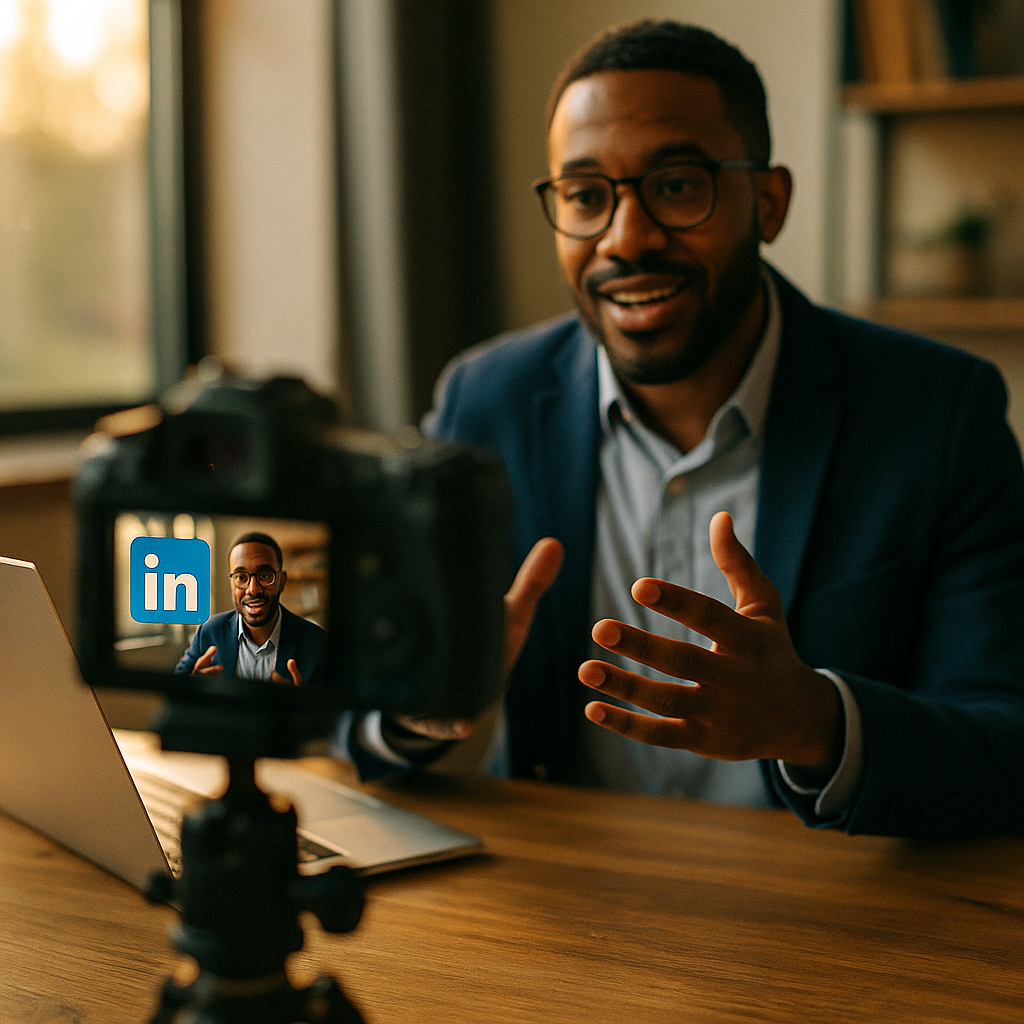
LinkedIn’s own data shows video posts now generate up to 5x more engagement than text updates, and the platform is pushing native video harder than at any point in its history. If your B2B creator program is still treating LinkedIn like a glorified press release feed, you’re leaving distribution on the table. The LinkedIn video-first algorithm rewards a very specific content structure, and most brand teams haven’t caught up yet.
This isn’t a minor tweak. It’s a platform-level shift in what gets surfaced, and it changes how you brief creators, structure sponsorships, and measure success.
Why LinkedIn Suddenly Cares So Much About Video
LinkedIn has spent the better part of two years chasing TikTok and YouTube’s watch-time playbook. The company has publicly stated it wants to be a “creator platform” for professionals, not just a resume repository with a news feed bolted on. That means the recommendation system now weighs dwell time, completion rate, and re-watch behavior far more heavily than it did when the feed was dominated by text posts and shared articles.
The business logic is straightforward. Video keeps users on-platform longer, which means more ad impressions, which means more revenue from LinkedIn’s core business: advertising and Sales Navigator subscriptions. Every algorithm change LinkedIn ships is, at some level, in service of that goal. Understanding the incentive helps you predict the next update instead of reacting to it after your reach craters.
LinkedIn’s feed now prioritizes native video completion and dwell time over shares or comments alone — a structural shift that rewards format discipline over follower count.
For brand teams still building programs around static carousels and thought-leadership text posts, this is the moment to recalibrate. We’ve covered how this fits into the broader platform shakeup in our roundup of recent algorithm changes across major networks — LinkedIn’s move is arguably the most consequential for B2B marketers specifically, because there’s been no equivalent native-video incumbent on the platform until now.
The Structural Elements That Actually Drive Distribution
Forget vague advice like “make more video.” The algorithm rewards specific, measurable structural choices. Here’s what actually moves the needle based on current LinkedIn creator behavior and reporting from platform partners.
- Native upload, not links. A YouTube link pasted into a LinkedIn post gets throttled almost instantly. Native MP4 uploads get prioritized in the ranking model because LinkedIn wants the watch time to happen on-platform, full stop.
- Sub-90-second runtime for top-of-funnel content. Completion rate is a heavier ranking signal than raw view count. A 45-second video watched to the end outperforms a 4-minute video that gets abandoned at the 20-second mark.
- Captions burned in or auto-generated. Most LinkedIn video is watched sound-off, especially during commute hours and in office settings. No captions means no comprehension, and no comprehension means no completion.
- A hook in the first three seconds. Not a logo animation. Not a slow zoom. An actual claim, question, or stat that gives someone a reason to keep scrolling with sound off.
- Vertical or square aspect ratio. Horizontal 16:9 video still works but underperforms in the mobile feed, where the majority of LinkedIn sessions now happen.
None of this is exotic. It’s the same format discipline that’s driven TikTok and Reels growth for years. What’s notable is that LinkedIn — historically the slowest major platform to adopt short-form video norms — is now enforcing them algorithmically.
Comments Are Worth More Than Likes, and It’s Not Close
Here’s something a lot of B2B teams miss: LinkedIn’s algorithm treats a comment as a dramatically stronger relevance signal than a like or a share. A reaction takes one tap and tells the algorithm almost nothing about content quality. A comment requires effort, and effort signals genuine interest.
This means your creator briefs need an explicit call-to-comment strategy, not just a call-to-action. Ending a video with an open question (“What’s your team’s biggest blocker on this?”) consistently outperforms a generic “thoughts?” close. Some of the highest-performing B2B creator accounts now build entire video structures around eliciting disagreement, because a comment thread with pushback and reply chains keeps the post alive in the feed for days.
Structuring the Creator Brief for Feed Distribution
If you’re running a LinkedIn creator program, your brief template needs to change. Most brand briefs written for LinkedIn in the past few years were built for text-post thought leadership or static carousel breakdowns. Those formats still have a place, but they shouldn’t be your primary distribution vehicle anymore.
A video-first brief for LinkedIn should specify:
- Runtime target — 30-90 seconds for feed-native clips, up to 3 minutes for deeper explainer or case-study content.
- Hook script — the first line, written out, not left to improvisation. This is the single highest-leverage sentence in the whole brief.
- On-screen text cues — key stats or claims that reinforce the audio, since a meaningful share of viewers watch muted.
- Comment prompt — a specific question or provocation baked into the closing seconds.
- Disclosure requirements — sponsorship labeling per LinkedIn’s ad policies and FTC guidance, non-negotiable for any paid creator relationship.
If you’re new to structuring paid creator relationships on this platform specifically, our LinkedIn Creator Marketplace sponsorship guide covers the contracting and rate-benchmarking side in more depth. Pair that operational guidance with the format rules above, and you’ve got a program that’s both compliant and algorithmically competitive.
What About Long-Form? Is It Dead on LinkedIn?
No — but it needs a different distribution strategy. Long-form video (5+ minutes) still performs well on LinkedIn, particularly for executive interviews, product deep-dives, and panel content. The catch is that it rarely wins organic feed distribution on its own. The algorithm treats it as a different content class, one that benefits far more from employee advocacy sharing and paid boost than from pure organic reach.
The smart play is a clip-and-boost model: produce the long-form asset, then cut 3-5 short-form clips from it specifically engineered for feed distribution using the structural rules above. Treat the long-form piece as a content well, not a distribution vehicle. This mirrors a pattern we’ve documented across other platforms — see our breakdown of native content and programmatic boost strategy for how this clip-and-amplify model plays out beyond LinkedIn specifically.
Worth noting: organic-only strategies are increasingly a losing bet on every major platform, LinkedIn included. If your program still assumes organic reach alone will carry a campaign, it’s time to revisit that assumption — we go deeper on why in this piece on paid amplification.
Measurement: Stop Reporting Views, Start Reporting Completion and Comment Quality
Vanity metrics die hard in B2B marketing, and views is the worst offender on LinkedIn right now. A high view count with a low completion rate tells you the hook worked and the content didn’t. That’s a creative problem, not a distribution win.
Track these instead:
- Completion rate — the percentage watching to the final frame, available in LinkedIn’s native video analytics.
- Comment-to-view ratio — a strong proxy for the algorithmic signal strength discussed earlier.
- Follower conversion — new followers gained directly attributable to a specific video, which LinkedIn now surfaces in creator-mode analytics.
- Click-through to profile or website — the actual pipeline-relevant metric most CMOs actually care about.
According to LinkedIn’s own marketing resources, video content on the platform has continued to see disproportionate growth relative to other formats, and third-party analysis from firms like eMarketer and HubSpot backs this up with cross-platform benchmarking data. If your reporting dashboard still leads with impressions, it’s time for an update.
For teams running multi-platform creator programs, the good news is that a lot of this structural thinking transfers. If you’re already building briefs that account for platform-specific algorithm quirks, check our multi-platform brief framework and adapt the LinkedIn-specific rules above as an added layer rather than a separate process.
A Word on Disclosure and Compliance
Sponsored video on LinkedIn still needs to follow the same disclosure standards as any other paid creator content. That means clear labeling, adherence to FTC endorsement guidelines, and, for teams operating in the UK or EU, awareness of relevant advertising standards enforcement. B2B marketers sometimes assume disclosure scrutiny is lighter outside consumer verticals. It isn’t. If you want a platform-agnostic audit framework, our ad disclosure audit guide is a useful starting point before you scale any paid creator video program.
The Takeaway
Audit one thing this week: pull your last ten LinkedIn video posts and check completion rate against comment count, not views. If completion is under 40% and comments are near zero, your hooks and CTAs need a rewrite before you spend another dollar boosting the content.
FAQs
Does LinkedIn actually penalize external links in video posts?
Yes. Posts containing external links, including links to hosted video on other platforms, typically see reduced organic reach compared to native uploads. LinkedIn wants viewing sessions to stay on-platform, so native video is favored in ranking.
What’s the ideal video length for LinkedIn’s algorithm right now?
For top-of-funnel feed content, 30 to 90 seconds performs best because it maximizes completion rate, a heavily weighted ranking signal. Longer explainer or interview content still has a place but should be distributed differently, often via clips and paid boost rather than relying on organic reach alone.
Do comments really matter more than likes for distribution?
Yes, comments require more effort from the viewer and are treated as a stronger relevance signal by LinkedIn’s ranking system than reactions or shares. Briefs should include an explicit prompt designed to generate genuine discussion, not just engagement bait.
Should B2B brands work with creators or rely on employee advocacy for video?
Both, ideally. Employee advocacy adds distribution and trust signals, while creator partnerships bring production quality and format fluency. Many effective programs combine an executive or employee as the on-camera talent with creator-level scripting and editing support.
How do I measure ROI on LinkedIn creator video beyond views?
Track completion rate, comment-to-view ratio, follower growth attributable to specific posts, and click-through to profile or landing pages. These metrics correlate more directly with pipeline impact than raw view counts.
Top Influencer Marketing Agencies
The leading agencies shaping influencer marketing in 2026
Agencies ranked by campaign performance, client diversity, platform expertise, proven ROI, industry recognition, and client satisfaction. Assessed through verified case studies, reviews, and industry consultations.
Moburst

-
2

The Shelf
Boutique Beauty & Lifestyle Influencer AgencyA data-driven boutique agency specializing exclusively in beauty, wellness, and lifestyle influencer campaigns on Instagram and TikTok. Best for brands already focused on the beauty/personal care space that need curated, aesthetic-driven content.Clients: Pepsi, The Honest Company, Hims, Elf Cosmetics, Pure LeafVisit The Shelf → -
3

Audiencly
Niche Gaming & Esports Influencer AgencyA specialized agency focused exclusively on gaming and esports creators on YouTube, Twitch, and TikTok. Ideal if your campaign is 100% gaming-focused — from game launches to hardware and esports events.Clients: Epic Games, NordVPN, Ubisoft, Wargaming, Tencent GamesVisit Audiencly → -
4

Viral Nation
Global Influencer Marketing & Talent AgencyA dual talent management and marketing agency with proprietary brand safety tools and a global creator network spanning nano-influencers to celebrities across all major platforms.Clients: Meta, Activision Blizzard, Energizer, Aston Martin, WalmartVisit Viral Nation → -
5

The Influencer Marketing Factory
TikTok, Instagram & YouTube CampaignsA full-service agency with strong TikTok expertise, offering end-to-end campaign management from influencer discovery through performance reporting with a focus on platform-native content.Clients: Google, Snapchat, Universal Music, Bumble, YelpVisit TIMF → -
6

NeoReach
Enterprise Analytics & Influencer CampaignsAn enterprise-focused agency combining managed campaigns with a powerful self-service data platform for influencer search, audience analytics, and attribution modeling.Clients: Amazon, Airbnb, Netflix, Honda, The New York TimesVisit NeoReach → -
7

Ubiquitous
Creator-First Marketing PlatformA tech-driven platform combining self-service tools with managed campaign options, emphasizing speed and scalability for brands managing multiple influencer relationships.Clients: Lyft, Disney, Target, American Eagle, NetflixVisit Ubiquitous → -
8

Obviously
Scalable Enterprise Influencer CampaignsA tech-enabled agency built for high-volume campaigns, coordinating hundreds of creators simultaneously with end-to-end logistics, content rights management, and product seeding.Clients: Google, Ulta Beauty, Converse, AmazonVisit Obviously →