


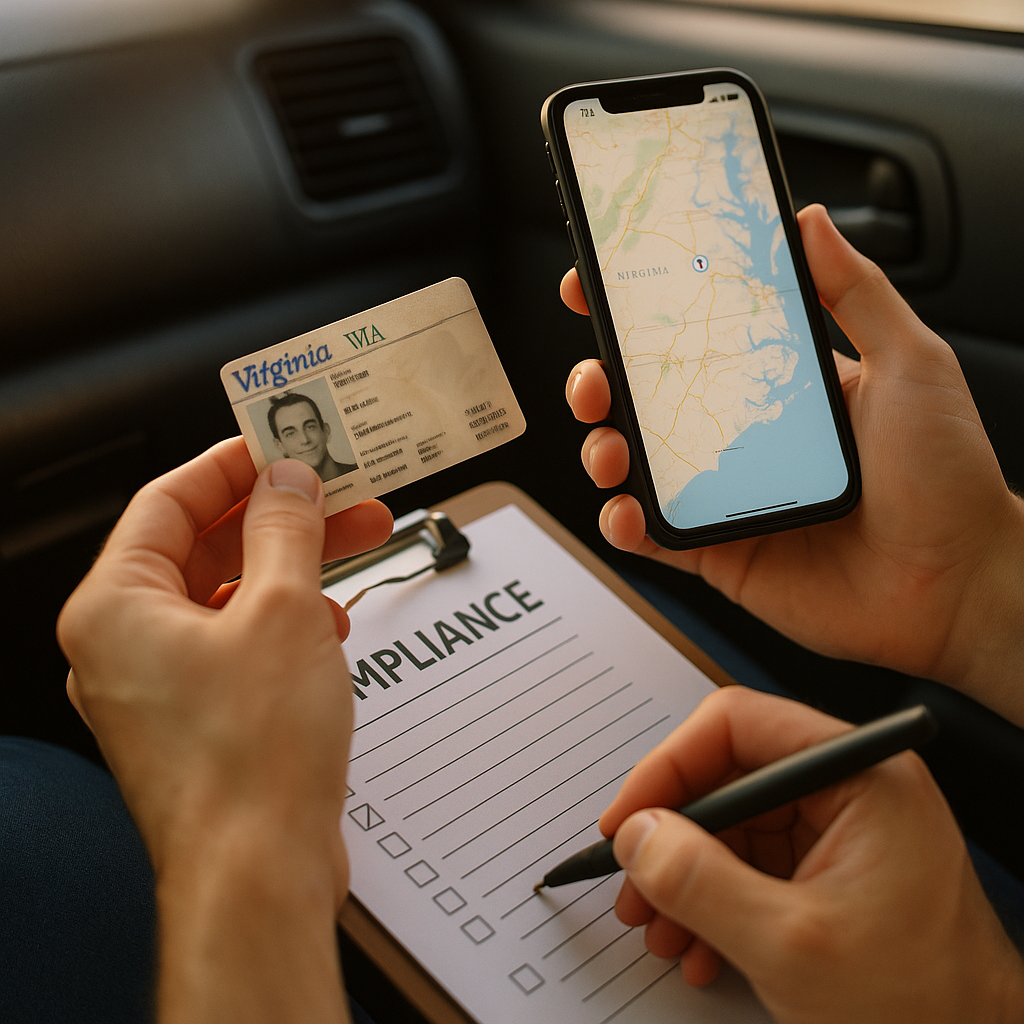
Twenty states now regulate precise geolocation data as sensitive personal information, and most brand teams running creator campaigns don’t have a map for it. Virginia’s amendment to its Consumer Data Protection Act takes effect this year, tightening the definition of geolocation data and raising the consent bar for any targeting that relies on it. If your influencer program uses location-based audience segments — and most do, even unknowingly through platform lookalikes — geolocation data compliance just became a state-by-state minefield, not a single checkbox.
This isn’t a theoretical compliance exercise. Creator campaigns increasingly lean on geofenced targeting, location-tagged UGC, and platform-side audience overlap tools that quietly ingest precise location signals. Brands that treat this as a “legal will handle it” problem are the ones who end up in an AG inquiry file. Let’s break down what changed, which states matter most, and how to build a targeting workflow that survives an audit.
What Virginia’s Amendment Actually Changes
Virginia was the second state to pass comprehensive privacy legislation, behind California, but its original 2023 law left geolocation somewhat loosely defined. The amendment narrows the precision threshold — generally aligning with a 1,750-foot radius standard similar to what California and Colorado use — and explicitly folds “precise geolocation data” into the sensitive data category requiring opt-in consent, not opt-out.
That distinction matters enormously for creator marketing. Opt-out models let you target first and let users object later. Opt-in models require affirmative consent before you ever fire a geofenced ad or build a location-based lookalike audience. If your influencer team is running local market activations — say, a beauty brand geofencing a creator’s meet-and-greet, or a QSR chain targeting users within a mile of a location a creator visited — you now need documented, affirmative consent mechanisms in Virginia, not a buried privacy policy clause.
Opt-in consent for precise geolocation isn’t a Virginia quirk anymore — it’s becoming the default expectation across the majority of newer state privacy laws, which means your national campaign templates need to assume the strictest standard, not the loosest.
The State Patchwork, Simplified
Here’s the uncomfortable truth: there is no single “geolocation compliance” standard in the U.S. Instead, brands are navigating a fragmented set of thresholds, consent models, and enforcement postures. A rough grouping, as of now:
- Opt-in required for precise geolocation: Virginia (post-amendment), California (CCPA/CPRA), Colorado, Connecticut, and Oregon all classify precise geolocation as sensitive data requiring affirmative consent before processing.
- Opt-out models with disclosure requirements: Texas, Utah, and Montana allow processing with a clear notice and an accessible opt-out, a lighter lift but still requiring documented mechanisms.
- Sector-specific carve-outs: Illinois’ BIPA-adjacent rules and Washington’s My Health My Data Act create overlapping obligations when geolocation data intersects with health-adjacent inferences (think: fitness creators, wellness brands targeting users near clinics).
- No comprehensive law yet: A shrinking list of states still rely on general consumer protection statutes and FTC guidance rather than dedicated privacy legislation.
The practical problem: national creator campaigns don’t respect state lines. A single Instagram Reels boost or TikTok Spark Ad campaign can reach audiences across all fifty states simultaneously. Most brands don’t build fifty different consent flows. They build one, calibrated to the strictest applicable regime, and apply it everywhere.
Why Creator Campaigns Are Especially Exposed
Location data risk in influencer marketing doesn’t just come from your own ad platform settings. It comes from three overlapping sources most teams underestimate.
First, creator-generated location tags. When a creator geotags a post at a specific venue, that metadata can be scraped and used for audience building by third-party tools, sometimes without the brand’s direct instruction. Second, platform-native geofencing features on TikTok, Meta, and Snap increasingly default to precise radius targeting rather than city- or DMA-level targeting, because precision performs better. Third, affiliate and referral links used in creator commerce campaigns often carry IP-based geolocation that gets cross-referenced with other identity signals, creating a de facto precise location profile even without GPS data.
None of this is exotic. It’s standard creator marketing infrastructure. But regulators aren’t grading on intent, they’re grading on outcome: was precise location data processed without proper consent, yes or no.
This is where the overlap with broader data minimization compliance practices becomes relevant. If your creator loyalty program or ambassador tier system is already collecting more location data than necessary, geolocation targeting just compounds the exposure.
Building a Compliance Workflow That Doesn’t Slow Down Campaigns
Nobody wants to add three weeks of legal review to a creator activation timeline. The goal isn’t to freeze targeting, it’s to build repeatable guardrails.
- Default to city or DMA-level targeting unless precise geofencing is the explicit campaign mechanic (event activations, store visits). This alone eliminates most sensitive-data classification issues.
- Audit your ad platform defaults quarterly. Meta and TikTok periodically update targeting radius minimums and audience-building tools. What was compliant last quarter may not be now.
- Standardize consent capture in creator briefs. If a creator’s content will be used to build geofenced retargeting audiences, that needs to be disclosed and consented to as part of the content usage agreement, not assumed under a generic media release.
- Document your legal basis, state by state. Build a simple matrix: which states you’re targeting, which consent model applies, and where your opt-in mechanism lives. This is the single artifact most AG offices ask for first in an inquiry.
- Loop in the same team doing your quarterly creator compliance audits so geolocation checks aren’t a separate, forgotten workstream.
None of this requires a legal department the size of a Fortune 100 company. It requires a checklist, a named owner, and a cadence. Most compliance failures aren’t caused by bad intent, they’re caused by nobody owning the review.
What Happens If You Get It Wrong
Enforcement so far has been uneven but sharpening. California’s Privacy Protection Agency has issued fines tied to sensitive data mishandling, and several state AG offices have opened inquiries into ad tech vendors whose geolocation practices bled into brand campaigns without adequate disclosure. That’s a real risk pattern: your vendor’s non-compliance becomes your liability, especially if you can’t produce documentation showing you asked the right questions during procurement.
This mirrors what’s already playing out with ad tech subpoenas more broadly, discussed in this look at vendor subpoena exposure, and in the growing wave of state AG lawsuits against Meta. Brands assume the platform absorbs the risk. It doesn’t. Advertisers and their agencies are named parties in a growing share of these actions.
If you can’t produce a state-by-state consent matrix within 24 hours of an inquiry, you don’t have a compliance program — you have a hope.
According to the Federal Trade Commission, geolocation-linked advertising practices remain a priority enforcement area, particularly where sensitive locations (health facilities, places of worship, immigration services) intersect with targeted ad delivery. Creator campaigns that inadvertently geofence near sensitive locations, even for unrelated retail purposes, carry outsized reputational risk regardless of legal outcome.
Where This Is Heading
More states will follow Virginia’s lead toward opt-in models for precise geolocation. Industry trackers at eMarketer have noted that privacy-driven targeting restrictions are accelerating the shift toward contextual and first-party data strategies in creator marketing, a trend that dovetails with platform-level changes already reshaping paid social, like the EU’s approach to autoplay and intent-based targeting.
The practical implication for brand teams: build your creator targeting strategy around first-party consented data and contextual relevance now, rather than treating precise geolocation as a permanent tool in the kit. Platforms like Meta Business and TikTok Ads Manager are already adjusting default targeting granularity in response to this regulatory direction. Brands that adapt now avoid the scramble later.
Frequently Asked Questions
FAQs
What counts as “precise geolocation data” under state privacy laws?
Most states, including Virginia post-amendment, define precise geolocation as location data accurate to within approximately 1,750 feet (roughly a third of a mile). This typically comes from GPS, Wi-Fi triangulation, or Bluetooth beacons, and is distinct from broader location signals like city or ZIP code, which generally don’t trigger the same consent requirements.
Do creator geotags count as geolocation data brands are responsible for?
It depends on how the data is used. A creator tagging a location in a post is generally their own content decision. But if a brand or its agency uses that tag to build a targeted audience, retarget users who engaged with that location, or feed it into a geofenced ad campaign, the brand becomes the data controller responsible for consent obligations.
Is opt-out consent still acceptable anywhere for geolocation targeting?
Yes, in states like Texas, Utah, and Montana, opt-out models with clear disclosure remain legally sufficient. However, because campaigns typically run across multiple states simultaneously, many brands now default to opt-in consent everywhere to simplify compliance and reduce audit complexity.
How does this affect influencer event activations and store visits?
Geofenced targeting tied to event activations or store visits is exactly the use case most likely to trigger sensitive-data rules, since it relies on precise radius targeting by definition. Brands running these campaigns should build explicit consent capture into event RSVP flows or app permissions rather than relying on ambient ad platform defaults.
Who is liable if an ad tech vendor mishandles geolocation data collected for a creator campaign?
Liability frequently extends to the brand and agency, not just the vendor, particularly if the brand cannot demonstrate it vetted the vendor’s data practices during procurement. This is why documentation and vendor audits matter as much as the targeting decision itself.
Start by pulling your last three creator campaigns’ targeting settings and checking whether any used radius-based geofencing under 1,750 feet — that’s your immediate audit priority before Virginia’s enforcement window matures.
Top Influencer Marketing Agencies
The leading agencies shaping influencer marketing in 2026
Agencies ranked by campaign performance, client diversity, platform expertise, proven ROI, industry recognition, and client satisfaction. Assessed through verified case studies, reviews, and industry consultations.
Moburst

-
2

The Shelf
Boutique Beauty & Lifestyle Influencer AgencyA data-driven boutique agency specializing exclusively in beauty, wellness, and lifestyle influencer campaigns on Instagram and TikTok. Best for brands already focused on the beauty/personal care space that need curated, aesthetic-driven content.Clients: Pepsi, The Honest Company, Hims, Elf Cosmetics, Pure LeafVisit The Shelf → -
3

Audiencly
Niche Gaming & Esports Influencer AgencyA specialized agency focused exclusively on gaming and esports creators on YouTube, Twitch, and TikTok. Ideal if your campaign is 100% gaming-focused — from game launches to hardware and esports events.Clients: Epic Games, NordVPN, Ubisoft, Wargaming, Tencent GamesVisit Audiencly → -
4

Viral Nation
Global Influencer Marketing & Talent AgencyA dual talent management and marketing agency with proprietary brand safety tools and a global creator network spanning nano-influencers to celebrities across all major platforms.Clients: Meta, Activision Blizzard, Energizer, Aston Martin, WalmartVisit Viral Nation → -
5

The Influencer Marketing Factory
TikTok, Instagram & YouTube CampaignsA full-service agency with strong TikTok expertise, offering end-to-end campaign management from influencer discovery through performance reporting with a focus on platform-native content.Clients: Google, Snapchat, Universal Music, Bumble, YelpVisit TIMF → -
6

NeoReach
Enterprise Analytics & Influencer CampaignsAn enterprise-focused agency combining managed campaigns with a powerful self-service data platform for influencer search, audience analytics, and attribution modeling.Clients: Amazon, Airbnb, Netflix, Honda, The New York TimesVisit NeoReach → -
7

Ubiquitous
Creator-First Marketing PlatformA tech-driven platform combining self-service tools with managed campaign options, emphasizing speed and scalability for brands managing multiple influencer relationships.Clients: Lyft, Disney, Target, American Eagle, NetflixVisit Ubiquitous → -
8

Obviously
Scalable Enterprise Influencer CampaignsA tech-enabled agency built for high-volume campaigns, coordinating hundreds of creators simultaneously with end-to-end logistics, content rights management, and product seeding.Clients: Google, Ulta Beauty, Converse, AmazonVisit Obviously →