


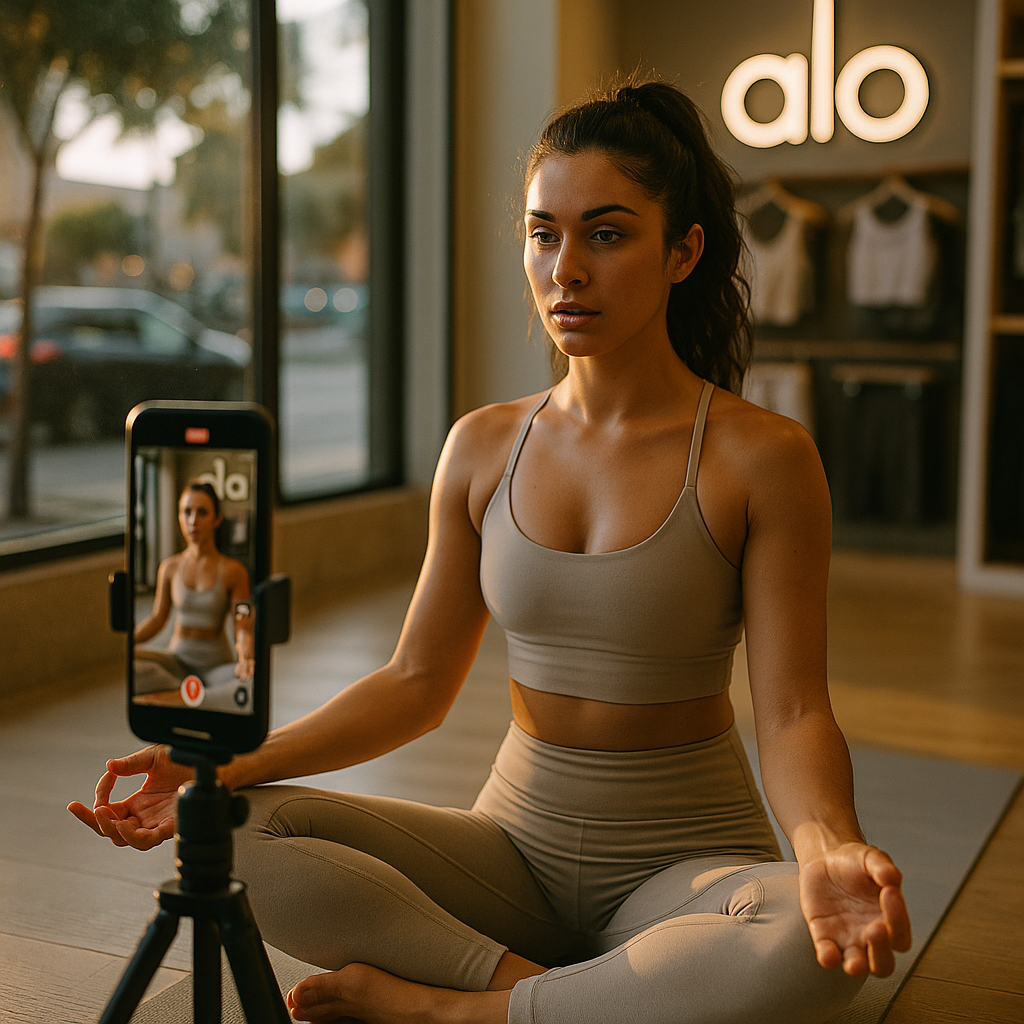
Alo Yoga doesn’t run ads that feel like ads. It runs a content machine disguised as a wellness lifestyle. That distinction — and the TikTok-first creator strategy behind it — is doing more to prep the brand for a public offering than any performance media line item could. A billion-dollar valuation story is now being told one unboxing video at a time.
Why Credibility, Not Reach, Became the Metric That Mattered
Most brands chase impressions. Alo chased belief. When a company is heading toward an IPO, analysts and prospective shareholders don’t just look at revenue multiples — they look at brand durability. Can this thing survive a trend cycle? Alo’s answer has been to embed itself so deeply into TikTok’s fitness, wellness, and “clean girl” aesthetic ecosystems that the brand reads less like a retailer and more like a lifestyle operating system.
That’s a deliberate positioning choice. Athleisure is a brutal, commoditized category. Lululemon owns the performance-credibility lane. Vuori owns the understated-athletic-guy lane. Alo needed something else: aspirational wellness married to visible, repeatable social proof. TikTok, with its algorithmic discovery engine and its habit of turning niche creators into overnight tastemakers, was the only platform built for that job.
Alo Yoga’s TikTok strategy isn’t about selling leggings. It’s about selling the idea that wearing Alo means you’ve already arrived at a certain kind of life.
The Mechanics: Seeding, Not Spraying
Alo’s creator program is notably restrained compared to mass-seeding brands. Instead of blanketing hundreds of micro-creators with free product, the brand has leaned into concentrated bets: yoga instructors with real teaching credibility, wellness creators with pre-existing audience trust, and a rotating cast of celebrity-adjacent faces (think Kendall Jenner-style ambassadors) who blur the line between organic fan content and paid placement.
This mirrors a pattern we’ve tracked across other premium DTC plays. In our breakdown of the Rhode creator camp model, earned media outperformed paid sponsorships specifically because the creator felt like a genuine user, not a billboard. Alo applies the same logic but at a larger scale, using studio partnerships and “Alo House” event activations to generate content that looks native even when it’s contractually obligated.
TikTok Shop as the Silent Revenue Engine
Here’s where the strategy stops being just brand-building and starts becoming a hard commerce play. Alo has steadily built out its presence on TikTok Shop, letting creators tag products directly inside videos that already look like organic lifestyle content. That’s the trick: commerce infrastructure hidden behind editorial-feeling posts.
We covered the mechanics of this in detail in our Alo Yoga IPO strategy analysis, but the short version is this — TikTok Shop gives Alo a closed-loop attribution story that traditional influencer marketing never had. A creator posts a “get ready with me” video, taps a product card, and a sale happens without the customer ever leaving the app. For a company building an IPO narrative, that kind of trackable revenue attribution is gold. Investors don’t just want brand affinity; they want proof that affinity converts.
According to eMarketer, social commerce sales in the U.S. are projected to keep climbing sharply, with TikTok Shop cited repeatedly as the fastest-growing channel driving that curve. Alo positioned itself early inside that growth curve rather than reacting to it later.
The Lifestyle Credibility Play: How It Actually Works
Building “lifestyle credibility” sounds soft until you break down what it actually requires operationally.
- Category-adjacent creator selection: Alo doesn’t just work with fitness influencers. It works with wellness coaches, therapists-turned-content-creators, sober-curious lifestyle accounts, and even finance-adjacent “soft life” creators — anyone whose audience already associates them with intentional living.
- Consistent visual language: Muted tones, soft lighting, minimalist studio backdrops. Whether it’s a paid partnership or a genuine fan post, the aesthetic is disciplined enough that content blends together into a cohesive brand world.
- Event-driven content spikes: Alo Yoga’s studio openings and pop-up experiences function as content harvesting operations. Dozens of creators post from the same event within a 48-hour window, creating an algorithmic wave that TikTok rewards with extra distribution.
- Repost and stitch culture: Alo’s brand account actively reposts creator content rather than only running polished studio ads, which signals to the algorithm — and to viewers — that this is a two-way relationship, not a broadcast.
None of this is revolutionary in isolation. What’s notable is the discipline. Most brands sample two or three of these tactics. Alo runs all four simultaneously, at a volume few competitors can match.
What This Means for Brands Watching From the Sidelines
If you’re a mid-market or challenger brand reading this and thinking “we don’t have Alo’s budget,” that’s the wrong takeaway. The budget isn’t the differentiator here — the sequencing is. Alo built lifestyle credibility before it needed IPO-ready metrics, not during the roadshow. That’s a lesson every brand eyeing a liquidity event, acquisition, or major funding round should internalize: your creator program should already look investable long before a banker asks to see it.
Compare this to how Ralph Lauren’s Olympics creator strategy generated a burst of new customers around a single cultural moment. Alo’s approach is slower and more compounding — less a single campaign spike, more a permanent content infrastructure. Both are valid, but they serve different business goals. Olympic-moment marketing drives acquisition; Alo’s model drives sustained valuation narrative.
An IPO prospectus doesn’t care about vibes. But investors absolutely price in whether a brand’s demand looks self-sustaining or ad-dependent. Alo’s creator ecosystem is built to answer that question before anyone asks it.
Risk Management: What Could Go Wrong With This Model
No creator-heavy strategy is risk-free, and it’s worth being honest about where Alo’s approach could crack.
Disclosure and compliance exposure. As Alo scales its ambassador and gifting programs, FTC disclosure requirements become harder to police consistently across hundreds of creators. The FTC’s endorsement guidelines are unambiguous about material connections needing clear disclosure, and any inconsistency here becomes a reputational liability right as public scrutiny increases pre-IPO.
Aesthetic sameness fatigue. When every piece of content shares the same muted, minimalist visual grammar, audiences eventually notice the formula. We saw a version of this risk play out in our coverage of the anti-AI beer campaign backfire, where audiences turned sharply once they sensed manufactured authenticity rather than genuine sentiment.
Over-reliance on a single platform’s algorithm. Building lifestyle credibility primarily through TikTok is powerful, but it’s also fragile. Platform policy shifts, changes to the For You Page algorithm, or regulatory action affecting TikTok’s U.S. operations could disrupt distribution overnight. Brands leaning this heavily into one channel need a genuine cross-platform contingency, not just a token Instagram presence.
Smart brand strategists should treat Alo’s model as a template with guardrails, not a blueprint to copy blindly. The Sprout Social research on brand trust consistently shows that audiences reward transparency over polish — a nuance Alo will need to keep managing as scrutiny intensifies.
What Marketing Leaders Should Actually Steal From This
Strip away the yoga pants and the wellness branding, and there’s a transferable operating model here for any B2B or B2C marketing team managing a creator program with business-critical stakes:
- Treat creator content as owned infrastructure, not campaign-by-campaign spend. Build repeatable systems, not one-off activations.
- Prioritize category-adjacent creators whose existing audience trust transfers credibly to your brand, rather than chasing raw follower counts. Our piece on interest over follower count covers this shift in more depth.
- Build commerce attribution into the content itself using shoppable formats, so revenue impact is provable, not inferred.
- Maintain aesthetic consistency without sacrificing creator authenticity — the two aren’t mutually exclusive if your brief architecture is tight enough. See our analysis of brief architecture that wins for a deeper framework.
- Get disclosure compliance airtight before scale forces your hand, not after a regulator or journalist forces the issue.
The bigger strategic point: Alo isn’t using TikTok because it’s trendy. It’s using TikTok because the platform’s discovery mechanics let a brand manufacture the appearance of organic cultural relevance at commercial scale — and that appearance is exactly what pre-IPO valuation stories are built on.
FAQs
What is Alo Yoga’s TikTok-first creator strategy?
Alo Yoga concentrates creator partnerships on TikTok, working with wellness-adjacent influencers, yoga instructors, and celebrity ambassadors to produce lifestyle content that blends organic and sponsored posts, supported by TikTok Shop for direct commerce attribution.
Why does lifestyle credibility matter for an IPO?
Investors evaluate whether demand is sustainable and brand-driven rather than dependent on paid acquisition. A strong, organic-feeling lifestyle association signals durability, which supports a higher valuation multiple during an IPO roadshow.
How does TikTok Shop fit into Alo’s strategy?
TikTok Shop lets creators tag Alo products directly inside lifestyle content, creating a closed-loop path from discovery to purchase. This gives Alo trackable revenue attribution tied directly to creator content, strengthening its growth story for potential investors.
Can smaller brands replicate Alo Yoga’s approach?
Yes, at a smaller scale. The core principles — category-adjacent creator selection, consistent visual identity, event-driven content spikes, and shoppable content — don’t require Alo’s budget, just disciplined execution and consistent creator brief architecture.
What are the risks of a TikTok-heavy creator strategy?
Key risks include FTC disclosure compliance gaps at scale, audience fatigue from repetitive aesthetics, and over-dependence on a single platform’s algorithm and policy environment.
FAQs
What is Alo Yoga’s TikTok-first creator strategy?
Alo Yoga concentrates creator partnerships on TikTok, working with wellness-adjacent influencers, yoga instructors, and celebrity ambassadors to produce lifestyle content that blends organic and sponsored posts, supported by TikTok Shop for direct commerce attribution.
Why does lifestyle credibility matter for an IPO?
Investors evaluate whether demand is sustainable and brand-driven rather than dependent on paid acquisition. A strong, organic-feeling lifestyle association signals durability, which supports a higher valuation multiple during an IPO roadshow.
How does TikTok Shop fit into Alo’s strategy?
TikTok Shop lets creators tag Alo products directly inside lifestyle content, creating a closed-loop path from discovery to purchase. This gives Alo trackable revenue attribution tied directly to creator content, strengthening its growth story for potential investors.
Can smaller brands replicate Alo Yoga’s approach?
Yes, at a smaller scale. The core principles — category-adjacent creator selection, consistent visual identity, event-driven content spikes, and shoppable content — don’t require Alo’s budget, just disciplined execution and consistent creator brief architecture.
What are the risks of a TikTok-heavy creator strategy?
Key risks include FTC disclosure compliance gaps at scale, audience fatigue from repetitive aesthetics, and over-dependence on a single platform’s algorithm and policy environment.
The takeaway for marketing leaders: audit your own creator roster against Alo’s four-part discipline — selection, visual consistency, event-driven spikes, and shoppable content — before your next budget cycle, not after a growth plateau forces the conversation.
Top Influencer Marketing Agencies
The leading agencies shaping influencer marketing in 2026
Agencies ranked by campaign performance, client diversity, platform expertise, proven ROI, industry recognition, and client satisfaction. Assessed through verified case studies, reviews, and industry consultations.
Moburst

-
2

The Shelf
Boutique Beauty & Lifestyle Influencer AgencyA data-driven boutique agency specializing exclusively in beauty, wellness, and lifestyle influencer campaigns on Instagram and TikTok. Best for brands already focused on the beauty/personal care space that need curated, aesthetic-driven content.Clients: Pepsi, The Honest Company, Hims, Elf Cosmetics, Pure LeafVisit The Shelf → -
3

Audiencly
Niche Gaming & Esports Influencer AgencyA specialized agency focused exclusively on gaming and esports creators on YouTube, Twitch, and TikTok. Ideal if your campaign is 100% gaming-focused — from game launches to hardware and esports events.Clients: Epic Games, NordVPN, Ubisoft, Wargaming, Tencent GamesVisit Audiencly → -
4

Viral Nation
Global Influencer Marketing & Talent AgencyA dual talent management and marketing agency with proprietary brand safety tools and a global creator network spanning nano-influencers to celebrities across all major platforms.Clients: Meta, Activision Blizzard, Energizer, Aston Martin, WalmartVisit Viral Nation → -
5

The Influencer Marketing Factory
TikTok, Instagram & YouTube CampaignsA full-service agency with strong TikTok expertise, offering end-to-end campaign management from influencer discovery through performance reporting with a focus on platform-native content.Clients: Google, Snapchat, Universal Music, Bumble, YelpVisit TIMF → -
6

NeoReach
Enterprise Analytics & Influencer CampaignsAn enterprise-focused agency combining managed campaigns with a powerful self-service data platform for influencer search, audience analytics, and attribution modeling.Clients: Amazon, Airbnb, Netflix, Honda, The New York TimesVisit NeoReach → -
7

Ubiquitous
Creator-First Marketing PlatformA tech-driven platform combining self-service tools with managed campaign options, emphasizing speed and scalability for brands managing multiple influencer relationships.Clients: Lyft, Disney, Target, American Eagle, NetflixVisit Ubiquitous → -
8

Obviously
Scalable Enterprise Influencer CampaignsA tech-enabled agency built for high-volume campaigns, coordinating hundreds of creators simultaneously with end-to-end logistics, content rights management, and product seeding.Clients: Google, Ulta Beauty, Converse, AmazonVisit Obviously →